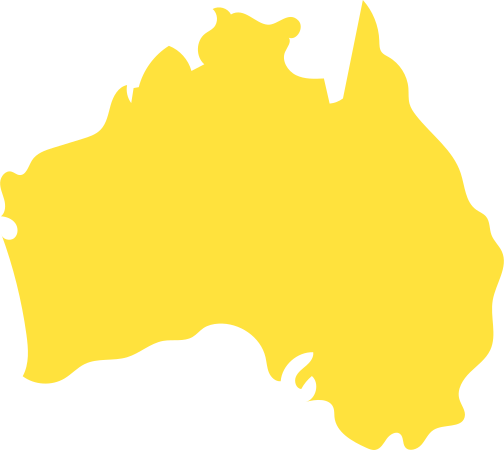
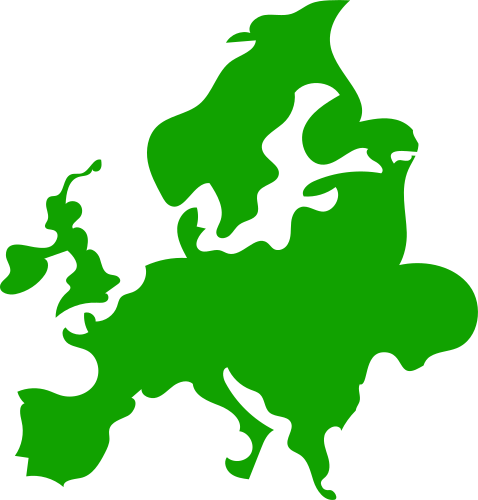
There are about 26 species of brightly-colored birds in this family. They are found in open or lightly wooded areas, usually near swamps, rivers, lakes, or flooded fields in tropical and semi-tropical regions of Europe, Africa, Asia, Australia, and the South Pacific.
Most of the species in this family are green with red, yellow, blue, or black markings. They are between 6 and 14 inches in length and have long tails and long, sharply pointed black bills. Many species have a black stripe that runs from the eye to the base of the bill.
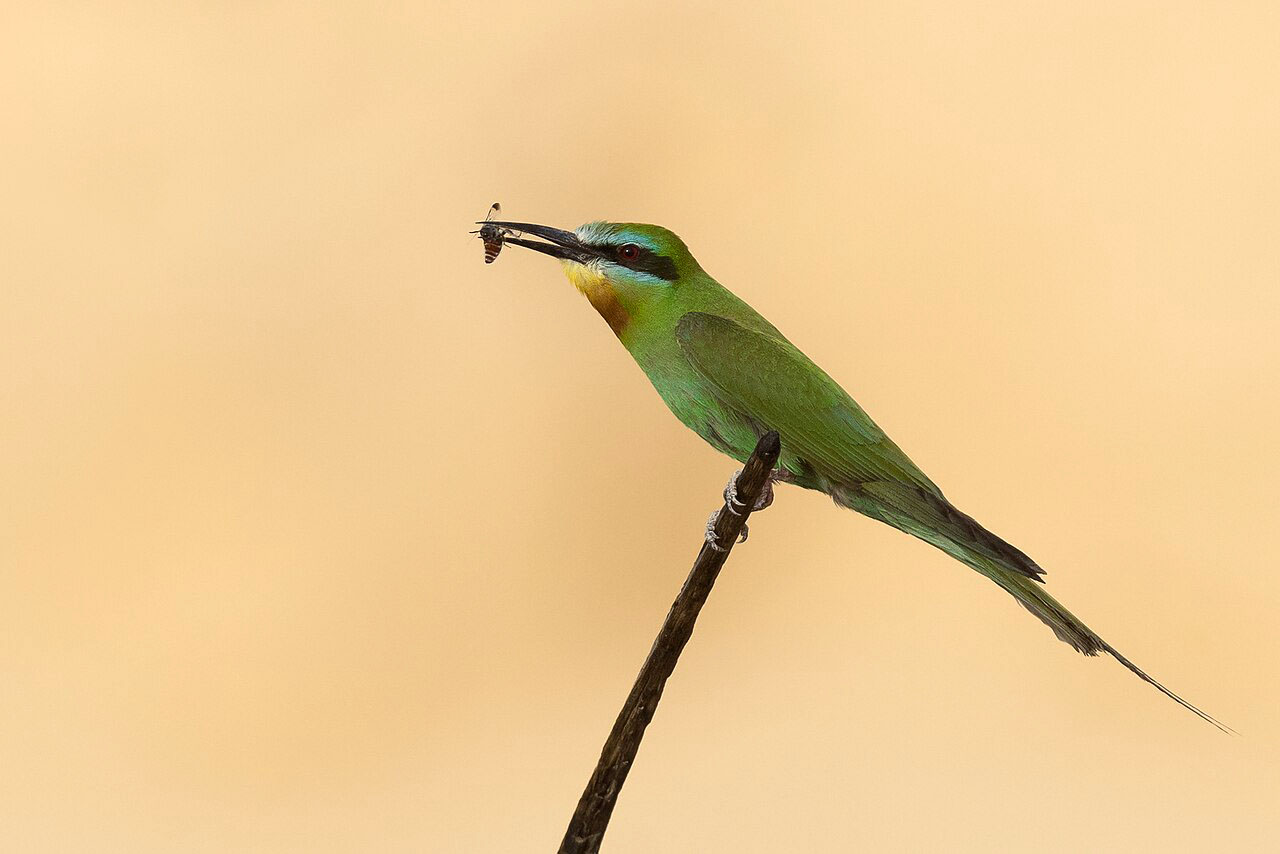
Bee-eaters are insectivores and eat flying insects. They sit on branches or other perches and wait for insects to fly by and then give chase. They get the name bee-eater because they often eat bees and wasps.
Bee-eaters live in flocks and are very sociable. Most species build their nests on riverbanks. Bee-eaters are cooperative breeders. Non-breeding birds help build the nests and help incubate the eggs and feed, and raise the young.
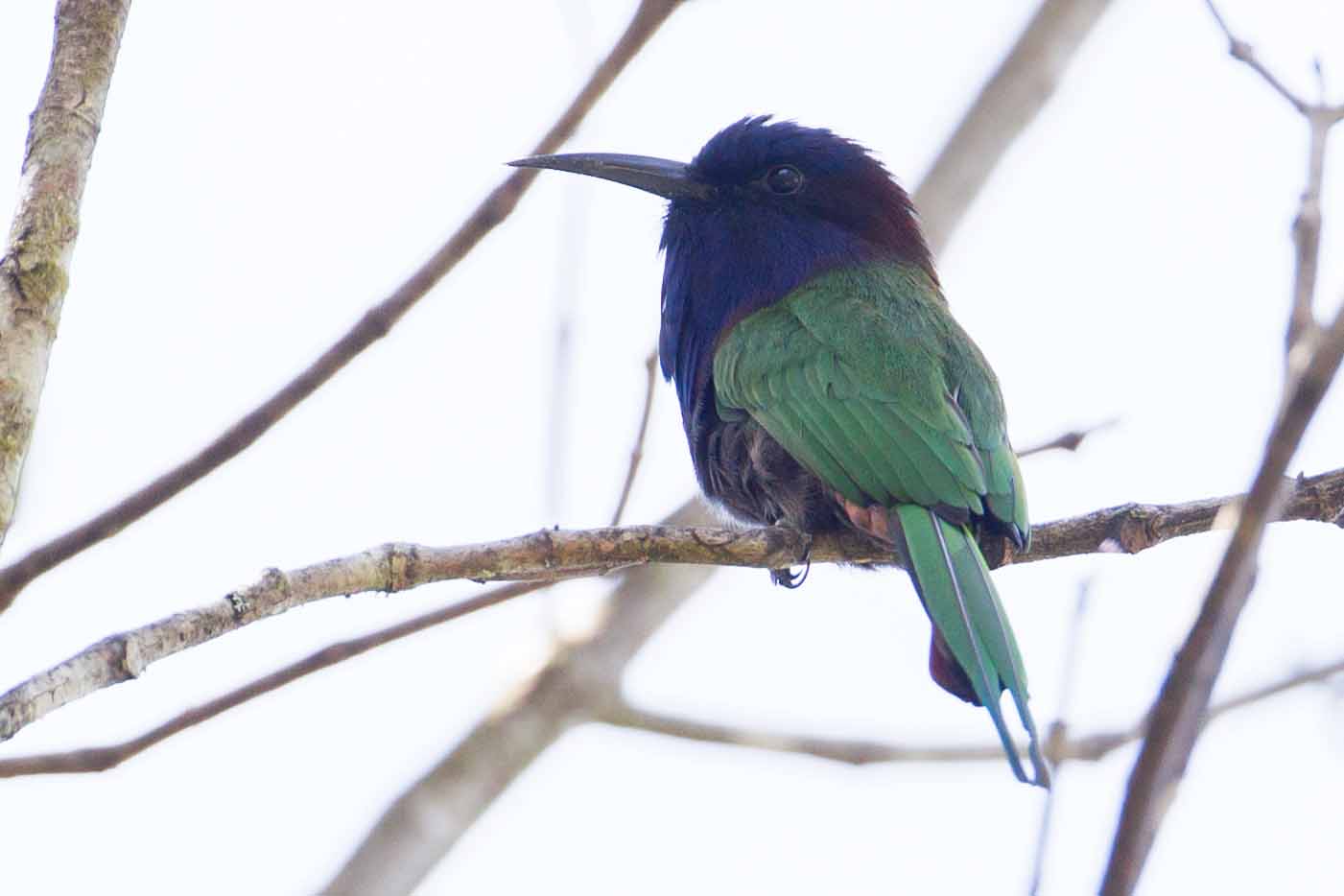
Purple-Bearded Bee-Eater (Meropogon forsteni)
The purple-bearded bee-eater is found in Indonesia. IUCN Redlist Status: Least Concern
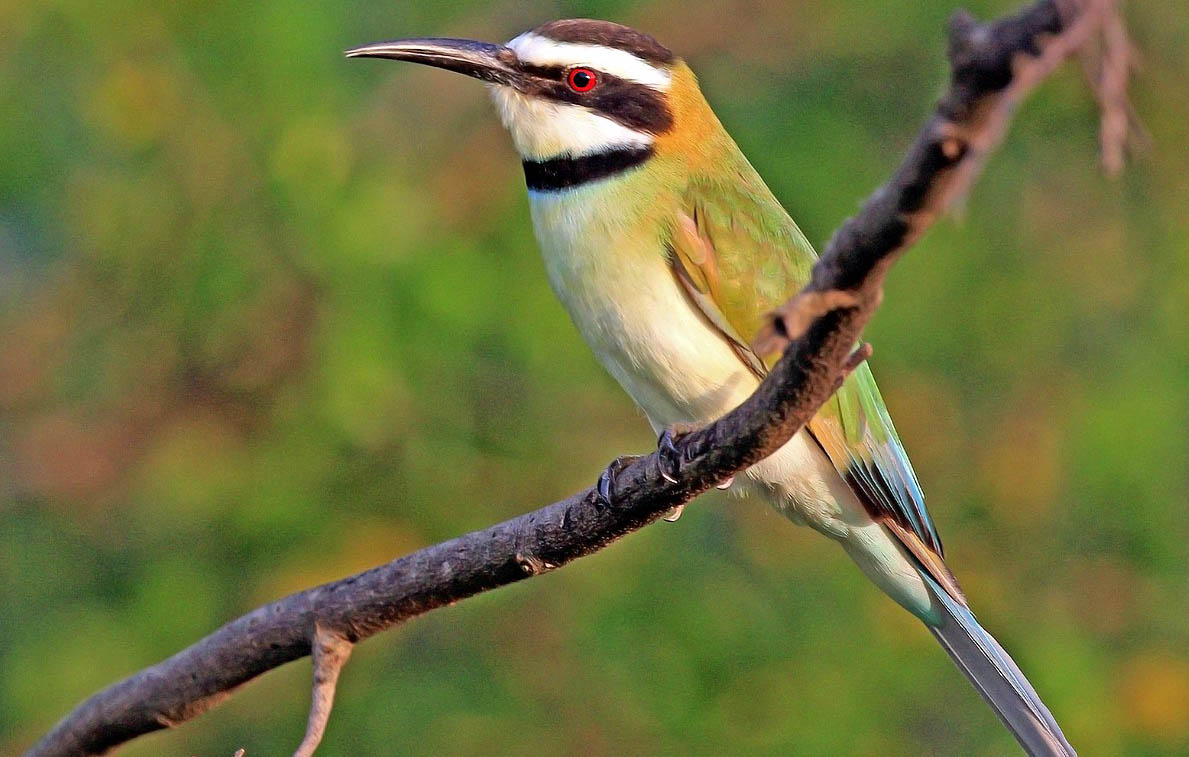
White-Throated Bee-Eater (Merops albicollis)
The white-throated bee-eater is found across central Africa IUCN Redlist Status: Least Concern
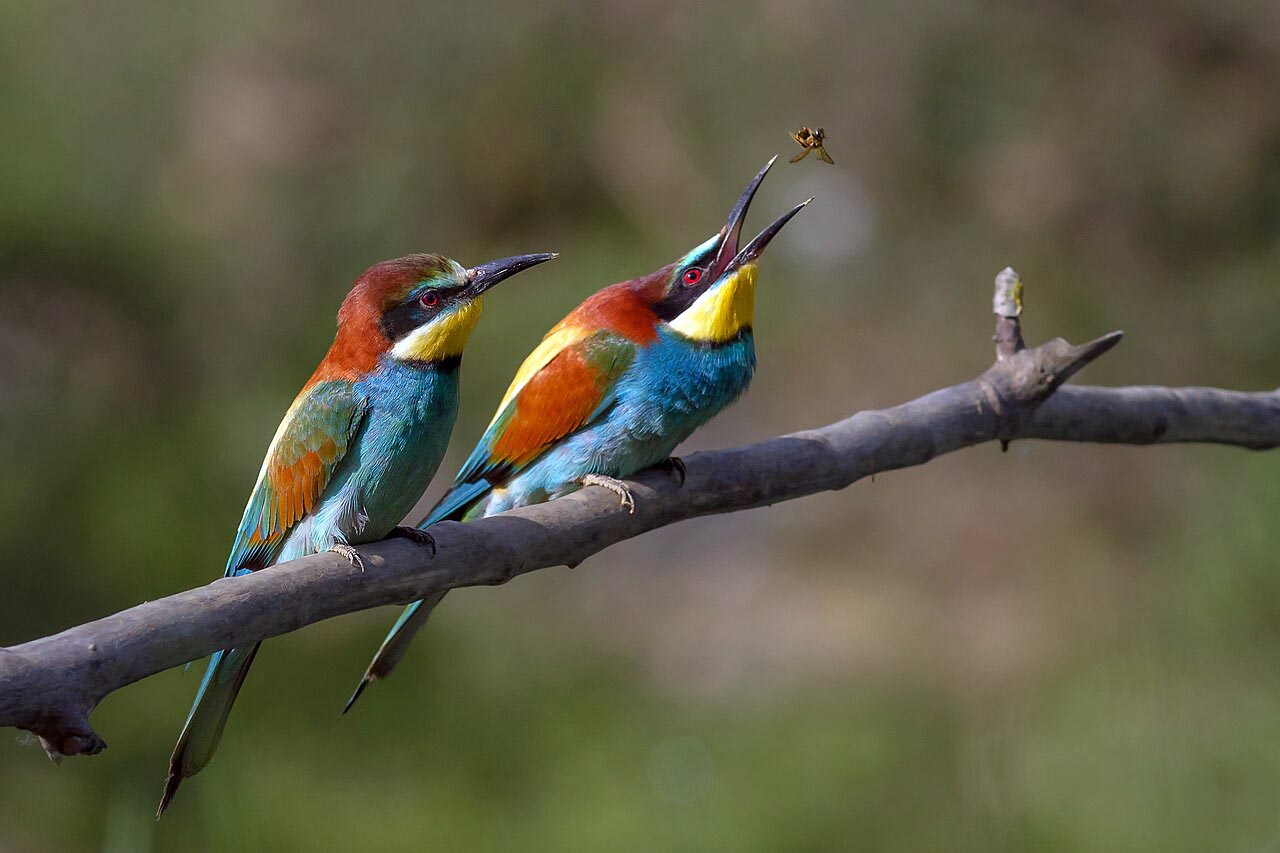
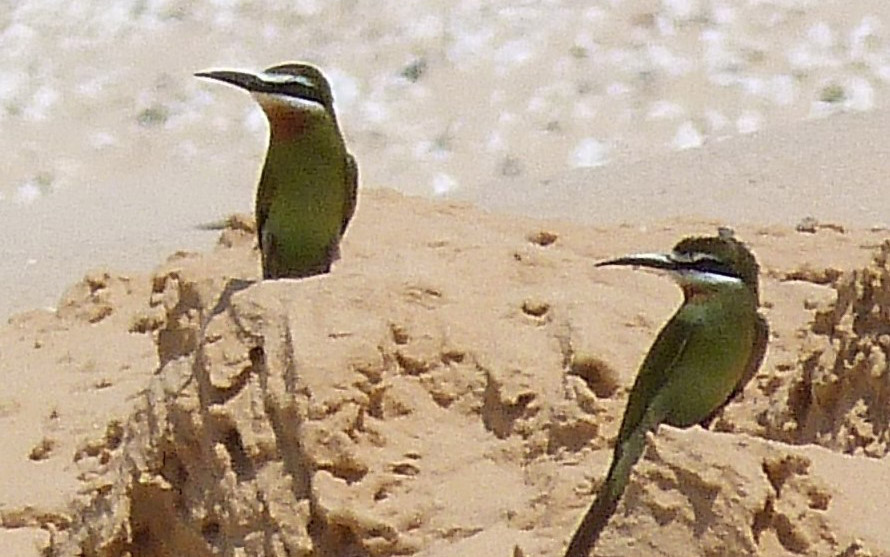
European Bee-Eater (Merops apiaster)
European bee-eaters are monogamous. Pairs will stay together from year-to-year. They are found across much of Europe and Africa from Finland south to south Africa. It is also found in some parts of Asia. IUCN Redlist Status: Least Concern
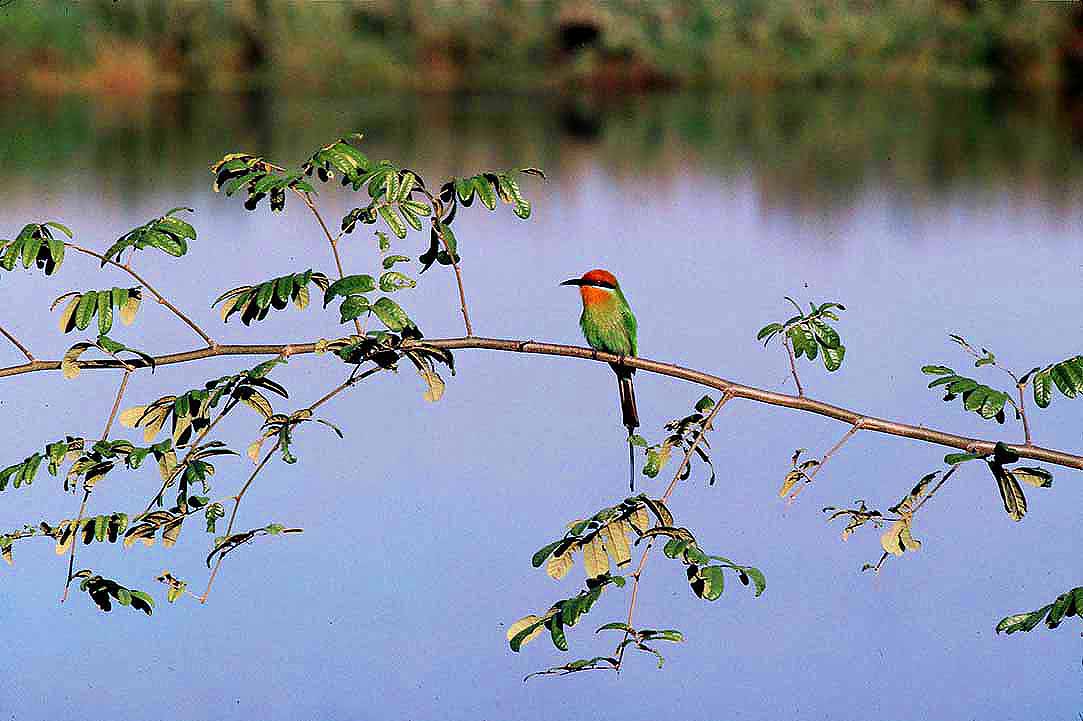
Boehm's Bee-Eater (Merops boehmi)
Boehm's Bee-eater is found in the Democratic Republic of the Congo, Malawi, Mozambique, Tanzania, and Zambia. Boehm's bee-eater is found in IUCN Redlist Status: Least Concern
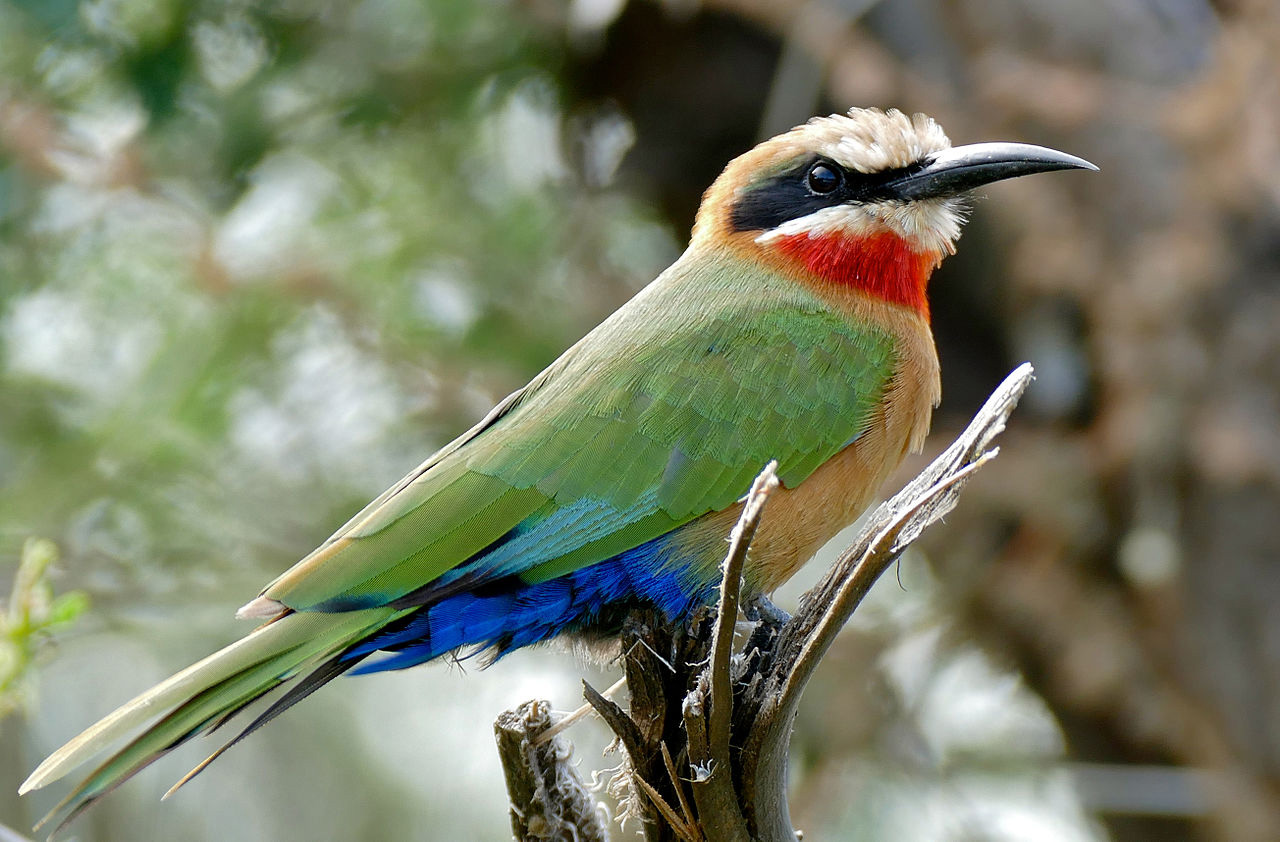
White-Fronted Bee-Eater Merops bullockoides)
The white-fronted bee-eater is found in Angola, Botswana, Burundi, Congo, The Democratic Republic of the Congo, Eswatini, Gabon, Kenya, Malawi, Mozambique, Namibia, Rwanda, South Africa, Tanzania, Zambia, and Zimbabwe. IUCN Redlist Status: Least Concern
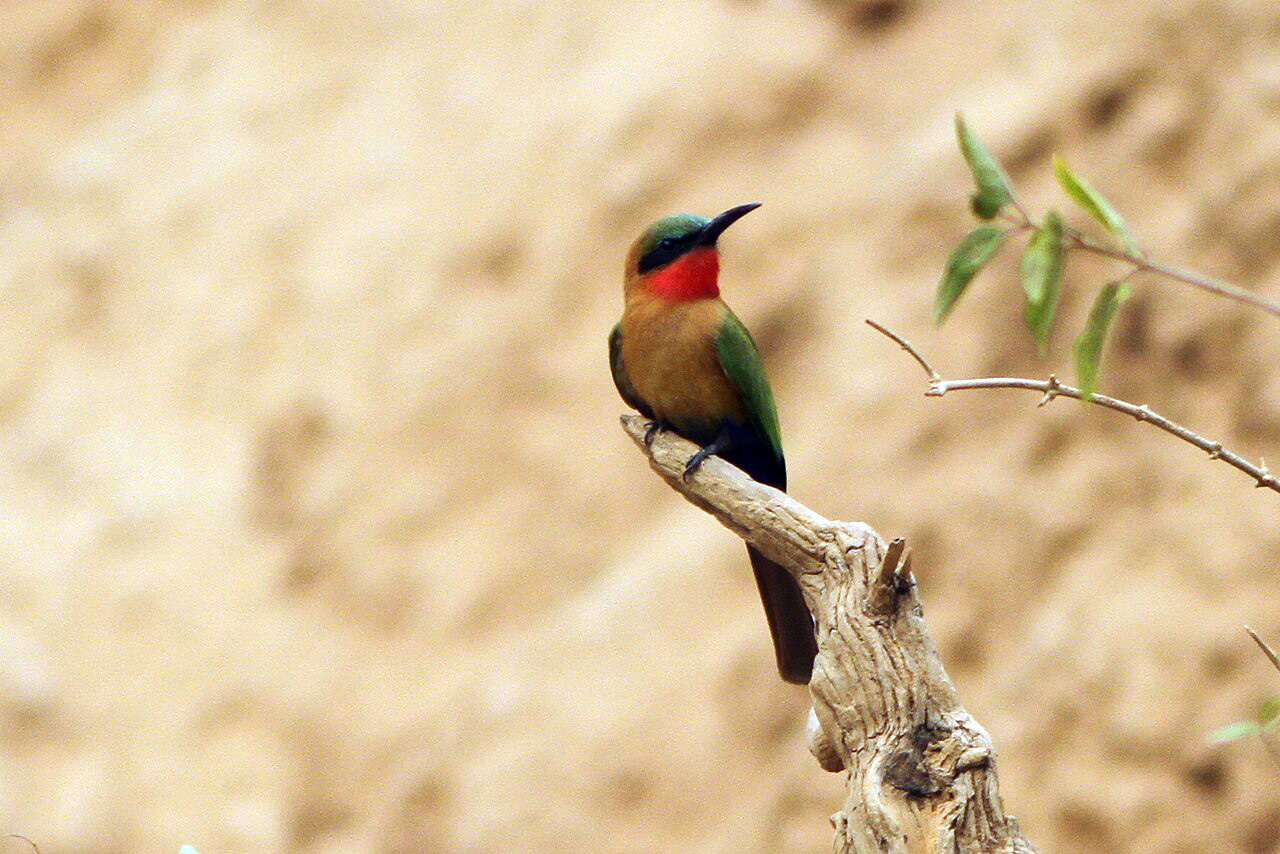
Red-Throated Bee-Eater (Merops bulocki)
The red-throated bee-eater is found in Benin, Burkina Faso, Cameroon, Central African Republic, Chad, The Democratic Republic of the Congo, Côte d'Ivoire, Ethiopia, Gambia, Ghana, Guinea, Guinea-Bissau, Mali, Mauritania, Niger, Nigeria, Senegal, South Sudan, Sudan, Togo, and Uganda. IUCN Redlist Status: Least Concern
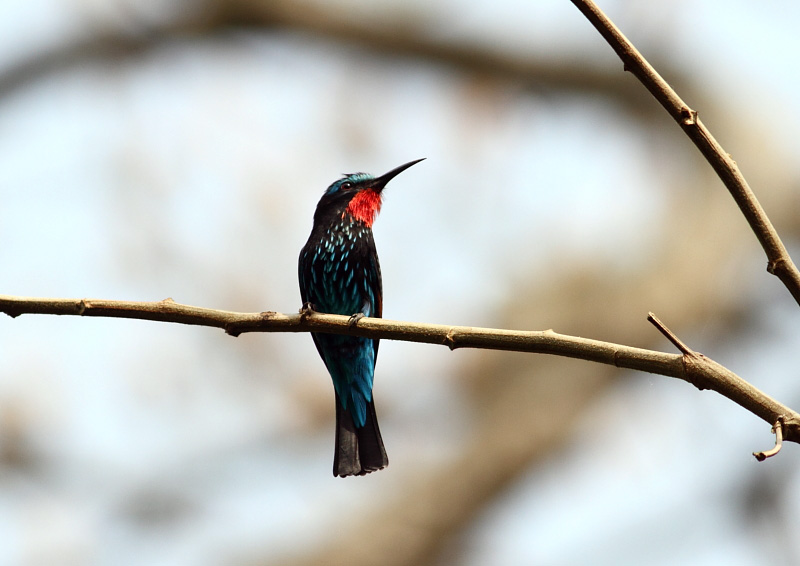
Black Bee-Eater Merops gularis)
The black bee-eater is found in Angola, Cameroon, Central African Republic, Congo, The Democratic Republic of the Congo, Cote d'Ivoire, Equatorial Guinea, Gabon, Ghana, Guinea, Liberia, Nigeria, Sierra Leone, Togo, and Uganda. IUCN Redlist Status: Least Concern
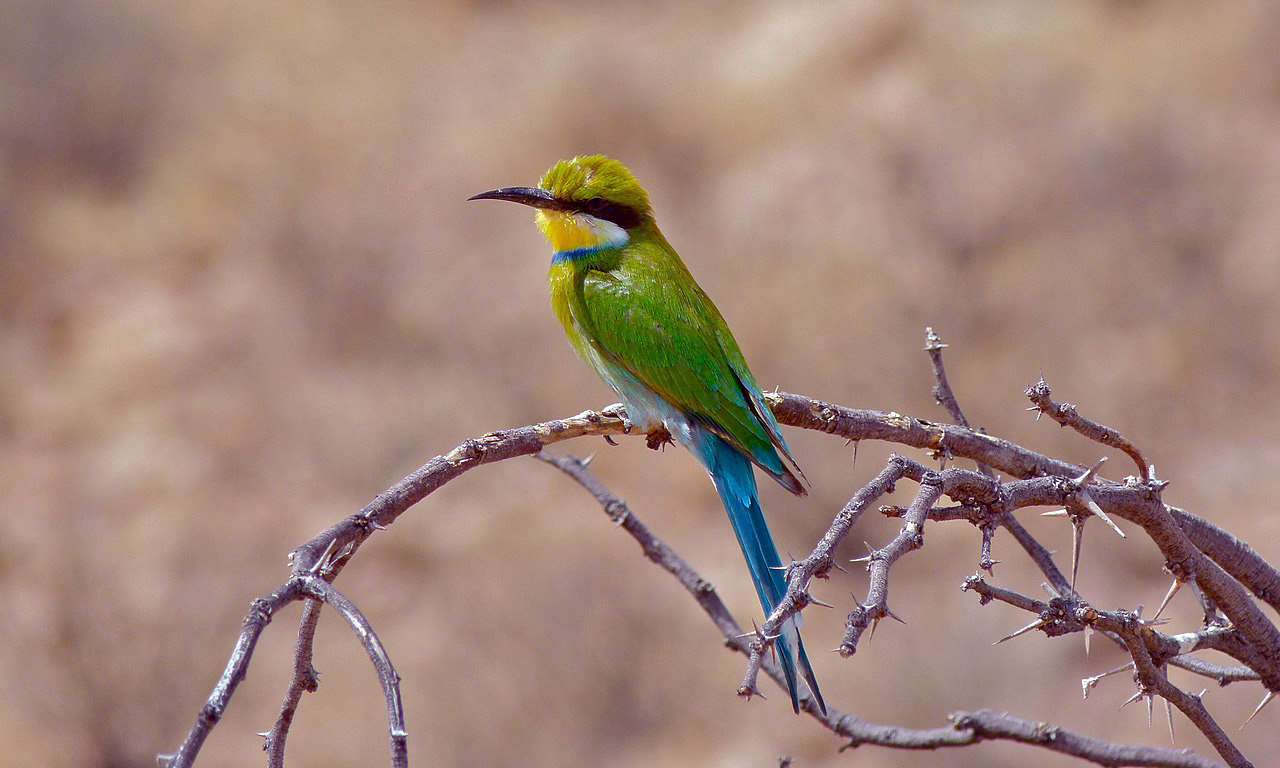
Swallow-Tailed Bee-Eater (Merops hirundineus)
The swallow-tailed bee-eater is found in central and southern Africa. IUCN Redlist Status: Least Concern
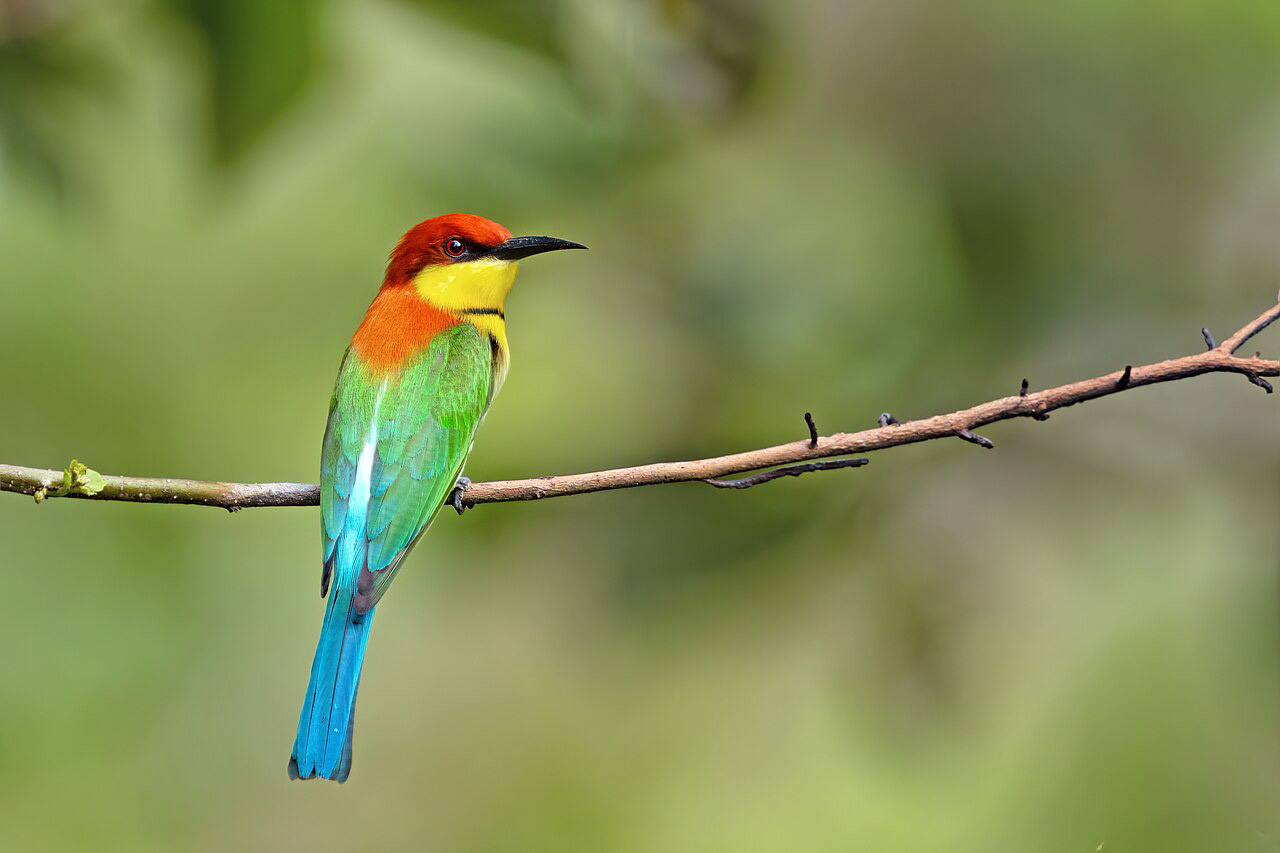
Chestnut-Headed Bee-Eater (Merops leschenaulti)
The chestnut-headed bee-eater is found in Bangladesh, Bhutan, Cambodia, China, India, Indonesia, Laos, Malaysia, Myanmar, Nepal, Sri Lanka, Thailand, and Vietnam. IUCN Redlist Status: Least Concern
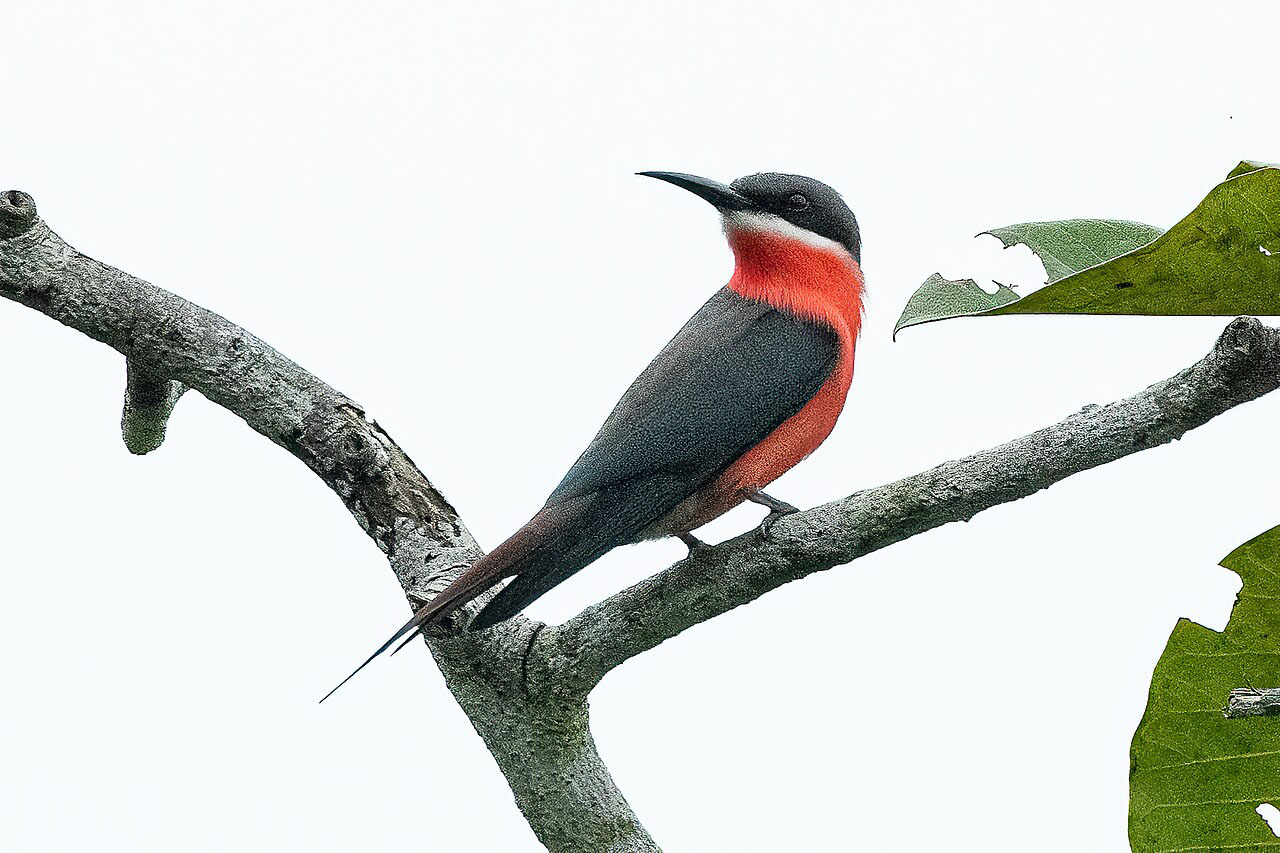
Rosy Bee-Eater (Merops malimbicus)
The rosy bee-eater is found in Equatorial Guinea, Ghana, Angola, Congo, The Democratic Republic of the Congo, Gabon, Nigeria, Benin, Burkina Faso, Togo, and Cote d'Ivoire. IUCN Redlist Status: Least Concern
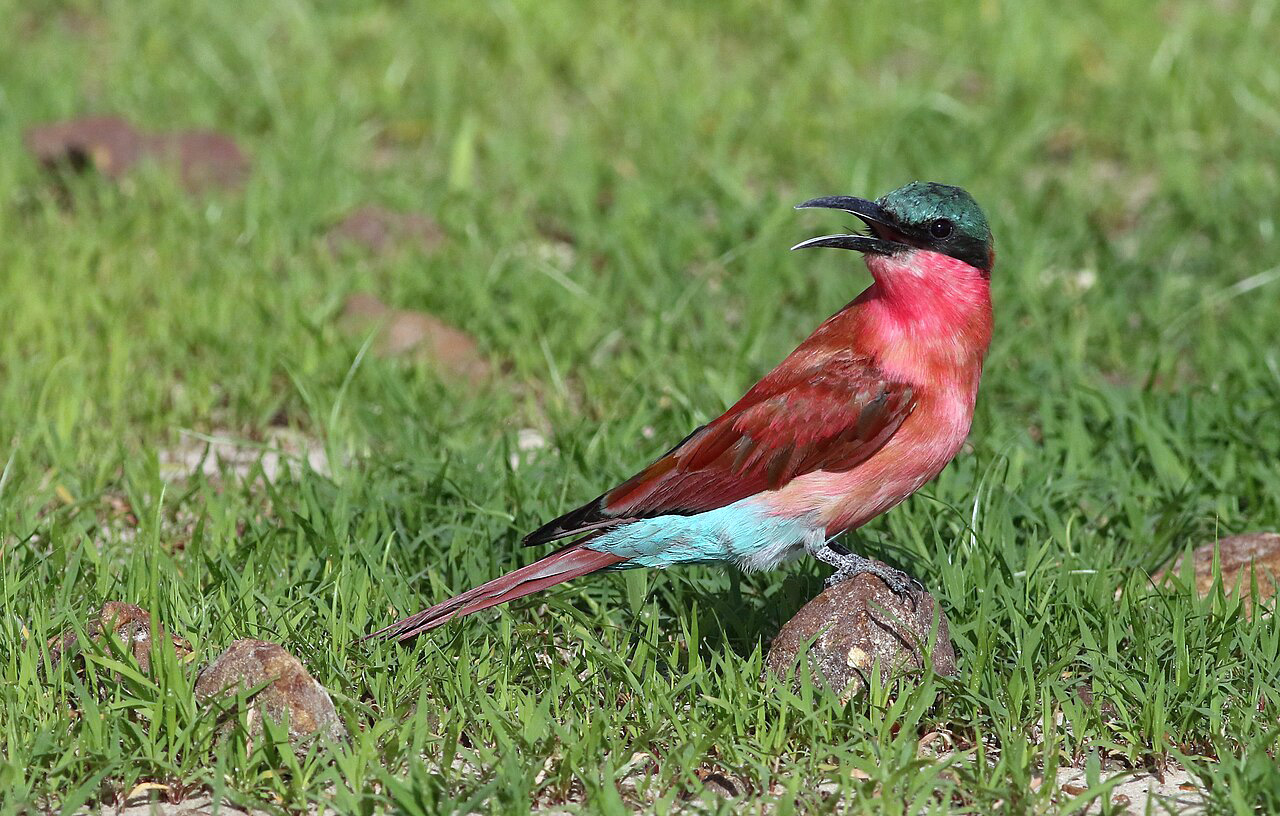
Southern Carmine Bee-Eater (Merops nubicoides)
The southern carmine bee-eater is found in Angola, Botswana, Burundi, Congo, Kenya, Malawi, Mozambique, Namibia, Rwanda, South Africa, Swaziland, Tanzania, Zambia, and Zimbabwe. IUCN Redlist Status: Least Concern
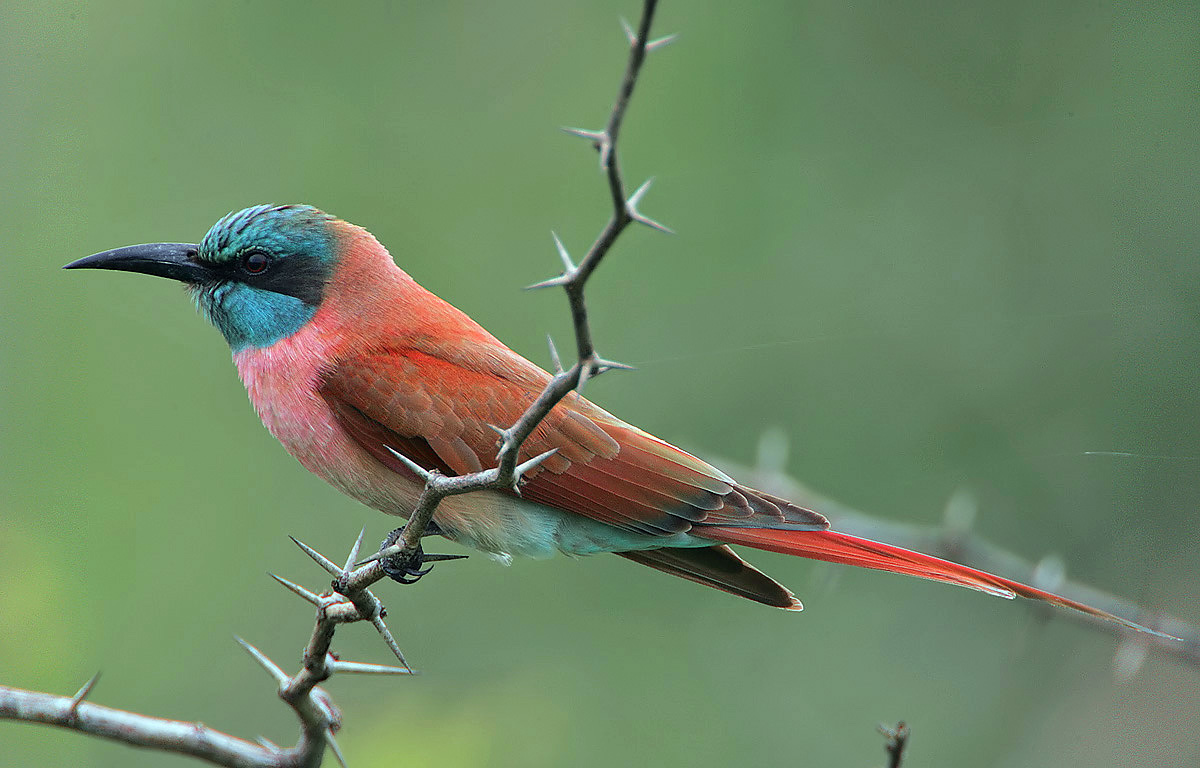
Northern Carmine Bee-Eater (Merops nubicus)
The northern carmine bee-eater is found across central Africa. IUCN Redlist Status: Least Concern
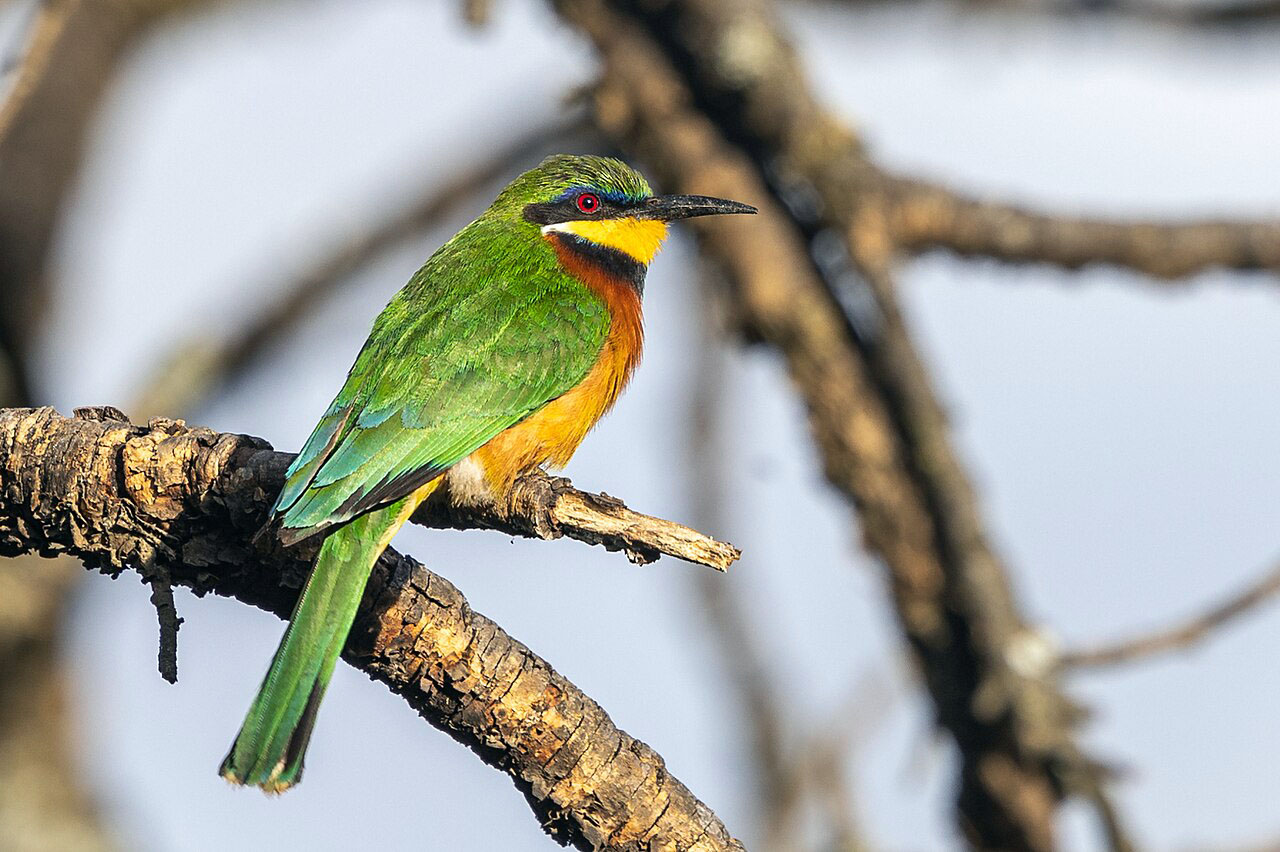
Cinnamon-Chested Bee-Eater (Merops oreobates)
The cinnamon-chested bee-eater is found in Burundi, The Democratic Republic of the Congo, Kenya, Rwanda, South Sudan, Sudan, Tanzania, and Uganda. IUCN Redlist Status: Least Concern
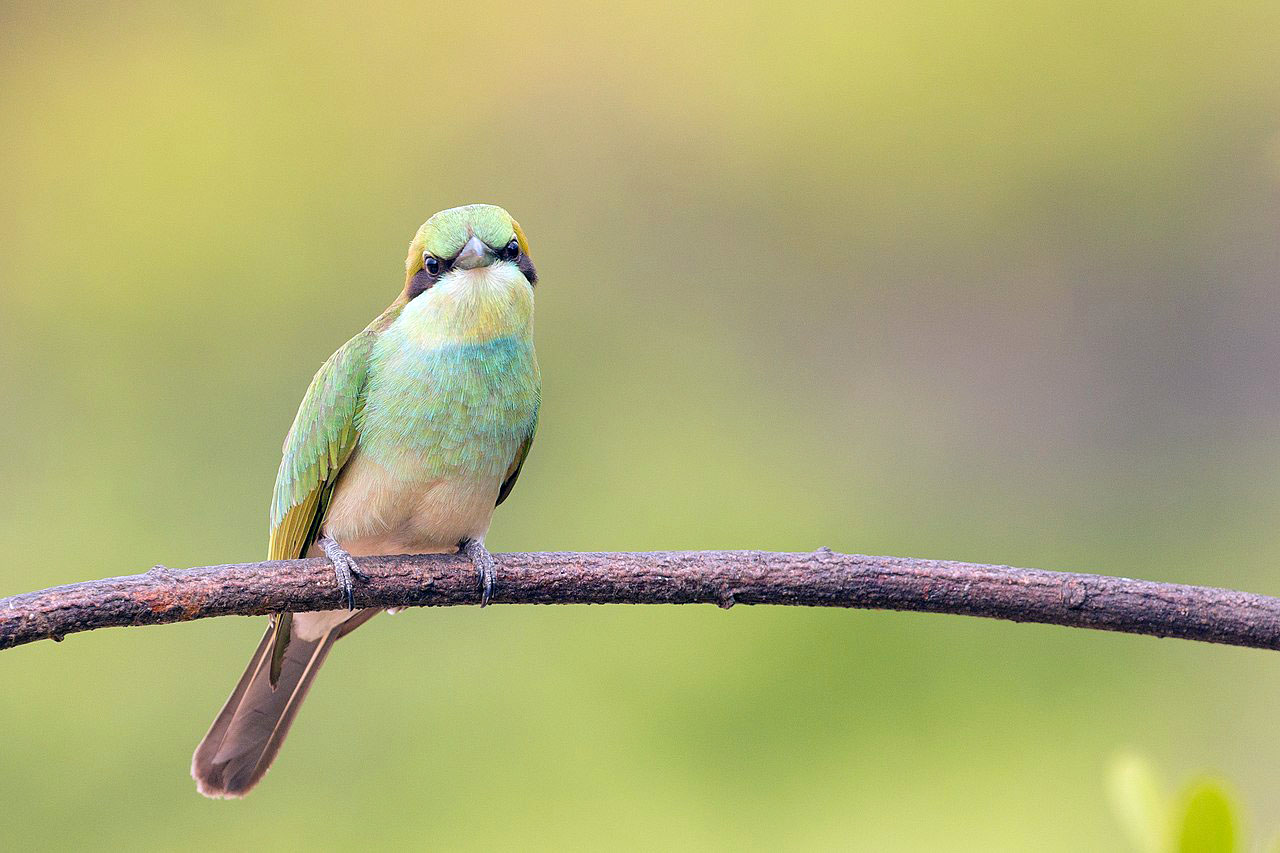
Asian Green Bee-Eater (Merops orientalis)
The Asian green bee-eater is found in Bangladesh, Cambodia, China, India, Iran, Laos, Myanmar, Nepal, Pakistan, Sri Lanka, Thailand, and Vietnam. IUCN Redlist Status: Least Concern
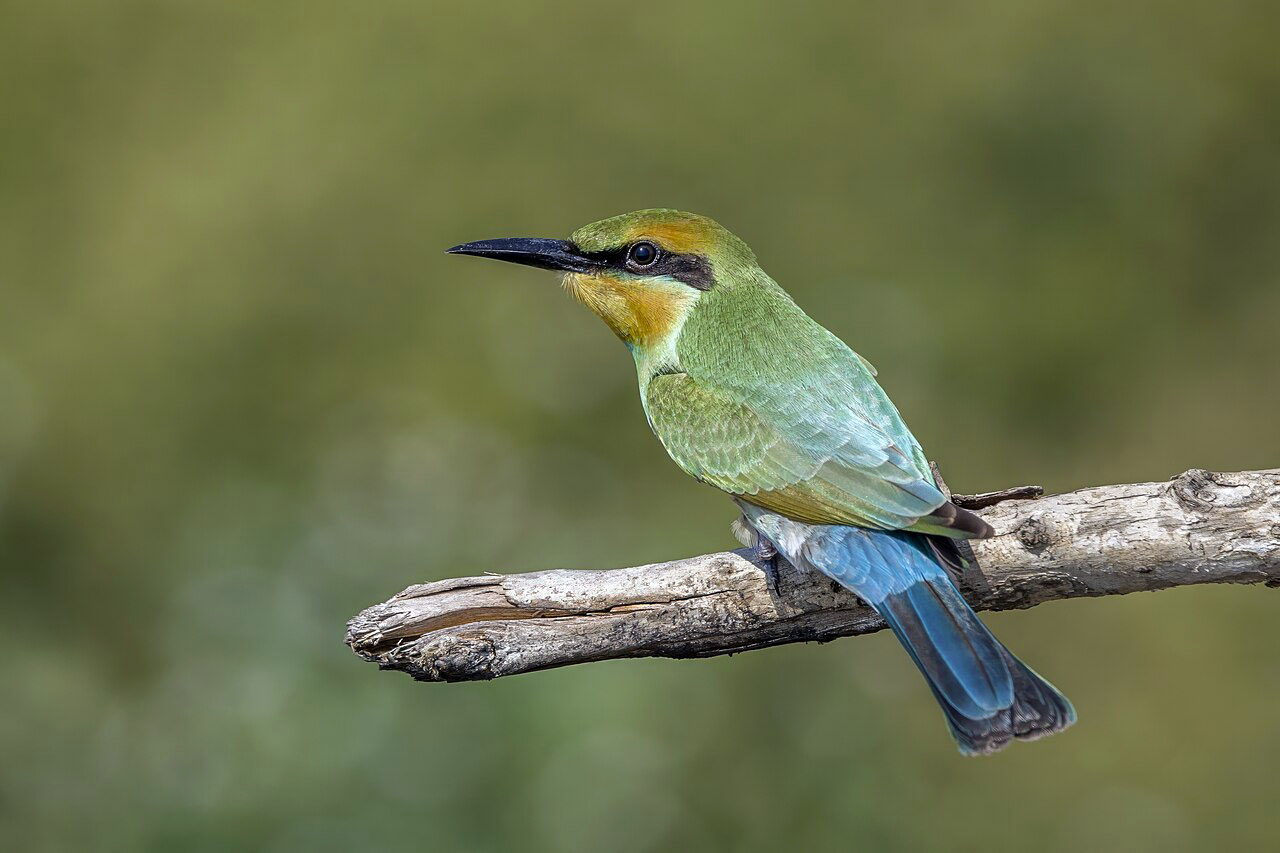
Rainbow Bee-Eater Merops ornatus)
The rainbow bee-eater is found in Australia, Indonesia, Papua New Guinea, the Solomon Islands, and East Timor. IUCN Redlist Status: Least Concern
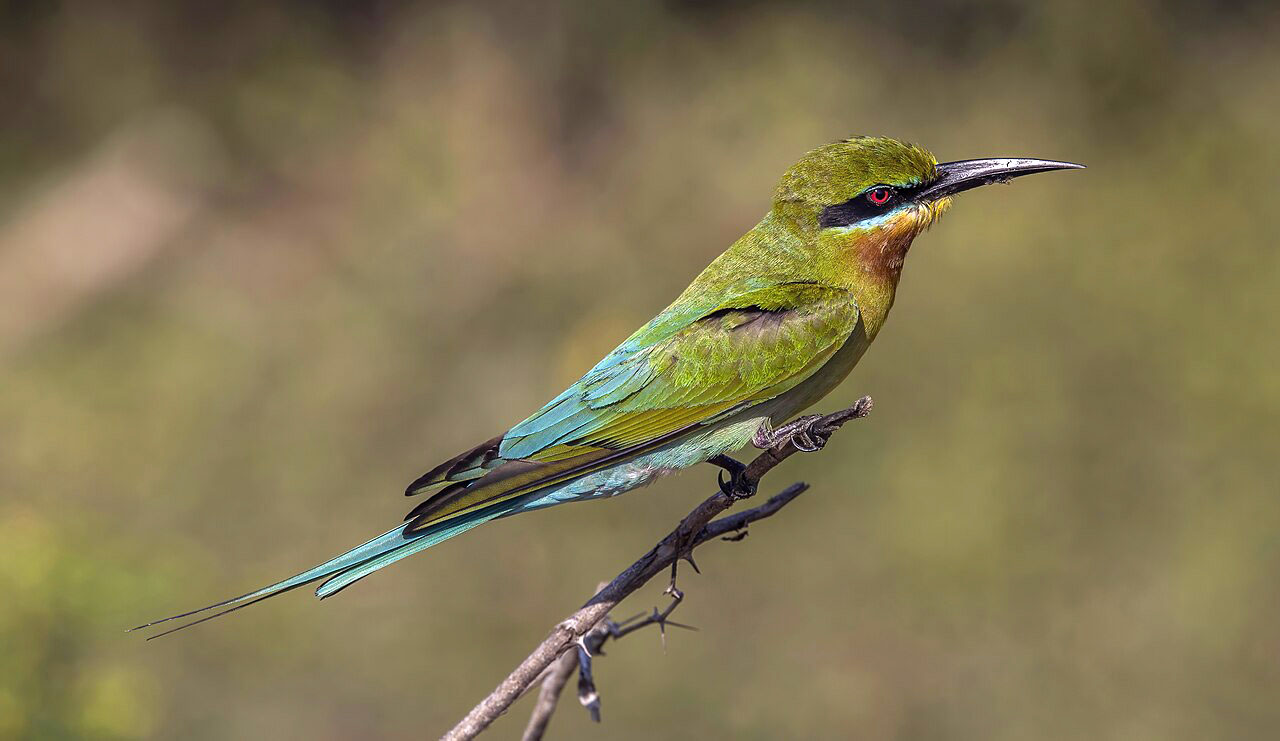
Blue-Cheeked Bee-Eater (Merops persicus)
The blue-cheeked bee-eater is found in northern Africa, the Middle East and southern Europe. IUCN Redlist Status: Least Concern
Blue-Tailed Bee-Eater (Merops philippinus)
The blue-tailed bee-eater is found in Bangladesh, Cambodia, China, Hong Kong, India, Indonesia, Laos, Malaysia, Myanmar, Nepal, Pakistan, Papua New Guinea, Philippines, Singapore, Sri Lanka, Thailand, East Timor, and Vietnam. IUCN Redlist Status: Least Concern
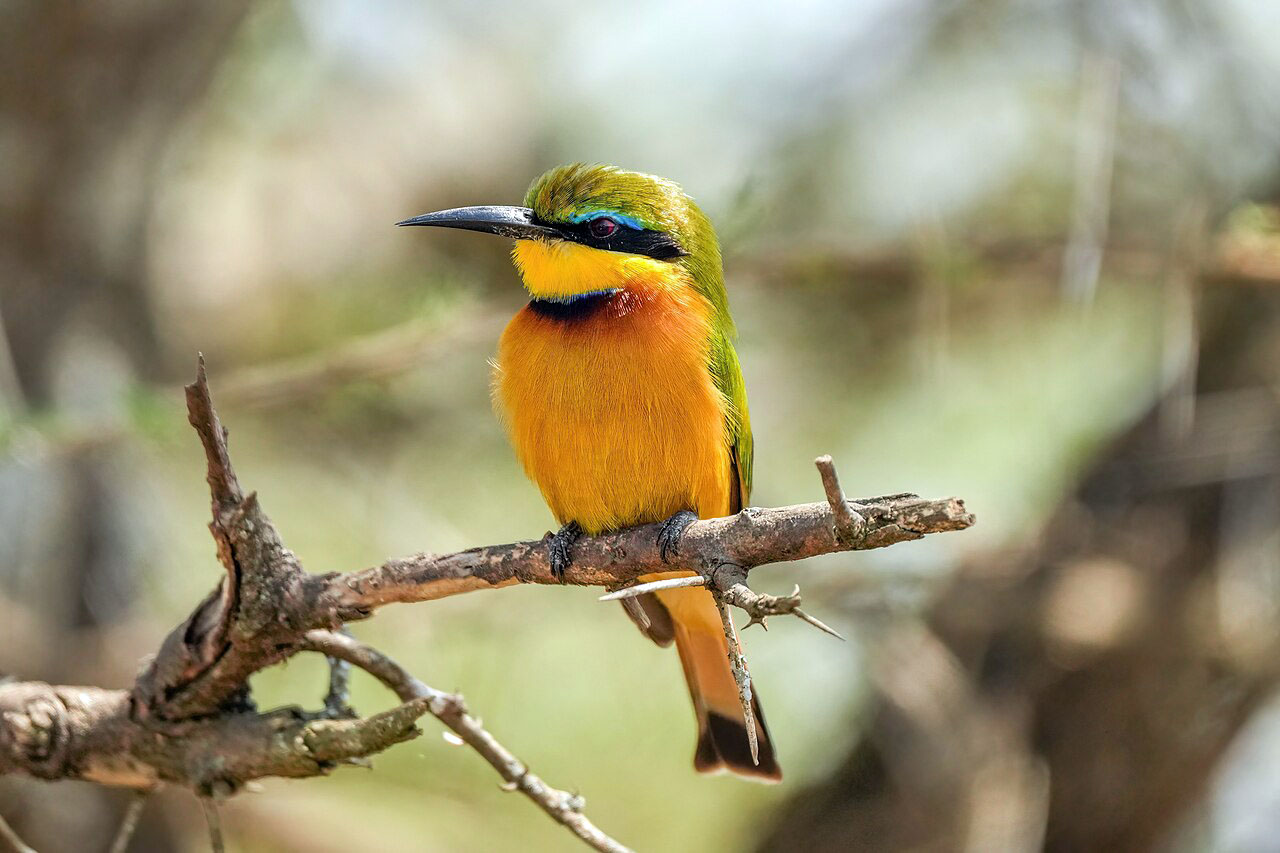
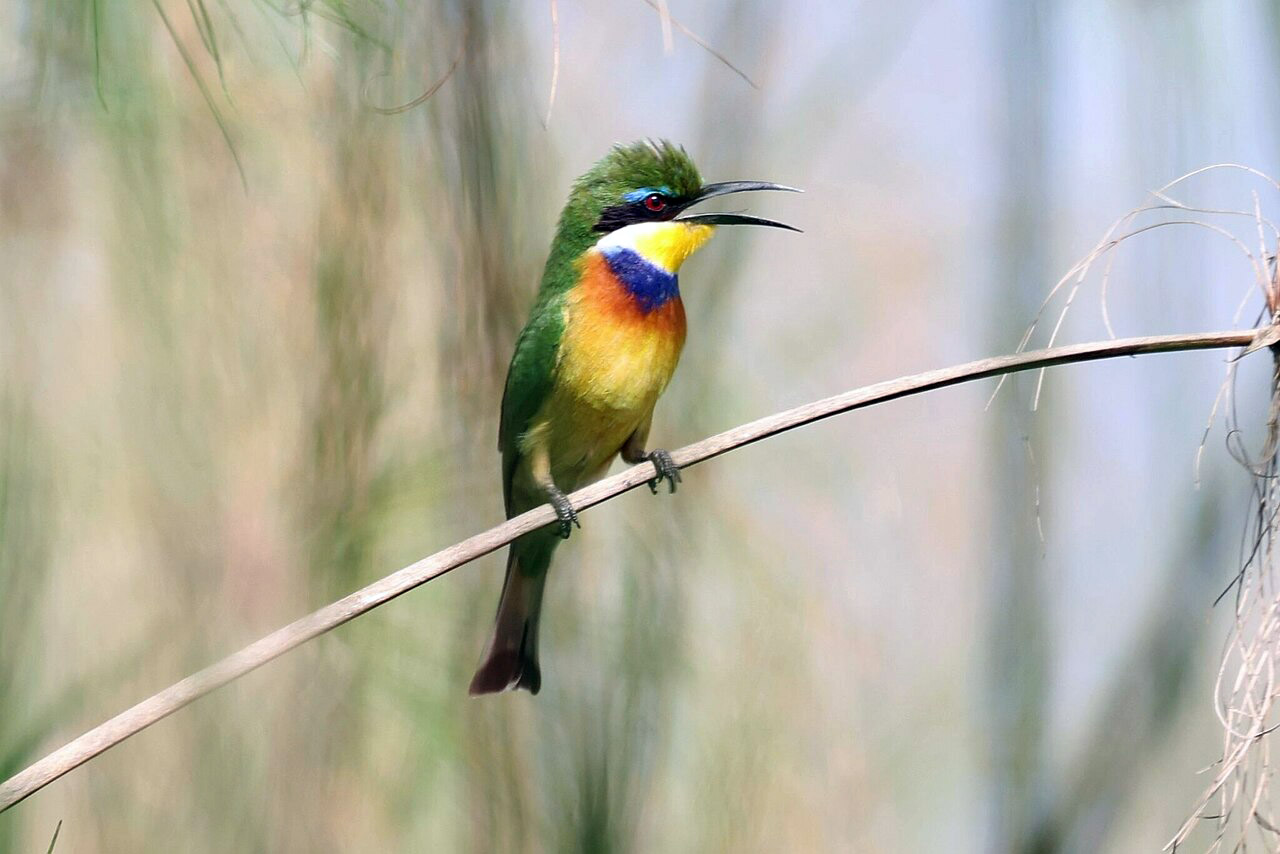
Little Bee-Eater (Merops pusillus)
The little bee-eater is found in central and southern Africa. IUCN Redlist Status: Least Concern
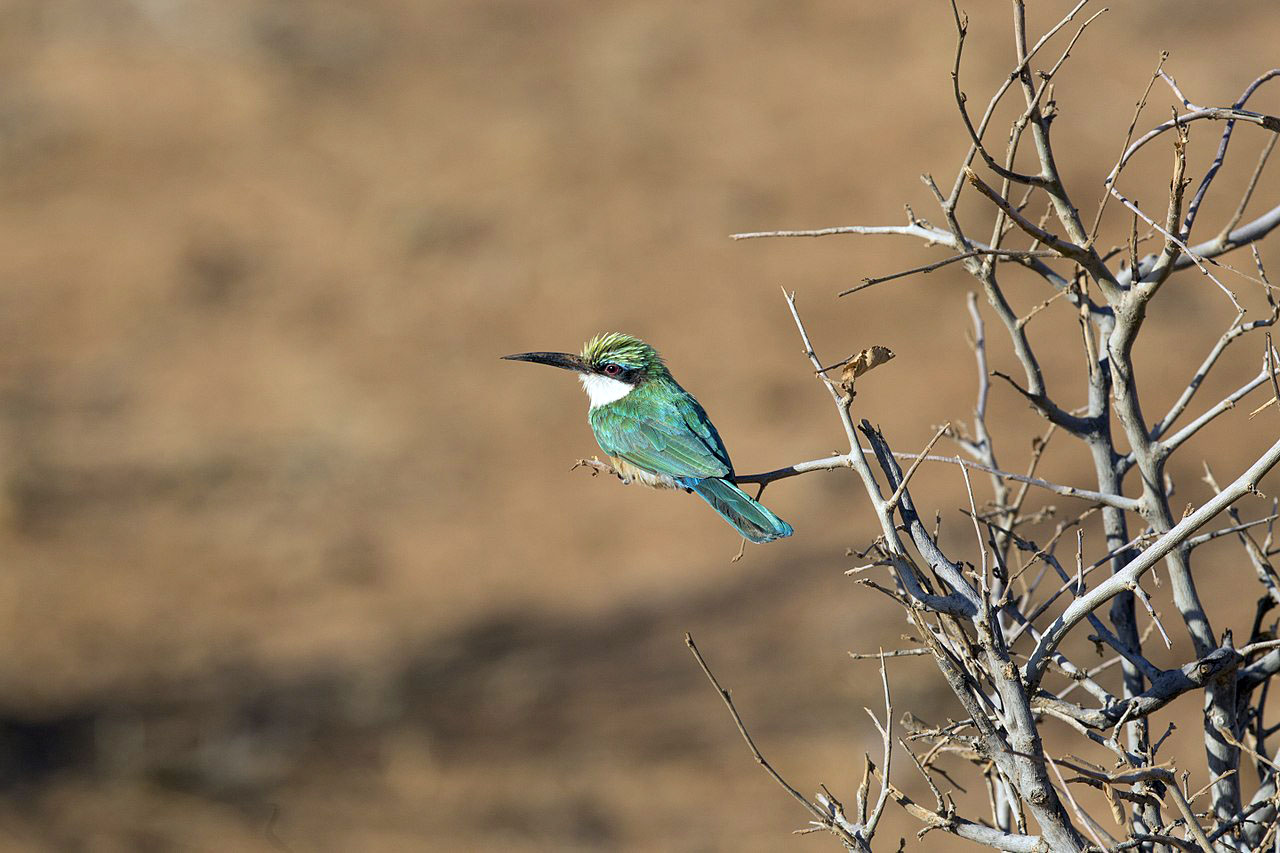
Somali Bee-Eater (Merops revoilii)
The Somali bee-eater is found in Ethiopia, Kenya, Somalia, and Tanzania. IUCN Redlist Status: Least Concern
Olive Bee-Eater (Merops superciliosus)
The olive bee-eater is found in Angola, Botswana, Burundi, Comoros, Congo, Ethiopia, Kenya, Madagascar, Malawi, Mayotte, Mozambique, Namibia, Rwanda, Somalia, South Africa, Sudan, Tanzania, Uganda, Zambia, and Zimbabwe. IUCN Redlist Status: Least Concern
Blue-Breasted Bee-Eater (Merops variegatus)
The blue-breasted bee-eater is found in Angola, Burundi, Cameroon, Central African Republic, Congo, The Democratic Republic of the Congo, Equatorial Guinea, Gabon, Kenya, Nigeria, Rwanda, Tanzania, Uganda, and Zambia. IUCN Redlist Status: Least Concern
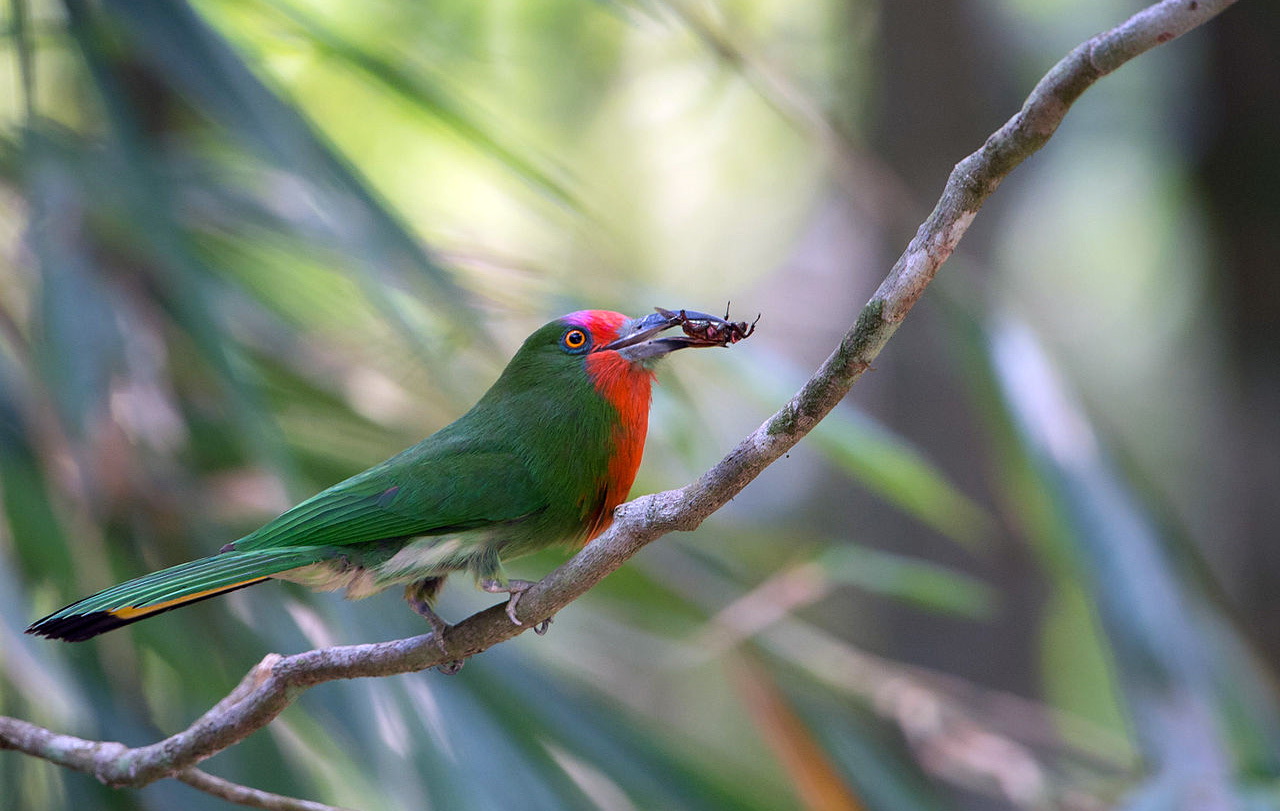
Red-Bearded Bee-Eater (Nyctyornis amictus)
The red-bearded bee-eater is found in Brunei Darussalam, Indonesia, Malaysia, Myanmar, and Thailand. IUCN Redlist Status: Least Concern
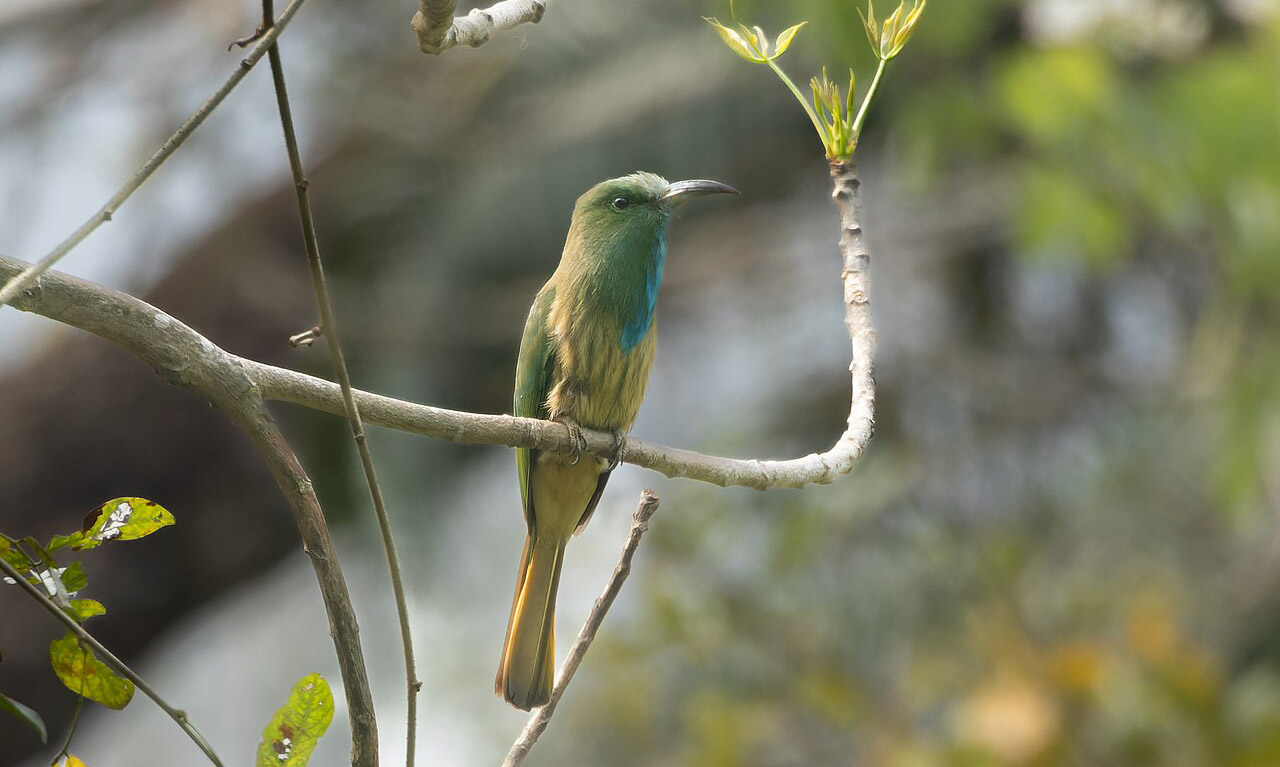
Blue-Bearded Bee-Eater (Nyctyornis athertoni)
The blue-bearded bee-eater is found in Bangladesh, Bhutan, Cambodia, China, India, Laos, Myanmar, Nepal, Thailand, and Vietnam. IUCN Redlist Status: Least Concern