There are three species in this family. They are found in the grasslands and rainforests of Central and South America.
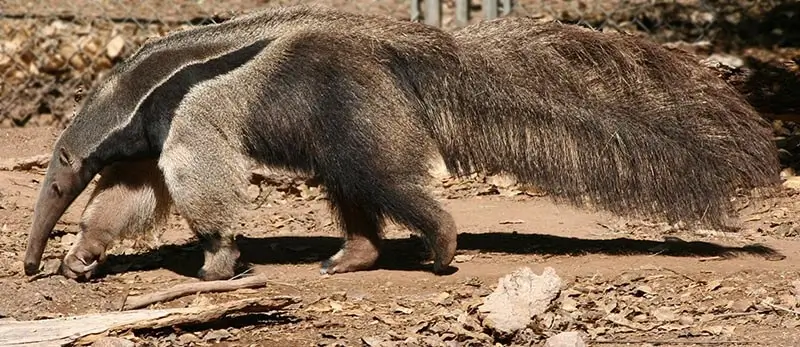
Anteaters have very long, tubular snouts and long, thin, sticky tongues. They have small ears, small eyes, small mouths, no teeth, and five long, strong, curving claws on their front feet.
Their claws don’t retract, so anteaters walk on their knuckles. Anteaters have long tails, and in some species, the tail is prehensile.
Anteaters use their long, sticky tongues to gather up the ants, termites, and other insects.
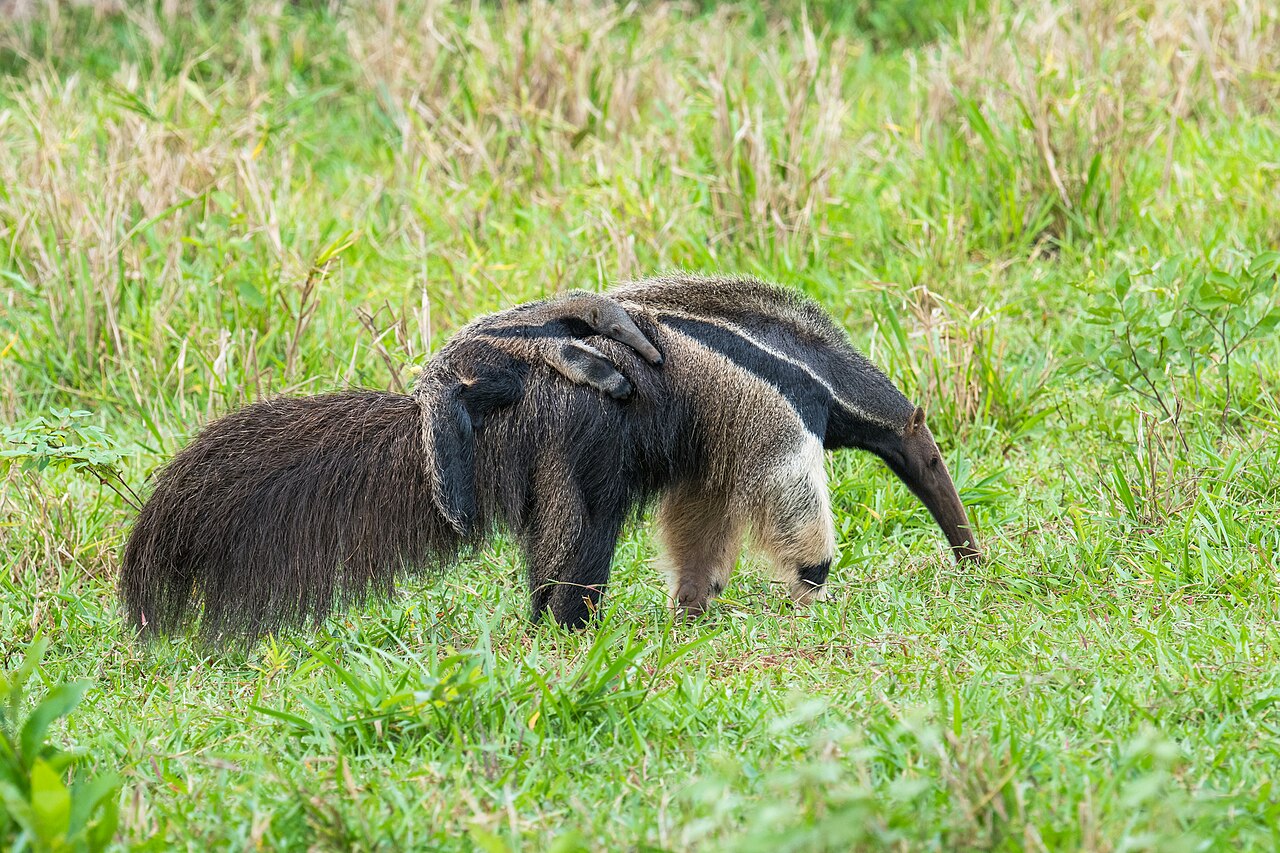
Anteaters are solitary. Females give birth to a single baby and carry it around on their backs.
The giant anteater lives on the ground, and the northern tamandua and the southern tamandua spend time in trees and on the ground.
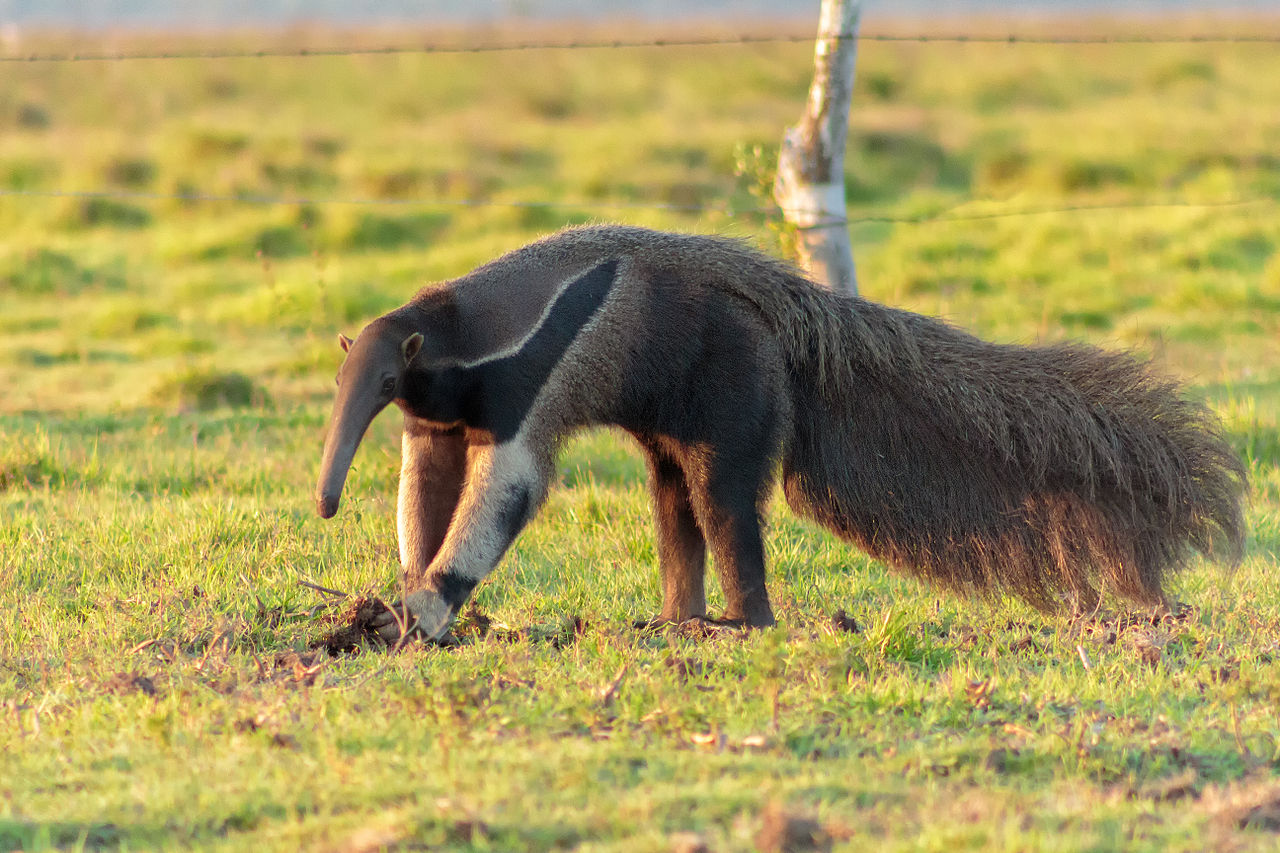
Giant Anteater (Myrmecophaga tridactyla)
The giant anteater is found in Argentina, Bolivia, Brazil, Colombia, Ecuador, French Guiana, Guyana, Honduras Nicaragua, Panama, Paraguay, Peru, Suriname, and Venezuela. IUCN Redlist Status: Vulnerable
Giant Anteater (Myrmecophaga tridactyla)
Female giant anteaters give birth to a single baby and carry it around on their backs. IUCN Redlist Status: Vulnerable
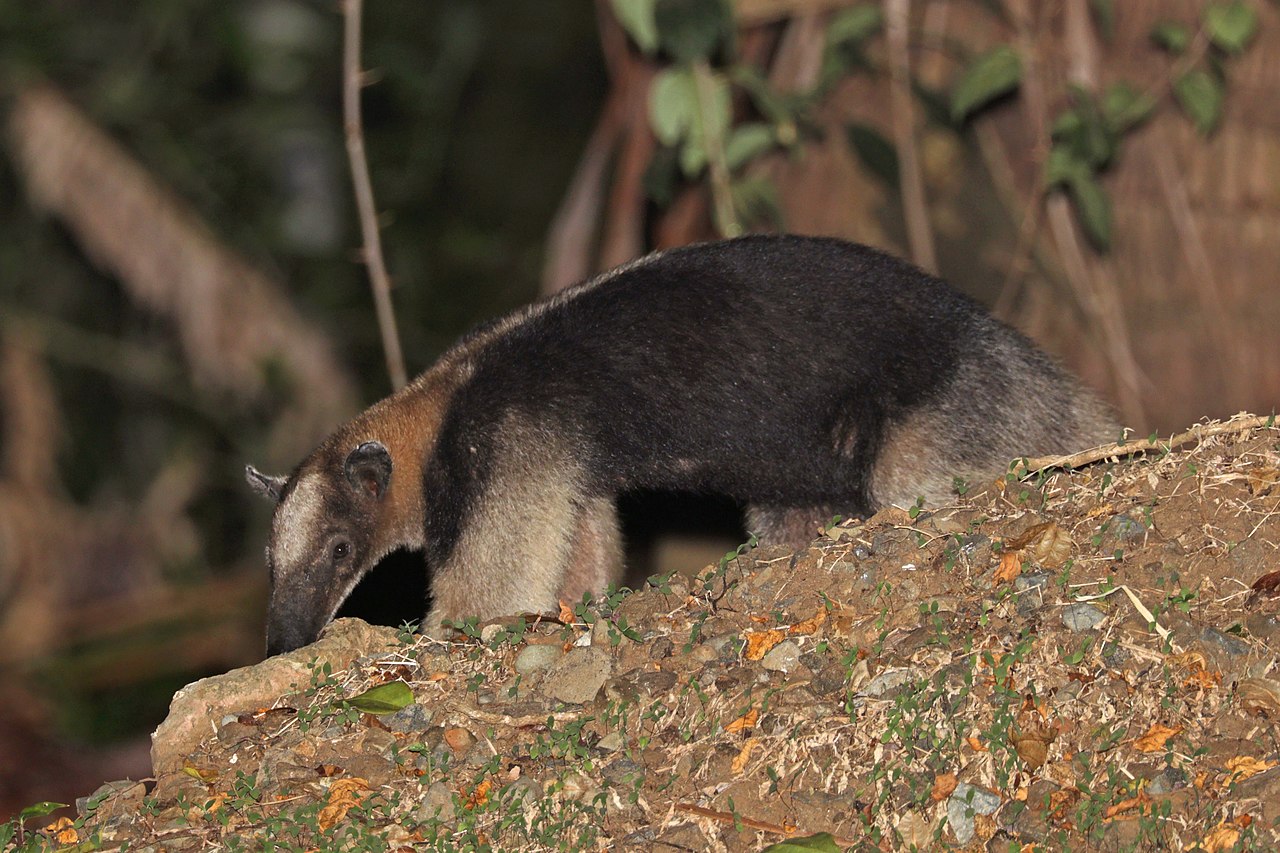
Northern Tamandua (Tamandua mexicana)
The northern tamandua is found from Mexico to northwestern South America. IUCN Redlist Status: Least Concern
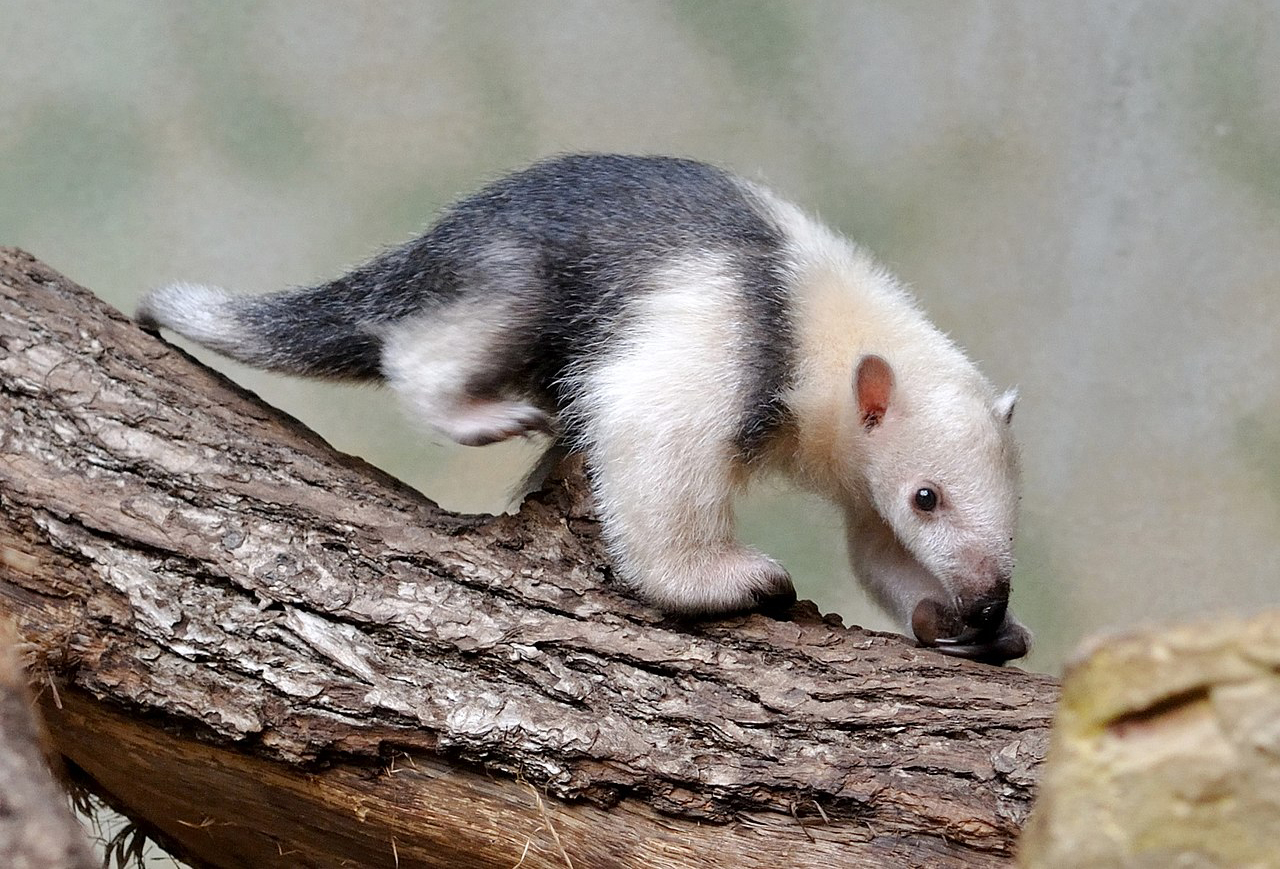
Southern Tamandua (Tamandua tetradactyla)
The southern tamandua is found in Argentina, Bolivia, Brazil Colombia, Ecuador, French Guiana, Guyana, Paraguay, Peru, Suriname, Trinidad and Tobago, Uruguay, and Venezuela. IUCN Redlist Status: Least Concern