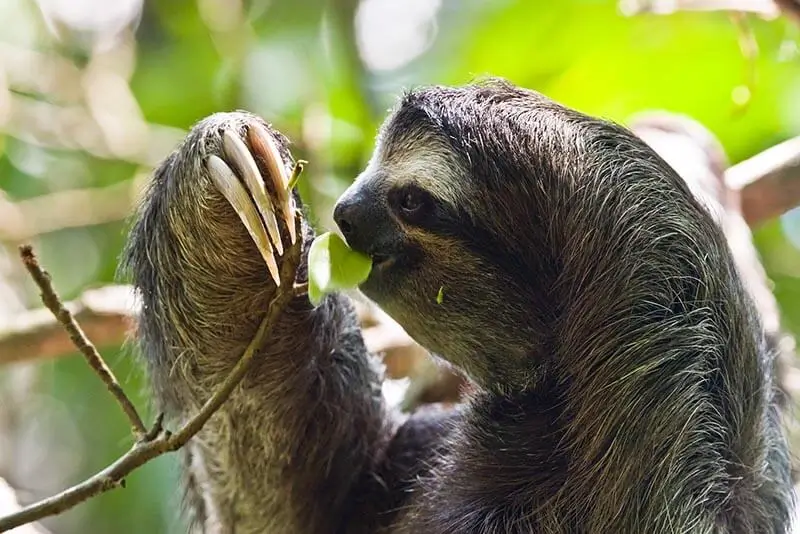
Most species in this order have long, curved claws on their front feet. Anteaters use their powerful claws to tear open ant and termite nests. They then use their long, sticky tongues to catch the insects. Anteaters have no teeth, so they swallow their food without chewing it.
Sloths use their long, curved claws to grip branches and hang upside down in trees. Their slow movements help them conserve energy. Because leaves provide relatively little energy and can be difficult to digest, sloths have a slow digestive process. Their teeth grow throughout their lives and lack enamel, the hard outer covering found on human teeth.
Although anteaters and sloths look quite different, they share some characteristics, including strong claws and specialized adaptations that help them survive.