There are eight species in this family of birds. They are found across sub-Saharan Africa.
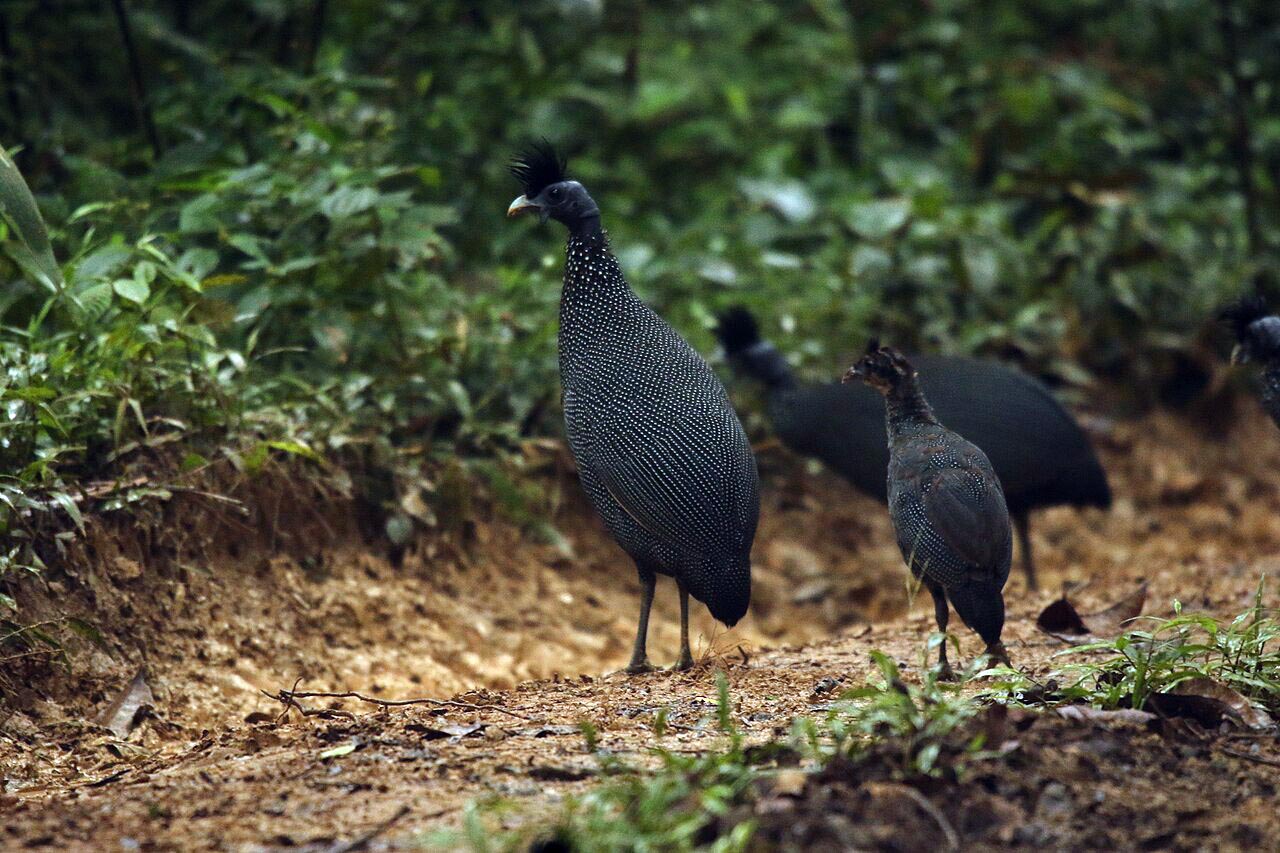
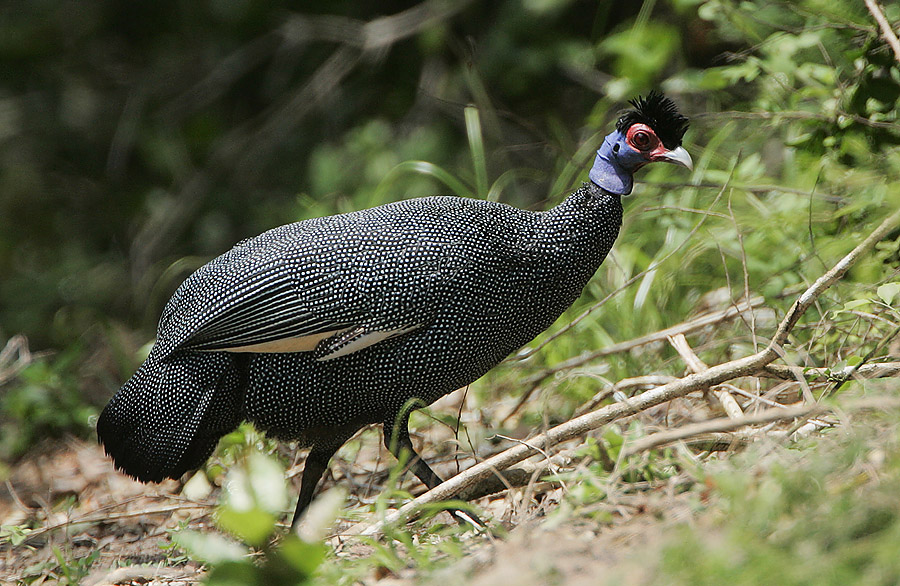
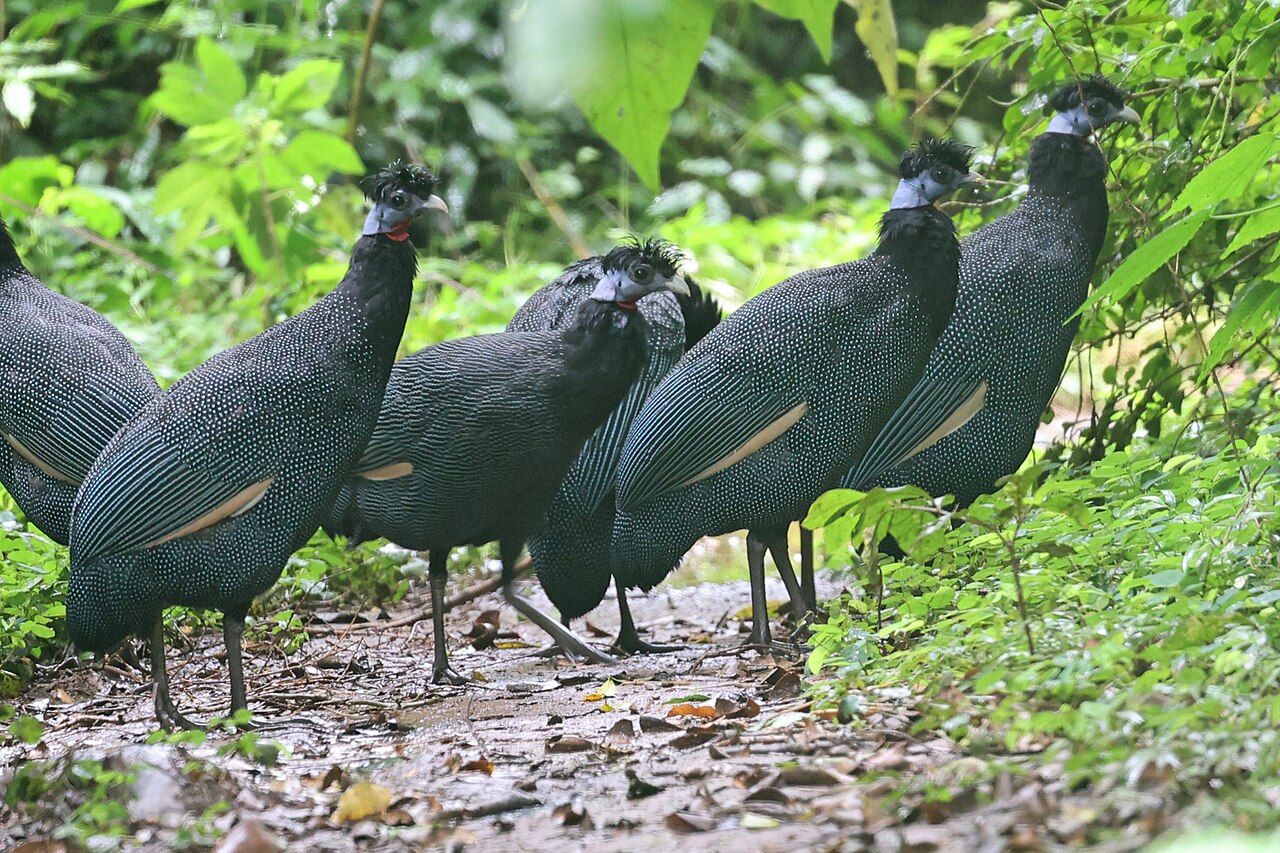
Guineafowl are medium-sized, ground-dwelling birds that measure 17–24 inches (43.2–61.0 cm) in length. They have small, rounded heads; bare heads and necks; short, rounded tails; strong legs; curved bills; and pear-shaped bodies. Most species have dark gray or black feathers covered with white spots.
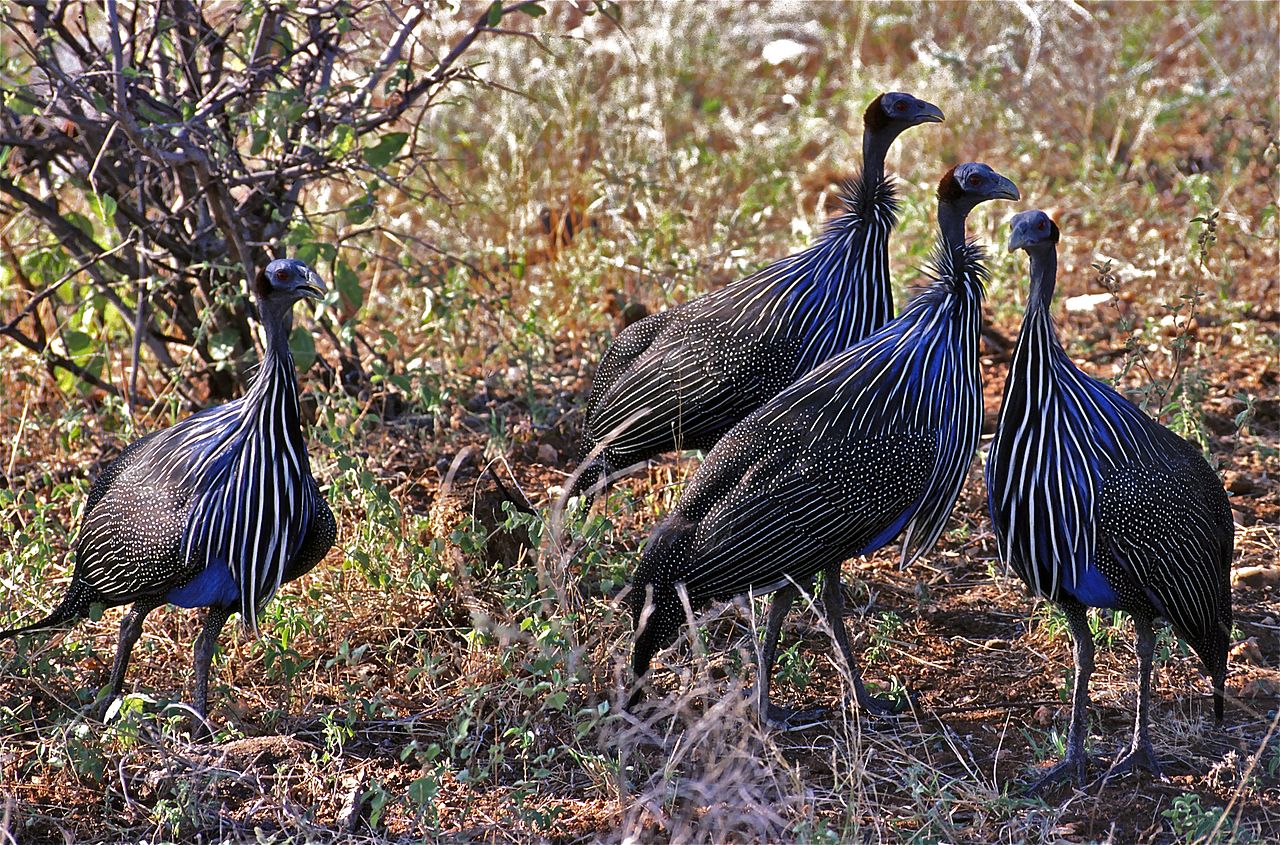
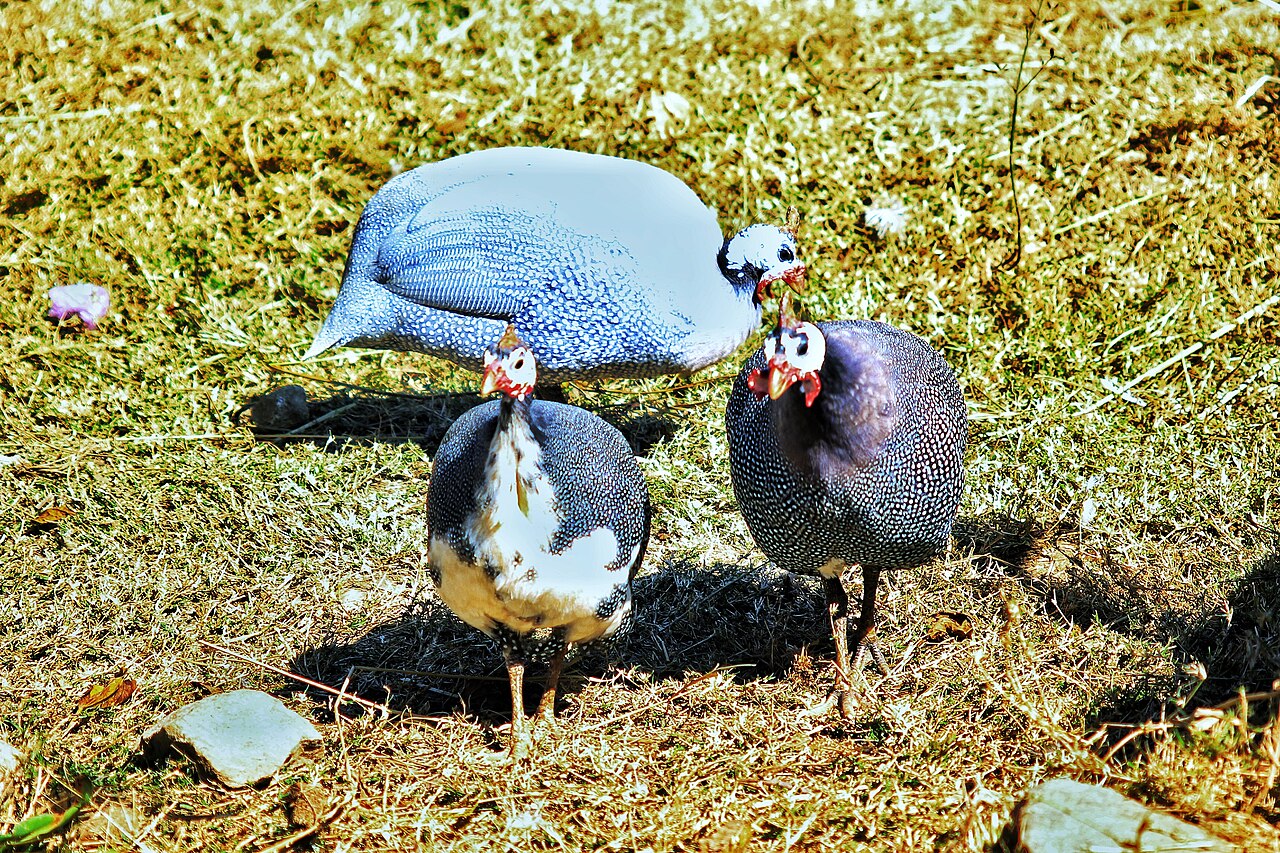
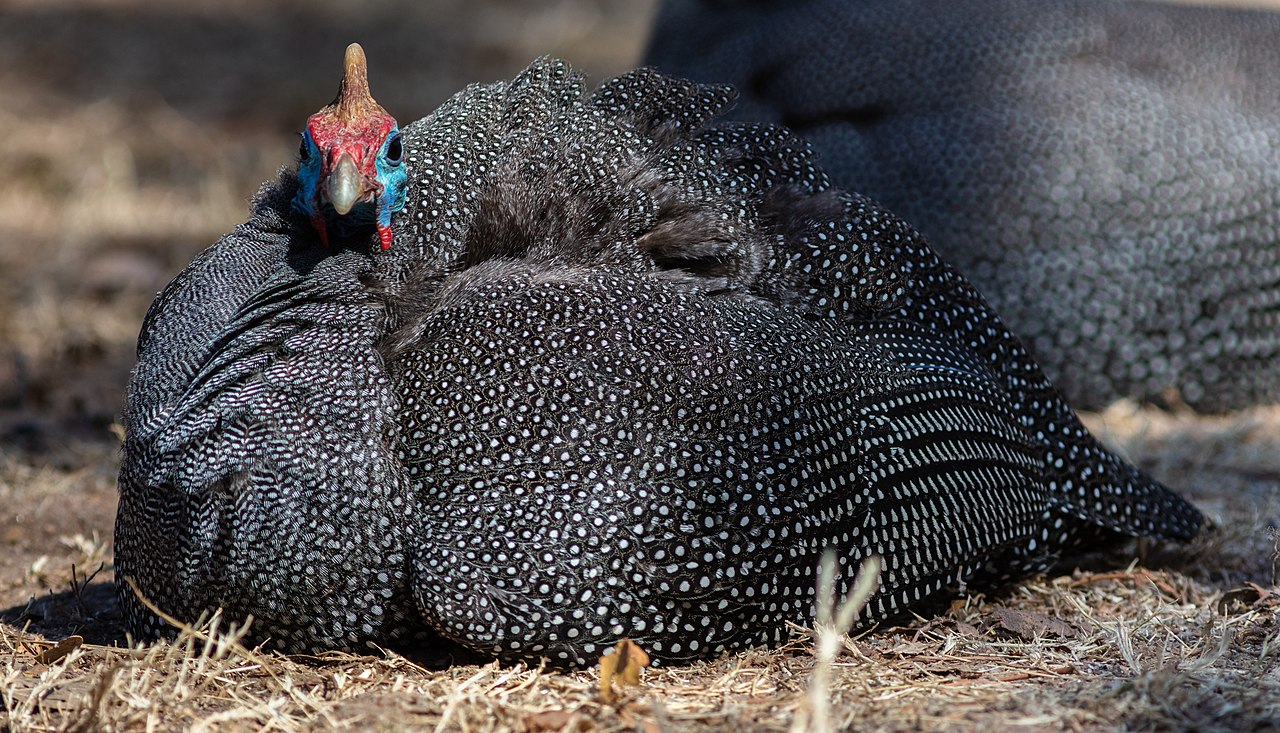
Some species, such as the Vulturine Guineafowl (Acryllium vulturinum), have striking blue-and-black feathers on their necks and chests. Others, such as the Helmeted Guineafowl (Numida meleagris), have a bony casque, or “helmet,” on top of their heads.
Guineafowl eat seeds, insects, spiders, snails, and other small invertebrates. They roost in trees at night but build their nests on the ground, where the female lays her eggs in a shallow scrape hidden among grasses or shrubs.
Although guineafowl can fly for short distances, they are excellent runners and usually escape danger by running. In many parts of the world, especially the Helmeted Guineafowl, they have been domesticated and are raised for their meat and eggs.
Vulturine Guineafowl (Acryllium vulturinum)
The Vulturine Guineafowl is found in Ethiopia, Kenya, Somalia, and Tanzania. IUCN Redlist Status: Least Concern
White-breasted Guineafowl (Agelastes meleagrides)
The White-breasted Guineafowl is found in Côte d'Ivoire, Ghana, Liberia, and Sierra Leone. IUCN Redlist Status: Vulnerable
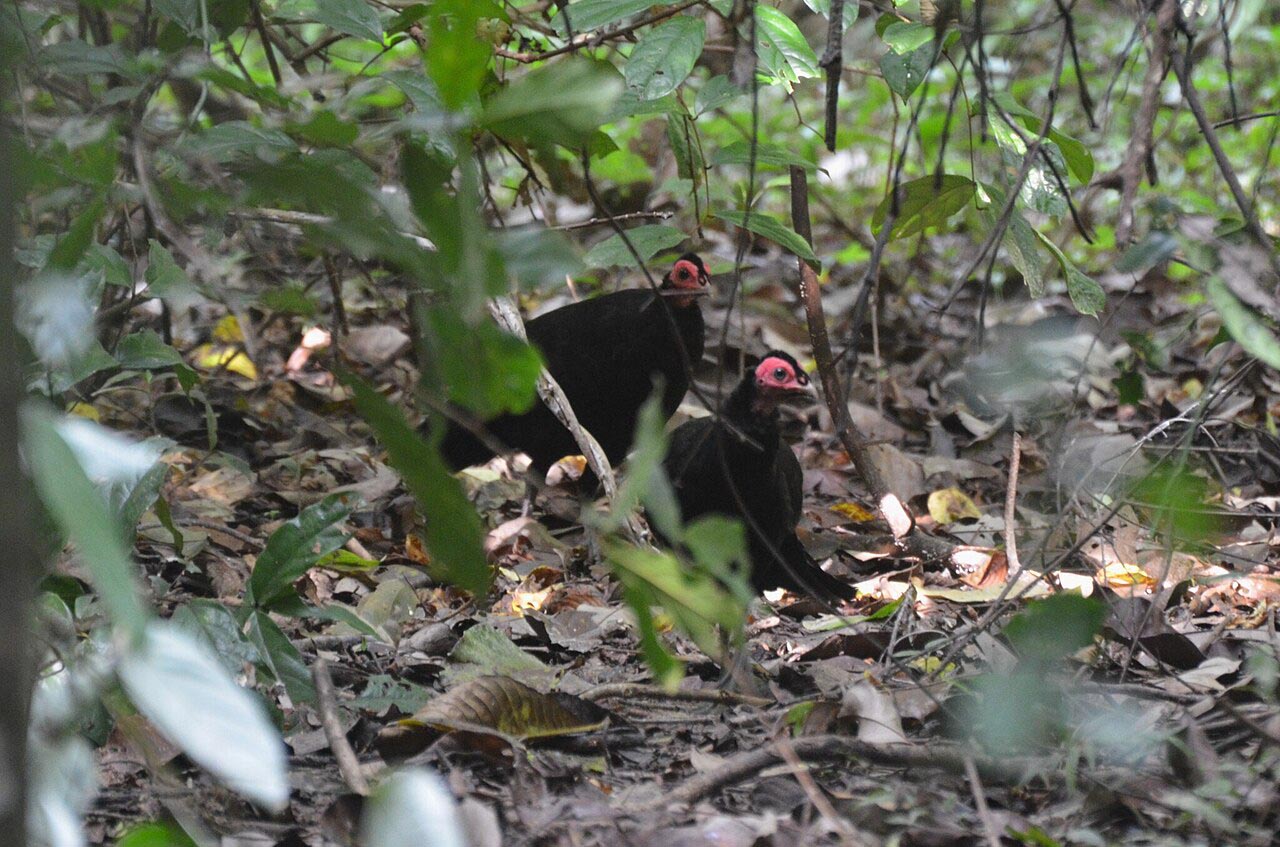
Black Guineafowl (Agelastes niger)
The Black Guineafowl is found in Angola, Cameroon, Central African Republic, Congo, The Democratic Republic of the Congo, Equatorial Guinea, Gabon, and Nigeria. IUCN Redlist Status: Least Concern
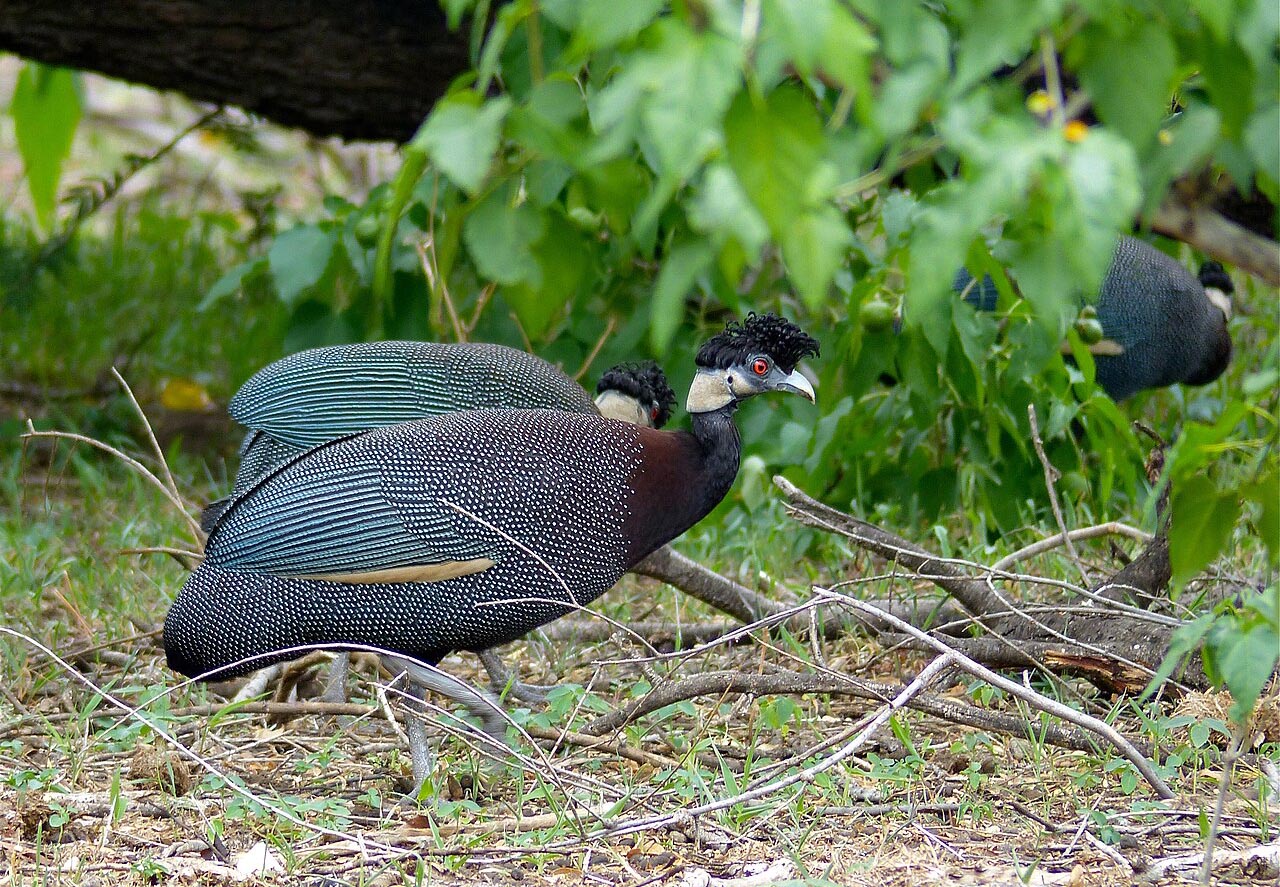
Southern Crested Guineafowl (Guttera edouardi)
The Southern Crested Guineafowl is found in Angola, Botswana, Eswatini, Malawi, Mozambique, Namibia, South Africa, Tanzania, Zambia, and Zimbabwe. IUCN Redlist Status: Least Concern
Plumed Guineafowl (Guttera plumifera)
The Plumed Guineafowl is found in Angola, Cameroon, Central African Republic, Congo, The Democratic Republic of the Congo, Equatorial Guinea, and Gabon. IUCN Redlist Status: Least Concern
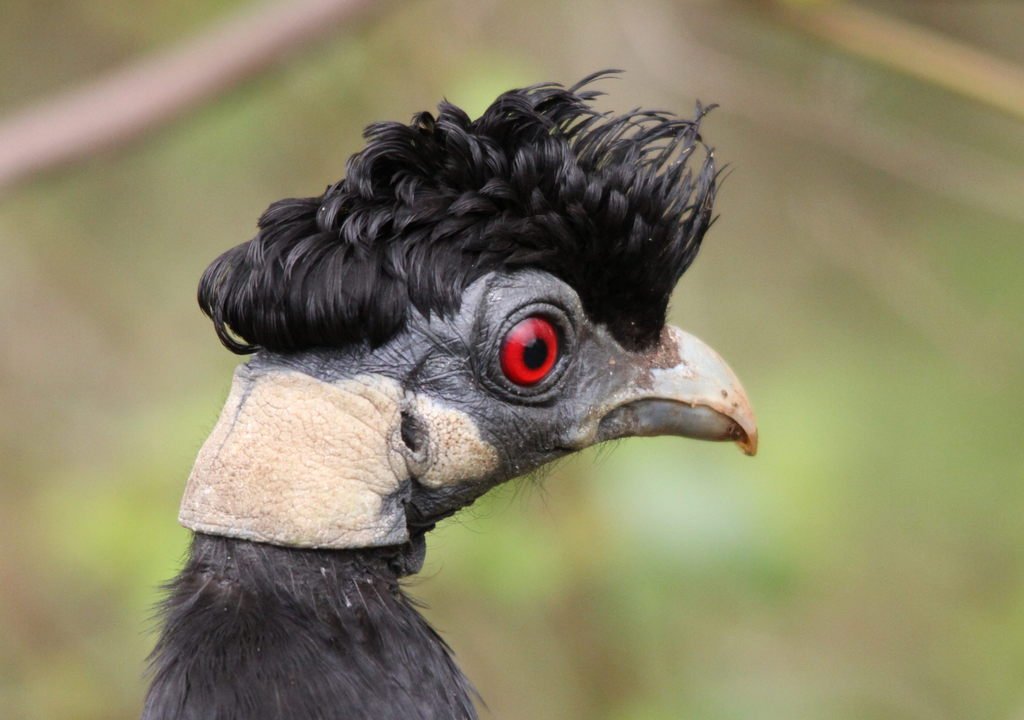
Eastern Crested Guineafowl (Guttera pucherani)
The Eastern Crested Guineafowl is found in Kenya, Somalia, and Tanzania. IUCN Redlist Status: Least Concern
Western Crested Guineafowl (Guttera verreauxi)
The Western Crested Guineafowl is found in lowland rainforests of West and Central Africa, from Sierra Leone and Liberia east to western Uganda. IUCN Redlist Status: Least Concern
Helmeted Guineafowl (Numida meleagris)
The Helmeted Guineafowl is found acros much of Sub-Saharan Africa. IUCN Redlist Status: Least Concern