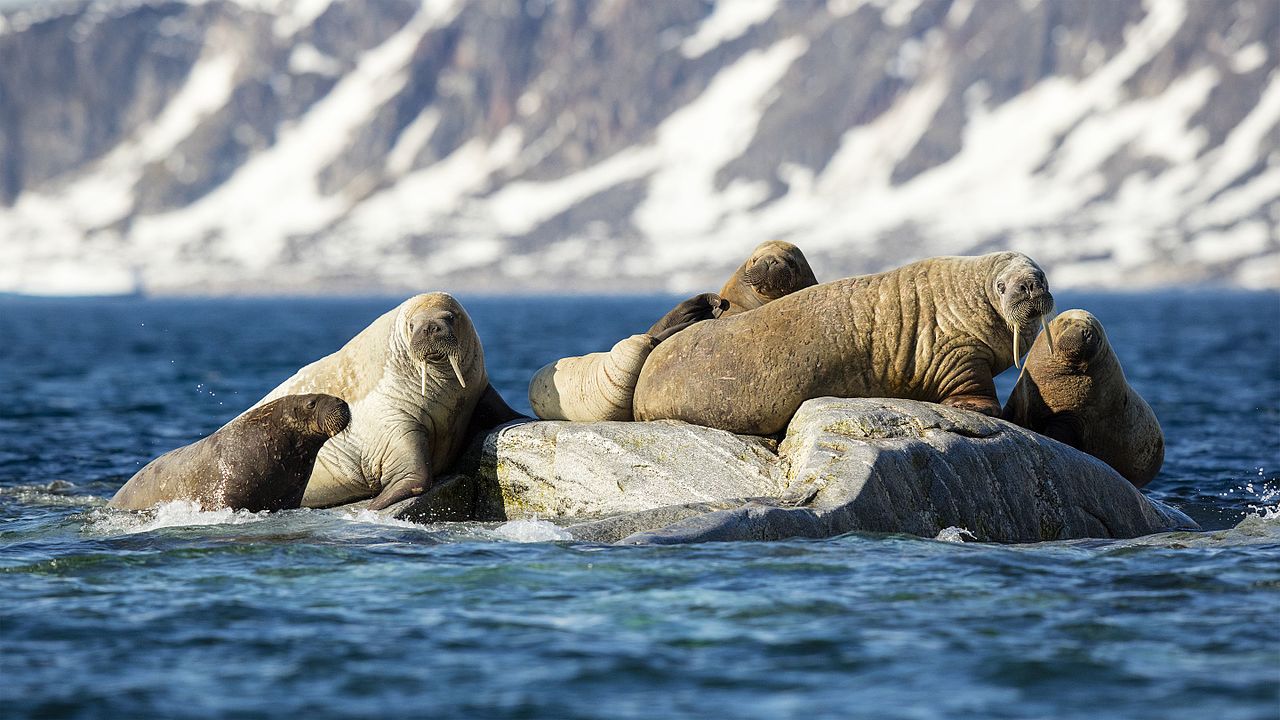
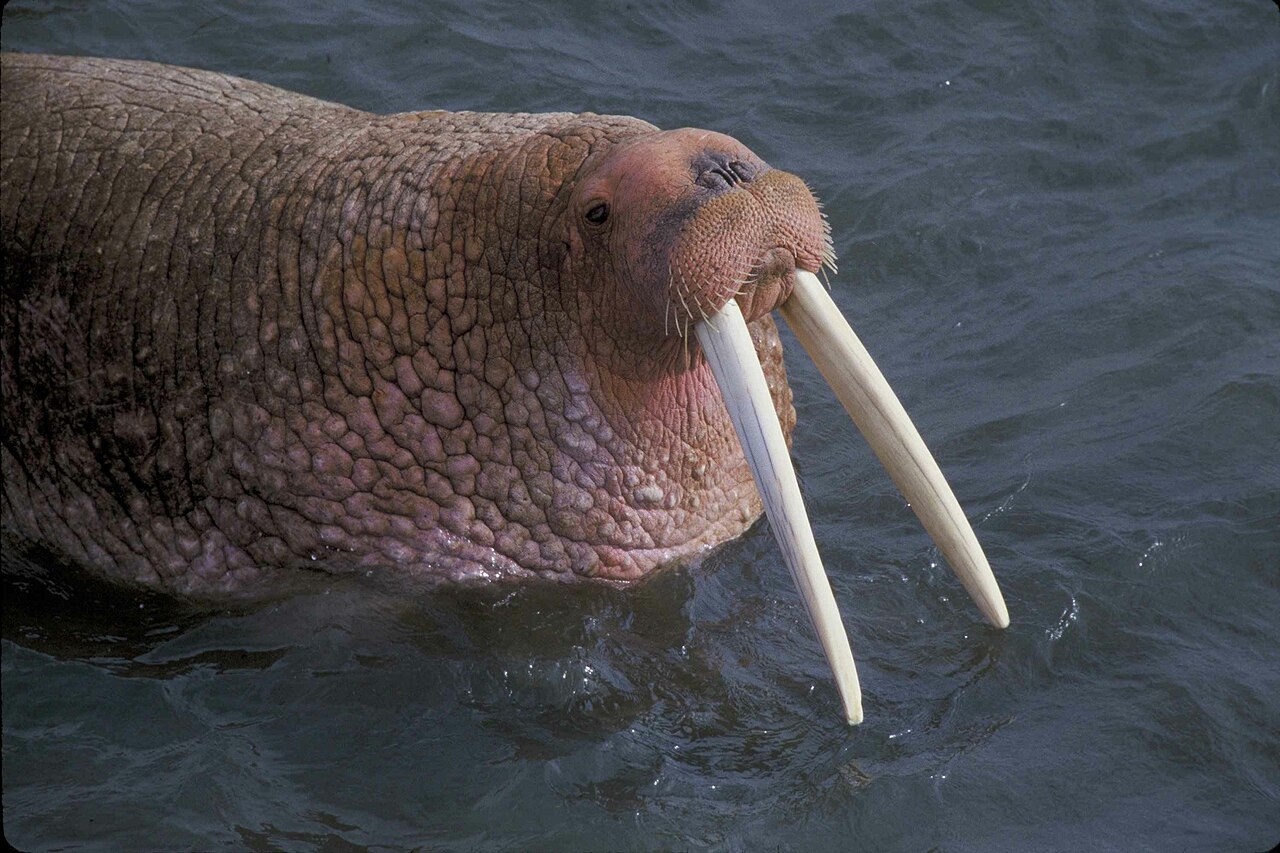
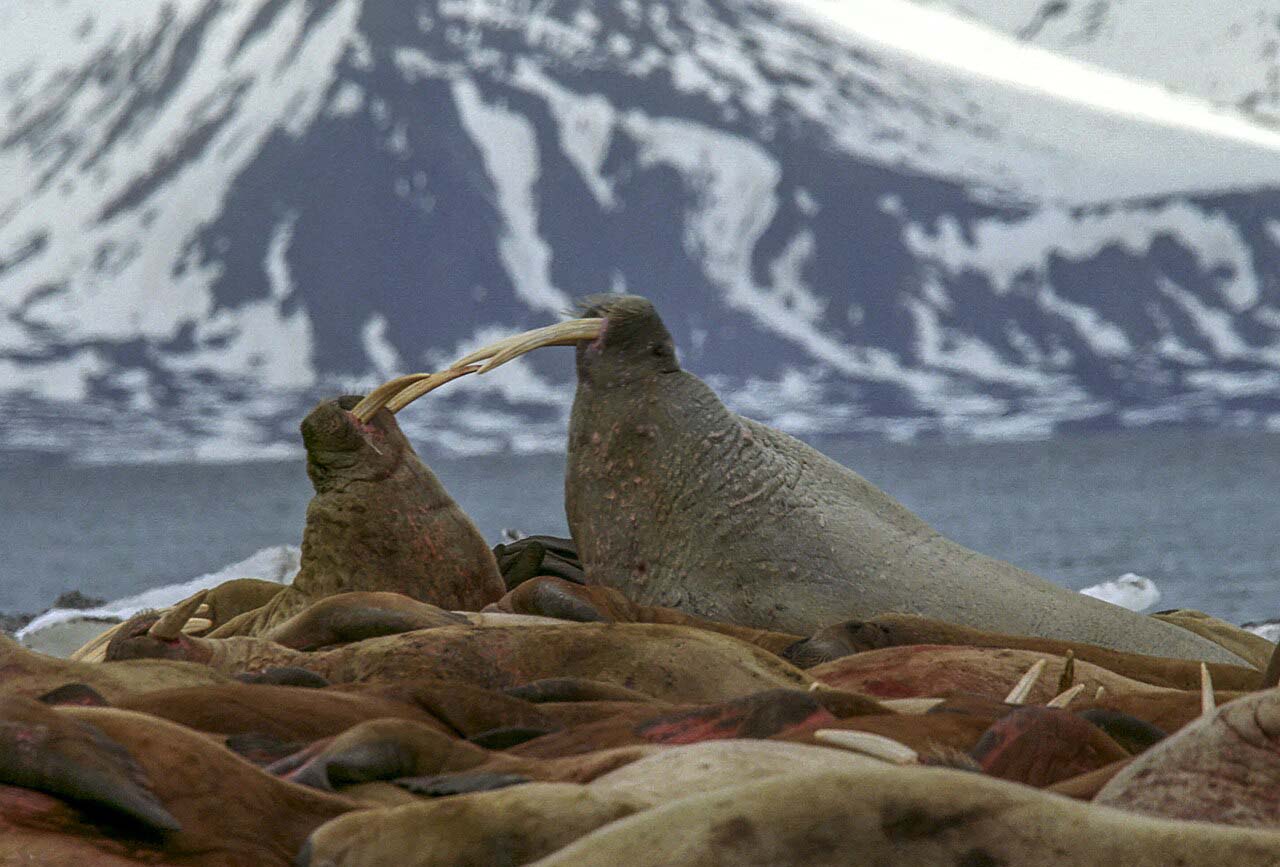
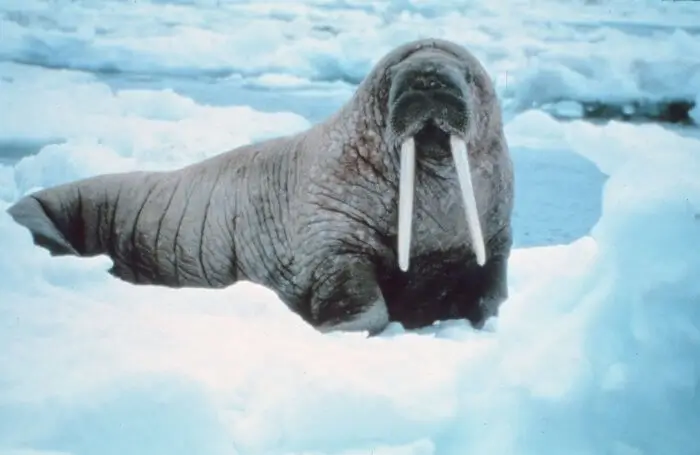
There is only one species in this family, the walrus (Odobenus rosmarus). There are two subspecies of walruses. The Atlantic walrus (Odobenus rosmarus rosmarus)is found in the coastal areas of northeastern Canada and Greenland. The Pacific walrus is found in the Bering and Chukchi seas.
The walrus is a large animal. It is 8-12 feet in length and weighs 900-4,000 pounds. Males are larger than females, and the Pacific walrus is larger than the Atlantic walrus.
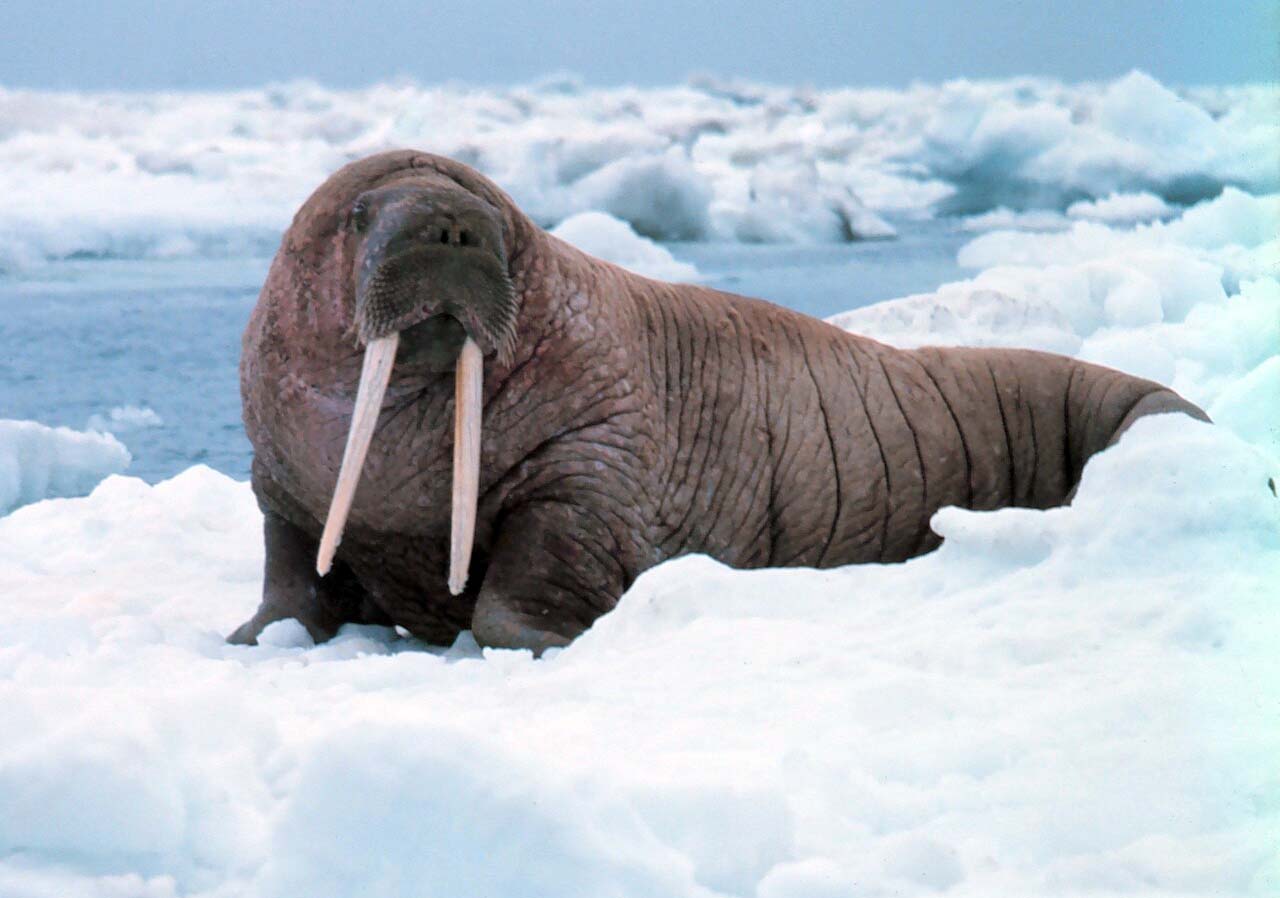
The walrus is reddish-brown, but can be a grayish-white after it has been in the water for long periods of time.
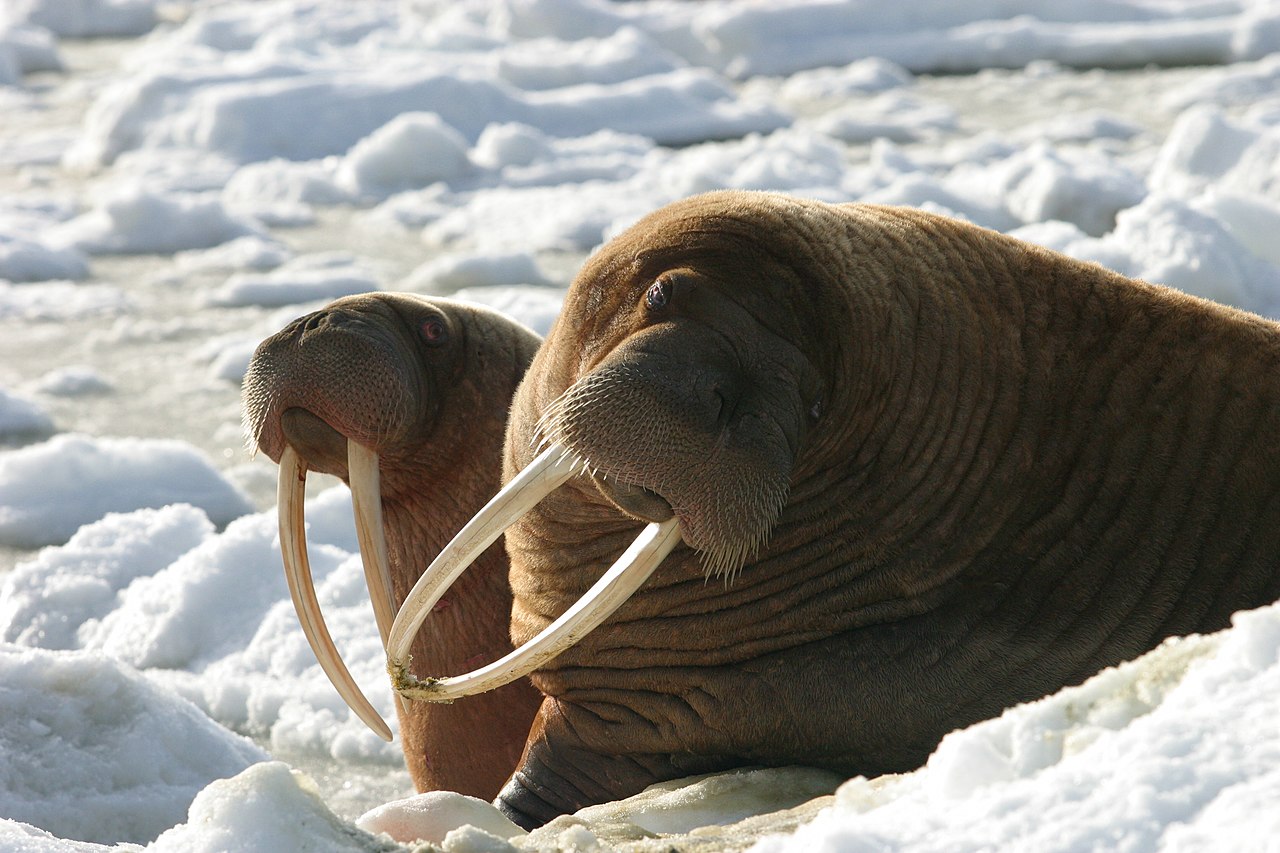
Both the male and the female have long tusks. The tusks are very long canine teeth. The male’s tusks are larger than the female’s tusks. He uses his tusks in aggressive displays with other male walruses and also uses them as a weapon when fighting other males.
The walrus is a carnivore and eats clams, mussels, crabs, octopuses, worms, sea cucumbers, and other prey it finds on the ocean floor.
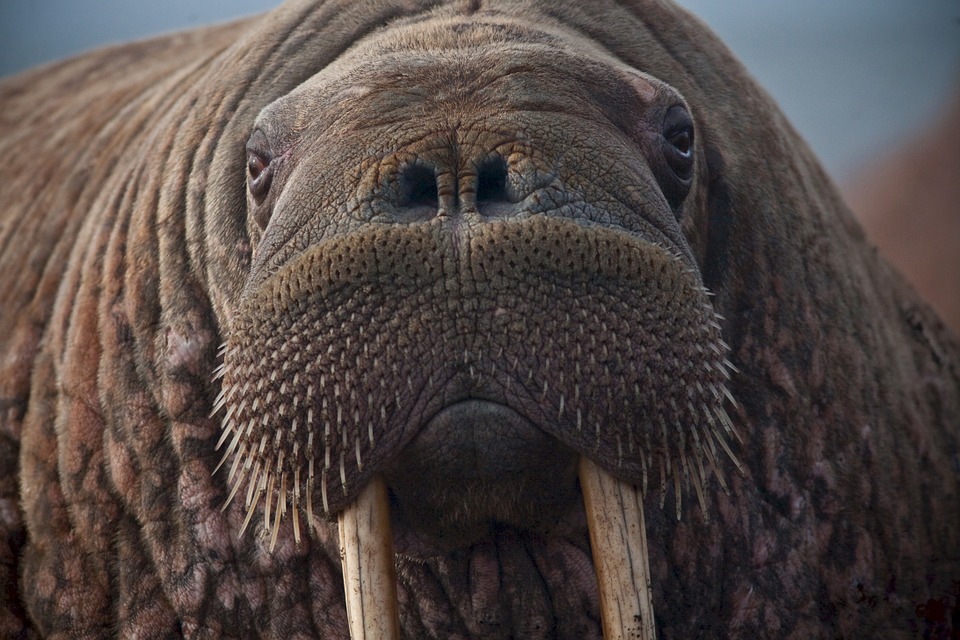
It has poor eyesight under the water and uses the hundreds of whiskers on its face to locate prey. It occasionally eats larger prey, like seals.
Atlantic Walrus (Odobenus rosmarus rosmarus)
The Atlantic walrus is found in the coastal areas of northeastern Canada and Greenland. IUCN Redlist Status: Vulnerable
Pacific Walrus (Odobenus rosmarus divergens)
The Pacific walrus is found in the Bering and Chukchi seas. IUCN Redlist Status: Vulnerable
Walrus (female with calf) (Odobenus rosmarus)
Both male and female walruses have long tusks. IUCN Redlist Status: Vulnerable
Walrus (Odobenus rosmarus)
The walrus has poor eyesight under the water and uses the hundreds of whiskers on its face to locate prey. IUCN Redlist Status: Vulnerable
Walrus (Odobenus rosmarus)
The walrus is a carnivore and eats clams, mussels, crabs, octopuses, worms, sea cucumbers, and other prey it finds on the ocean floor. IUCN Redlist Status: Vulnerable
Walrus (Odobenus rosmarus)
A male walrus may use his tusks in aggressive displays with other male walruses. IUCN Redlist Status: Vulnerable