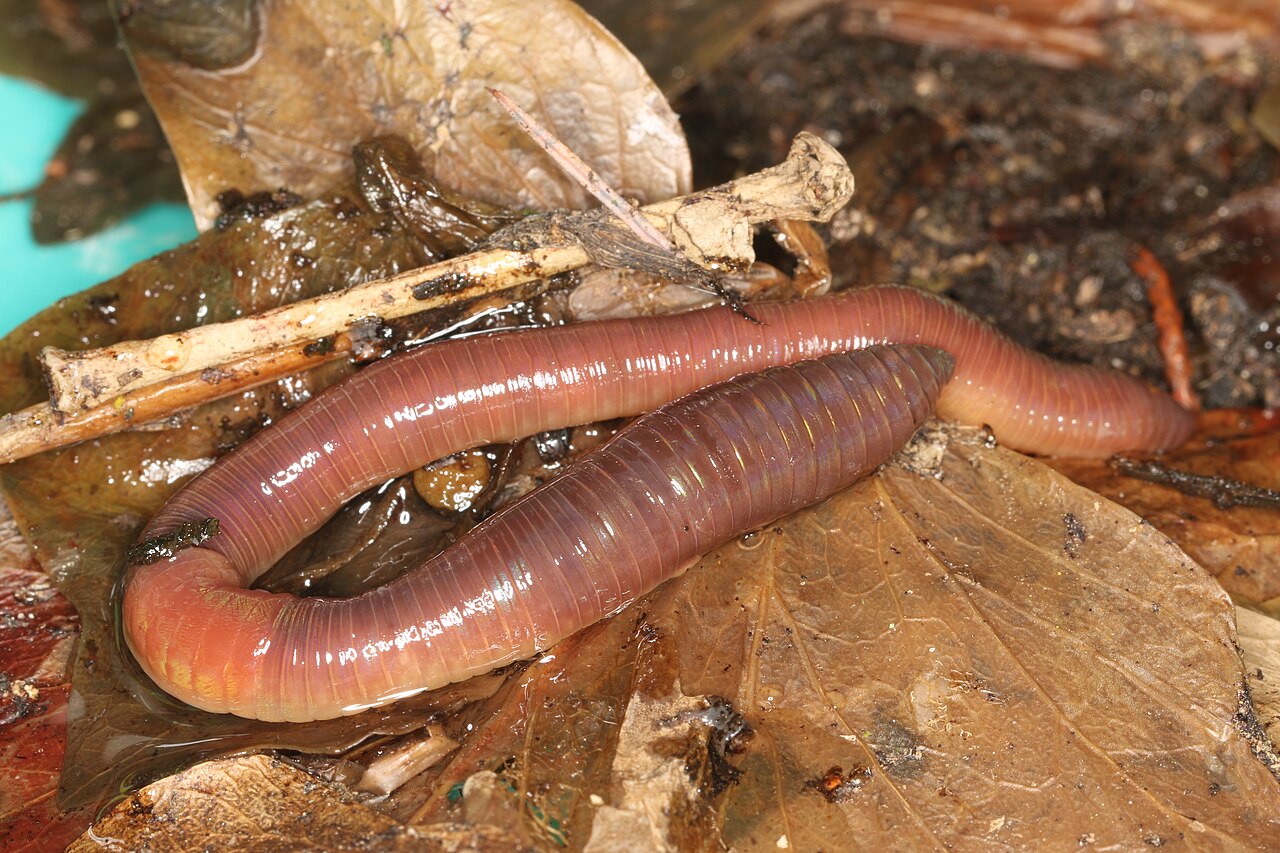
There are about 3,000-4,000 known species in this group of worms, called oligochaetes.
Oligochaetes are soft-bodied worms with bodies made up of many segments. They belong to a larger group of animals called annelids (segmented worms).
The name Oligochaeta means “few bristles,” which refers to the tiny hair-like structures called setae found on each body segment. Compared to other annelids, oligochaetes have fewer setae and do not have a well-developed head.
Oligochaetes breathe through their skin, so their bodies must stay moist to absorb oxygen.
They are found in most parts of the world, including every continent except Antarctica. Most species live in soil, while others live in freshwater habitats such as ponds, lakes, and streams. Because they rely on skin respiration, they need damp environments to survive.
Most oligochaetes are small, typically about 0.4-4 inches (1-10.2 cm) long. However, some tropical earthworms can grow much larger, reaching up to about 3 feet (0.91 m) in length.
Oligochaetes are detritivores; they feed on decaying plant material, organic matter in soil, and microorganisms such as bacteria and fungi. As they move through the soil and feed, they play an important role in breaking down organic matter and recycling nutrients, which helps improve soil health.