There is only one species of marsupial in this family. The koala is found in the eucalyptus forests of eastern Australia.
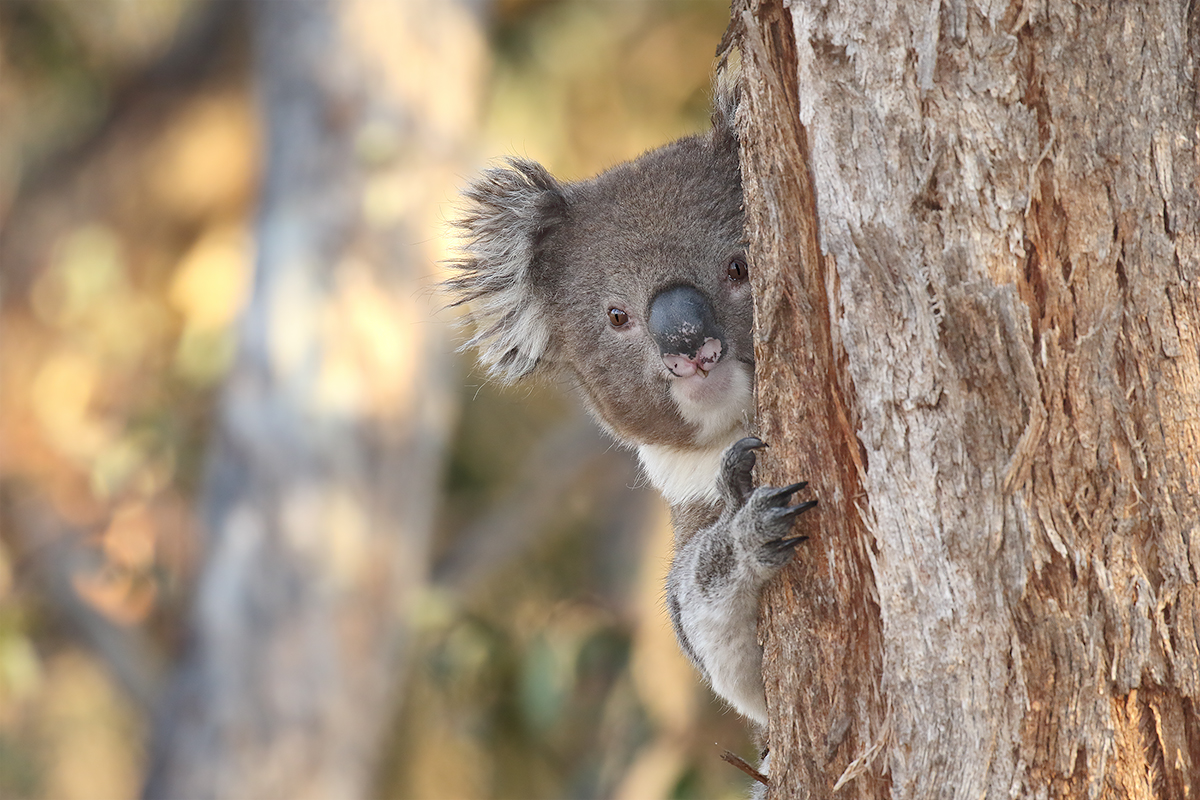
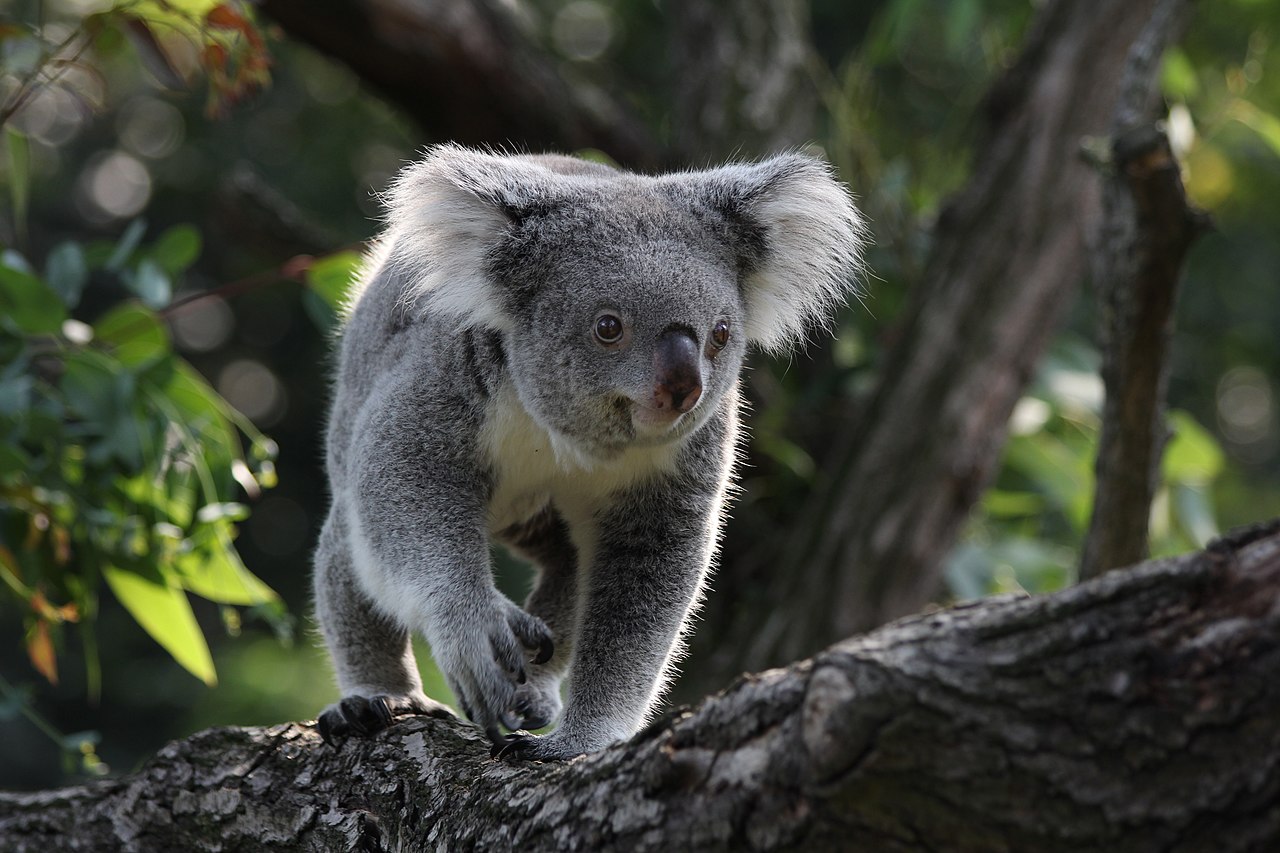
The koala has thick gray to brown fur; a round head; large, furry ears; small, round eyes; and a large, black nose.
It has large front paws with five long, sharp claws on each paw that it uses to climb trees. It has two opposable toes on its front paws that it uses to grab branches. It has five claws on its rear paws – two climbing claws, two grooming claws, and one grabbing claw.
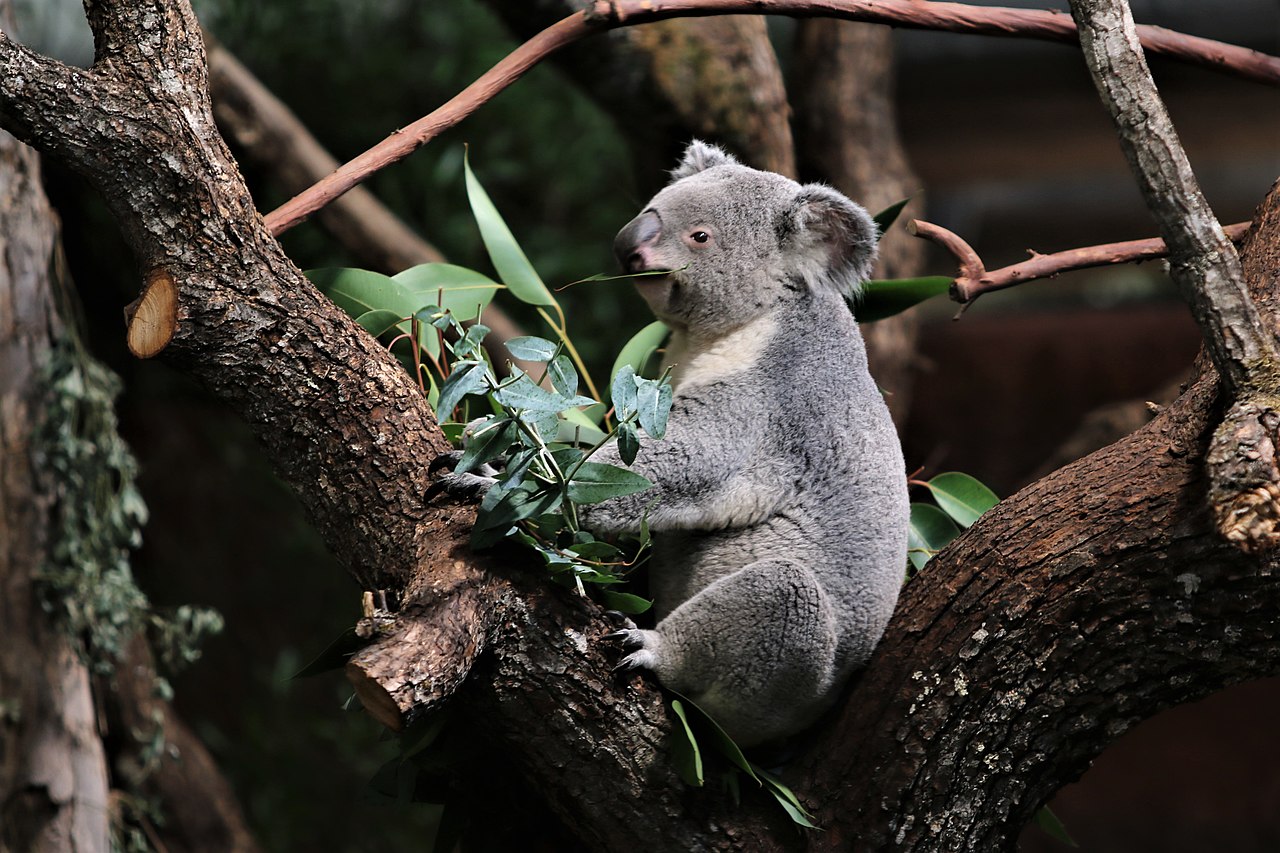
The koala eats the leaves, stems, and flowers of eucalyptus trees. The eucalyptus tree contains chemicals that are poisonous to most animals, but the koala has a special digestive system that lets it digest eucalyptus.
It usually stays in a tree until it has taken all the leaves within its reach or when it needs to get water. It usually feeds at night and spends up to 20 hours a day resting or sleeping in a tree.
Koalas mate from October through February. The male mates with more than one female. A single baby koala is born 34-36 days after mating.
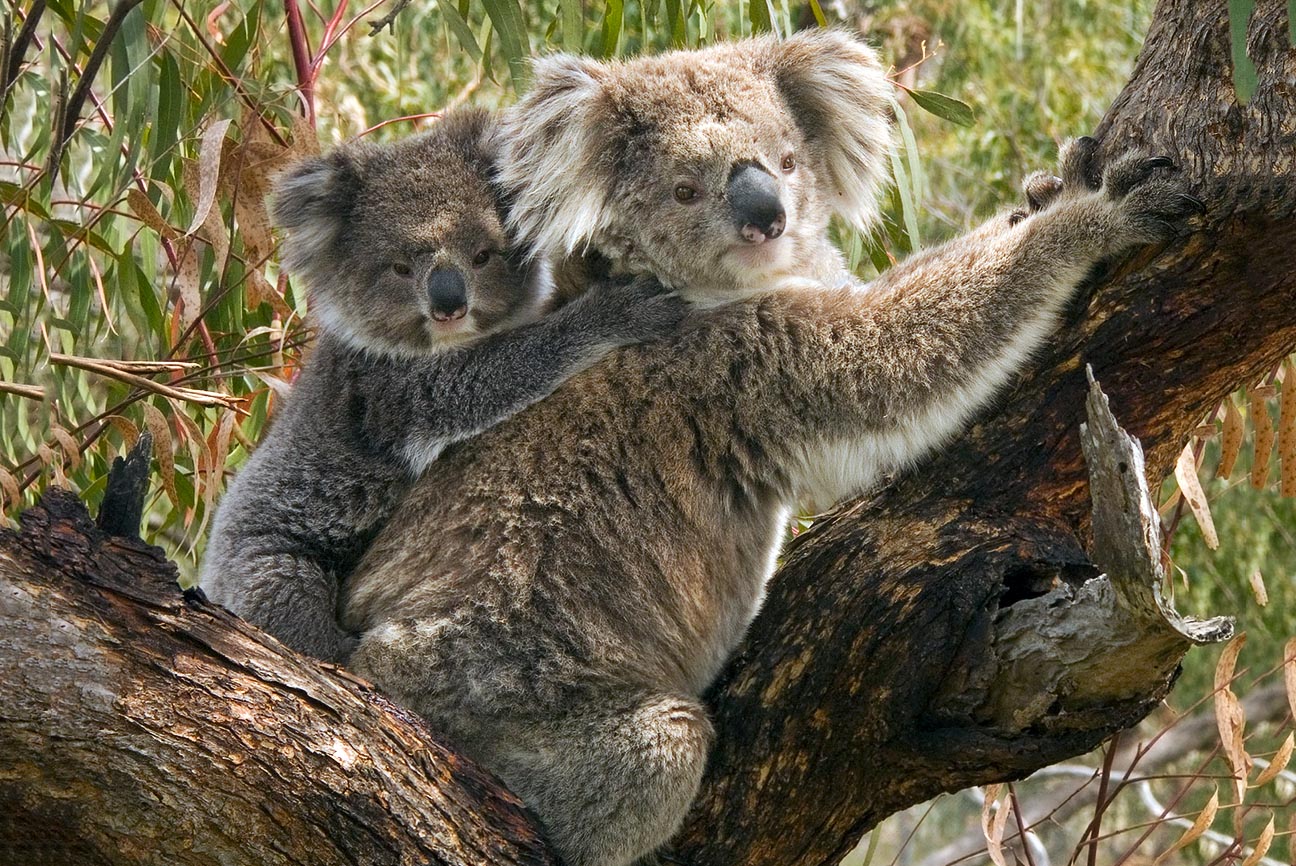
The baby koala is tiny and weighs less than two ounces. It attaches itself to a teat in its mother’s pouch, where it stays for seven months. When it comes out of the pouch, it clings to its mother’s back for about five months.
Koalas were once hunted for their soft fur, but they are now a protected species in Australia.
Koala (Phascolarctos cinereus)
The koala is found in Victoria, South Australia, Queensland, and New South Wales, Australia. IUCN Redlist Status: Vulnerablle
Koala (Phascolarctos cinereus)
The koala eats the leaves, stems, and flowers of eucalyptus trees. IUCN Redlist Status: Vulnerable
Koala (Phascolarctos cinereus)
When a koala joey comes out its mother’s pouch, it clings to her back for about five months. IUCN Redlist Status: Vulnerable