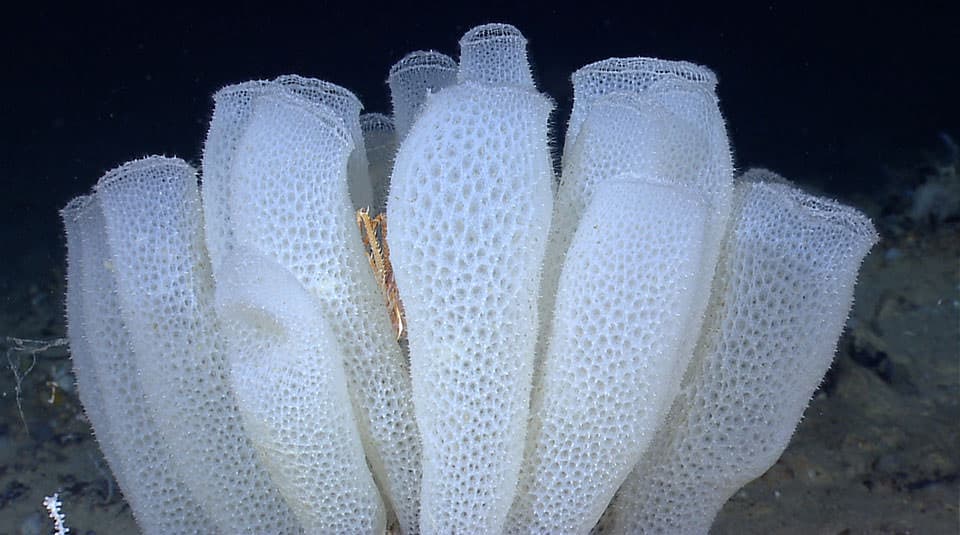
Sponges are simple animals that live mostly in water, especially in oceans. They are among the oldest and most basic animal groups. Sponges don’t have a brain, heart, or true tissues, but they do have specialized cells that help them survive. Scientists have identified between 5,000 and 10,000 different species of sponges.
Sponges are anchored to the seabed. They are sessile filter feeders, which means they stay in one place and feed by filtering tiny food particles, organic matter, or small organisms like zooplankton from the water. Water flows through their bodies, and the sponges trap the food as it passes through.
Their bodies are full of tiny holes called pores, and they are supported by either spicules—tiny, hard structures—or a flexible protein called spongin.
Sponges can reproduce in two ways:
Asexually: By budding or breaking into pieces that grow into new sponges.
Sexually: By producing eggs and sperm that combine to form larvae. These larvae can swim for a short time before settling down and growing into a new sponge.
Even though they are simple, sponges play an important role in their ecosystems. They help clean the water and provide homes for small marine animals.