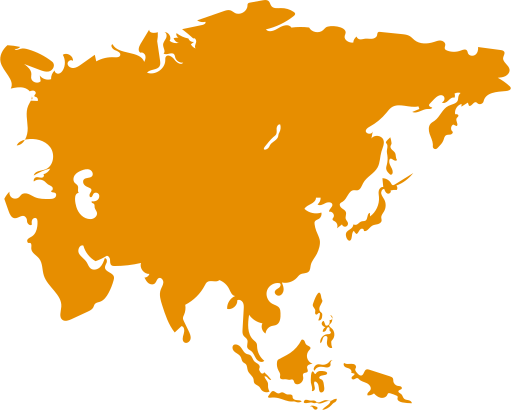
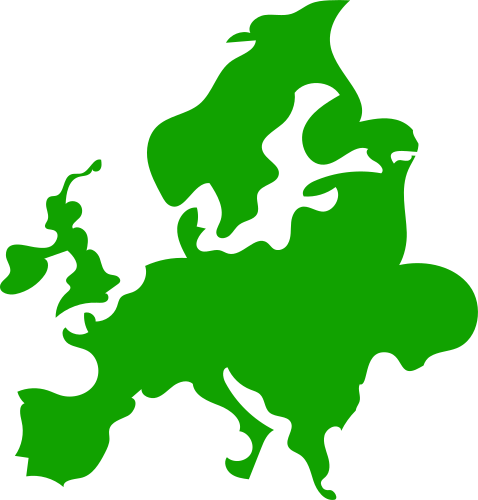
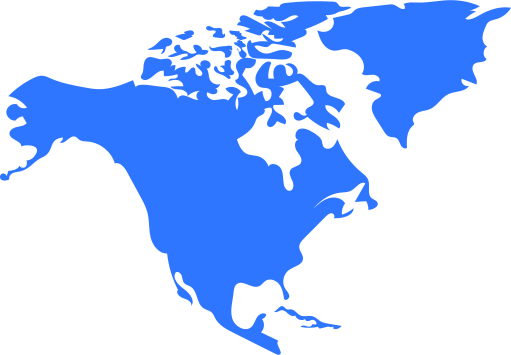
There are nine species in this family. They are all found in North America except for one species, the olm, found in southeastern Europe.
They are neotenic. That means they retain the characteristics they had when they were larvae.
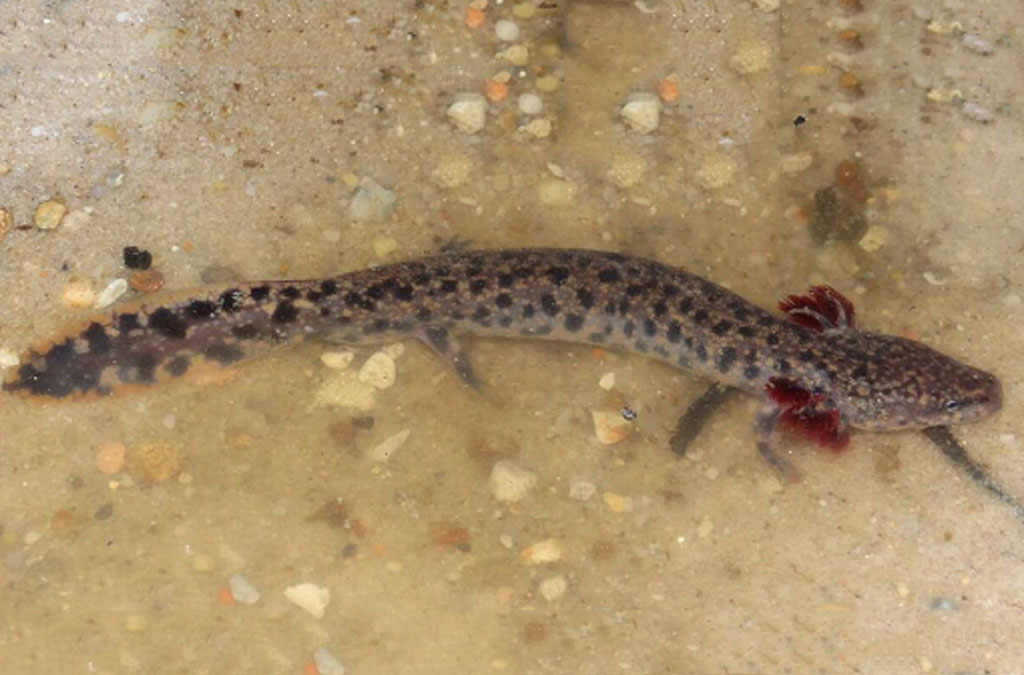
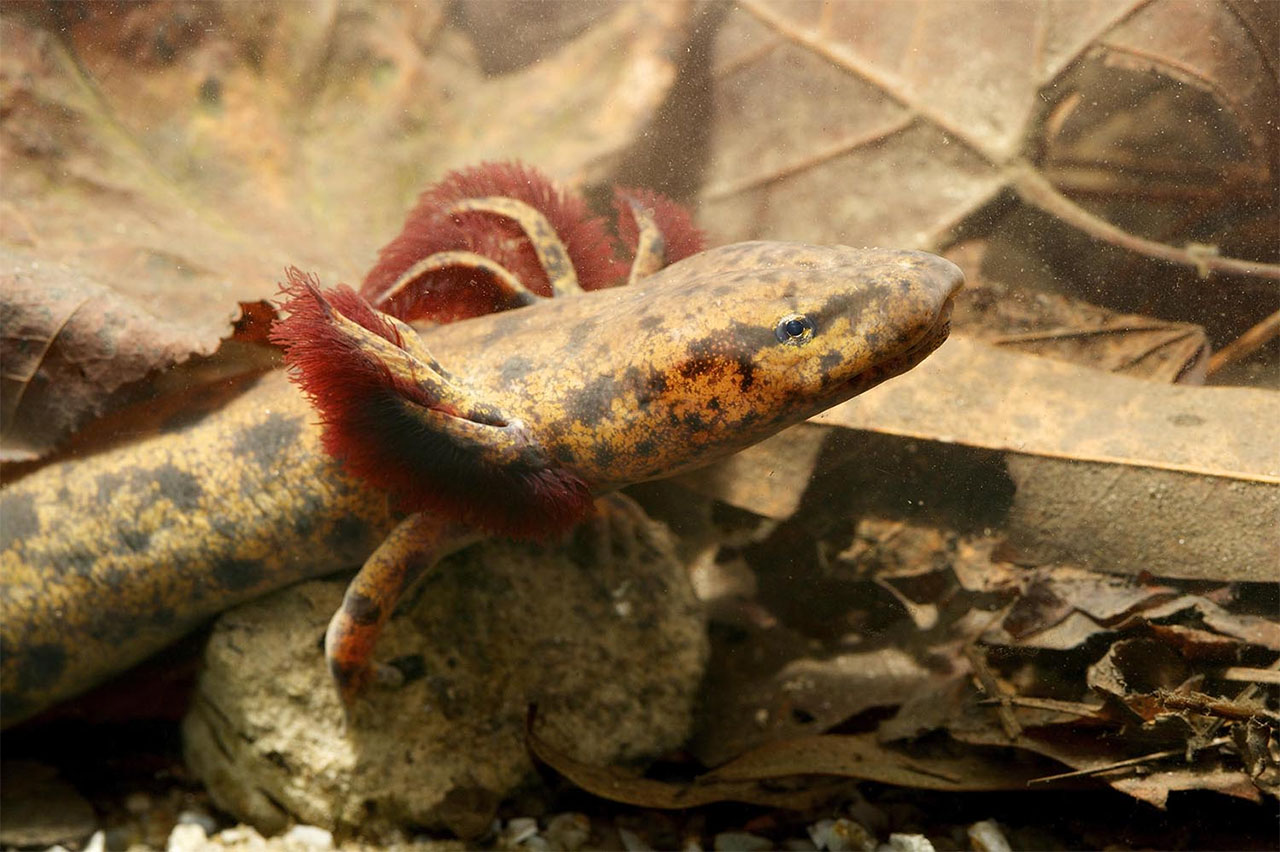
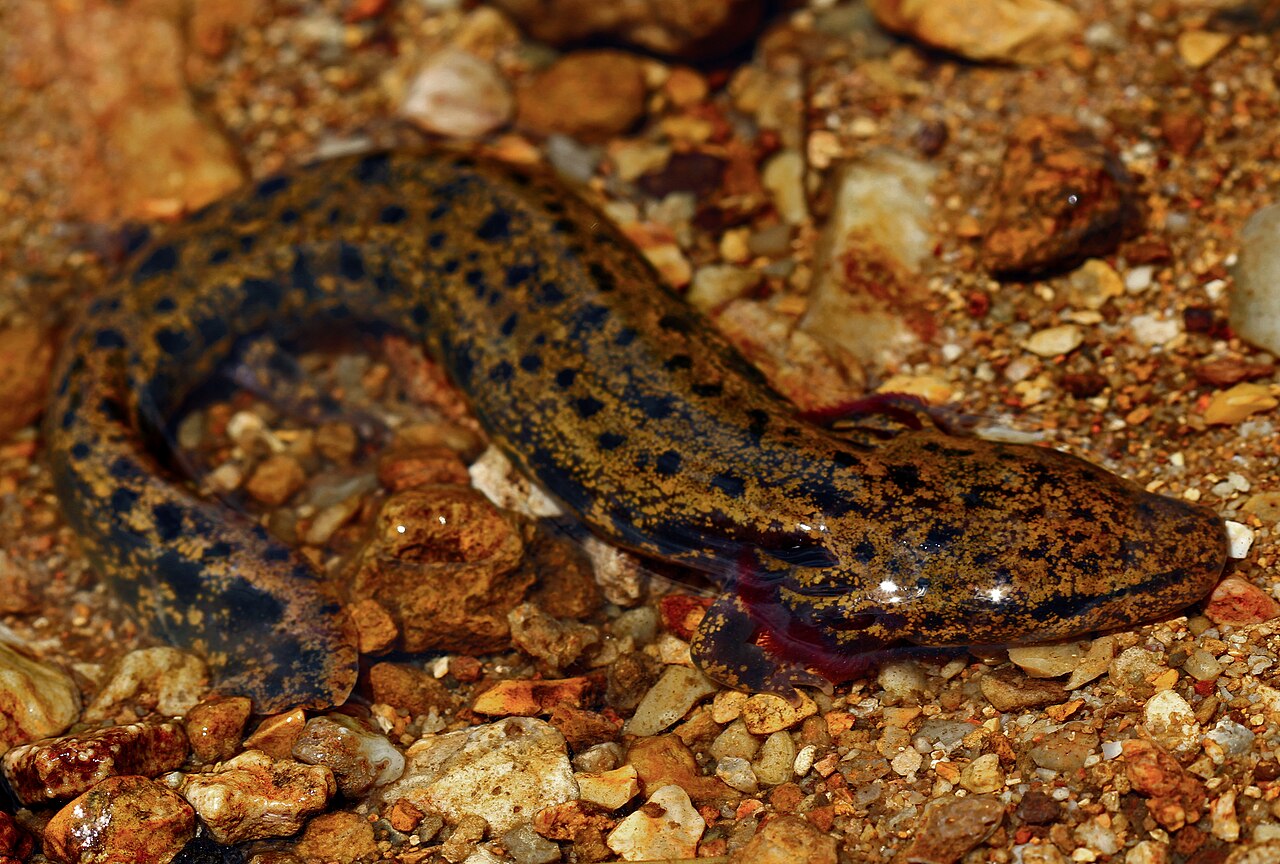
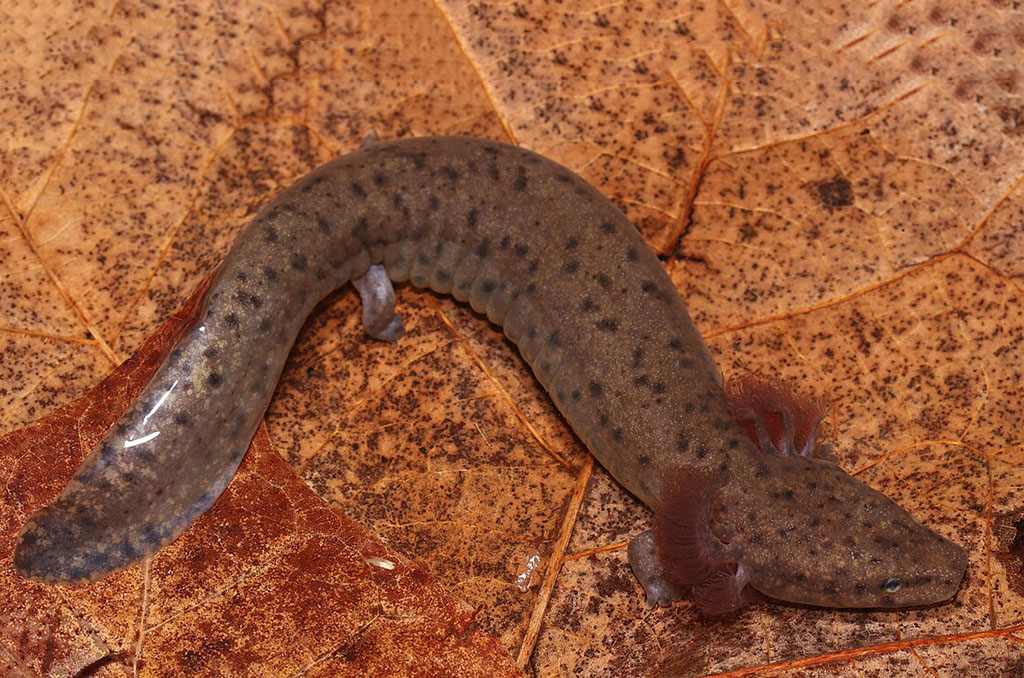
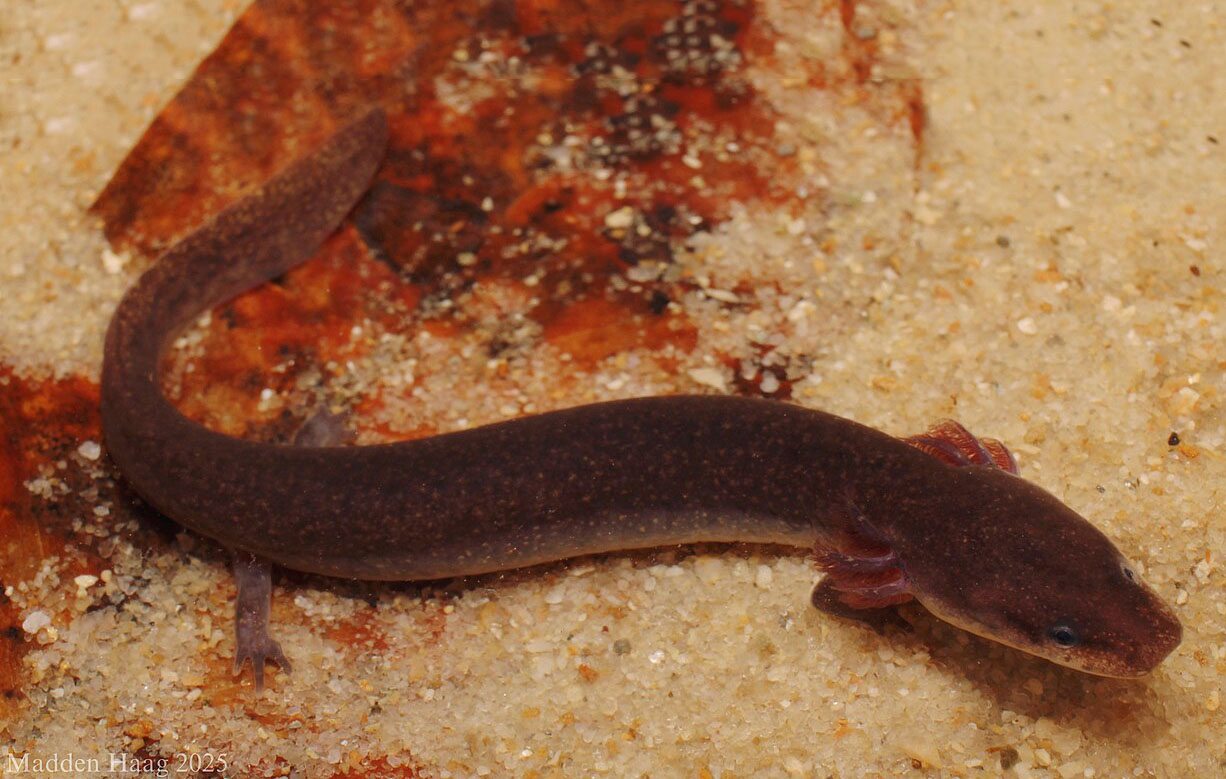
The species in this family are aquatic. They have feathery, red, maroon, or purple external gills and a fin-like tail. Most species are 8-15 inches in length.
They live in streams, rivers, and lakes and spend the day hidden under rocks, logs, or other debris and hunt for invertebrates at night.
Their eggs are fertilized inside the female. She lays her eggs in water under a log or a stone. In some species in this family, the male or the female may guard the eggs.
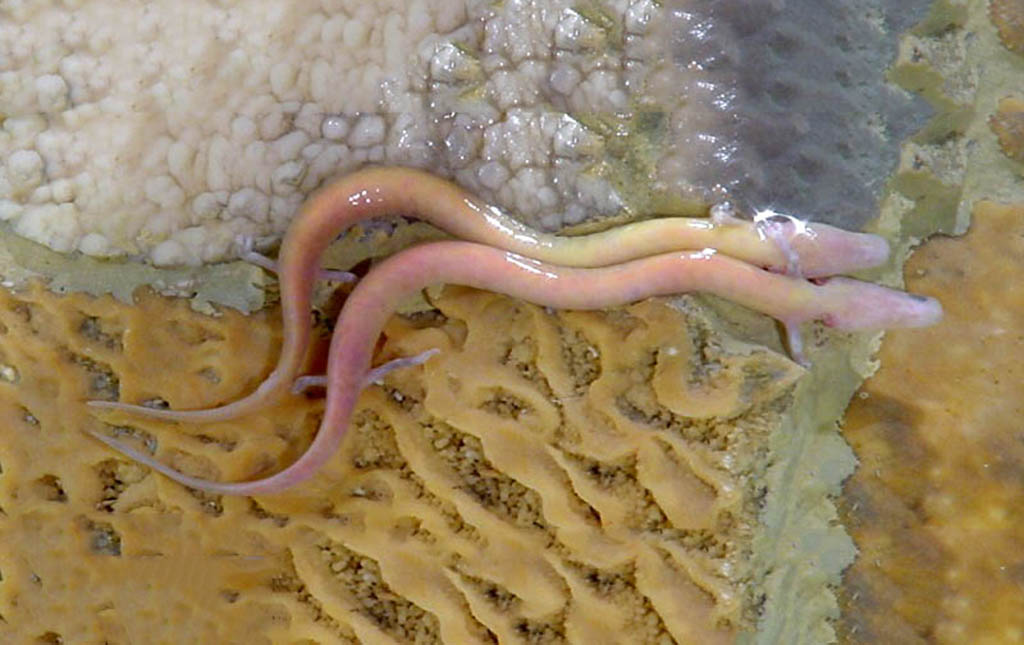
One species in this family, the olm, lives in limestone caves in southeastern Europe.
Gulf Coast Waterdog (Necturus beyeri)
The Gulf Coast waterdog is found along the Gulf Coast from southeastern Texas to western Georgia and northwestern Florida. IUCN Redlist Status: Least Concern
Neuse River Waterdog (Necturus lewisi)
The Neuse River waterdog is found only in the Neuse and Tar-Pamlico River basins of the Piedmont and Atlantic Coastal Plain regions of North Carolina. It is designated as a threatened species in the U.S. IUCN Redlist Status: Least Concern
Red River Mudpuppy (Necturus louisianensis)
The Red River mudpuppy is found Arkansas, Louisiana, Missouri, Kansas, and Oklahoma. IUCN Redlist Status: Least Concern
Mudpuppy (Necturus maculosus)
The mudpuppy lives on the bottoms of lakes, rivers, and streams. It is found in the eastern U.S. and Canada. It is found in New Hampshire in the Connecticut River and its tributaries. IUCN Redlist Status: Least Concern
Apalachicola Waterdog (Necturus moleri)
The Apalachicola waterdog is found in Alabama, Florida, and Georgia. IUCN Redlist Status: Least Concern
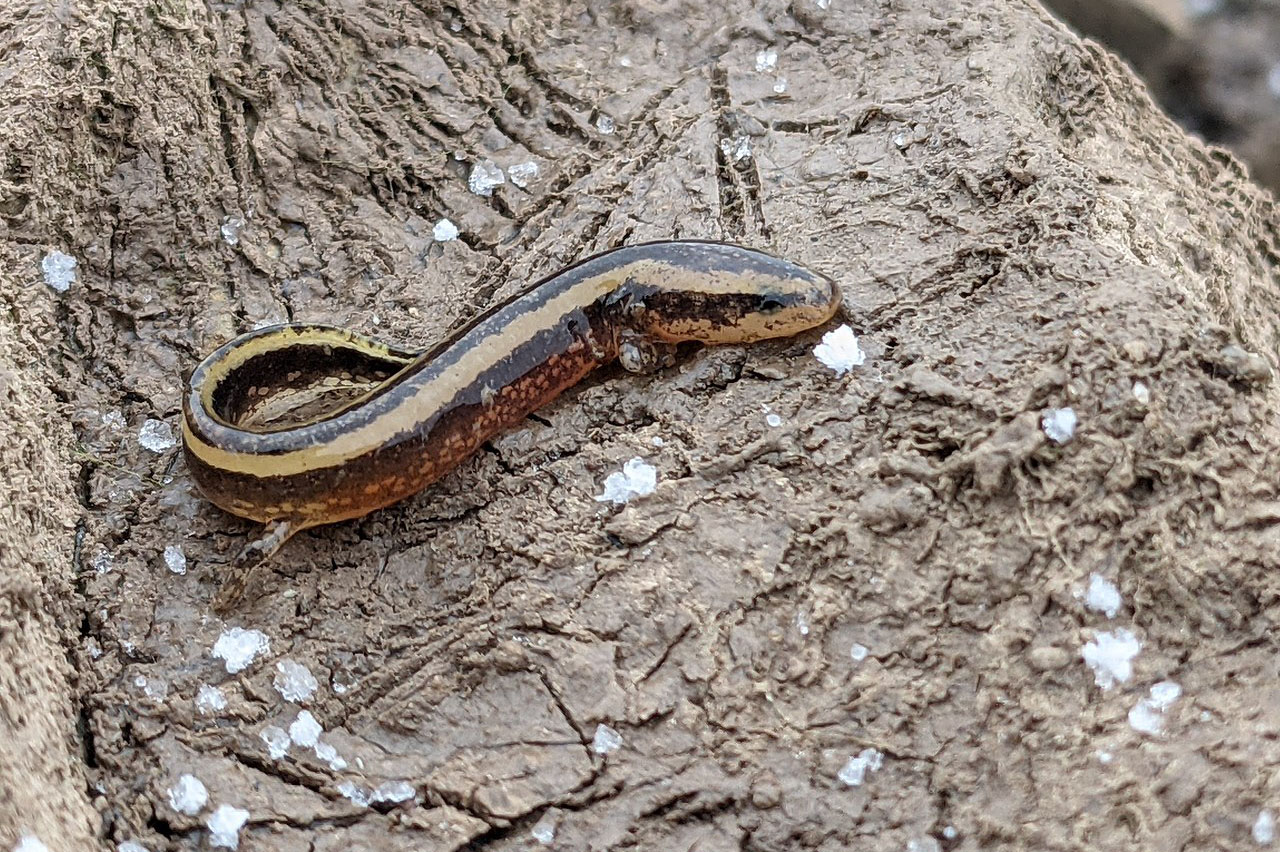
Dwarf Waterdog (Necturus punctatus)
The dwarf waterdog is found in slow moving streams and swamps in the southeastern U.S. from southern Virginia to Georgia. IUCN Redlist Status: Least Concern
Olm (Proteus anguinus)
The olm is found in Bosnia and Herzegovina, Croatia, and Slovenia. IUCN Redlist Status: Vulnerable