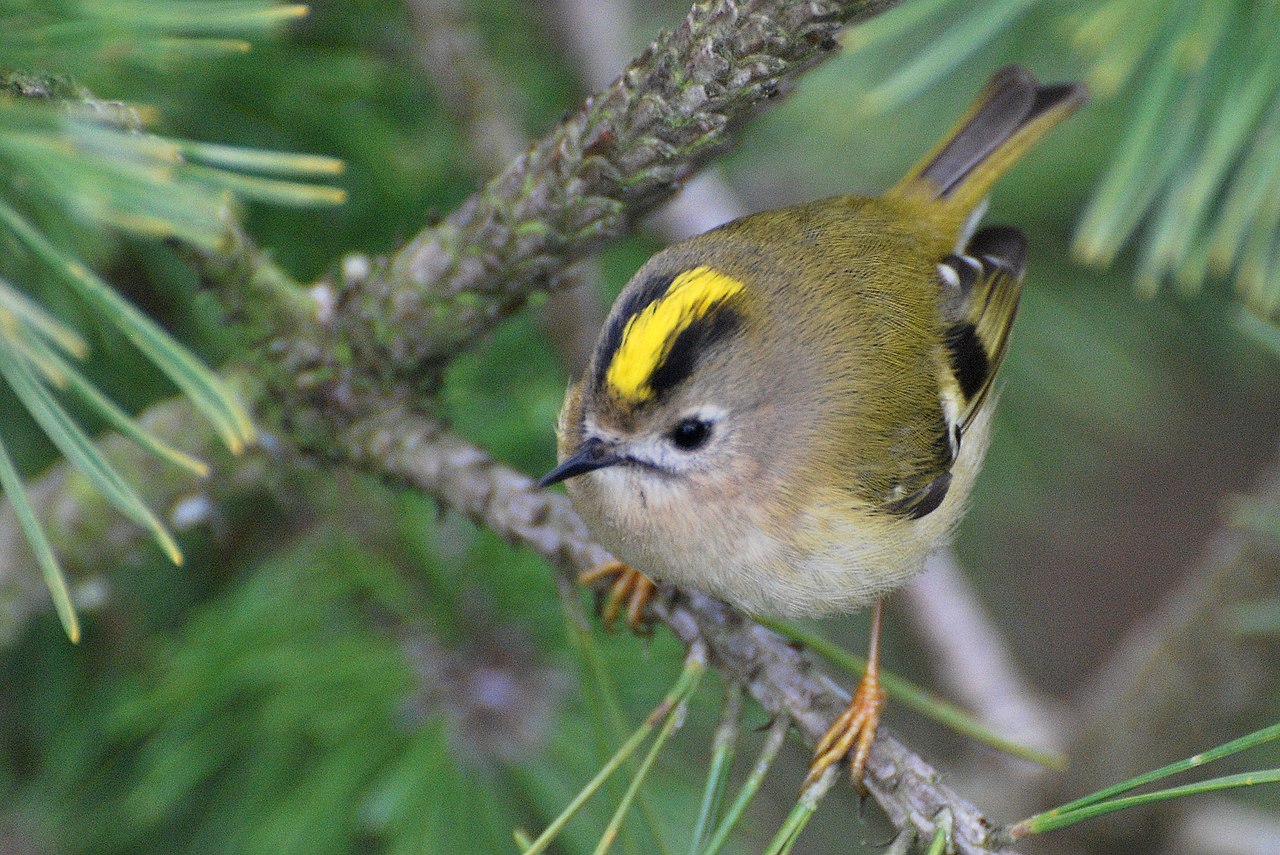
There are 6 species in this family. They are found in the Northern Hemisphere.
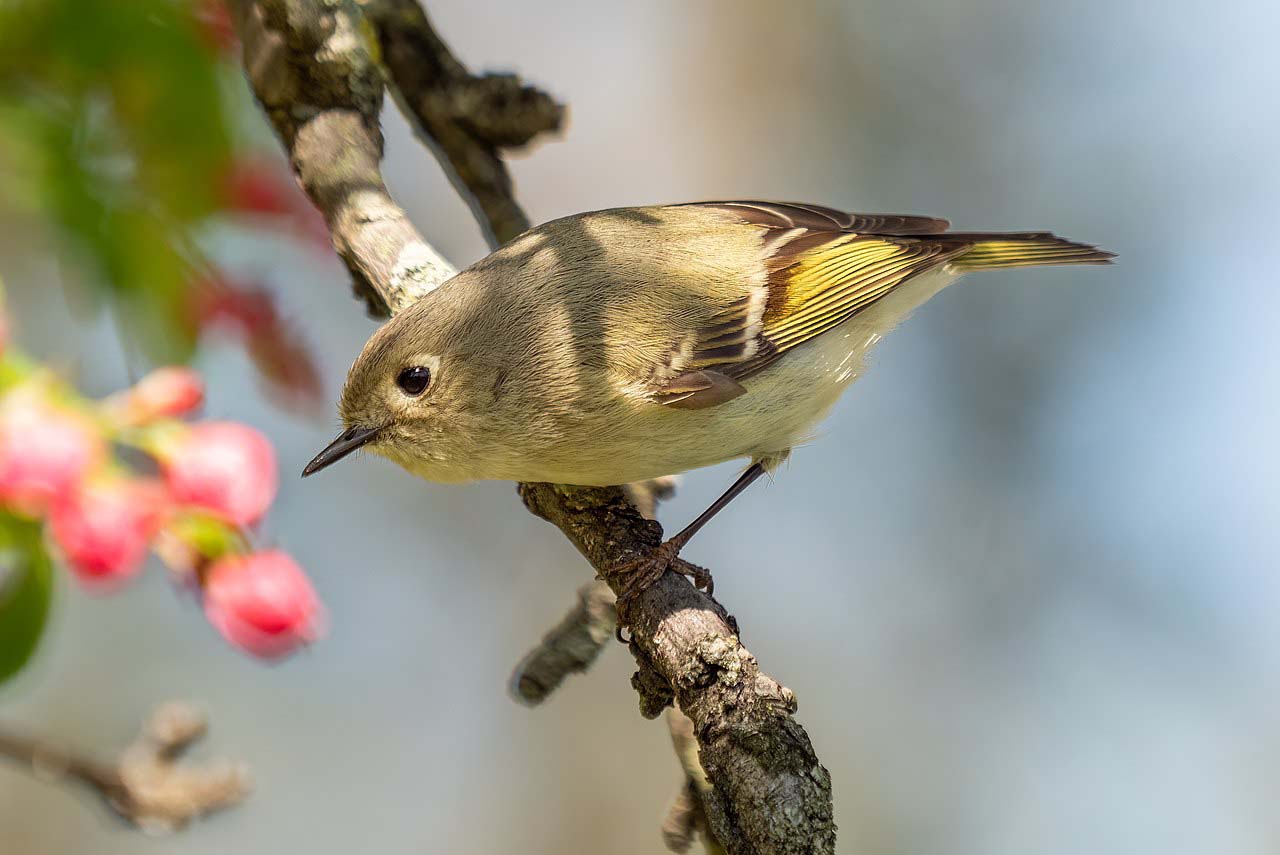
There are two species found in North America – the golden-crowned kinglet (Regulus satrapa) and the ruby-crowned kinglet (Corthylio calendula). Both species breed in New Hampshire.
The birds in this family are tiny birds, around 3-5 inches in length. They have big, rounded heads, small, pointed wings, and small, pointed bills. They are gray to olive in color and often have a yellow or orange patch on the crown of their heads.
They often eat insect and spider eggs from the undersides of leaves. They also eat insects and fruit while hovering in the air.
RUBY-CROWNED KINGLET
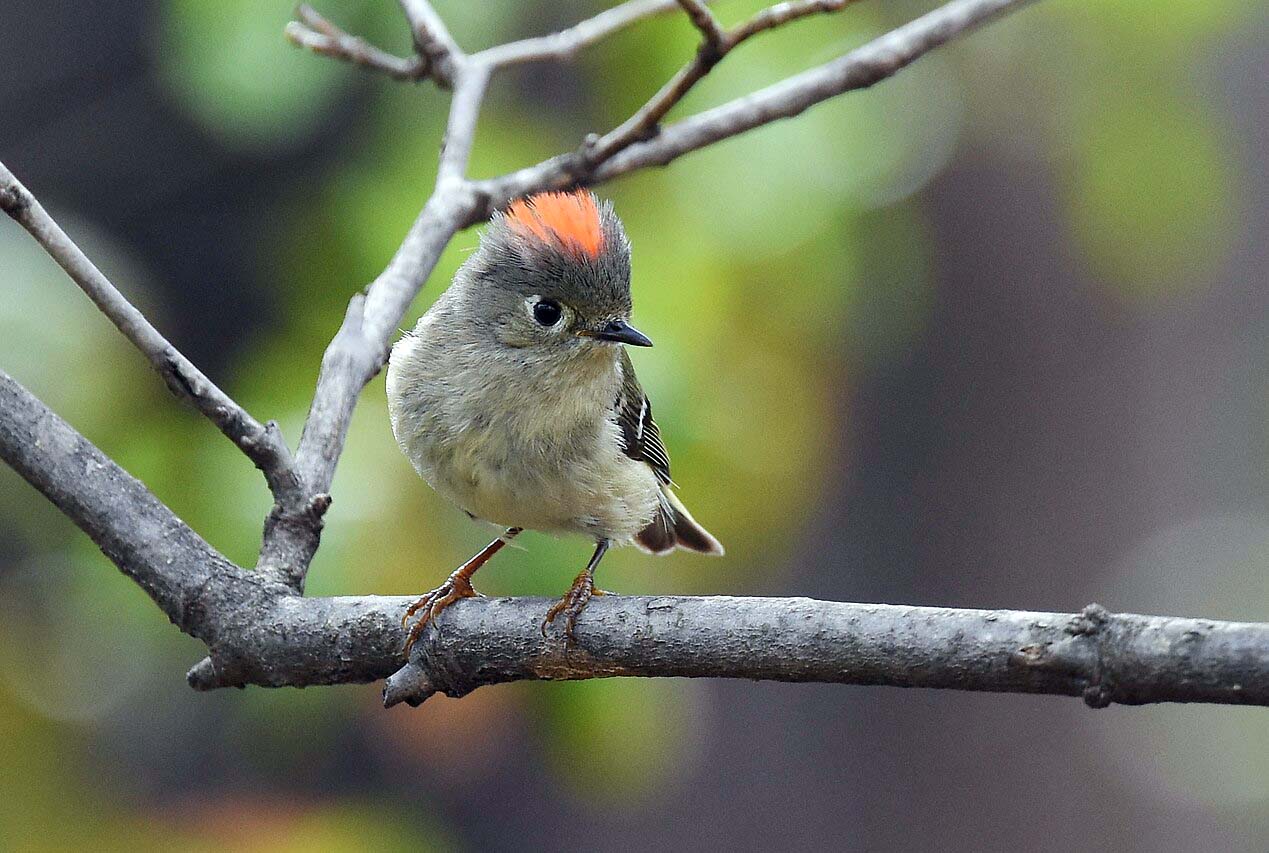
The ruby-crowned kinglet is about 4 inches in length. It is olive-green in color with white and black bars on its wings. The male has a red crown. It is found in coniferous forests in the summer and deciduous forests in the winter. Its breeding ground stretches from Alaska across to Newfoundland, Canada, south to southern California, the Great Lakes, and northern New England.
GOLDEN-CROWNED KINGLET
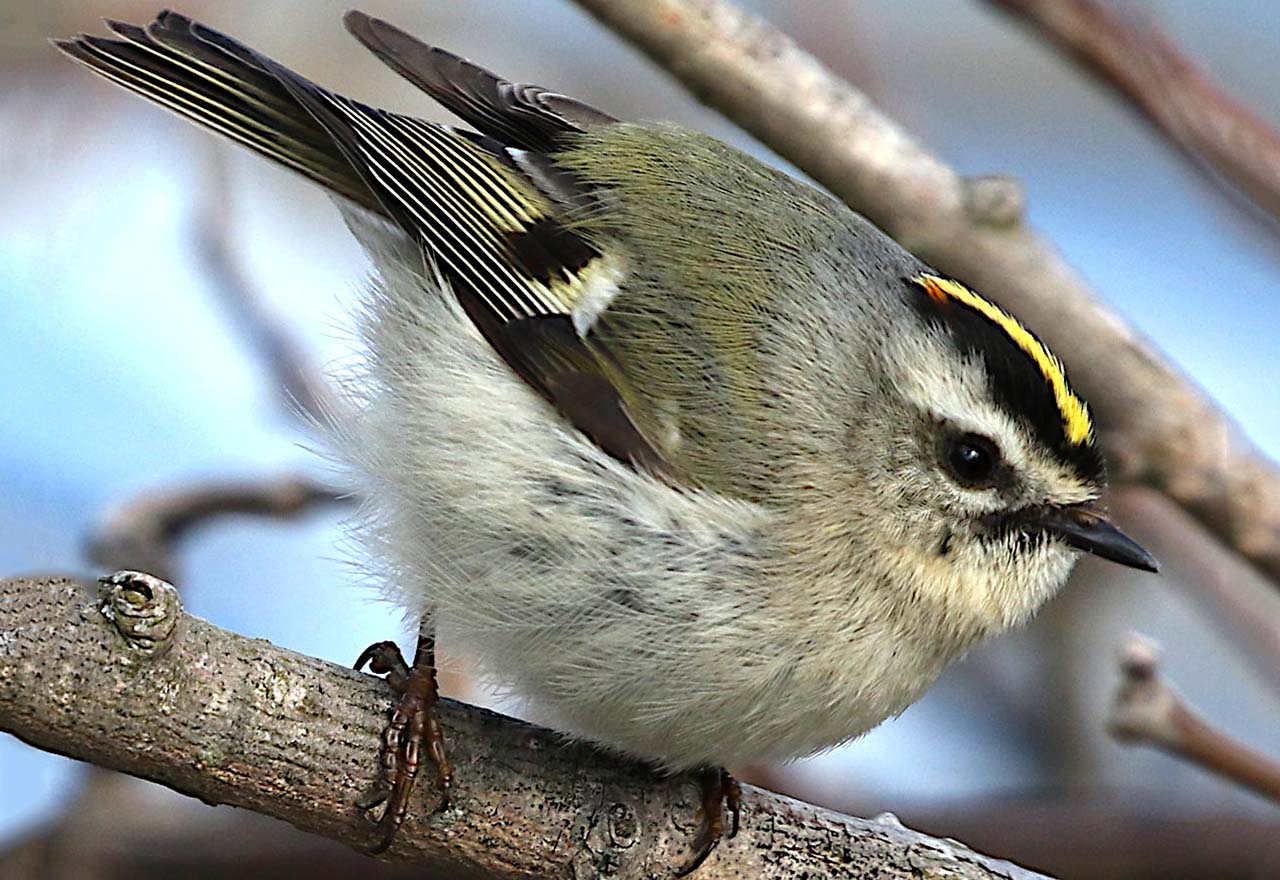
The golden-crowned kinglet is also olive green with white wing bars. It is about 3.5-4 inches in length.
Males have an orange crown bordered with yellow; females have a solid yellow crown. The crown on both the male and female is bordered in black.
Golden-crowned kinglets are found in coniferous and deciduous forests. They breed from Alaska to Newfoundland, Canada, and south to southern California, Michigan, Massachusetts, and the mountains of North Carolina.
They winter from southern Canada south to southern California, Arizona, the Gulf Coast, and northern Florida.