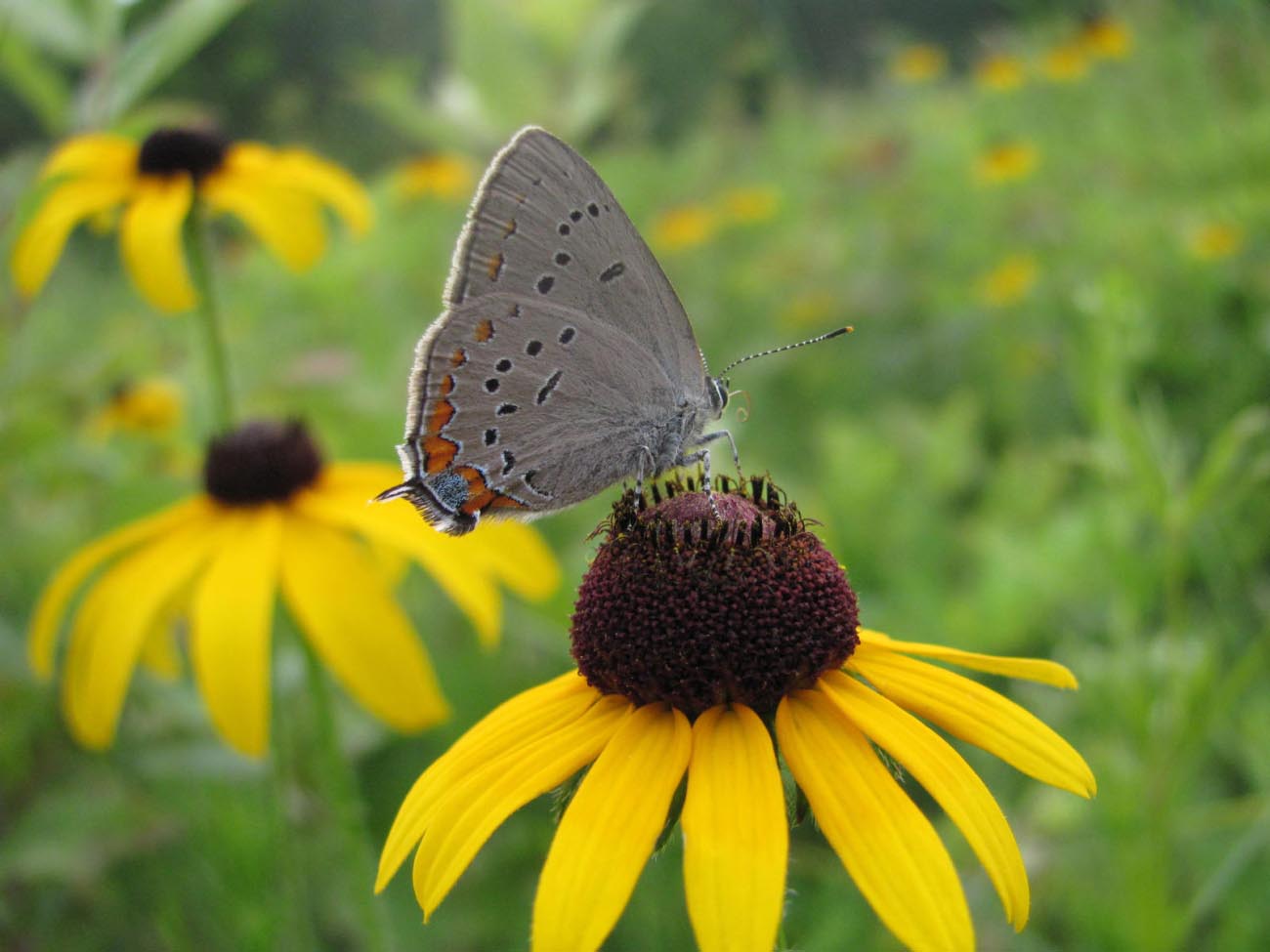
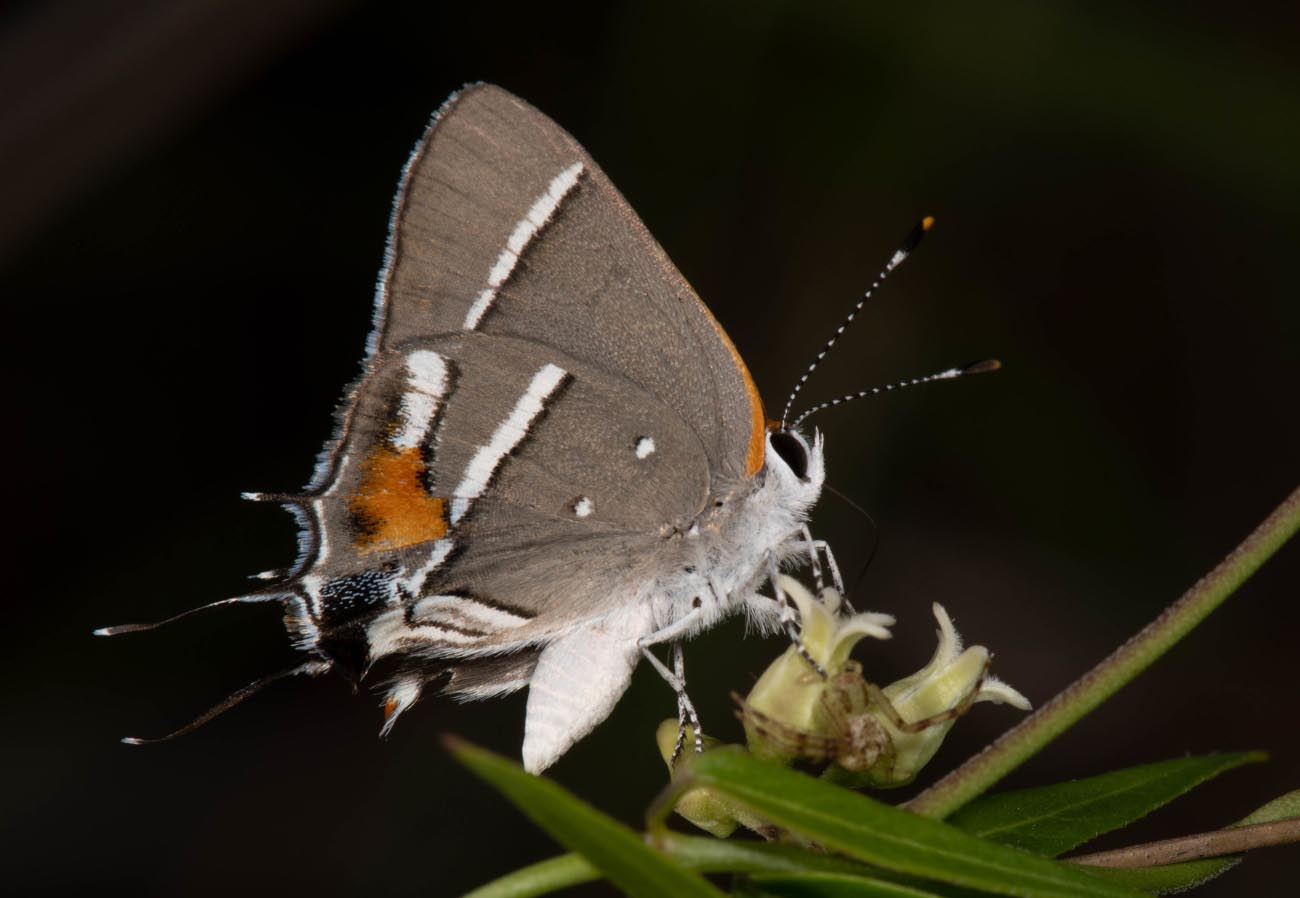
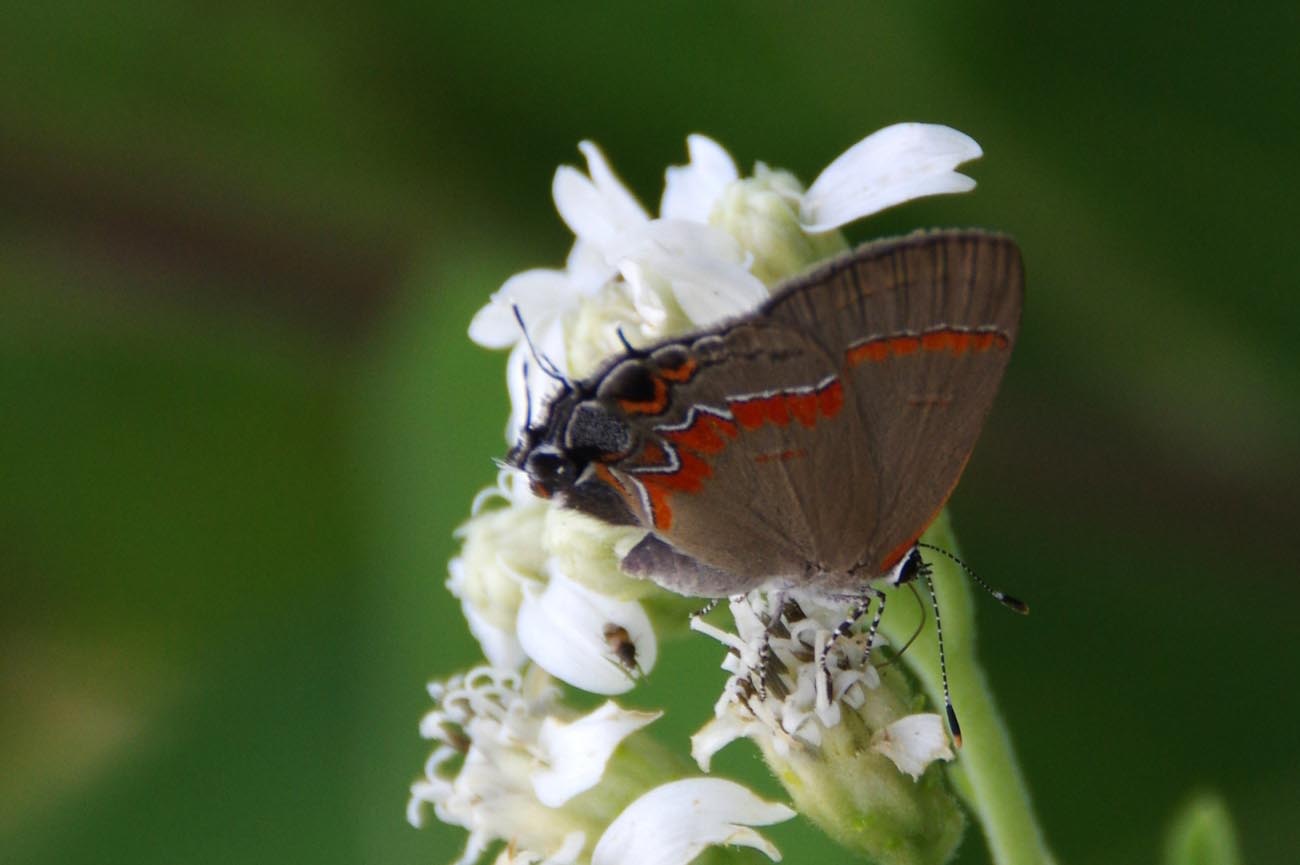
The butterfly genus Satyrium includes a group of small butterflies called hairstreaks. These butterflies belong to the same family as blues and coppers. Many species of Satyrium live in North America, while others are found in Europe and Asia.
Species found in New Hampshire include the banded hairstreak, striped hairstreak, coral hairstreak, Edward’s hairstreak, and Acadian hairstreak.
Hairstreak butterflies are usually small, with wingspans of about 1 to 1.5 inches (25–38 mm). Most are brown, gray, or reddish-orange with thin lines and colorful spots on the undersides of their wings. One of their most interesting features is the pair of tiny “tails” on their hindwings. These tails look a little like antennae and can confuse predators such as birds, helping the butterfly escape.
Satyrium butterflies live in forests, woodland edges, shrublands, and mountain habitats. These butterflies are often seen near oak trees, shrubs, and wildflowers during the summer.
The caterpillars of hairstreak butterflies feed on woody plants such as oaks, cherries, willows, and shrubs. Adult butterflies drink nectar from flowers like milkweed and clover. Most hairstreak species have just one generation each year and survive the winter as eggs.
Scientists are still learning about these butterflies. In 2025, researchers identified a newly recognized species in Canada called Satyrium curiosolus, showing that there is still much to discover about these small but important insects.
The Acadian hairstreak (Satyrium acadica) is found in North America from British Columbia east to Nova Scotia and south to Idaho, Colorado, the northern Midwest, Maryland, and New Jersey.
Bartum's scrub hairstreak (Strymon acis) is only occurs in pine rocklands in South Florida and Big Pine Key. It is endangered.
The red-banded hairstreak is found in the southeastern U.S.