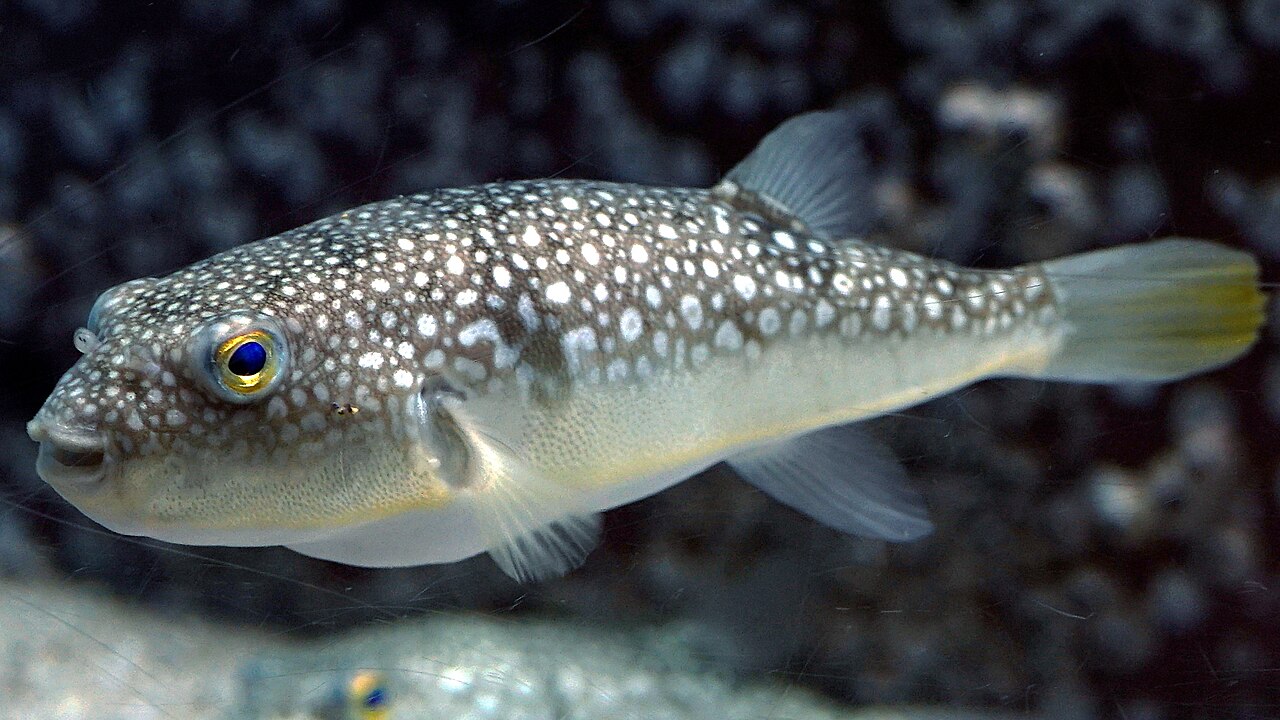
There are about 430 species in 10 families in this order. These fish are known for their unique shapes and unusual defenses. Many can puff up into a ball when they feel threatened, making it difficult for predators to eat them. Some, like pufferfish, also contain toxins in their bodies that make them dangerous to eat.
Tetraodontiformes usually have strong, fused teeth that form a beak-like structure. They use this to crush the shells of crabs, snails, and other hard-shelled prey. Their bodies are often thick and sometimes armored, and many species have bright colors or bold patterns that help warn predators or provide camouflage among coral reefs.
Most species in this order—except for members of the Balistidae family—use a type of movement called ostraciiform swimming. This means their bodies are rigid and do not bend from side to side. Instead of wiggling their bodies like many fish, they move by using their pectoral (side), dorsal (top), anal (bottom), and tail fins to glide through the water.
Most Tetraodontiformes live in tropical and subtropical oceans, especially around coral reefs, although a few species can be found in freshwater. While they are generally slow swimmers, they are well adapted to avoid predators using their defenses and behaviors.