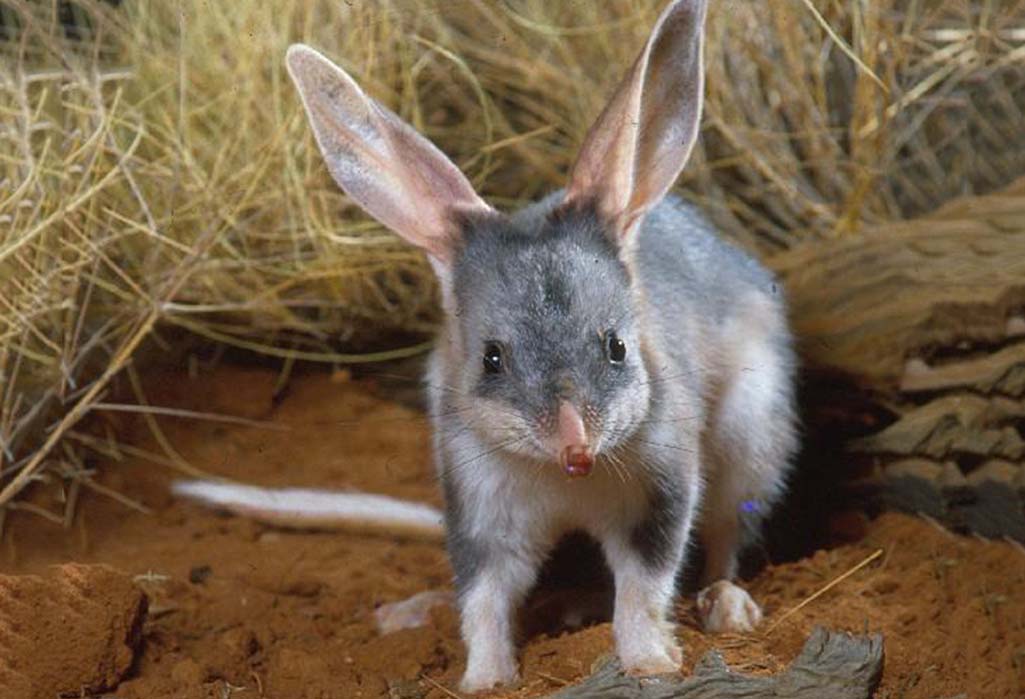
There are two species in this family of marsupials. One species, the lesser bilby, also known as the yallara, was found in Australia. It has been extinct since the 1950s.
The greater bilby is found in arid areas in Australia. It is grayish-blue and about a foot in length. It has large, mostly hairless, rabbit-like ears; a long, black and white tail; and a long, pointed snout. It has powerful front paws with strong, thick claws, and it is an excellent burrower.
The greater bilby uses its strong claws to dig extensive burrow systems. It often digs a number of burrows in its territory that it uses for rest and to escape from predators. The female greater bilby has a backwards-facing pouch. This keeps dirt out while she is digging.
The greater bilby is nocturnal and an omnivore. Bilbies get all the water they need from the food they eat. They use their strong claws and long tongues to dig and probe in the dirt for insects, spiders, fruit, seeds, and small animals.