Urolophidae

The species in this family of rays are found in ocean waters in the Pacific and Indian Oceans, especially around Australia.

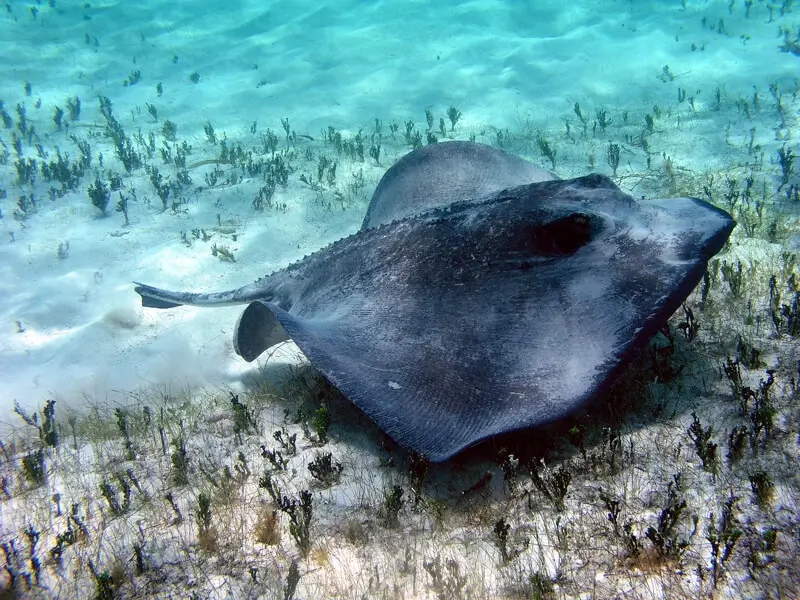
Stingarees are found on the ocean bottom, usually partially buried in the sand. Their coloration helps to camouflage them from both predators and prey.

Stingarees have dimond-shaped or oval pectoral fins, short tails and they have a leaf-shaped caudal fin and some species have a small dorsal fin.

Stingarees have one or more barbed venomous spines on their tails that they use to defend themselves.


Stingaress eat small fish and invertabrates.

Did You Know?

The sunlit zone is home to a wide variety of marine species because plants can grow there and water temperatures are relatively warm.

World Status Key

Status and range is taken from IUCN Redlist

Least Concern
Near Threatened
Vulnerable
Endangered
Critically Endangered
Extinct in the Wild
Extinct
Not Enough Data

U.S. Status Key

Status taken from US Fish and Wildlife

Threatened in US
Endangered in US
Introduced

NH Status Key

Status taken from NH Fish and Game

Threatened in NH
Endangered in NH
Breeds in NH (birds)

Location Key

Africa
Asia
Australia/Oceania
Europe
North/Central America
south america alt
South America

New Hampshire Species

No animals found.

Other Species Around the World

No animals found.

Support for NatureWorks is provided by: