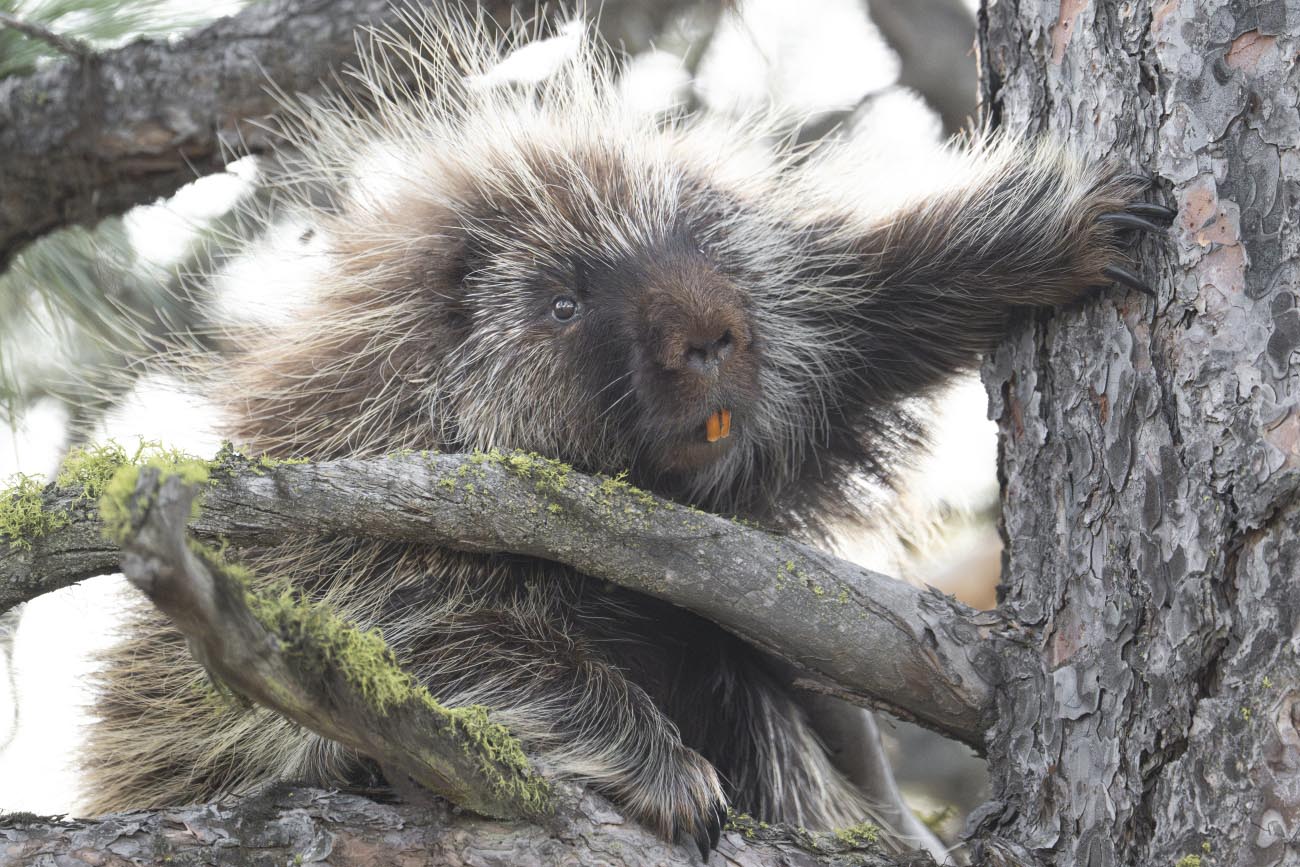
In the opening segment, Patrice looks at population and the limiting factors that can impact it. Next, she visits with Dave and they explore how a variety of factors can impact North American porcupine populations. The third segment takes an up-close look at the white-tailed deer And finally, Von and Daniel visit with Professor Peter Pekins from the University of New Hampshire and learn about how he is helping to control deer numbers.
Program Objectives
Students will:
Investigate and understand that organisms depend on other organisms and nonliving components of the environment for survival.
Describe limiting factors that can affect populations.
Give examples of how changes in limiting factors can affect populations.
Recognize the distinct characteristics of the white-tailed deer.
Describe how changes in limiting factors have affected the white-tailed deer population.
Pre-Viewing Activities
Mark off an area of the classroom that is at least six feet by six feet. One by one, have the students step into the area. Have the students indicate when the space has become too full to hold any more students. Discuss with the students how they felt as the space filled up. What made the space uncomfortable?
Post-Viewing Activities
Have the students research and identify causes and impacts of animal and plant overpopulation or underpopulation in your community.
Hands On: Multiply Like Rabbits
Multiply Like Rabbits
Graph paper
Two colors of dried beans
Give each student a bean of each color. Tell them that one bean is a male rabbit and the other is a female rabbit, and that they will record the rabbit population for five years. Each year, each pair of rabbits gives birth to two rabbits, one male and one female. As the years pass, have the students get beans for the new rabbits and record the numbers on their graph paper.
Note: You can change the number of rabbits born, the sex of the rabbits born, the number of years students record, or you can add limiting factors to impact populations.
Vocabulary
Population
Herbivore
Limiting Factor
Coniferous
Birth Rate
Contraception
Death Rate