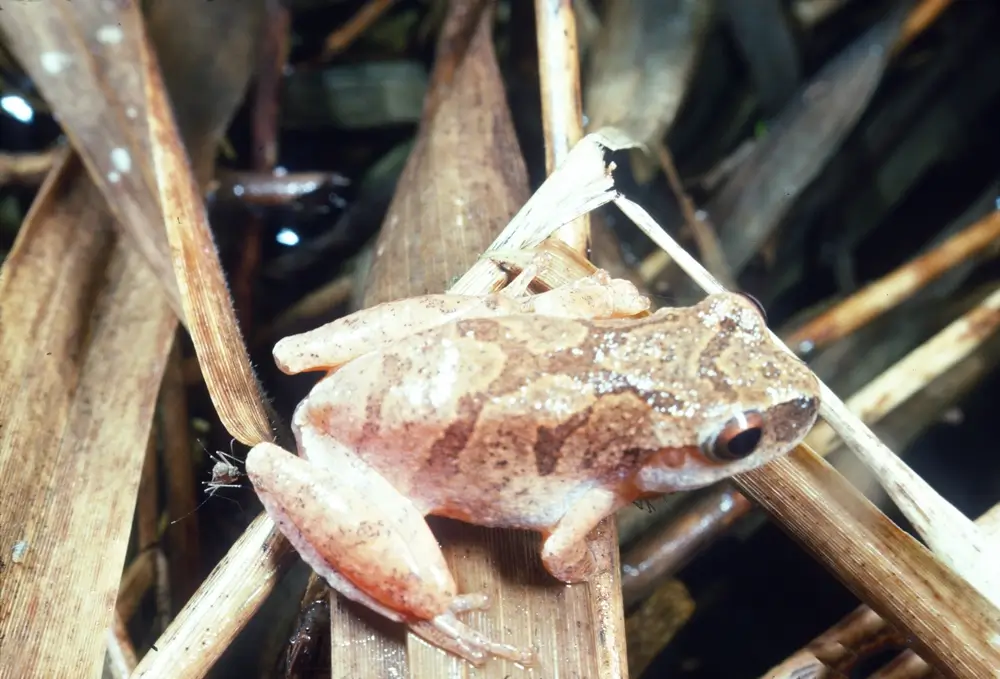
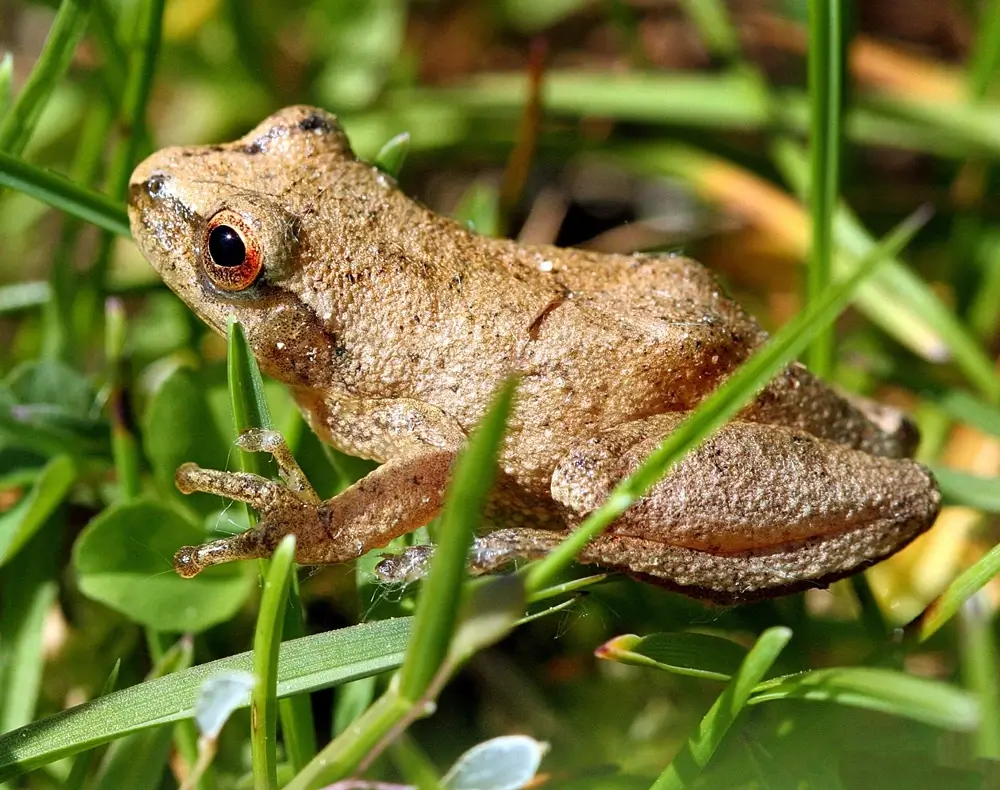
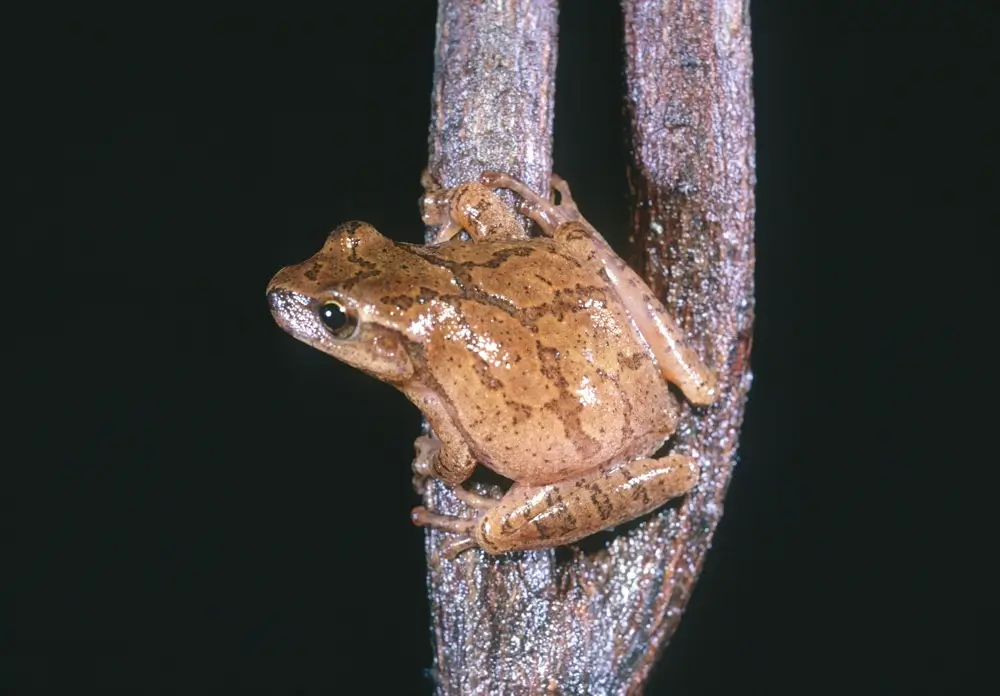
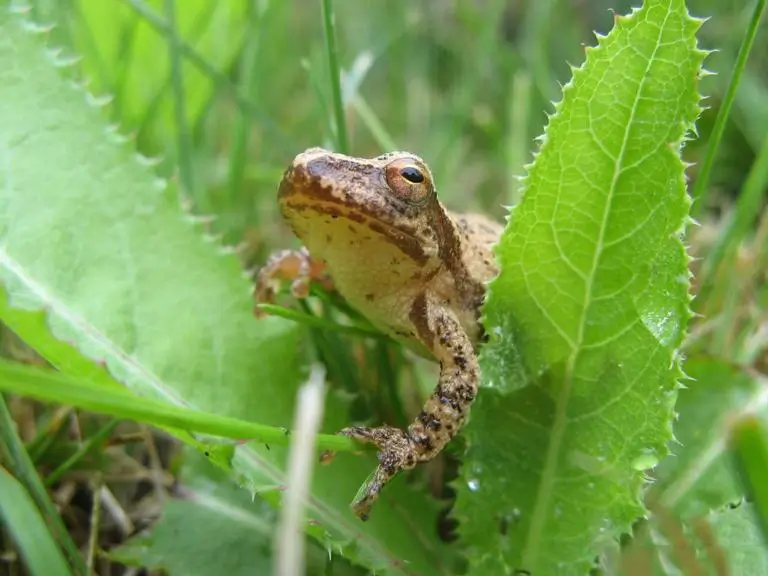
The spring peeper is a tiny treefrog between 0.75 and 1.5 inches (1.9-3.8 cm) in length.
It is usually green, gray, olive, or brown. It has an X-shaped mark on its back and banded markings on its legs. The word crucifer in its Latin name, Pseudacris crucifer means cross-bearer. In some spring peepers, these markings are very light
The spring peeper has a white or cream-colored belly and webbed feet with sticky toe pads that it uses to cling to trees and plants.
Although the spring peeper is a treefrog and a skilled tree climber, it spends a lot of time on the ground.
Habitat
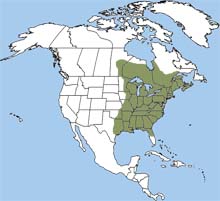
The spring peeper is found in marshy woodlands, ponds, and swamps.
The spring peeper first mates when it is three years old. The mating season begins in March and can last through June. The female lays up to 1,000 eggs on twigs and leaf litter in shallow water.
The eggs hatch in 6 to 12 days. The tadpoles begin to change into frogs in the late summer.
The spring peeper has a lifespan of around 2 years in the wild, but can live 3-4 years in captivity.
Behavior
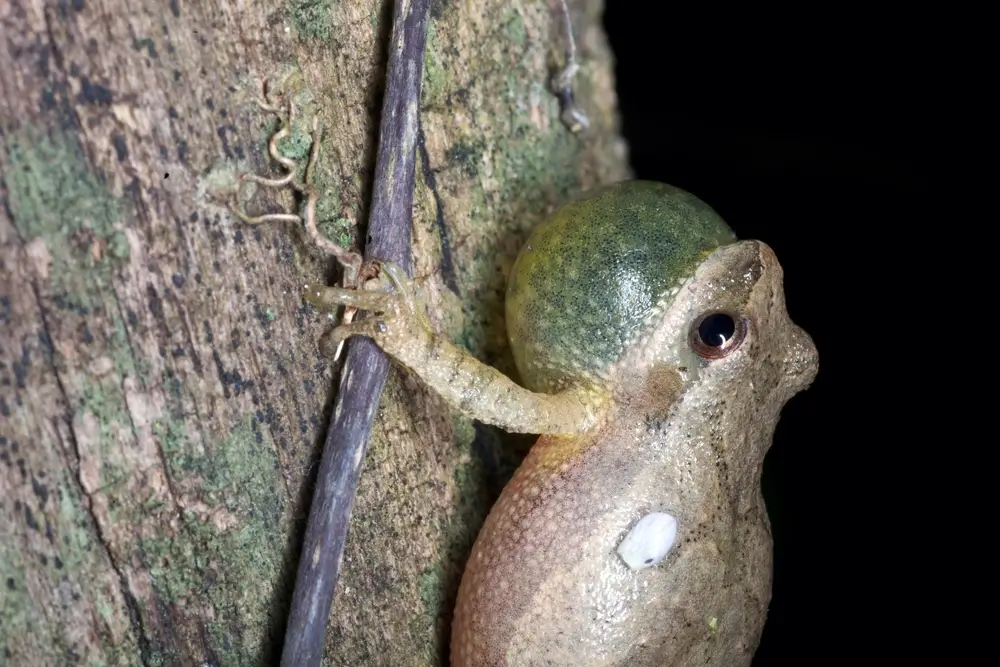
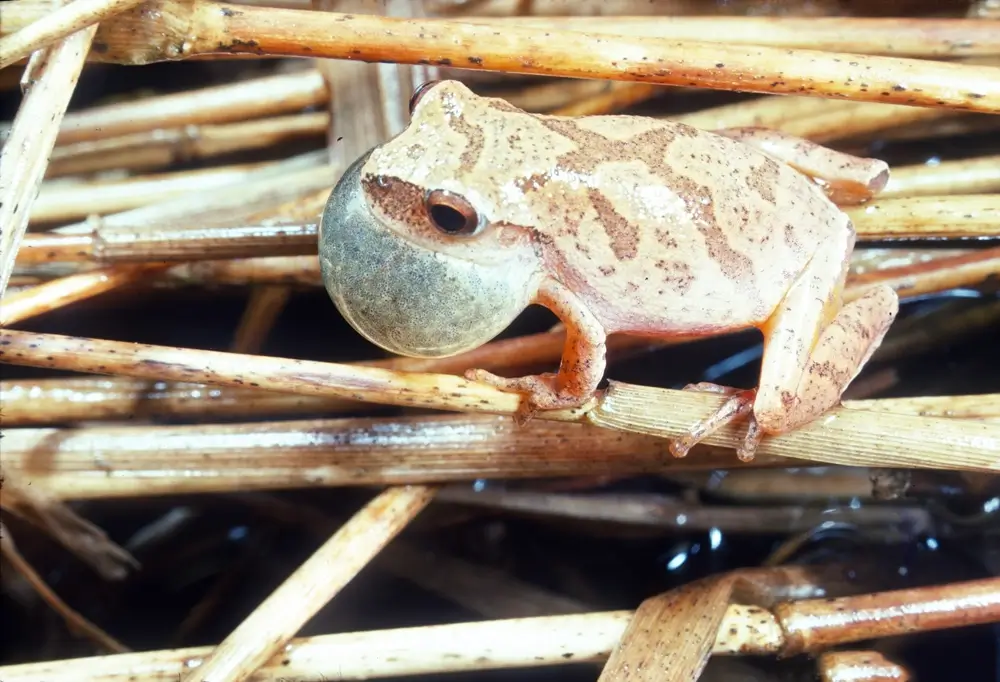
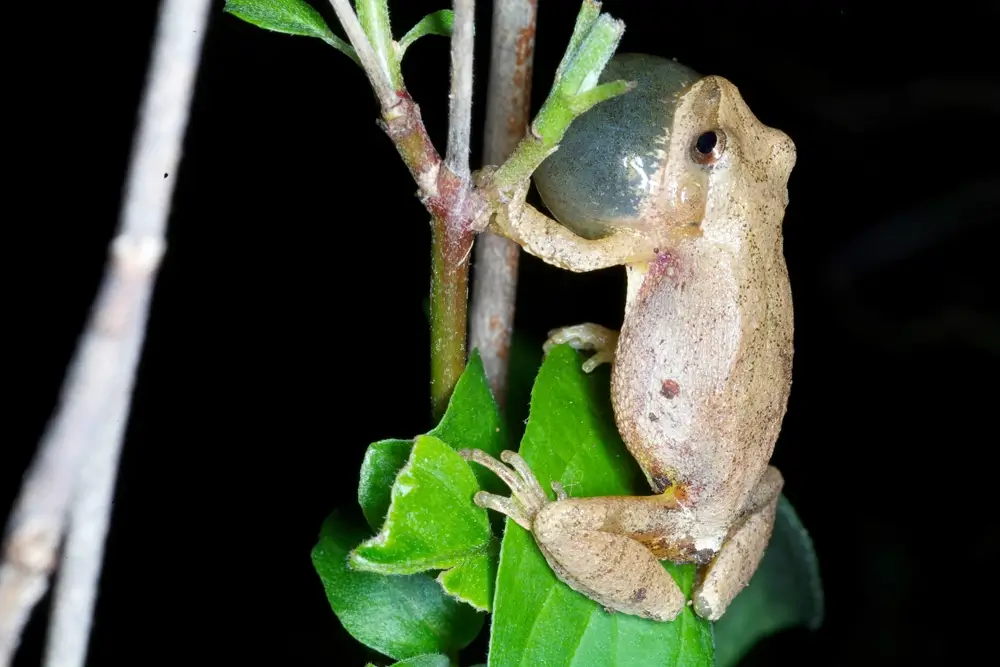
The spring peeper gets its name from its call. In the spring, males perch on grasses, sedges*, and branches near water and call out for mates with a high-pitched, single-note “peep” that they repeat 15-25 times a minute.
Usually, more than one peeper calls at the same time, and their calls sound like jingling bells. In some places, the sound of spring peepers is seen as one of the first signs of spring. Some people mistake the call for a cricket call, but crickets are usually not heard in the early spring. Only the male spring peeper makes the peeping call.
*Sedges are plants that look like grass and usually grow in clumps in wet areas. Unlike most plants, which have round stems, sedges have stems shaped like triangles. They also have silica in their leaves. Silica is the same material used to make glass, so sedge leaves can be very sharp! A handy way to remember the difference between sedges and grasses is: “Sedges have edges.”
Did You Know?
The spring peeper spends the winter hibernating under logs or under the loose bark of a tree.
Support for NatureWorks is provided by:
The Spring Peeper in NH
The spring peeper is found throughout New Hampshire.