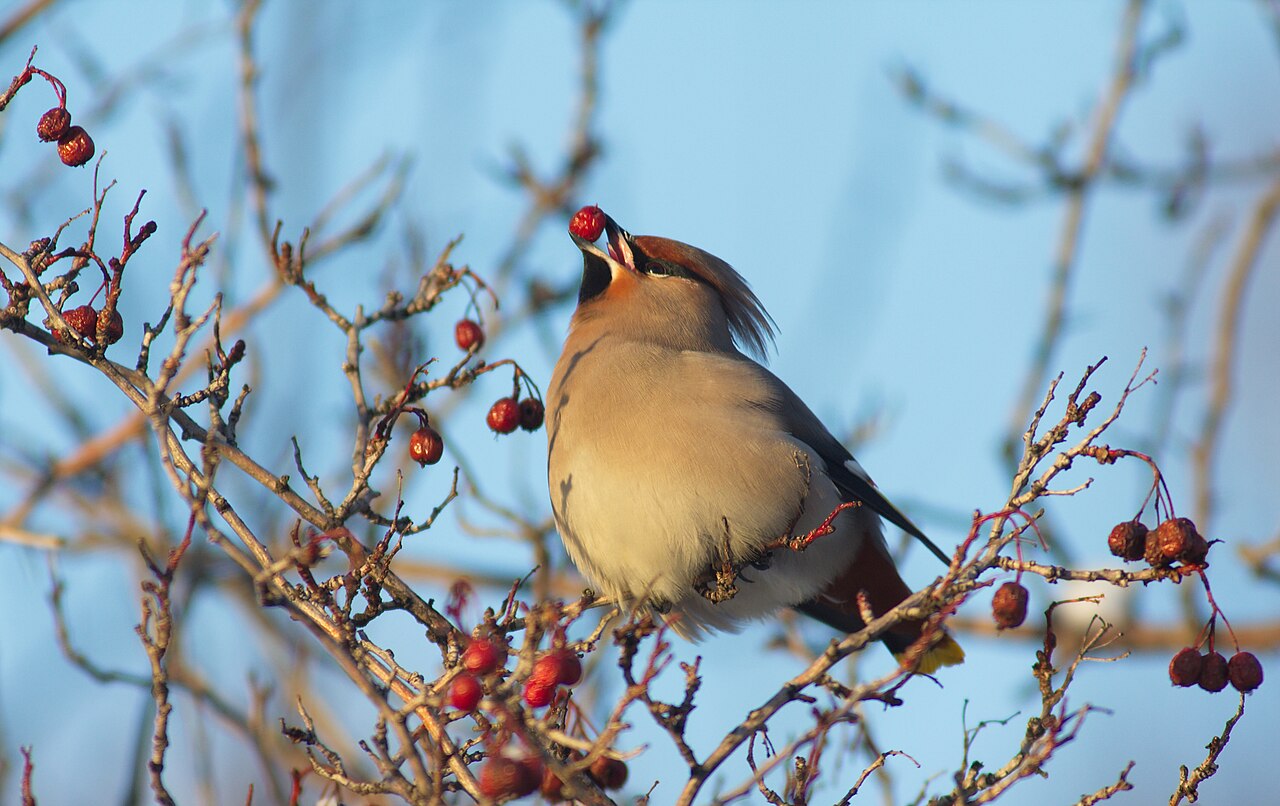
The bohemian waxwing is a medium-sized bird, measuring 6.3–7.5 inches (16–19 cm) in length, with a wingspan of about 13 inches (33 cm).
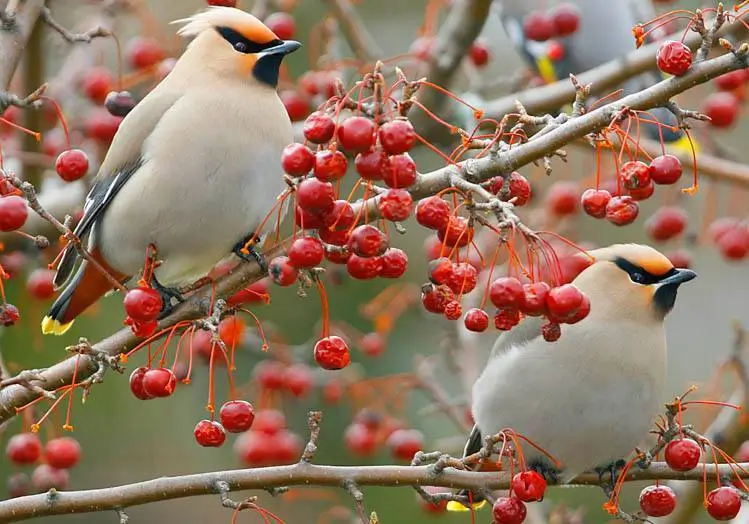
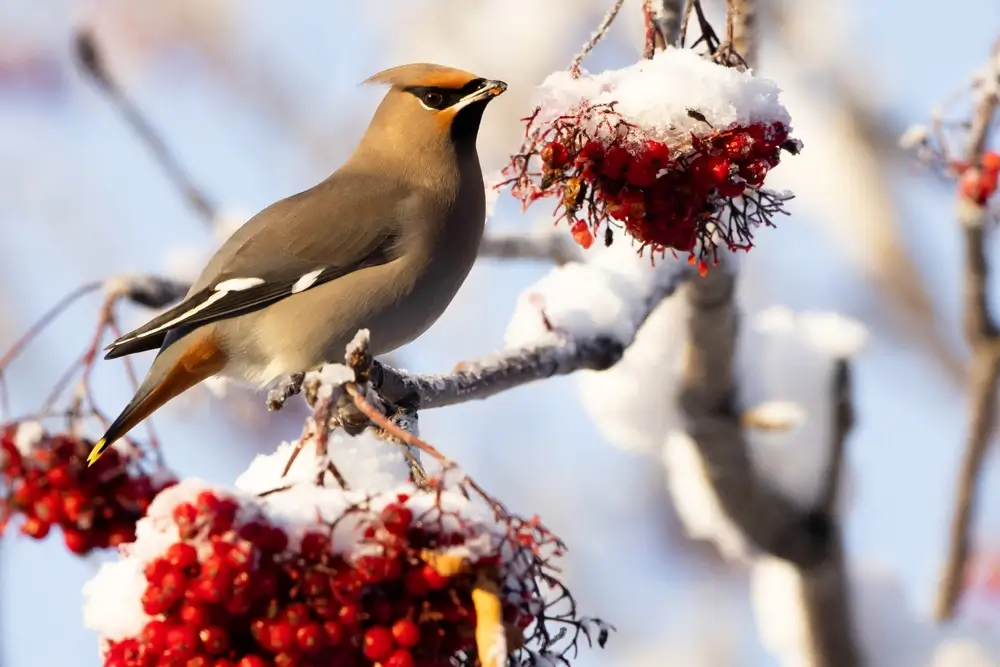
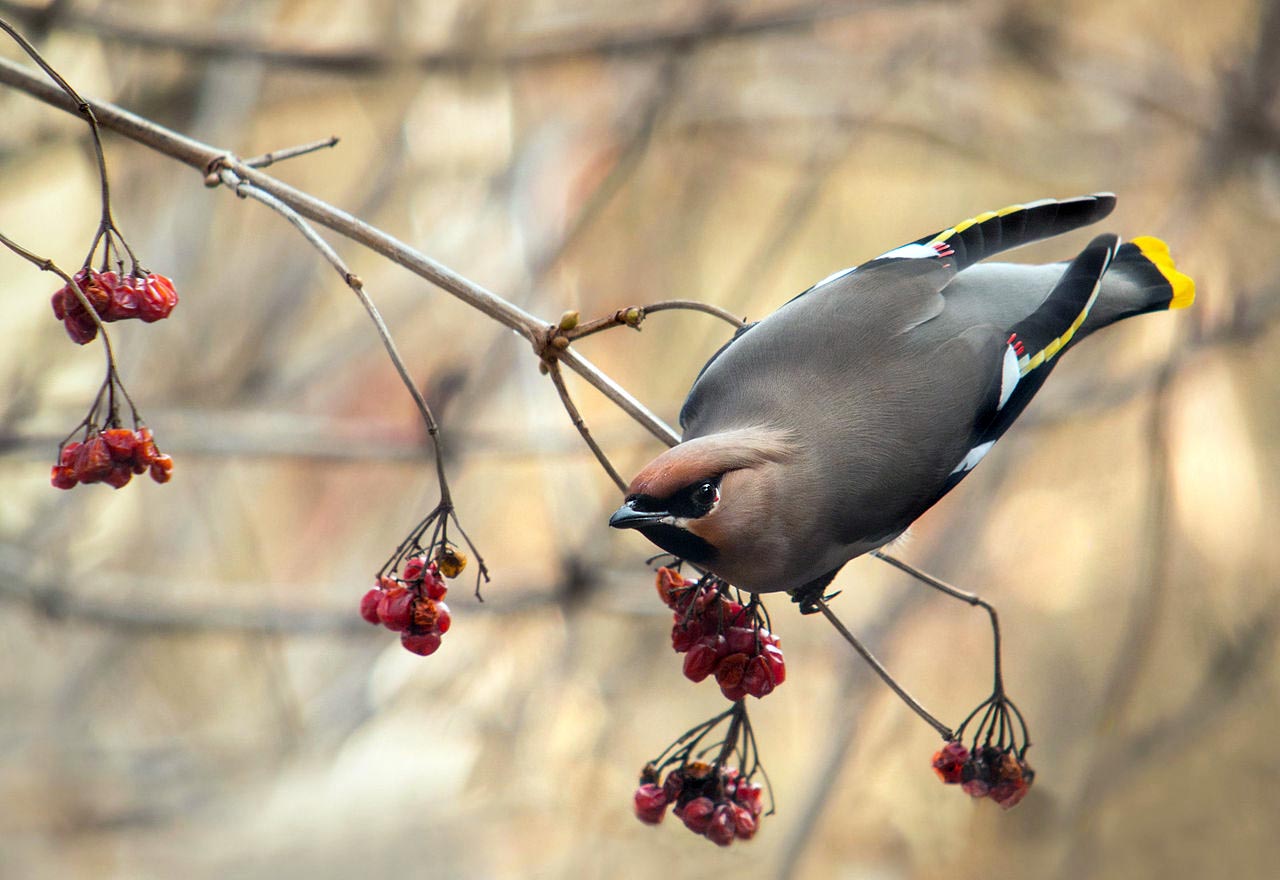
It has a grayish-brown body, a prominent crest of feathers on its head, and a distinctive black mask around its eyes. Its wings are marked with white and yellow edges, and its tail ends in a waxy yellow tip. The underside of the tail is reddish. Males and females look alike.
The cedar waxwing is similar in appearance but lacks the white wing edges and the reddish coloration under the tail, and it has a more yellowish belly.
Habitat
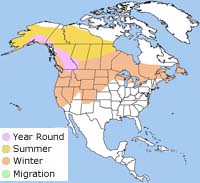
The bohemian waxwing breeds in open coniferous or mixed forests, usually near a water source like a lake, pond, or stream.
In the winter, it can be found in places where it can find fruits and berries. In the winter, flocks rarely stay in one place long; once the berries run out, they move on to a new location.
Diet
In the breeding season, the bohemian waxwing eats insects,spiders, and some berries and fruit. In the winter, it eats berries.
Life Cycle
The male bohemian waxwing courts the female by perching next to her on a branch. The male and the female hop towards each other and exchange food, and then hop away from each other. Breeding season can run anytime from March to late May.
The female bohemian waxwing lays 4-6 eggs in a nest made of grass, moss, and down, usually located high in a pine tree. She incubates the eggs for about 14 days. Both the male and the female feed the chicks. The chicks leave the nest when they are around 15-17 days old.
The lifespan of the bohemian waxwing is around 4-5 years.
Behavior
Bohemian waxwings are non-territorial and often travel in flocks of 50-300 birds or more birds. They often appear in a spot with a good crop of berries. When they have eaten all the berries, they move on.
Did You Know?
The word bohemian can mean a person who wanders from place to place, and the Bohemian waxwing is sometimes seen outside its normal range.
Support for NatureWorks is provided by:
The Bohemian Waxwing in NH
The bohemian waxwing does not breed in New Hampshire, but flocks of the bird can be found in the state in the winter, looking for berries.
The bohemian waxwing’s breeding range runs from Alaska east through Yukon, the Northwest Territories, British Columbia, Alberta, Saskatchewan, and Manitoba, Canada. In the winter, it can be found in areas between the U.S. and Canadian border and as far south as Nevada, Utah, and Nebraska in the West.