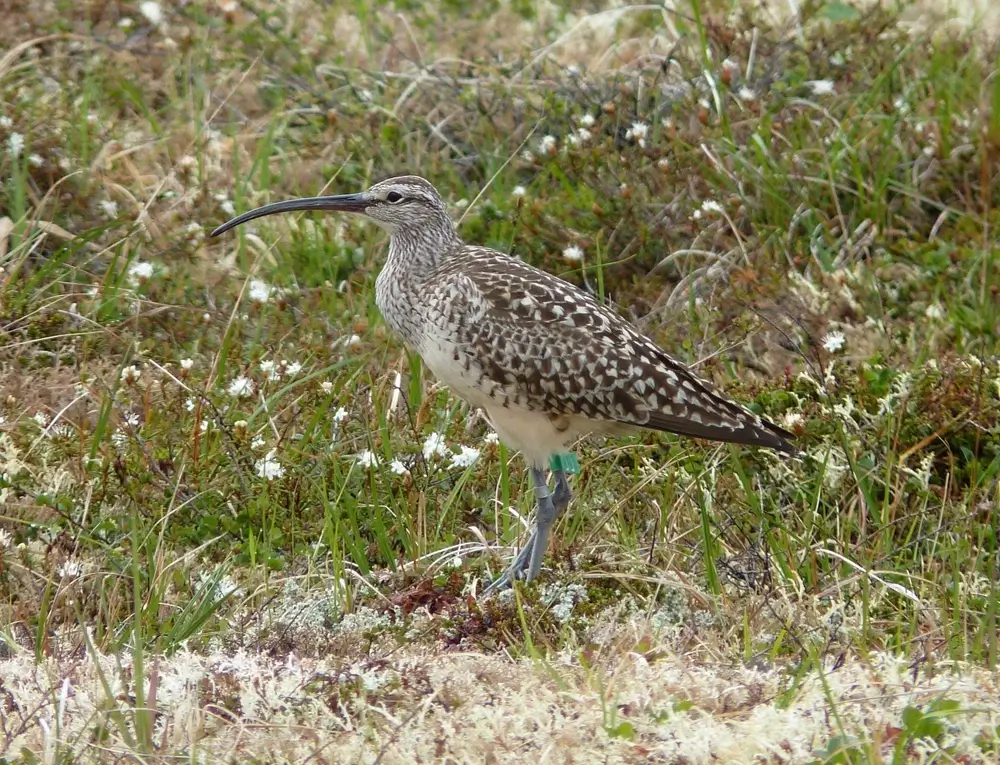
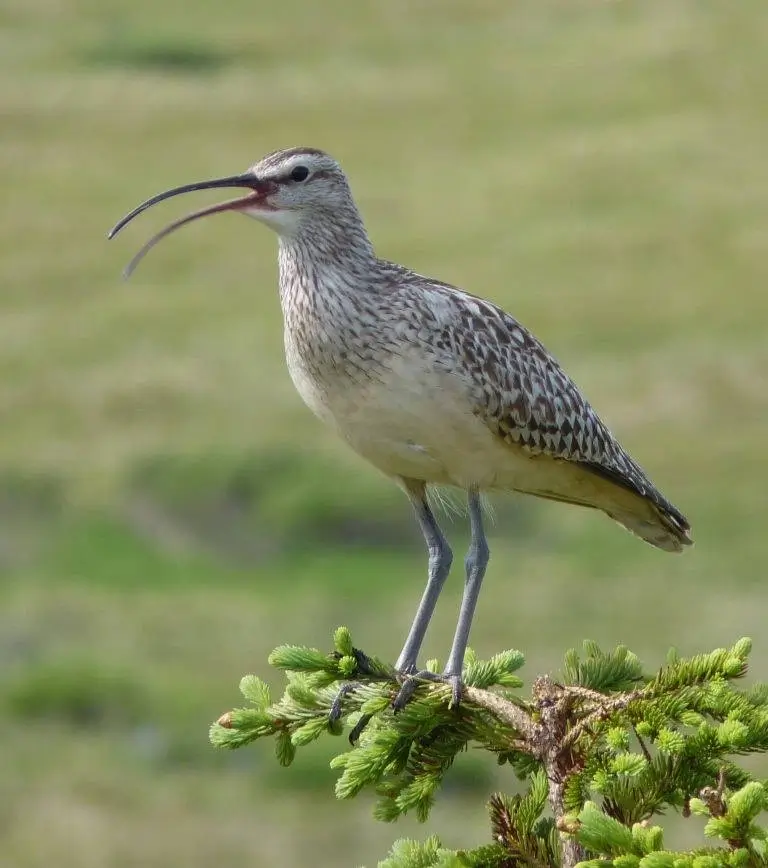
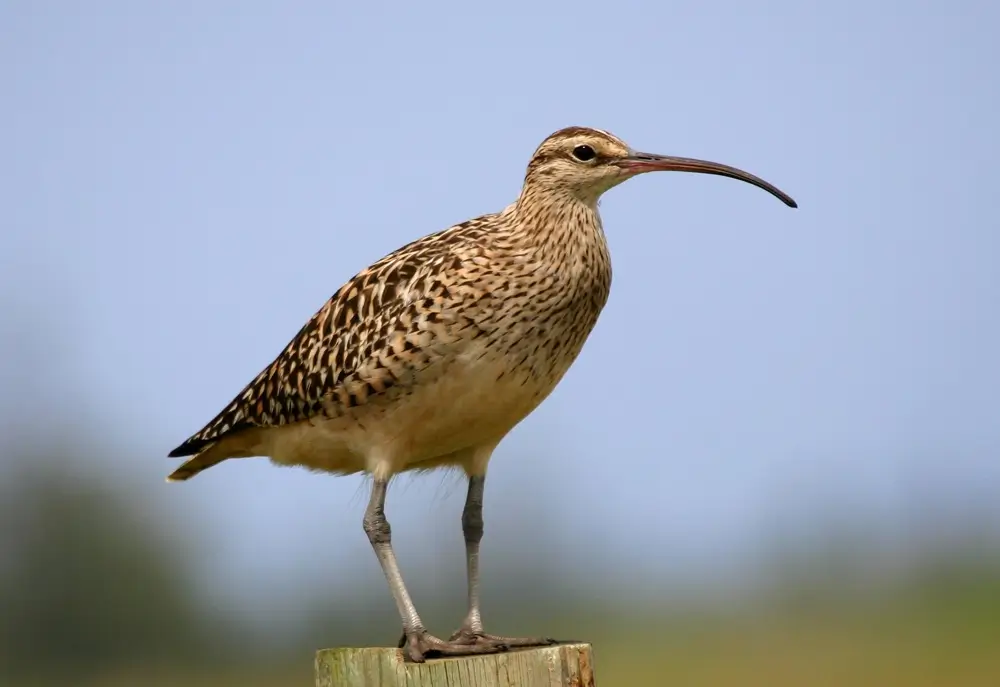
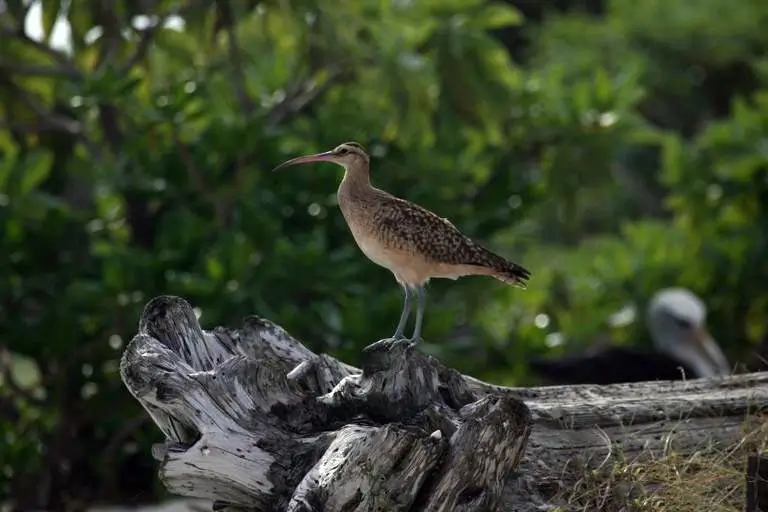
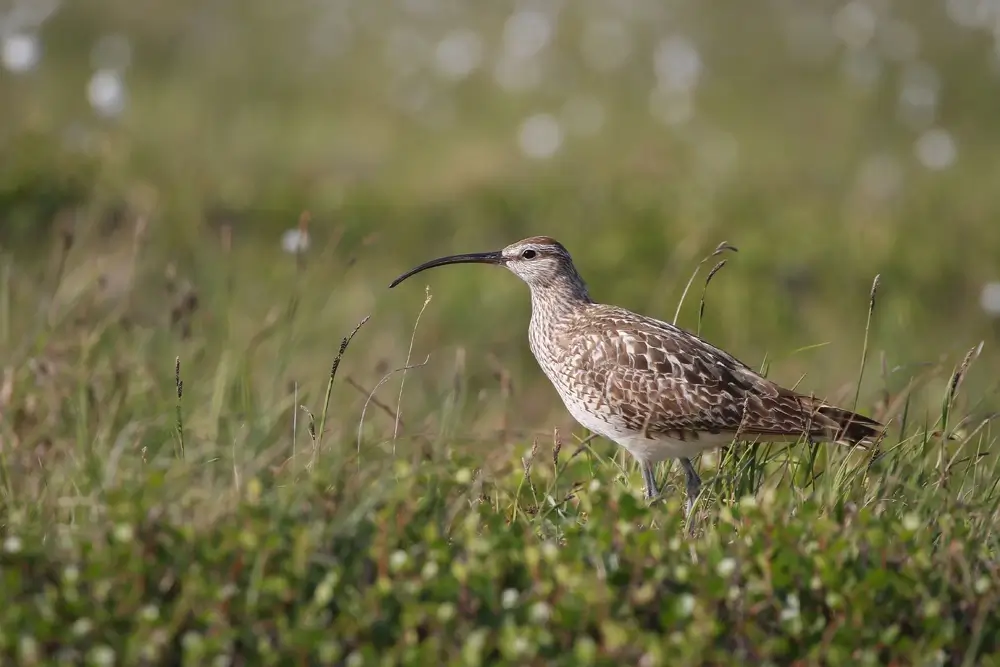
The bristle-thighed curlew is about 16-17 inches long (40.6-43.2 cm) with a wingspan of around 33 inches (83.8 cm).
It has a barred tail, a very long, curved bill, a mottled brown back, a reddish-brown belly and rump, a streaked brown breast, and a light brown head and neck. It gets its name from the bristly feathers at the ends of its thighs.
Males and females look alike.
Habitat
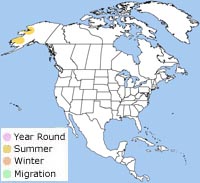
During the breeding season, the bristle-thighed curlew is found on hilly inland tundra in Alaska. In winter, it is found on the sandy beaches of South Pacific islands.
Diet
The bristle-thighed curlew eats crustaceans, small fish, bird eggs, and snails. On the tundra during the breeding season, it eats insects, seeds, and berries.
The bristle-thighed curlew sometimes breaks open large prey such as crabs by smashing them against the ground or a flat rock. It grips the crab in its bill, raises its head, and then forcefully brings it down, striking the crab against a hard surface to crack it open.
The bristle-thighed curlew also uses rocks or coral to open eggs. It takes a piece of coral or rock in its bill and flings it into a bird egg again and again until the egg breaks open. It then uses its long, pointed bill to poke into the egg and open it up.
It is one of only a few bird species that are known to use a tool to get food.
Life Cycle
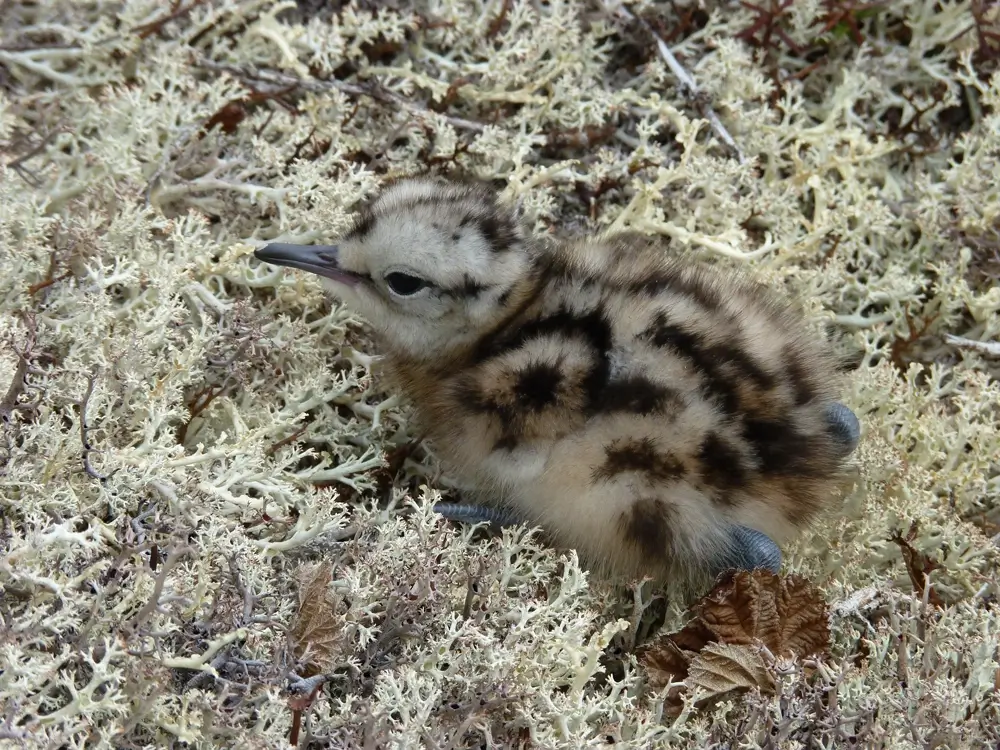
The female bristle-thighed curlew lays 4 eggs in a nest made in a shallow depression in the ground. Both parents incubate the eggs for about 25 days.
The chicks are precocial and leave the nest and feed themselves shortly after hatching. Both parents care for the young. The female leaves before the chicks are fledged (have developed flight feathers), and the male stays with them until they fledge.
Behavior
The bristle-thighed curlew is the only shorebird that can’t fly during its molt (the period when it sheds old feathers and grows new ones).
Did You Know?
Scientists have known about the bristle-thighed curlew since the mid-1700s, but they didn’t know about their breeding grounds in Alaska until 1948.