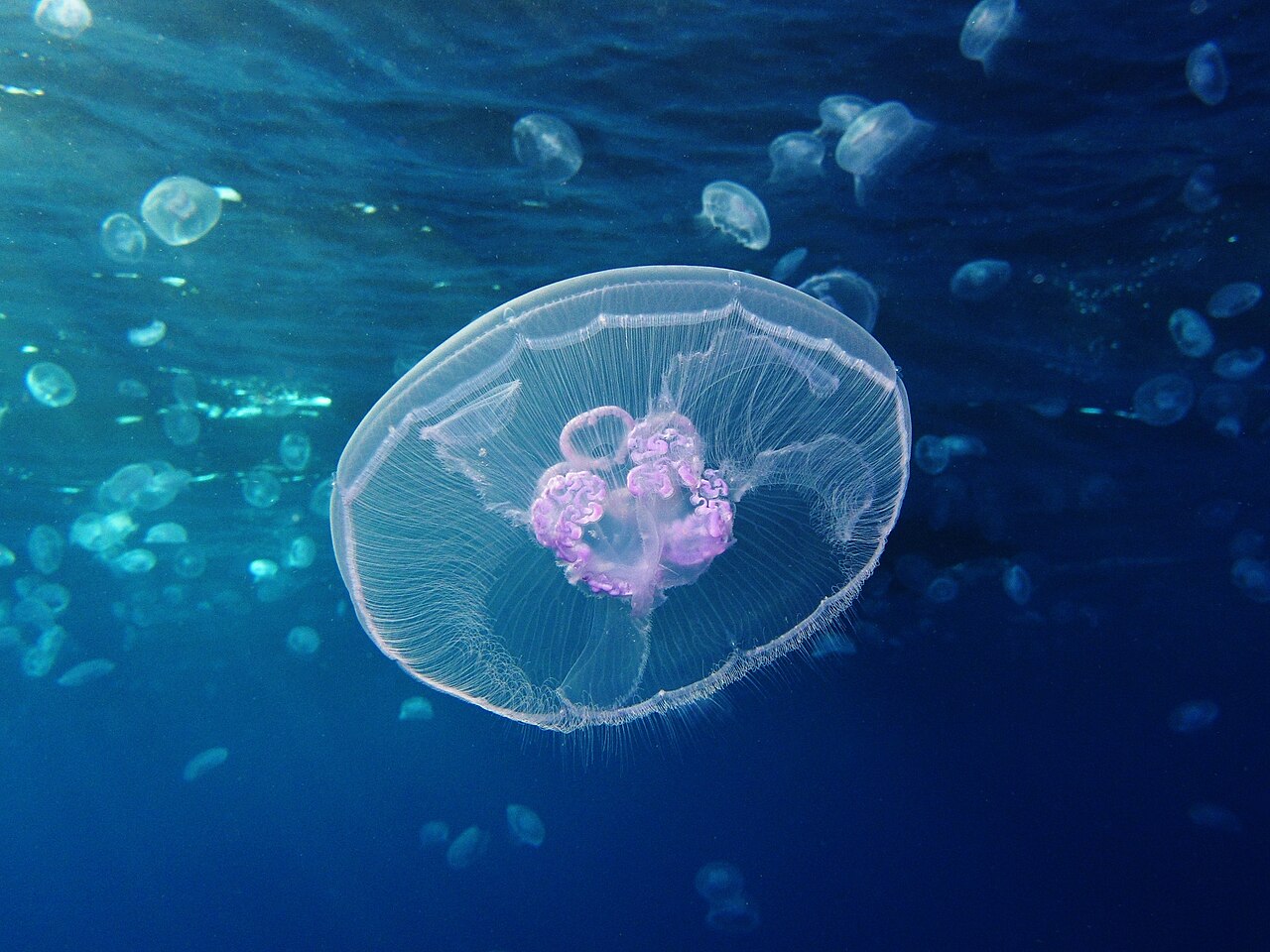
There are about 11,000 species of aquatic invertebrates in this phylum, found in both freshwater and marine environments. These species include jellyfish, hydroids, sea anemones, corals, and some of the smallest marine parasites.
Cnidarians have soft, jelly-like bodies and stinging cells called cnidocytes (or cnidoblasts) that help them catch food and defend themselves.
There are two main body forms in cnidarians:
Polyp – a tube-shaped form that usually stays attached to a surface, as in sea anemones and corals.
Medusa – a bell-shaped form that can move freely, as in jellyfish.
Cnidarians do not have a brain or bones. Instead, they have a simple nerve net to sense their environment and muscles that allow them to move. They have a single opening that serves as both a mouth and an anus.
While many cnidarians live alone, some—like corals—form colonies that can create massive reefs.