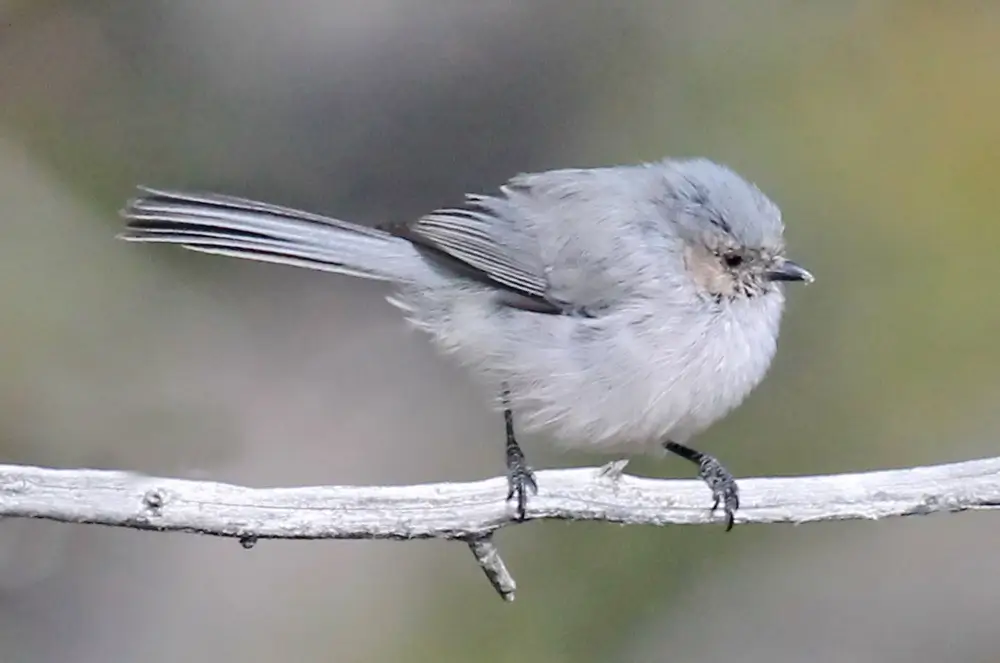
The bushtit is one of the smallest birds in North America. It measures only about 2.8 to 3.1 inches (7.1–7.9 cm) long, with a wingspan of about 6 inches (15.2 cm).
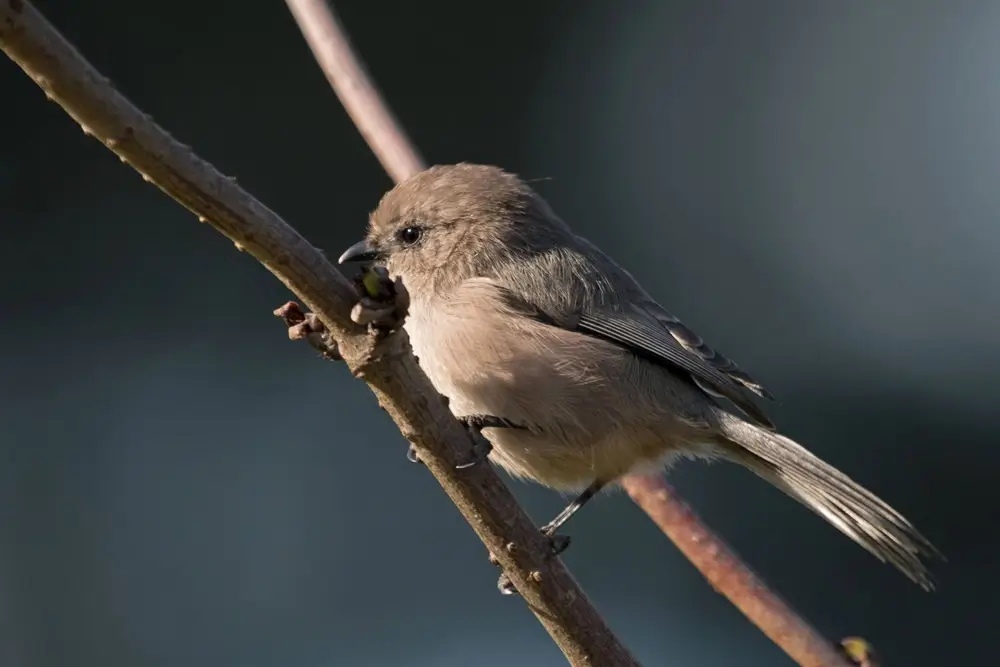
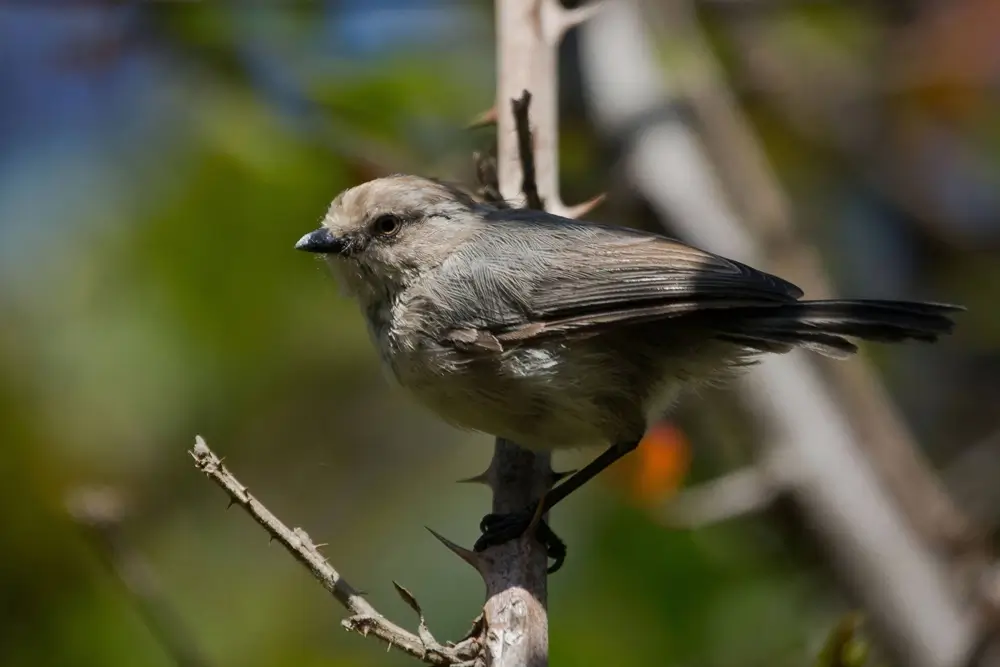
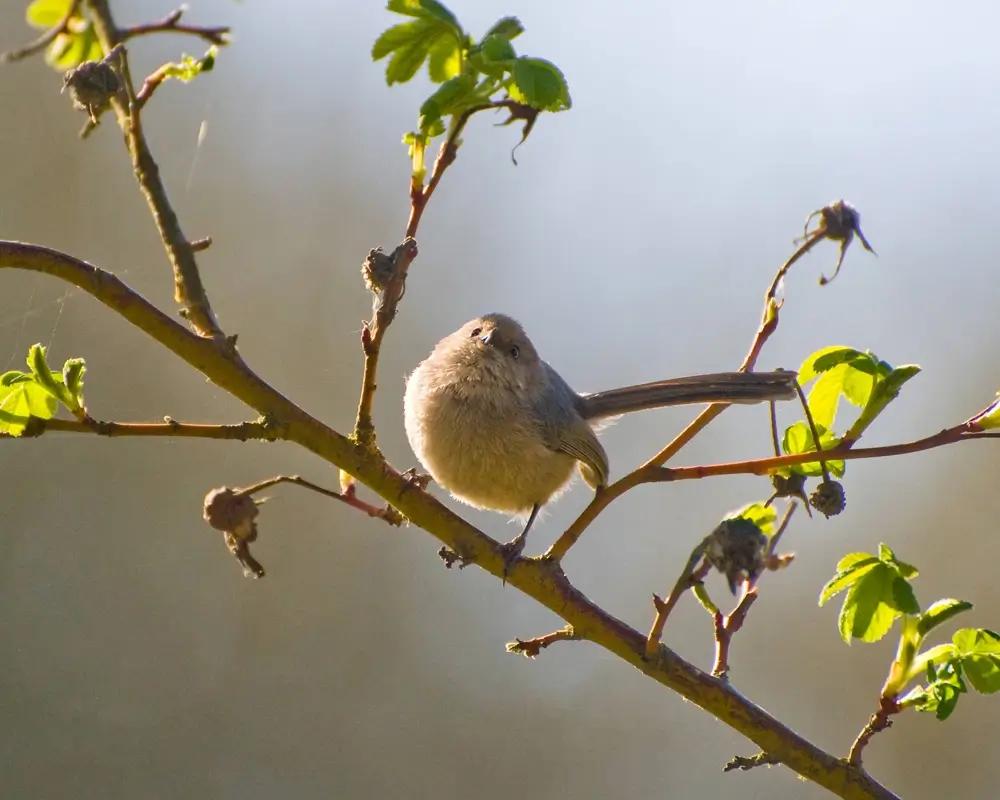
Its upper body is pale gray to grayish-brown, while its underside is whitish-gray. It has a long gray tail, short legs, and a small, pointed beak.
Males and females look very similar. However, bushtits can look slightly different depending on where they live. Coastal bushtits often have a brownish crown, inland birds may have brown cheeks, and bushtits found in or near Mexico often have black cheeks.
Habitat
The bushtit is found in open deciduous and mixed forest areas. It is also found in suburban areas.
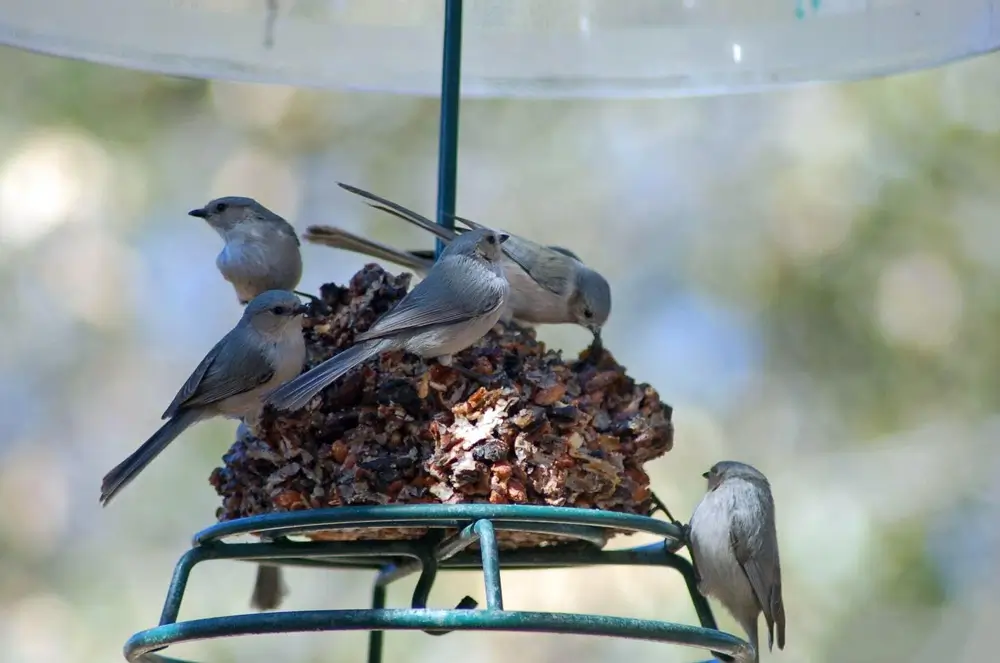
It is a very social bird and travels in flocks of up to 60 birds during the non-breeding season.
Diet
Bushtits feed in flocks and move quickly through vegetation, looking for insects and spiders. They often hang upside down as they pick their prey from the undersides of leaves. They call out with soft chirps to each other as they forage for food.
Life Cycle
During the breeding season, bushtits form pairs and establish nesting territories. Their nests are up to a foot long (0.30 m) and are pendulum-shaped. The nests have an opening in the top and hang from the branches of a tree or shrub. The nests are made of grass, twigs, leaves, moss, lichen, and various plant parts woven together with spider webs.
The female lays 4-10 eggs, and both parents incubate the eggs for 12-13 days. Both parents care for and feed the chicks. The chicks fledge (develop flight feathers) when they are about 18 days old.
Behavior
Bushtit nests are often decorated with flowers, feathers, and lichen.
Did You Know?
The bushtit is the only member of its family, Aegithalidae, found in the Americas. The other species are found in woodlands Europe and Asia.
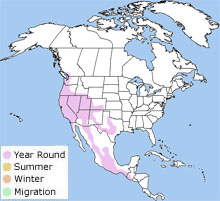
The bushtit is found from southwestern British Columbia in Canada to southern Idaho, southwestern Wyoming, and the Oklahoma panhandle southward to Central America.