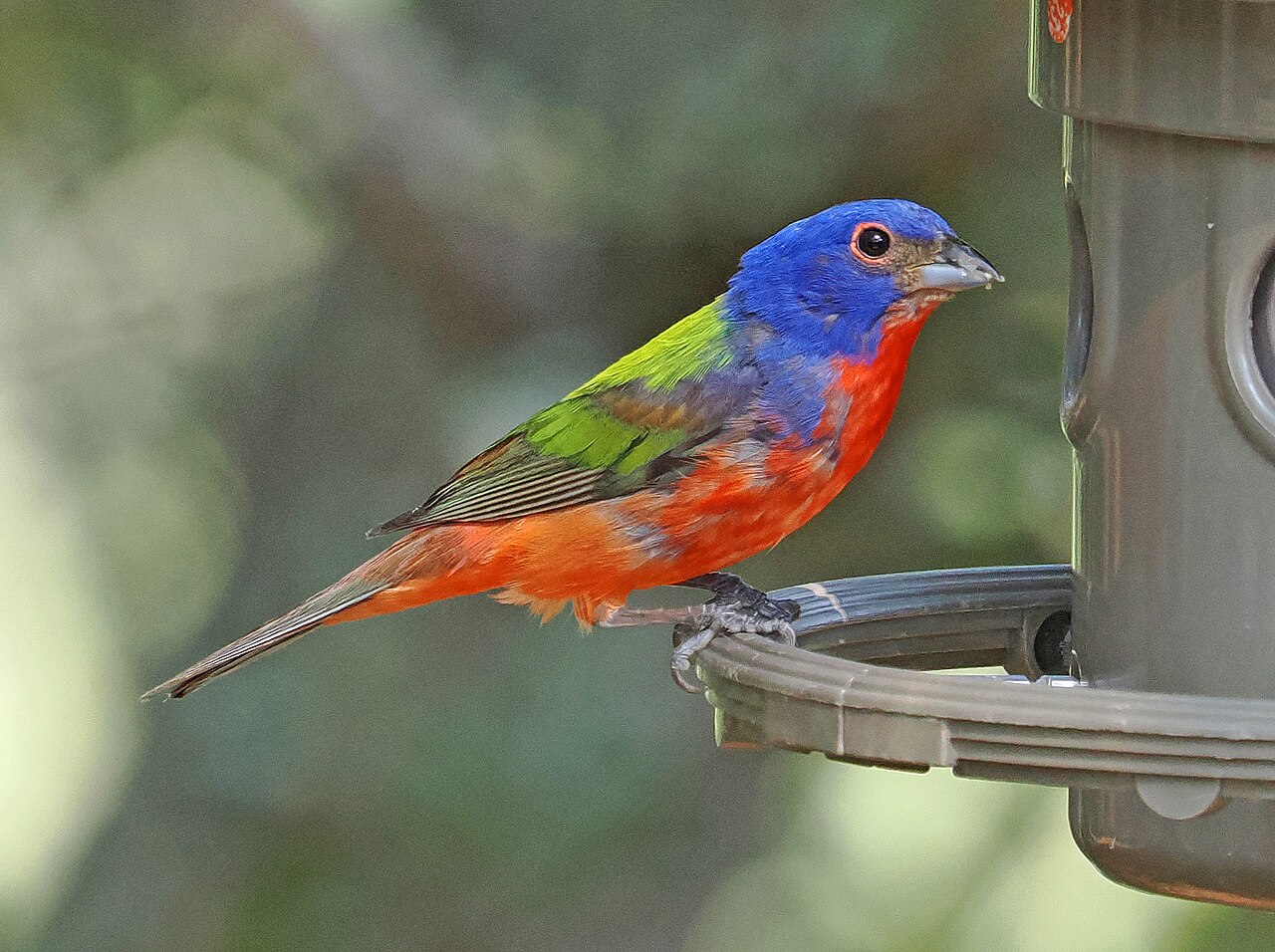
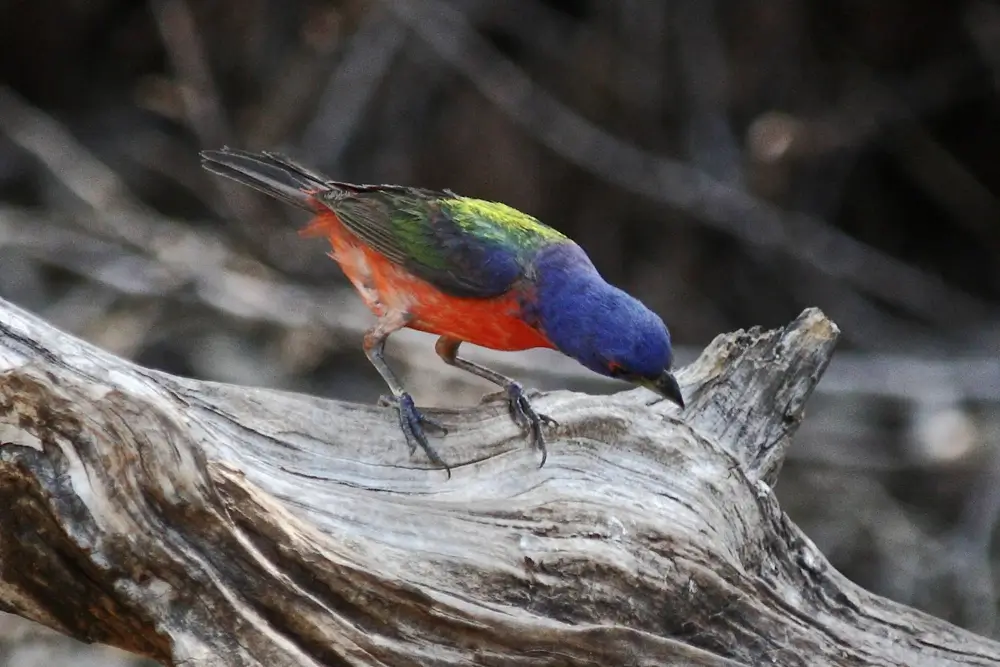
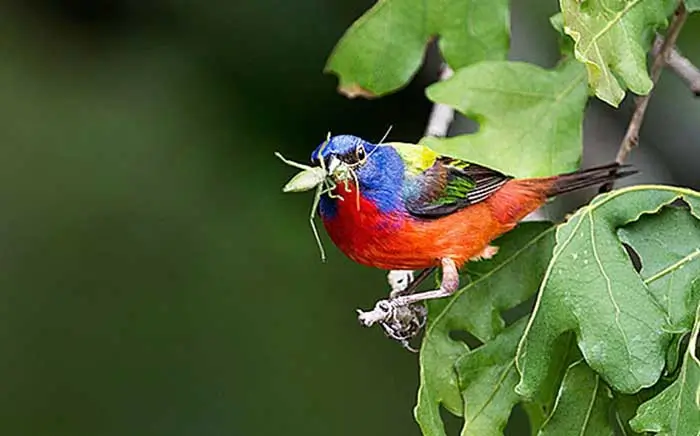
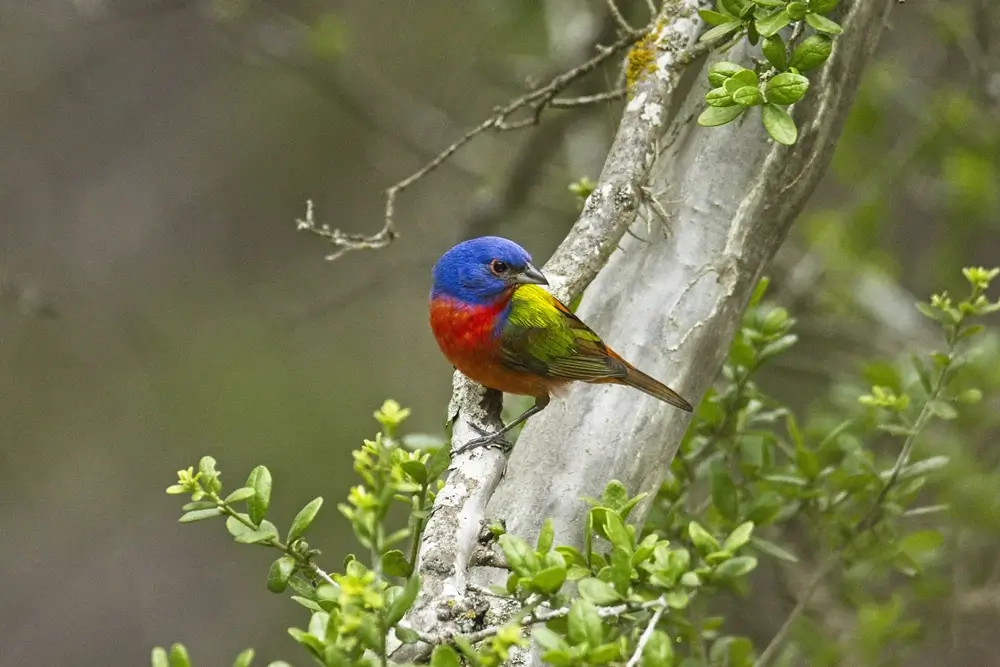
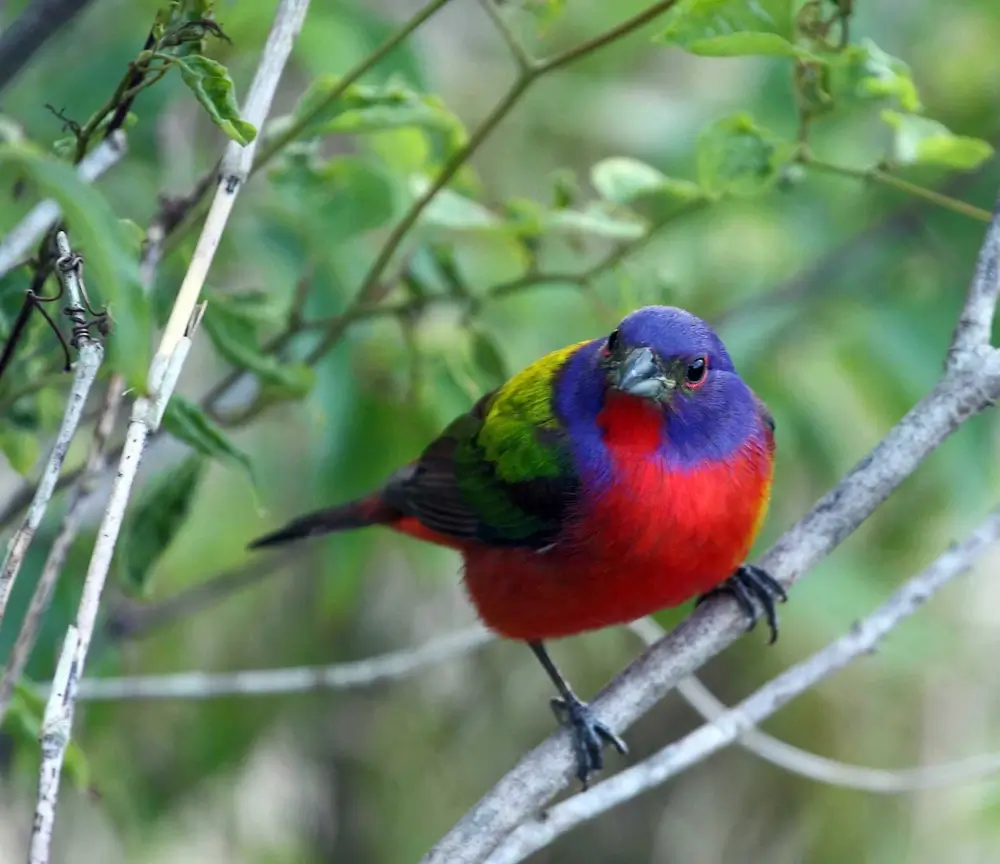
The painted bunting is a sparrow-sized bird. It is 4.7-5.5 inches (12-14 cm) in length with a wingspan of 8.3–9.1 inches (21–23 cm). It is one of the most colorful birds in North America.
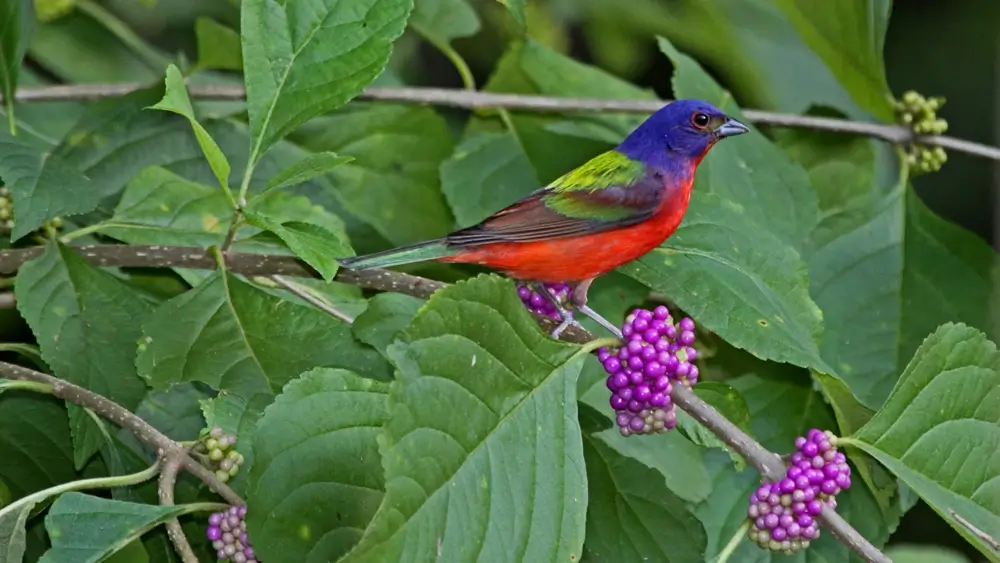
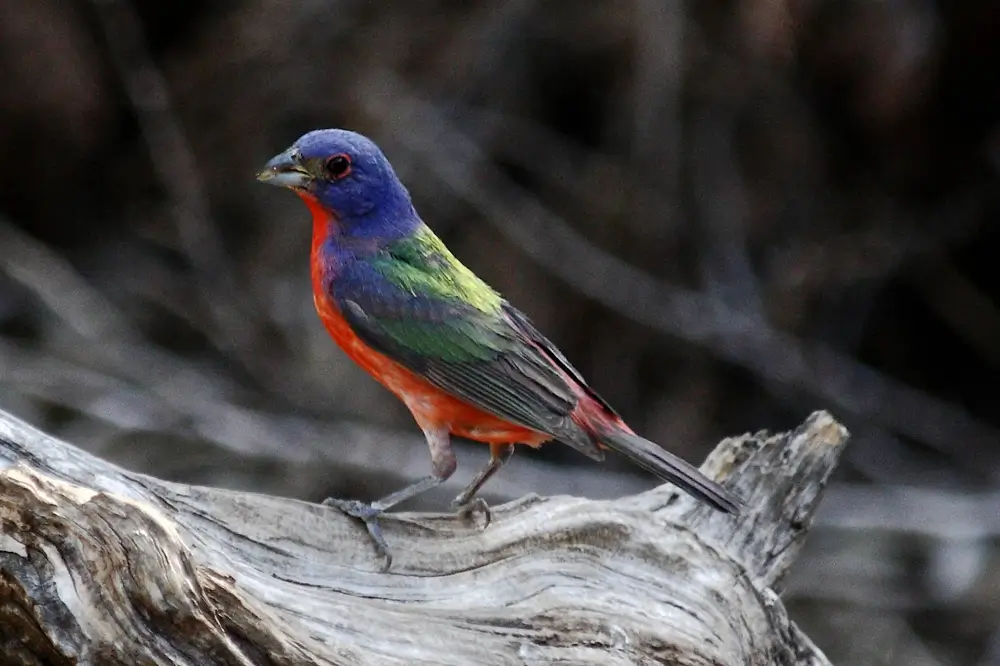
The male has bright red underparts and a bright red rump. It has a green back, a blue head, and a red eye ring.
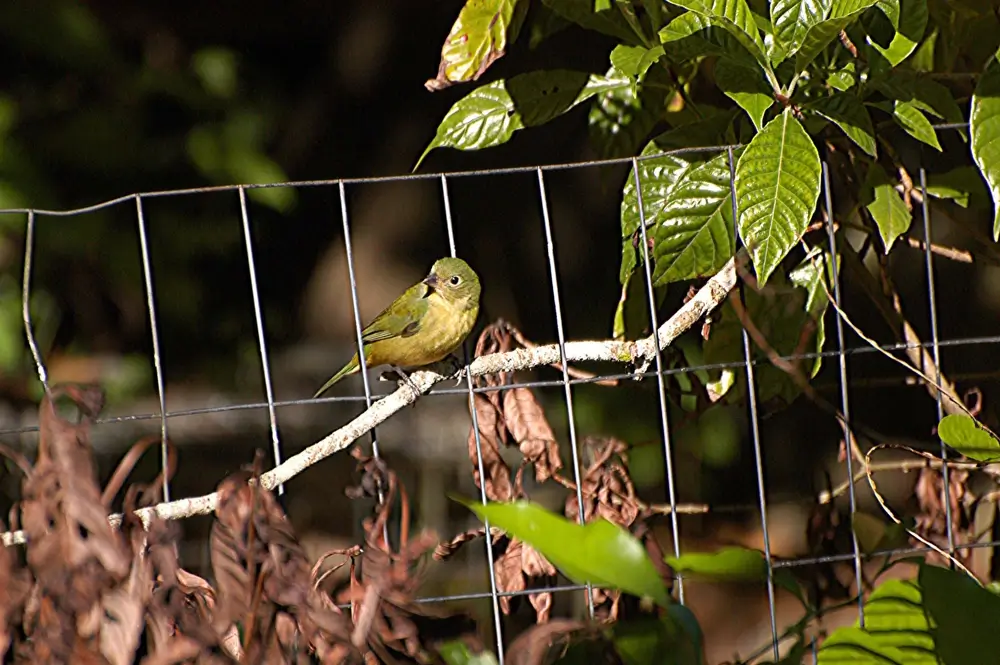
The female painted bunting is bright yellow-green with paler underparts. Both males and females have dark brown or black wings, a dark bill, and dark legs.
Habitat
The painted bunting lives in hedgerows, briar patches, woodland edges, and swampy thickets (areas with dense bushes and trees).
Diet
The painted bunting forages on the ground and in low vegetation for seeds, insects, spiders, and snails.
Life Cycle
The male arrives at the breeding grounds before the female and selects and defends a mating territory.
The female builds a cup-shaped woven-grass nest lined with moss and fur and placed in the fork of a small tree or bush.
She lays 3-4 eggs and incubates them for 11 days. The chicks are fed by the female and fledge (develop flight feathers) when they are 12-14 days old. The female may have up to three broods a year.
The painted bunting has a lifespan of 10-14 years. The oldest painting bunting on record lived to be 14 yeas old.
Behavior
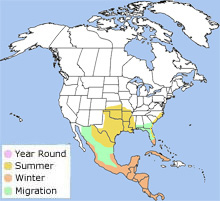
The western population of painted bunting begins its fall migration before molting (shedding old feathers and growing new ones). They molt in Mexico and then continue to migrate south. The eastern population molts before beginning their southern migration.
Did You Know?
Though the painted bunting is colorful, it is difficult to spot because it is often under the cover of brush and thickets.