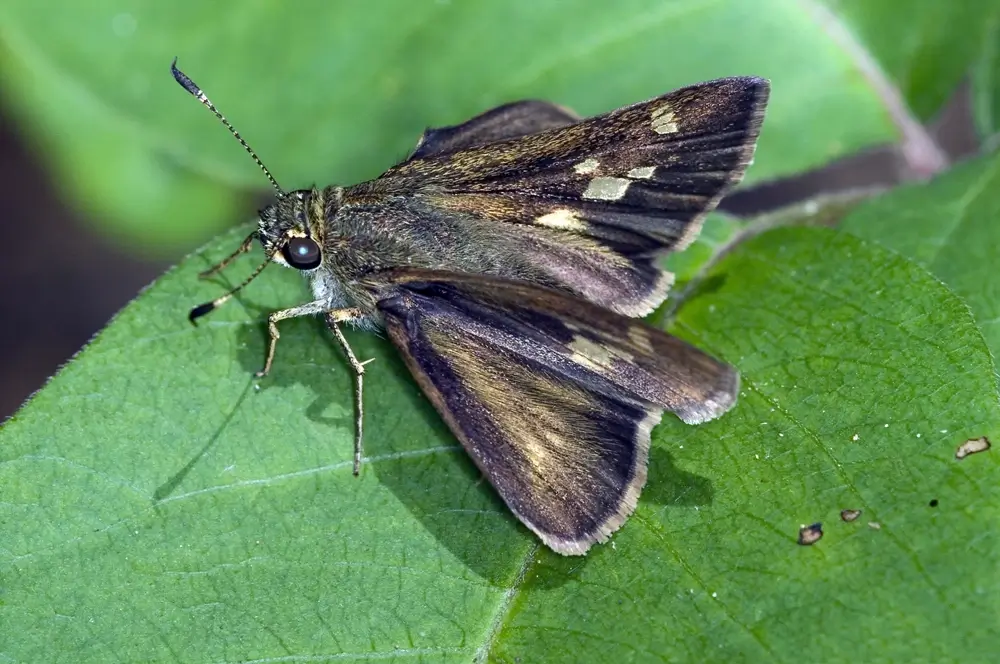
The little glassywing has a wingspan of 1 to 1.25 inches (2.5-3.2 cm).
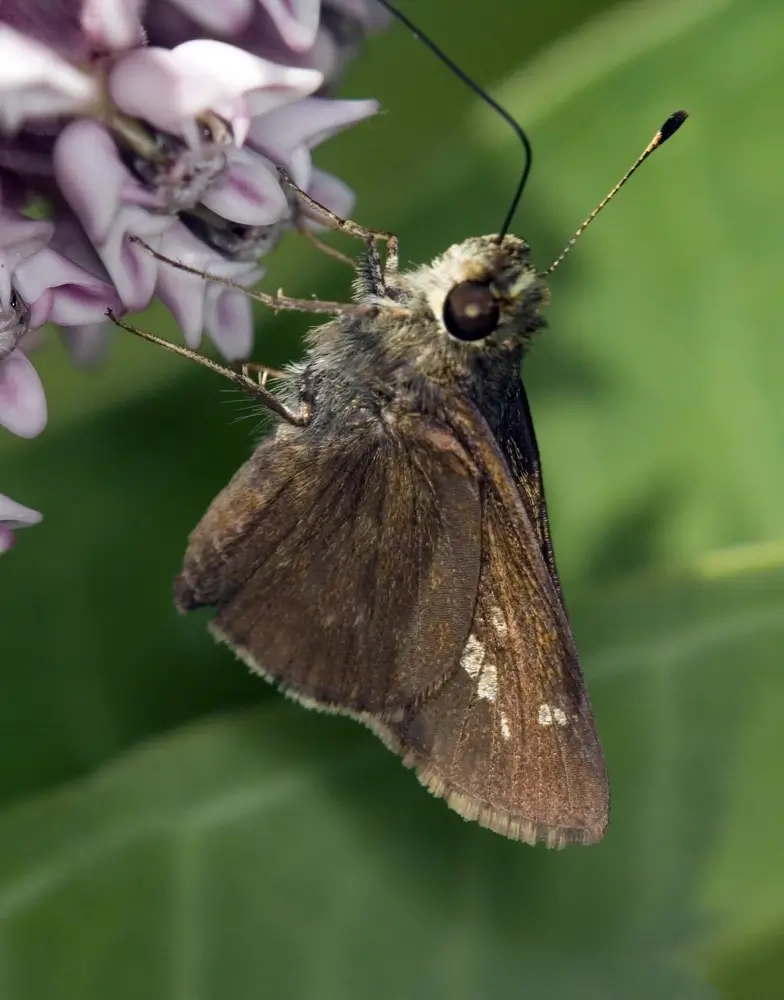
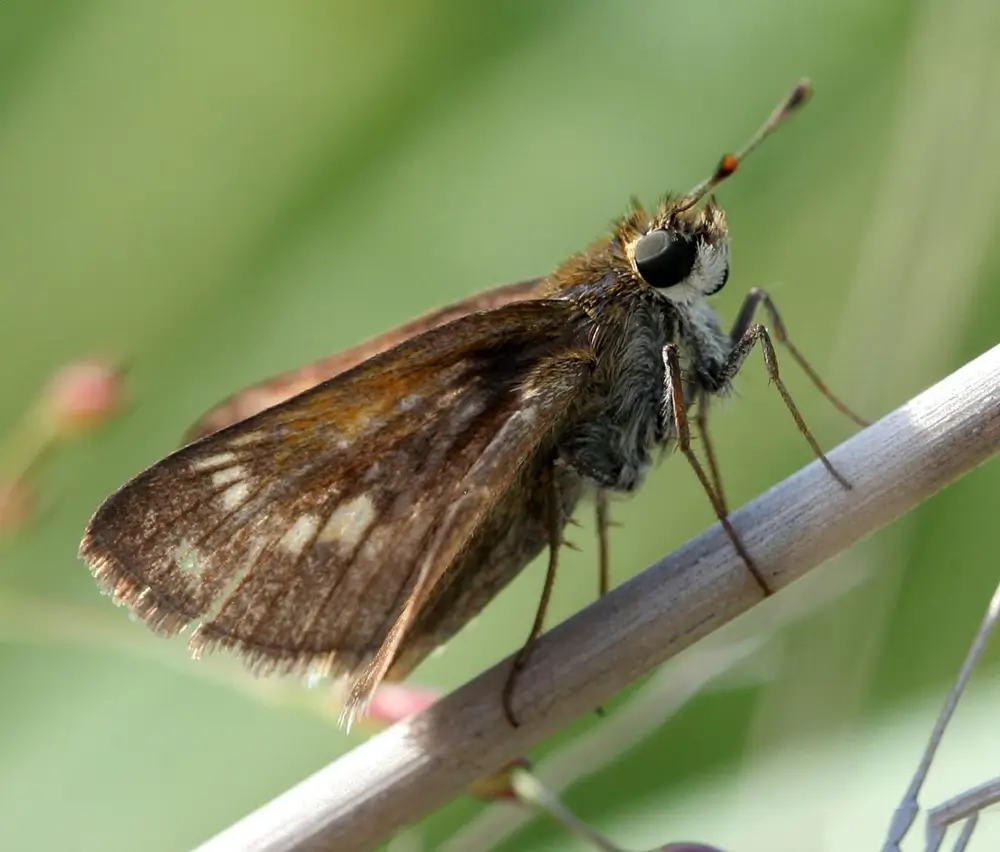
It has dark brown wings with white patches. It has an especially distinctive middle spot on its forewings. In females, this spot is slightly square and translucent (light can pass through). This is where the name glassywing comes from. In males, the center patch is long and slanted.
The male has a black stigma on his forewings. The stigma is a section of scent cells located on the forewings of the males of some species of butterflies. The undersides of its wings are a dark brown, sometimes with a few dull spots.
Habitat
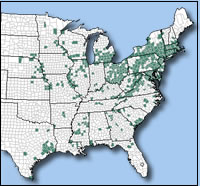
The little glassywing is found in moist meadows, bogs, fields, and gardens.
Diet
The little glassywing caterpillar eats purpletop (Tridens flavus). The adult little glassywing eats nectar from purple, pink, and white flowers, including dogbane, selfheal, peppermint, joe-pye weed, common milkweed, and swamp milkweed.
Life Cycle
The female little glassywing lays eggs on the leaves of a host plant. The larvae use silk to bind together leaves from the host plant, creating a shelter.
In the northern part of its range, the little glassywing has one brood a year. In the southern part of its range, it has two broods a year.
Behavior
Males sit on low plants in sunny, open areas, waiting for females to pass by. When a female comes near, they quickly dart out to try to attract her. You might also see males sipping moisture and nutrients from small patches of damp, bare soil.