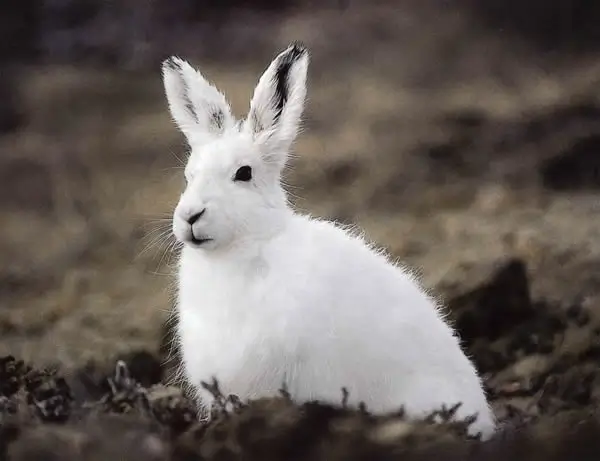
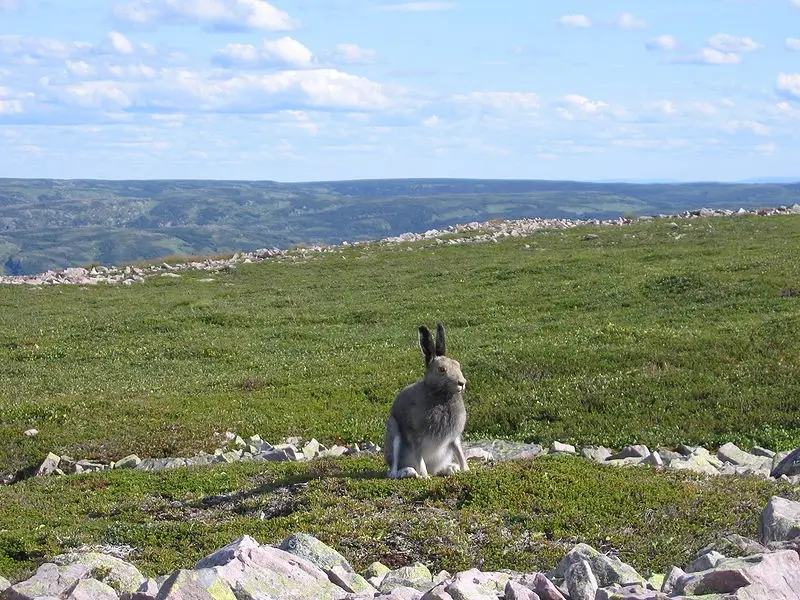
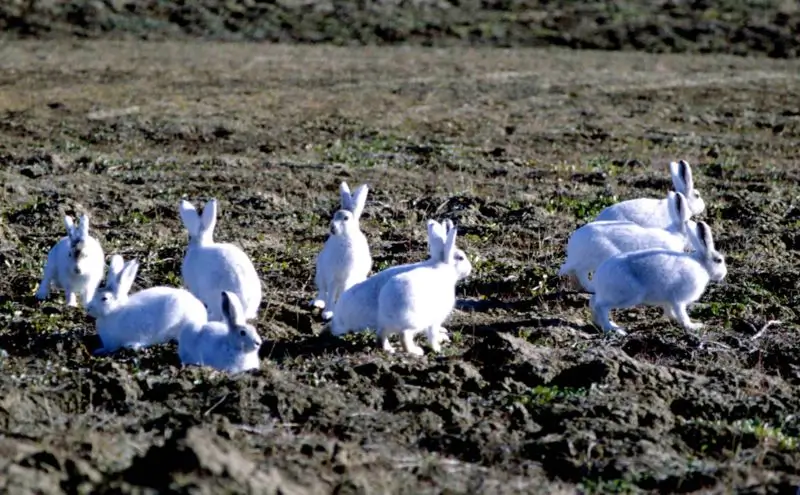
The Arctic hare is about the size of a house cat. It is 1.4-2.3 feet (0.43-o.7 m) in length and weighs 6-12 pounds (2.7-5.4 kg).
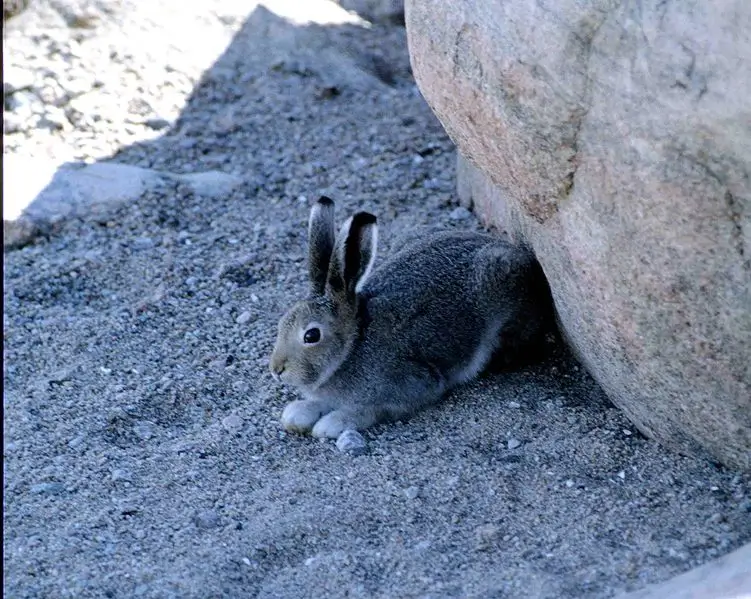
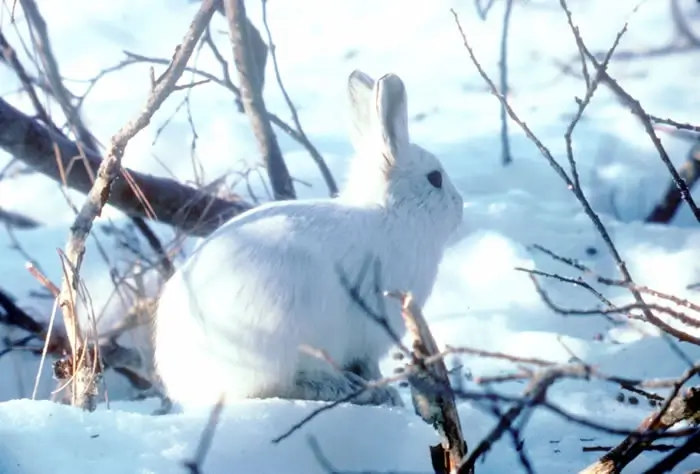
It has thick fur that keeps it warm in the winter. Its fur is white in the winter, which helps camouflage it in the snow. Its fur turns gray to brown in the warmer months.
The Arctic hare has long claws, especially on its hind legs. It uses its claws to dig in packed snow. The Arctic hare can hop on its hind legs like a kangaroo at speeds of up to 30 miles per hour (48.3 kph).
The Arctic hare also has incisors (front teeth) that are longer and straighter than most hares. It uses them to pull plants out from rocky crevices.
Habitat
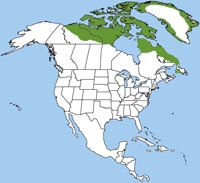
The Arctic hare lives in the tundra and in rocky mountainous areas. It needs a habitat in which plants can grow enough to keep the snow from getting too deep.
Diet
The Arctic hare eats mostly woody plants like willow twigs and roots, but it also eats sedges*, mosses, and berries.
*Sedges are plants that look like grass and usually grow in clumps in wet areas. Unlike most plants, which have round stems, sedges have stems shaped like triangles. They also have silica in their leaves. Silica is the same material used to make glass, so sedge leaves can be very sharp! A handy way to remember the difference between sedges and grasses is: “Sedges have edges.”
Life Cycle
The Arctic hare mates between April and May. Males may box with their front legs over a female. Babies are born in late May through July. Young are born later in the northernmost part of the hare’s range.
The female builds a nest in a depression in the ground, usually behind rocks or a bush. She lines it with grass and her fur. She gives birth to between 2 and 8 young. Young Arctic hares are called leverets.
The mother stays with the babies for the first couple of days. When she leaves to feed, the leverets can protect themselves by remaining motionless among the rocks or vegetation, making it hard for predators like wolves, lynxes, and Arctic foxes to spot them.
When the leverets are 2-3 weeks old, they start to leave the nest and explore their habitat. They will come back to the nest only to nurse. They are fully weaned (no longer need their mother’s milk) and independent at about 8 to 9 weeks old.
The Arctic hare has a lifespan of 3-5 years in the wild.
Behavior
Arctic hares are nocturnal (active at night). They often gather in groups of 10 to 60 hares when feeding. In the northernmost parts of their range, they have been known to gather in groups of up to 300 individuals.