

Camouflage helps an organism blend in with its surroundings.
Camouflage is an adaptation that helps an organism blend in with its surroundings. It can involve colors, patterns, textures, or even body shapes that match the environment.
When an organism is camouflaged, it becomes much harder to see. This can help it avoid predators or sneak up on prey.
Predators often rely on sight to hunt, so if they can’t easily spot an animal, they have to spend more time searching. This uses up energy, and sometimes the predator may give up and look for easier food.
Camouflage is important for survival because it increases an organism’s chances of staying safe and getting the food it needs.
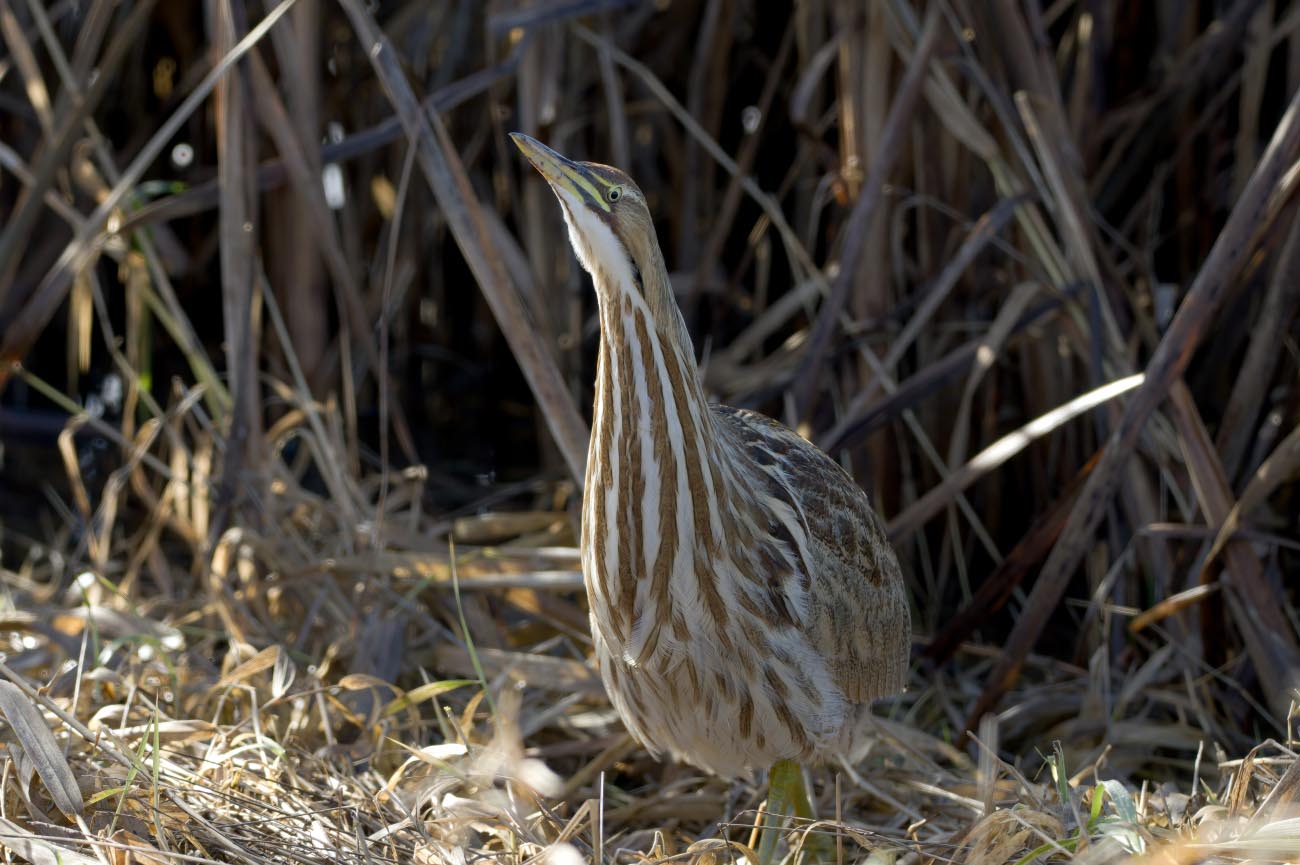
The American bittern relies camouflage coloration to protect it from predators
There are many different types of camouflage. Colors and patterns can help animals blend into places with light and shadow.
The American bittern spends most of its time hidden among reeds. When a threat approaches, it may freeze in place or stretch its neck straight up and sway gently back and forth. The stripes on its chest and belly look like reeds moving in the wind, which can trick predators. If that doesn’t work, the bittern gives a loud, booming call and flies away.
Other animals, like the bobcat, use spots to blend into their surroundings. Their spots work similarly to the bittern’s stripes. The darker spots match the shadows, while the lighter fur blends with brighter areas.
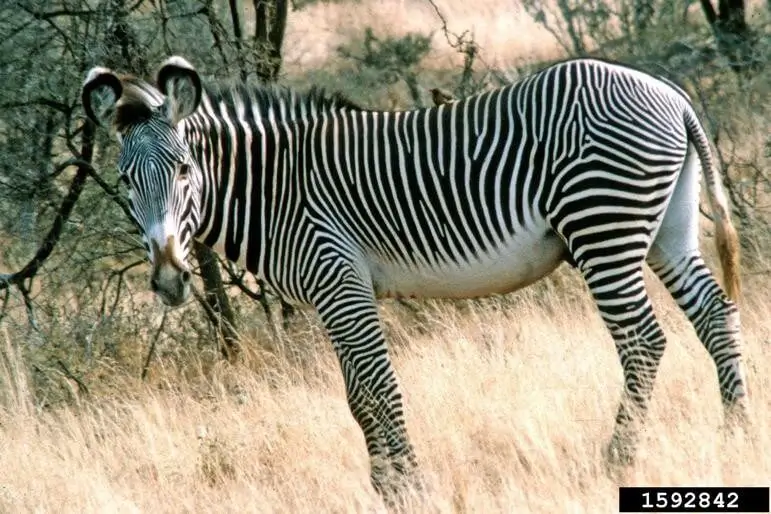
Stripes and spots can be <strong>disruptive coloration</strong>. Disruptive coloration helps break up an animal's outline.
Stripes and spots can be disruptive coloration. Disruptive coloration helps break up an animal’s outline. This makes it difficult for other animals to see it. You’d think that the zebra’s stripes would make it easy for predators to see it. The main predator of the zebra is the lion. Lions don’t like to hunt in the heat of the day; they prefer sleeping in the shade. They hunt as it gets dark. As the sun goes down, the zebra’s black-and-white stripes help it blend into the tall grass. But the zebra’s stripes have another purpose.
Zebras live in herds. Lions like to pick out one member of the herd that looks weak. When the lion attacks, the zebras start running in all directions. With all those stripes mixing, it’s easy for the lion to lose the zebra it picked out of the herd.
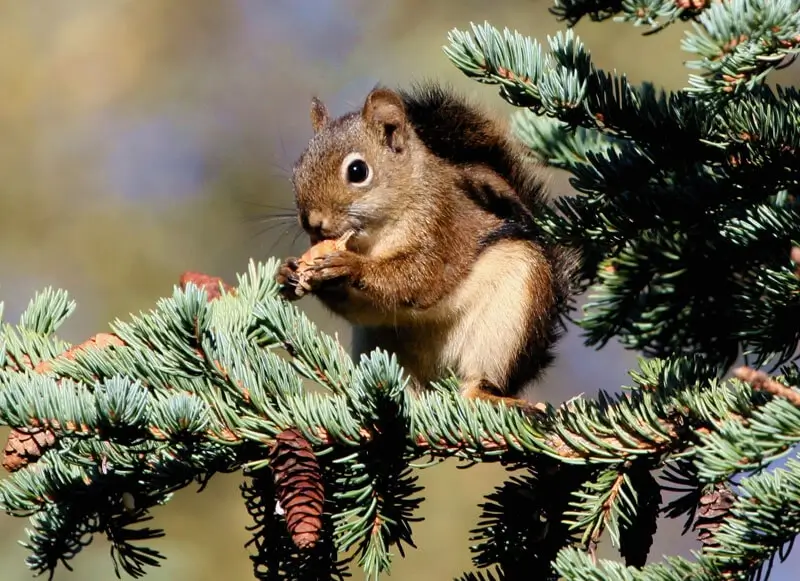
The red squirrel has reddish-brown fur on top and white fur on its undersides.
Another type of camouflage is called counter shading. Animals with countershading have different colors on their backs and stomachs.
The red squirrel has reddish-brown fur on top and white fur on its underside. The darker top fur makes it harder for predators to see the squirrel down on the ground. When it is perched on a tree branch, and the predator is looking up at it, the white fur on its belly helps it to blend into the lighter sky above.
Penguins also have counter shading. Penguins spend a lot of time in the water. The dark feathers on their backs help camouflage them from predators that are swimming above them. Their white stomach feathers hide them from predators swimming below them.
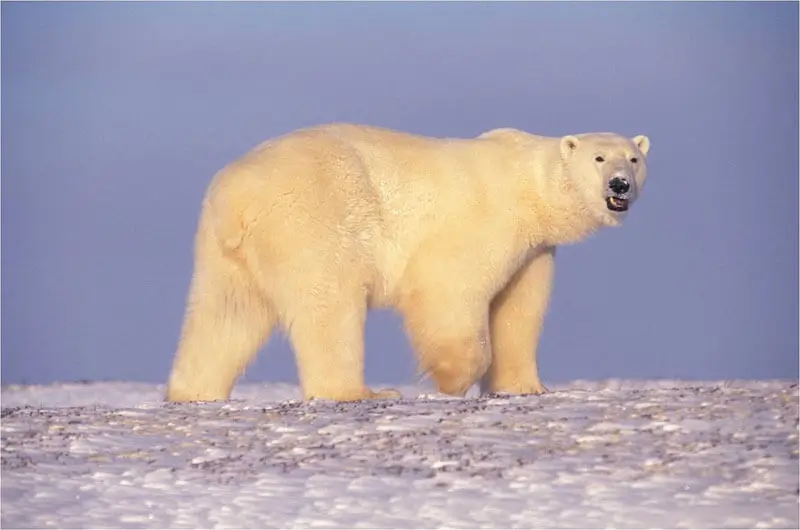
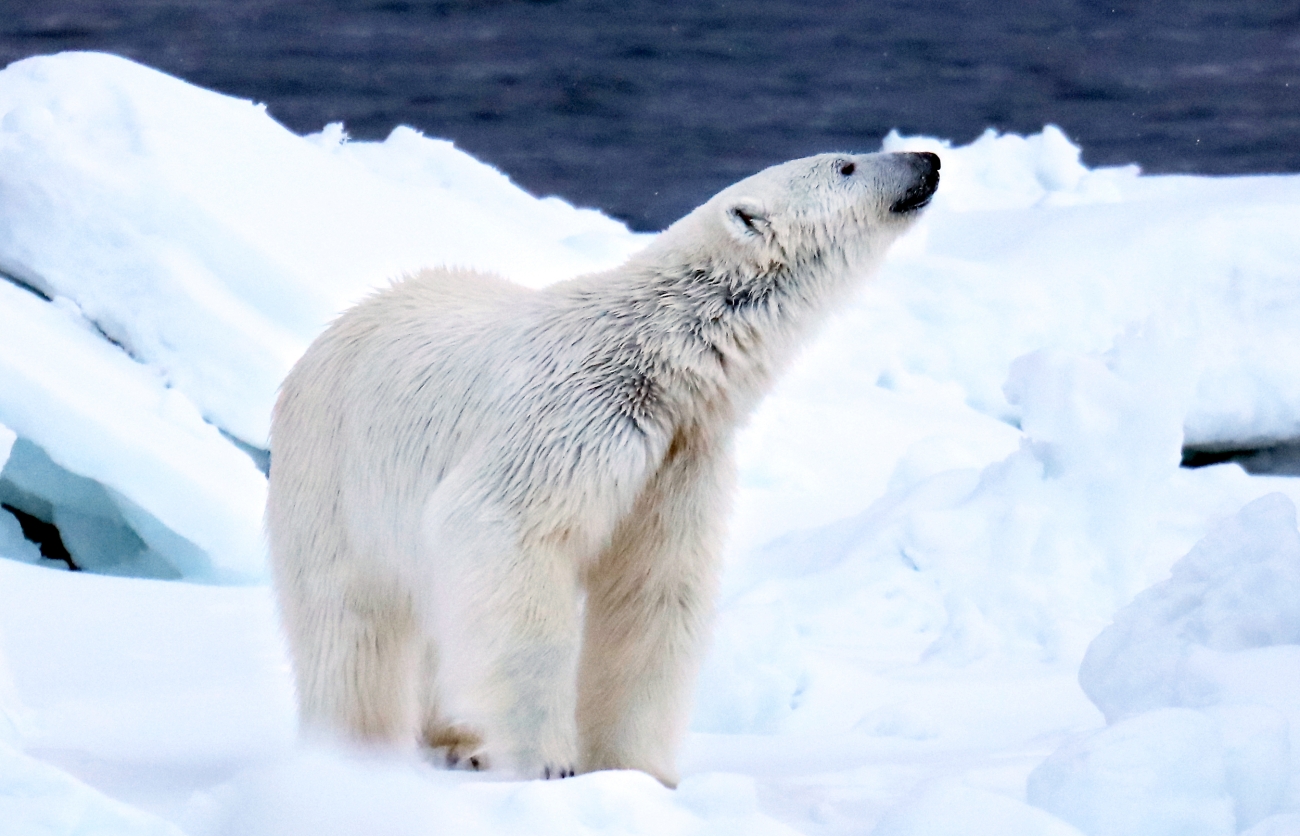
Sometimes an animal blends best into its environment when it is a solid color.
Sometimes an animal blends best into its environment by being one solid color. This type of camouflage helps it stay hidden from both predators and prey. For example, the thick white fur of the polar bear helps it blend in with the snow and ice of the Arctic. From a distance, a polar bear can be very hard to see, especially during winter when everything around it is covered in white.
This camouflage gives the polar bear an advantage when hunting animals like seals, because it can sneak up without being easily noticed. It also helps keep the bear safe by making it less visible to potential threats. Even though polar bears are powerful predators, blending in with their surroundings is still an important survival skill.
Many other animals use solid colors for camouflage, too. For example, in forest environments, animals like white-tailed deer use brown coats to blend in with tree trunks and fallen leaves, while some insects are green so they look like leaves.
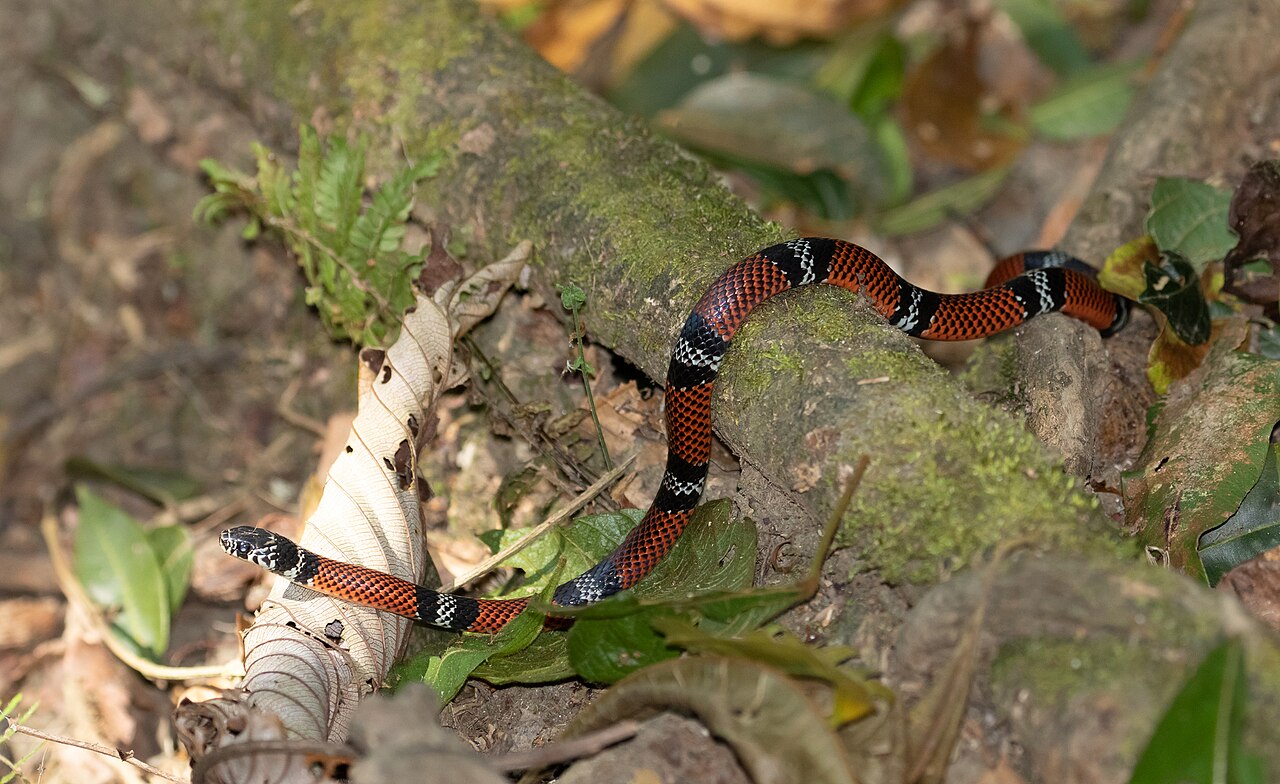
The poisonous coral snake and the harmless king snake can look a lot alike. Pictured: Double-Banded Coral Snake Mimic
Some animals and plants use mimicry, which is when one organism looks or acts like another organism or object in its environment. This helps them survive by avoiding predators or by helping them catch prey.
If mimicry were a play, there would be three key “characters.” The model is the species that is being copied. The mimic is the species that looks or behaves like the model. The dupe is the animal that is tricked—usually a predator or prey.
The dangerous coral snake has bright warning colors. The harmless kingsnake looks very similar, so predators often avoid it. This is called Batesian mimicry, where a harmless animal copies a dangerous one for protection.
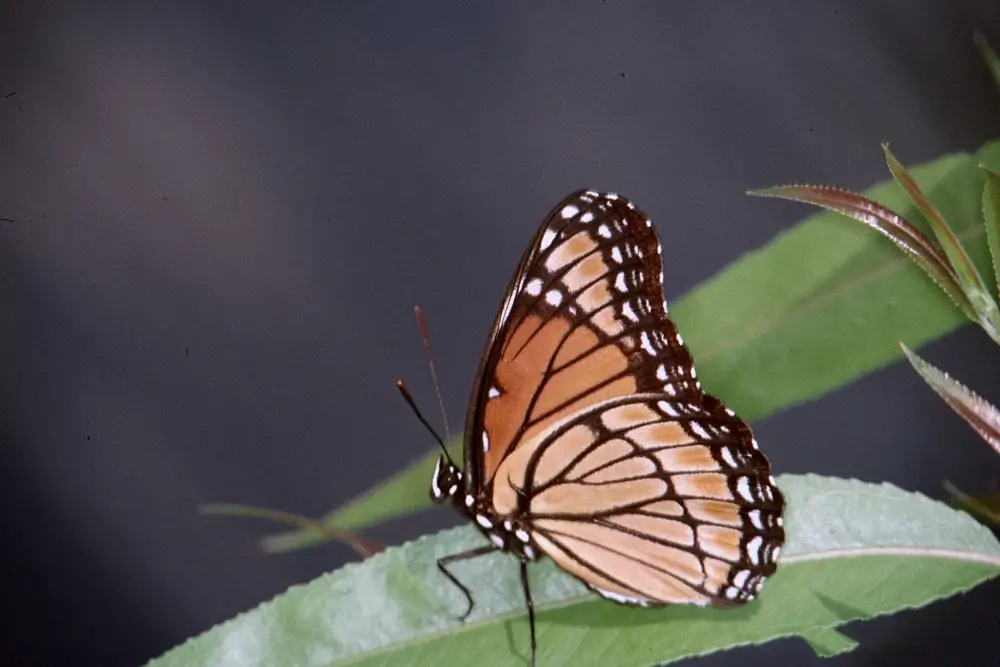
The monarch butterfly is toxic because it eats milkweed as a caterpillar. The viceroy butterfly looks very similar. Scientists once thought this was Batesian mimicry, but now they think both butterflies may taste bad to predators. If both species are harmful and copy each other’s warning colors, it is called Müllerian mimicry.
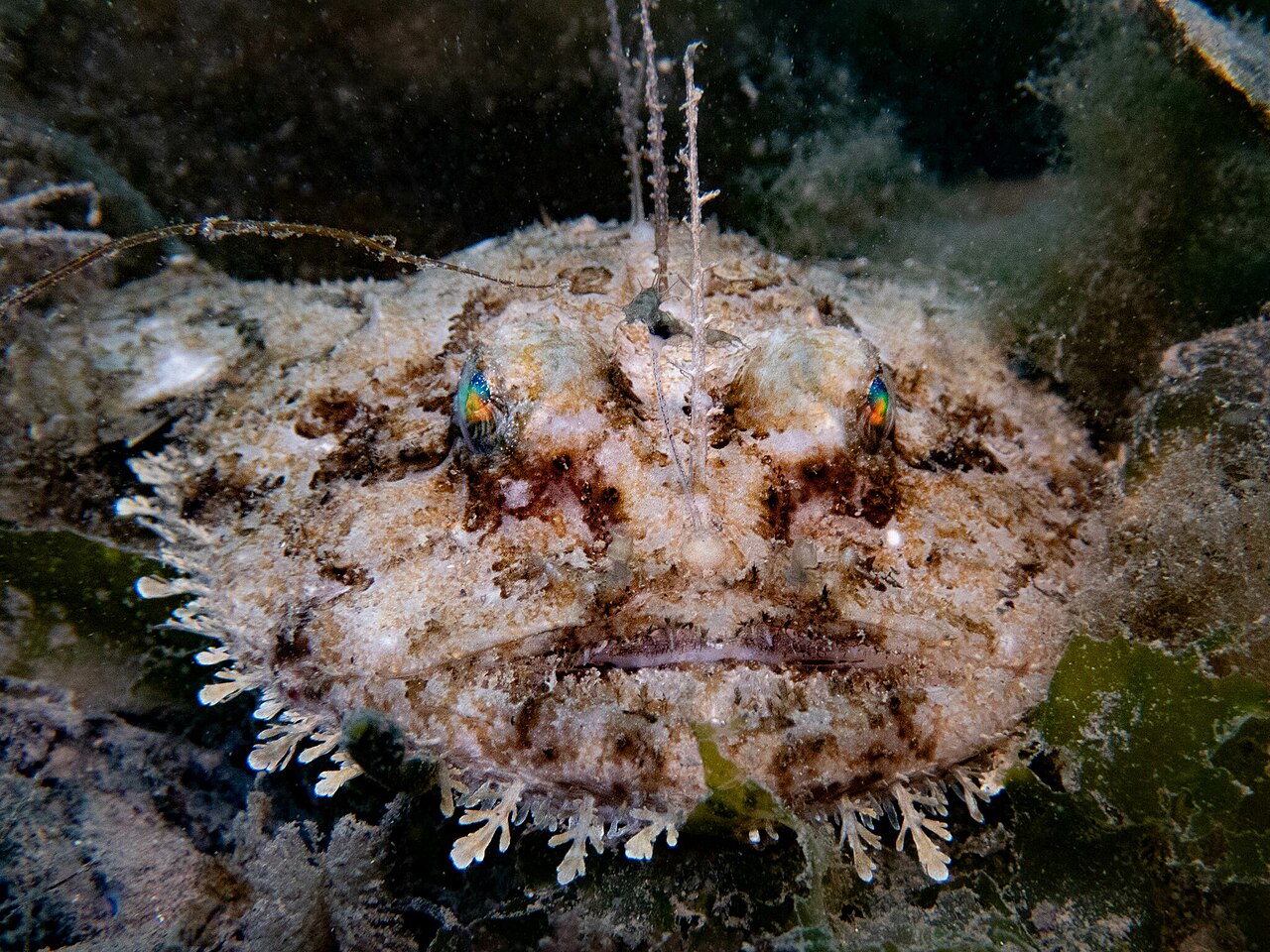
The angler fish lures its prey to where it can strike
Some animals use mimicry not to hide from predators, but to trick other animals into coming close so they can catch them. This is called aggressive mimicry. In this strategy, a predator copies the appearance, behavior, or signals of something harmless—or even something attractive—to lure prey within striking distance.
A well-known example is the anglerfish. Anglerfish live in the deep ocean, where it is very dark. It has a long, thin spine on its head that acts like a fishing rod with a glowing tip (from special bacteria). The anglerfish wiggles this “lure” to make it look like a small, moving snack. Curious fish and crustaceans swim closer, thinking they’ve found food—but instead, the anglerfish suddenly opens its large mouth and swallows them.
The alligator snapping turtle uses a worm-like tongue to lure fish. When a fish comes to “eat the worm,” the turtle snaps its jaws shut. The orchid mantis looks like a beautiful flower. Insects that come to feed on the “flower” end up becoming its meal instead. The zone-tailed hawk flies with turkey vultures. Since vultures are harmless scavengers, prey animals don’t get scared—but the hawk is actually hunting them.
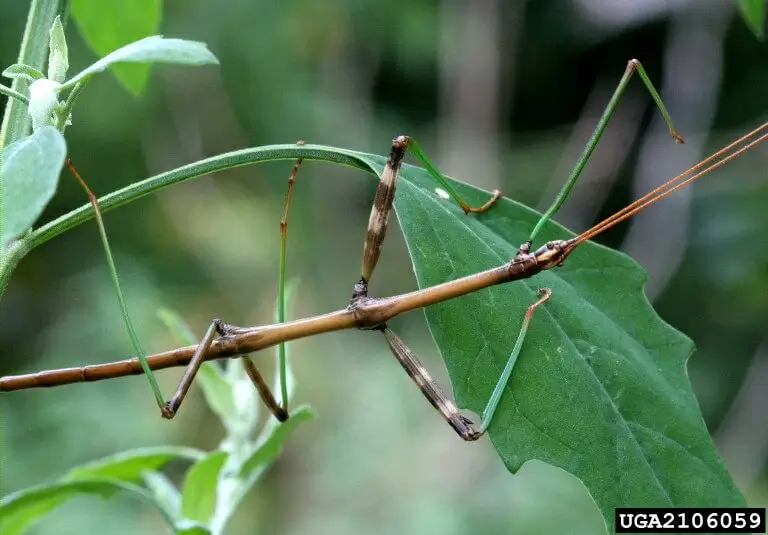
The walking stick looks so much like a twig that it's easy to overlook it.
Some organisms look so much like another object that they almost disappear.
The walking stick looks so much like a twig that it’s easy to overlook it. Walking sticks are members of the Phasmatodea insect order. There are over 2,500 species in this order, with over 32 species in North America. Most species in this order are found in the tropics.
Species in this order all have one thing in common – they are masters of disguise! Because walking sticks look like twigs and sticks, it is very difficult for predators to spot them. Most species of walking stick have no wings or very small, non-functioning wings. Walking sticks also move slowly, so they don’t attract predators.
The katydid looks like a leaf. Katydids are also known as leaf bugs or bush crickets. Katydids are members of the grasshopper family. There are over 6,000 species of katydids in the world.
The praying mantis can look like a leaf and a twig. The praying mantis is a member of the Mantodea order of insects. There are over 2,400 species of mantises found around the world.
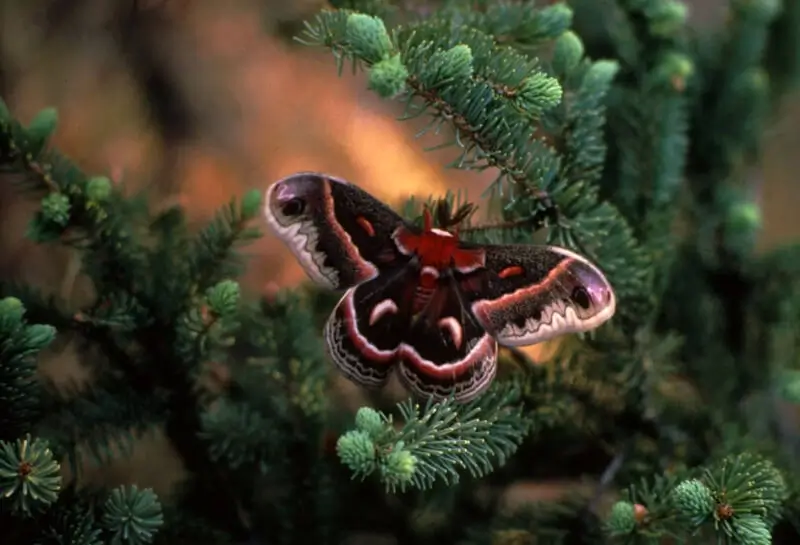
The cecropia moth is the largest North American moth. It has a wingspan of 5-6 inches.
Some butterflies and moths have large, round markings on their wings called eyespots. Even though they aren’t real eyes, they strongly resemble the eyes of a much larger animal.
These eyespots are a clever form of protection. When a bird sees them, it may be tricked into thinking the insect is a bigger, more dangerous animal instead of a small, easy meal. This can startle the bird or make it hesitate long enough for the butterfly or moth to escape.
In some species, such as the cecropia moth, the eyespots are especially noticeable when the wings are opened suddenly. This quick “flash” can surprise predators even more. In this way, eyespots help butterflies and moths survive in the wild by confusing or scaring away animals that might try to eat them.
