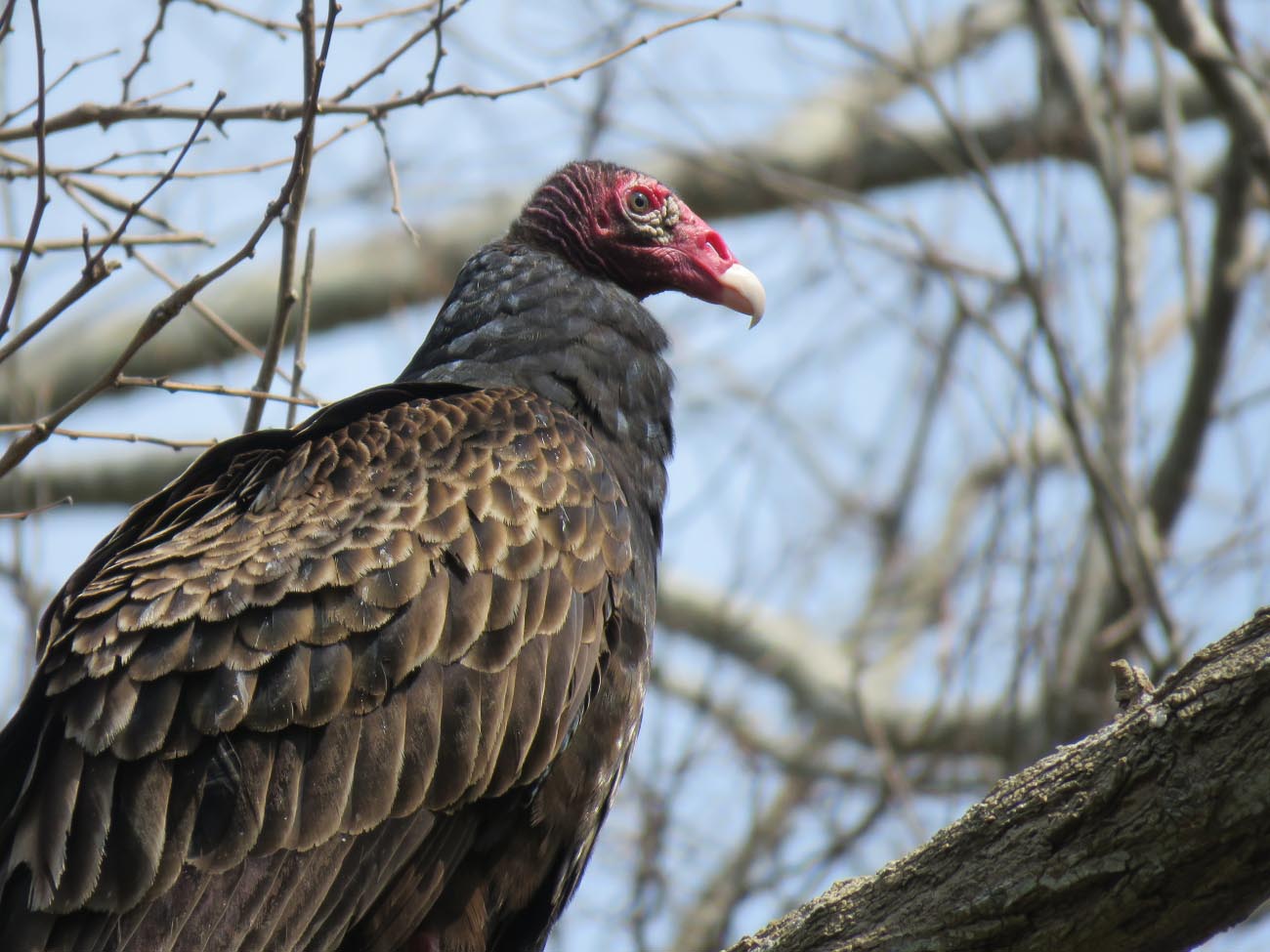
In the opening segment, Patrice looks at the important role decomposers and scavengers play in the natural world. She then visits with Dave and they check on the progress of the decomposition of a dead gray squirrel. In the third segment, we take an up-close look at the turkey vulture. Finally, Hawk Mathany and Chris Thayer of the Appalachian Mountain Club show Laura and Marshall just how and what they recycle in the wilderness.
Program Objectives
Students will:
Describe the relationship between scavengers and decomposers.
Explain the importance of decomposers and scavengers in an environment.
Give examples of some scavengers and decomposers.
Give an example of the decomposition of organic material.
Recognize the distinct characteristics of the turkey vulture.
Describe the turkey vulture’s role as a scavenger.
Pre-Viewing Activities
Have the students make a list of all the garbage or waste they created during the day. Have them identify where that garbage will end up.
Post-Viewing Activities
Take a nature walk and look for examples of decomposition. Good places to look include under logs and piles of leaves.
Have the students research what the school is doing to recycle waste. Have them identify things they can do to increase school recycling. Once they have identified actions they can take, have them develop a plan and implement it. Plans should be something they can accomplish. It could be collecting aluminum cans and taking them to a recycling center, or collecting kitchen and cafeteria waste for a school compost pile.
Hands On: Back to Earth
Back to Earth
Organic plant waste (no meat or animal waste)
Jars
Pieces of nylon screening cut to fit over jars or cups
Soil
Rubber bands
Scissors
Table spoon
Spray bottle
Popsicle sticks
Plant seeds
Pass out a jar, a piece of screen, a popsicle stick, and a rubber band to each student. Have each student place about 2 tablespoons of soil in their jar. Next, have the students cut up plant waste (leaves, grass, fruit…) into small pieces and pack it lightly on top of the soil. Spray the jar contents lightly with water and mix with a popsicle stick.
Next, place the screening over the jar and fasten it with the rubber band. Over a period of two or three weeks, have the students observe their compost jars and write down their observations.
They should lightly spray and mix the contents of their jars every couple of days to keep the soil moist. Once the plant material has decomposed, have the students plant some seeds in their jars.