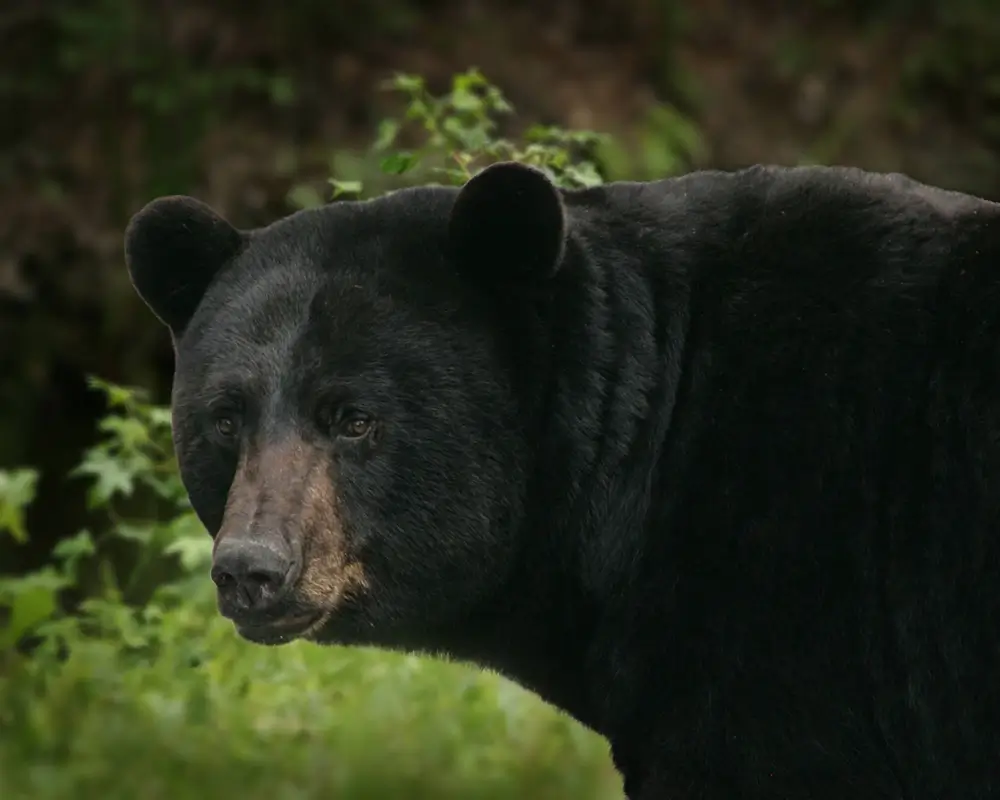
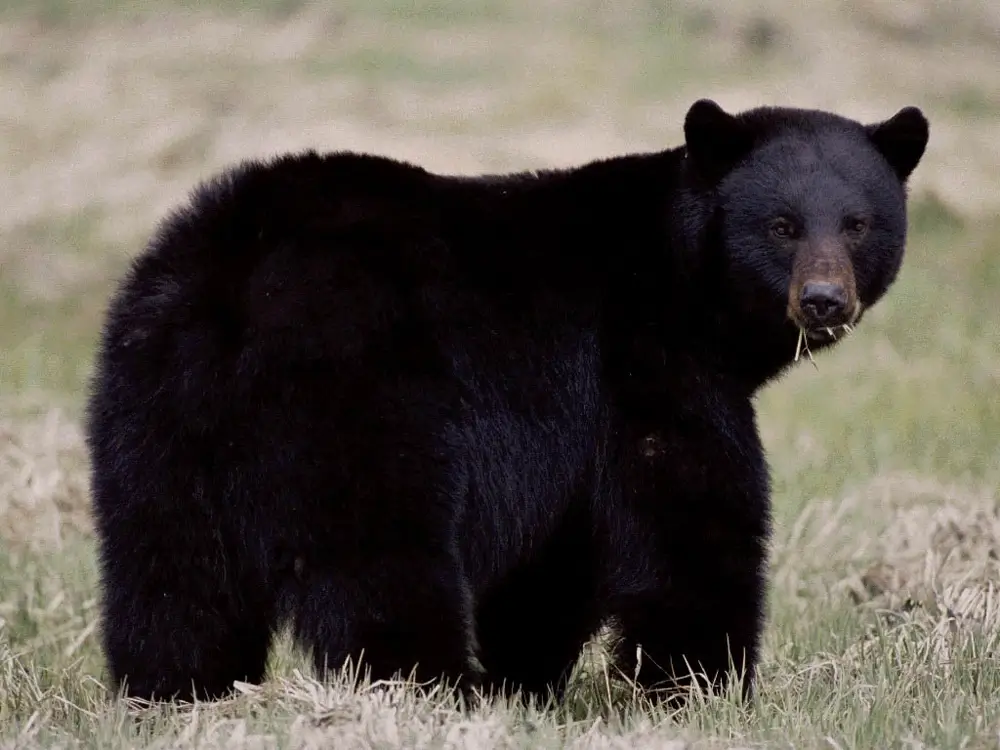
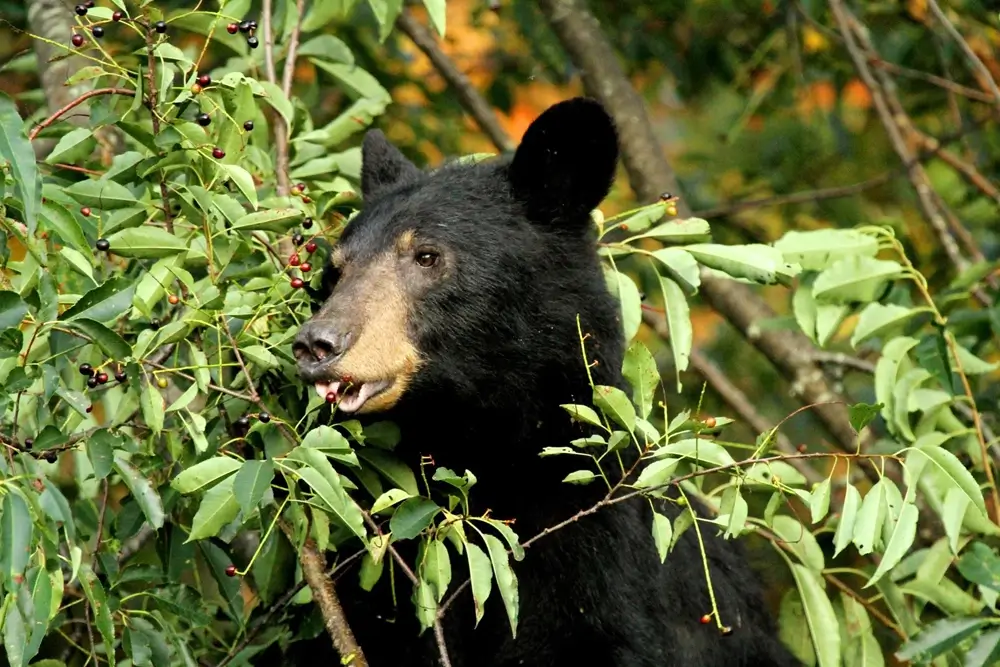
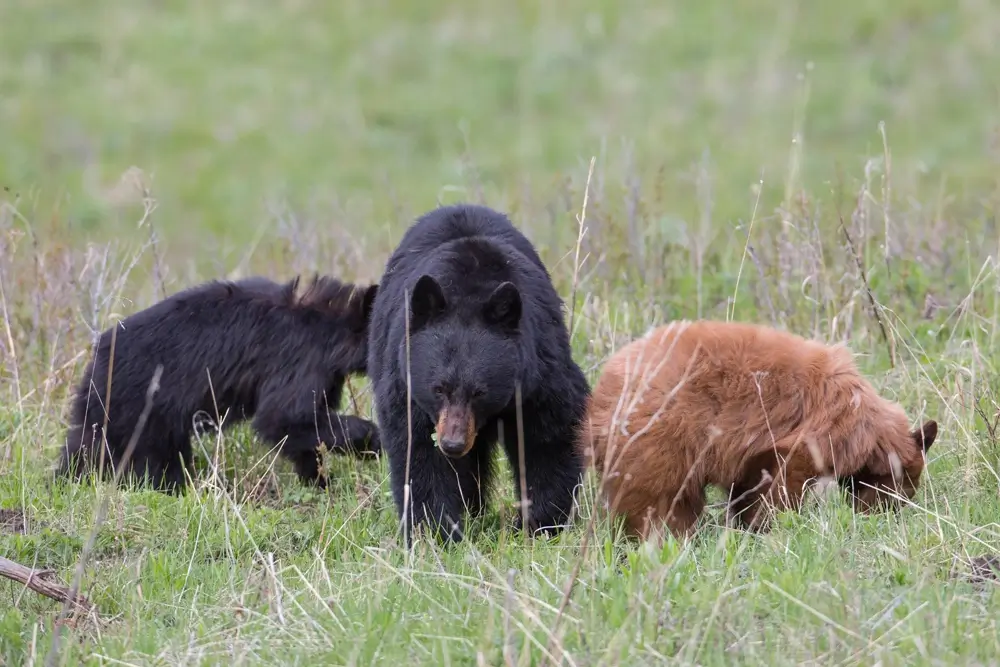
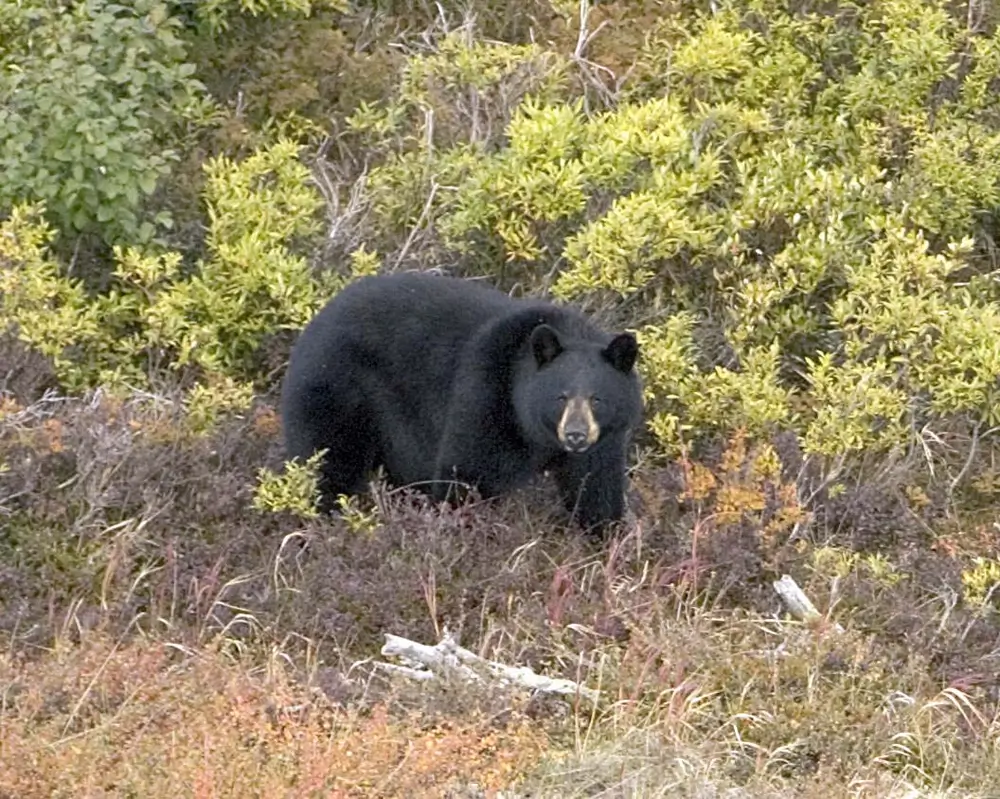
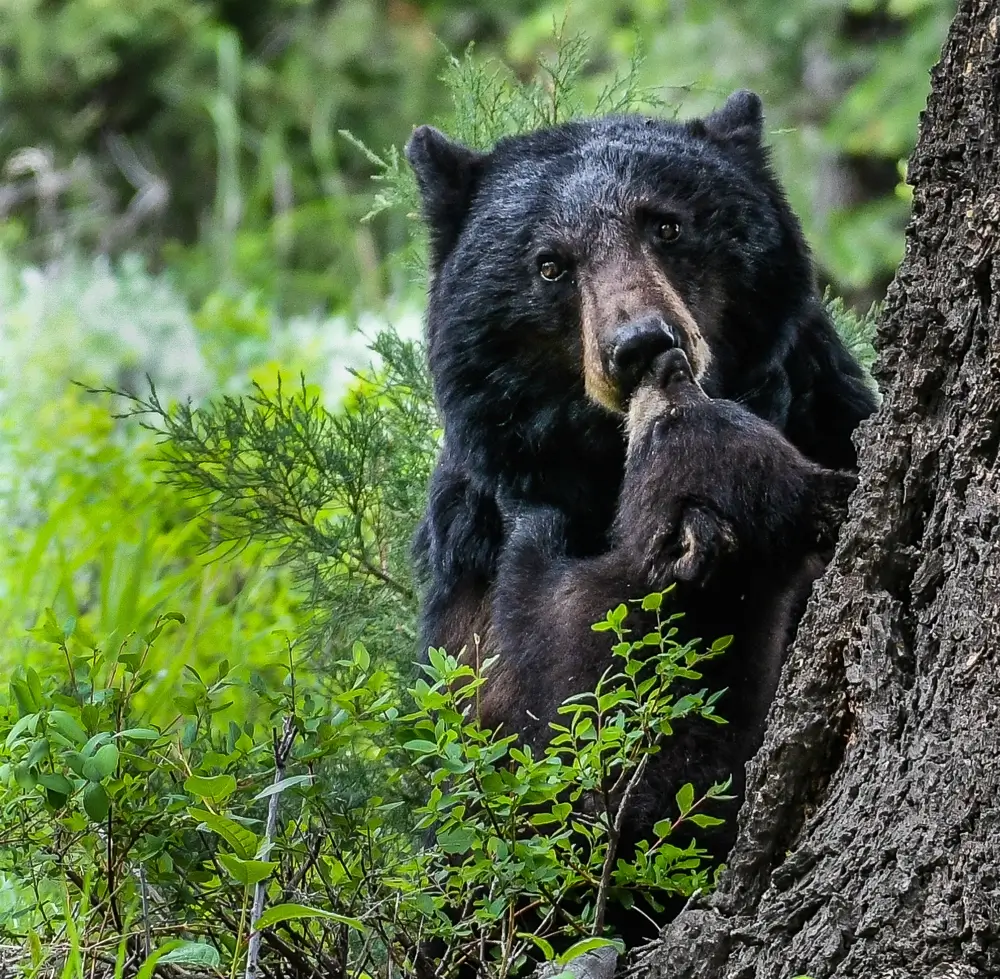
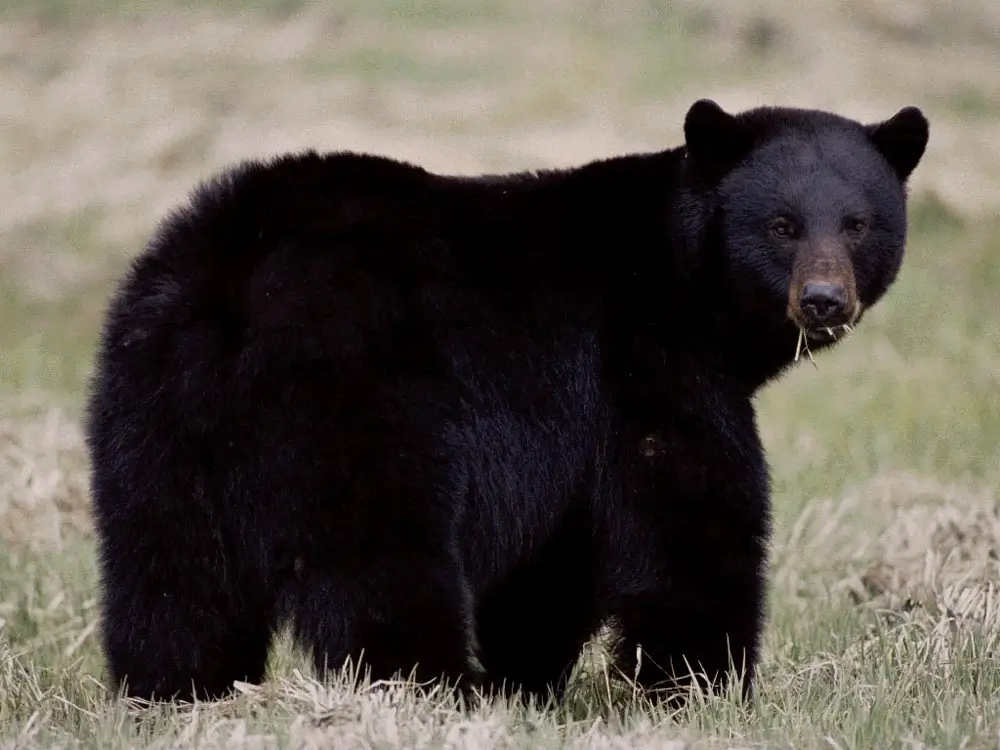
The American black bear is the smallest North American bear. It is usually black with a tan muzzle and a white patch on its chest. Black bears in the west may be cinnamon brown, and in parts of British Columbia and the Yukon Territory in Canada, the black bear may even be silver-gray or white.
The black bear has small, rounded ears and inch-long claws on its feet. The black bear doesn’t have a large shoulder hump like the brown bear.
The black bear stands about 3 feet tall (0.91 m) from shoulders to feet, and it is 4-6 feet (1.2 – 1.8 m) from head to toe. Males are usually much larger than females. The male usually weighs 130-350 pounds (59-159 kg), but it can weigh as much as 600 pounds (272 kg). The female weighs 90-175 pounds (41-79 kg).
Habitat
The black bear is found in a variety of habitats with tree-covered areas and meadows. It requires areas with lots of vegetation for cover and shrubs and other plants for food. It can be found in mountain areas, swamps, and forests.
The black bear has a home range of about ten square miles (6 km2). The home range of the male is usually larger than the home range of the female.
Diet
Although the black bear is in the Carnivora order, it is really an omnivore, and most of its diet is made up of plants. It eats twigs, buds, leaves, nuts, roots, fruit, corn, and berries.
It also eats bees and honey, and it tears up rotting logs to get to grubs, beetles, and insects. The black bear also catches fish and small to medium-sized mammals. It also eats carrion.
In the summer, the black bear eats lots of foods that are rich in carbohydrates, like berries. The black bear can gain as much as 30 pounds (13.6 kg) a week in the summer. It needs the extra weight to survive in the winter.
Life Cycle
The black bear mates in June and July. The female gives birth to 1-5 cubs in January or February. The cubs are naked and blind at birth and weigh only 7 ounces (198 g). By the spring, the cubs weigh about 10 pounds (4.5 kg) and begin to explore their environment with their mother.
The cubs learn how to find food and survive from their mother during the spring, summer, and fall. The cubs are weaned when they are 6-8 months old, but they stay with their mother through the winter. In the spring, they leave to establish their own territory.
The black bear has a lifespan of 10-20 years in the wild. Threats to black bears include hunting, getting hit by cars and trucks, and habitat loss.
Behavior
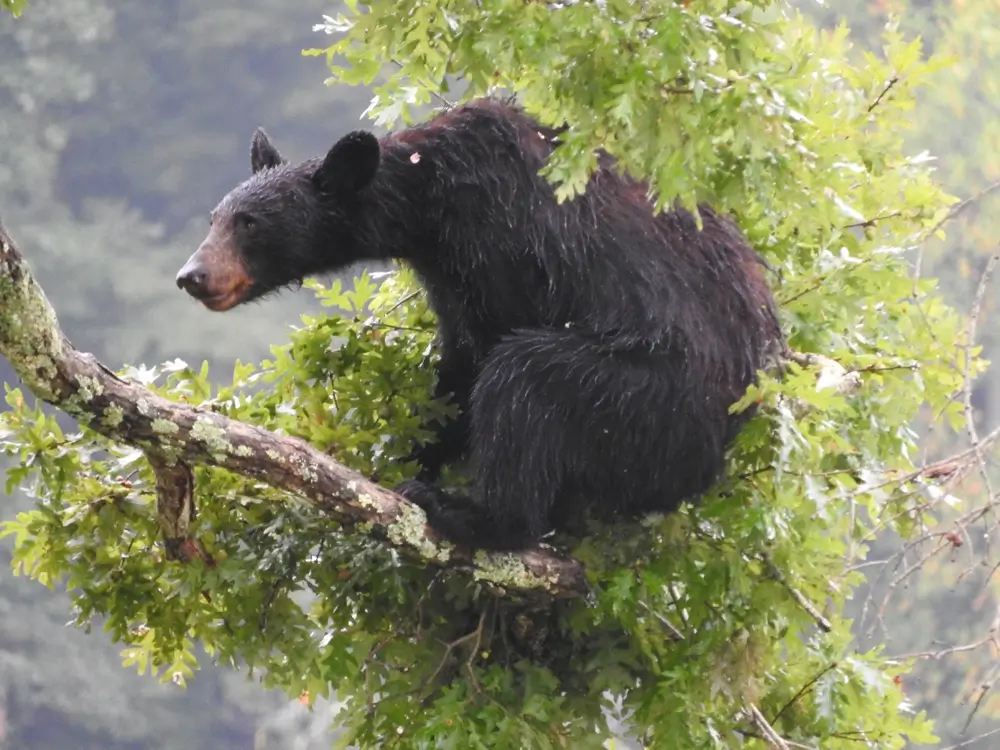
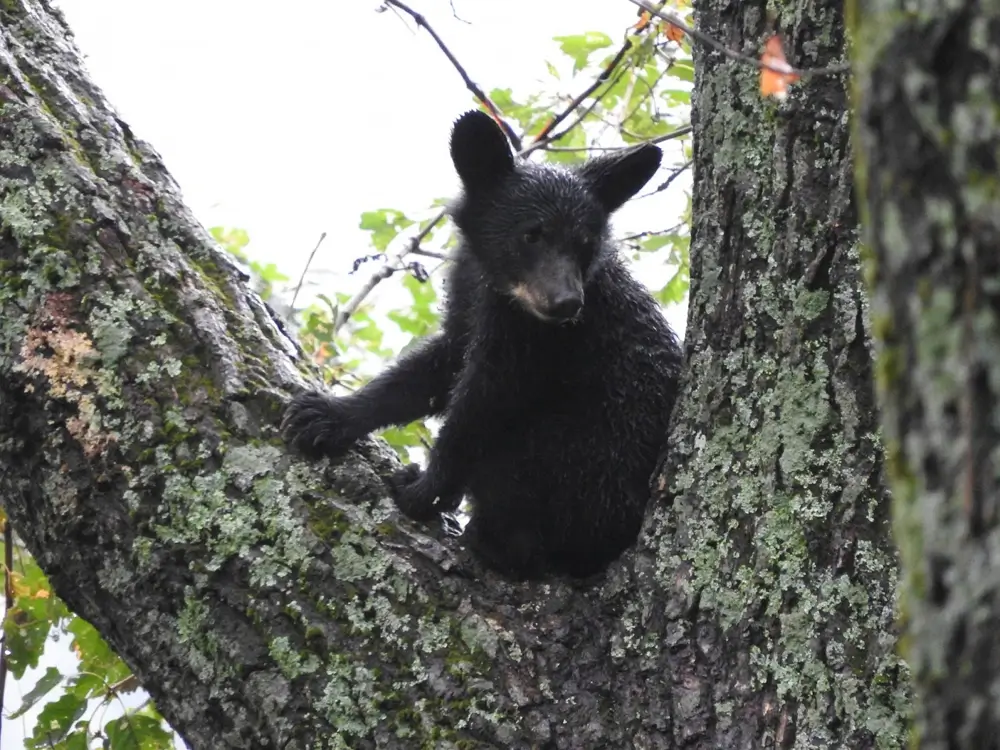
Except for during the mating season and when raising young, the black bear is a solitary animal. The black bear is usually crepuscular. That means it is active in the early morning and in the evening. It runs at speeds of up to 30 miles per hour (48 kph), and it is an excellent swimmer and tree climber. The black bear has poor eyesight, but it has an excellent sense of hearing and a keen sense of smell.
In the colder parts of its range, the black bear hibernates. It finds a place to spend the winter in a cave, under the roots of a fallen tree, in a crevice, in a hollow tree or log, or in a den it digs out. When it finds a place to hibernate, it curls up into a ball, places its head between its front paws, and goes to sleep.
During hibernation, the black bear’s heartbeat slows to conserve energy. The black bear can be roused during hibernation, although it may take a while for it to wake up. In the warmer parts of its range, the black bear can be active year-round.
Did You Know?
Support for NatureWorks Redesign is provided by:
The American Black Bear in NH
The black bear population in New Hampshire is around 5,000. They are found throughout the state.
Black bears sometimes wander into neighborhoods and campgrounds, looking for food and garbage.
The black bear is the only bear species in the state.
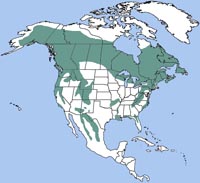
The black bear is found in most of Alaska, southeastward through Canada to Minnesota, Wisconsin, Michigan, and the Canadian Maritimes and south through New England, New York, Pennsylvania, and the Appalachian Mountains to Florida.
On the west coast, it is found from Alaska south through northern California and the Rocky Mountain states to Mexico. It is also found in Missouri, Arkansas, and Oklahoma.