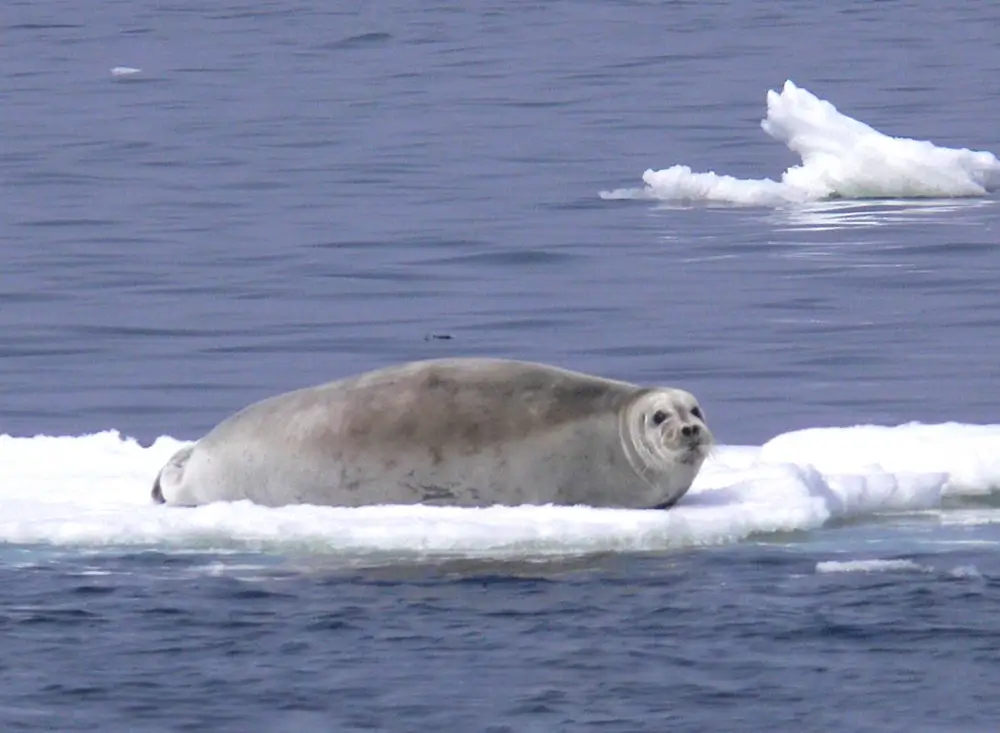
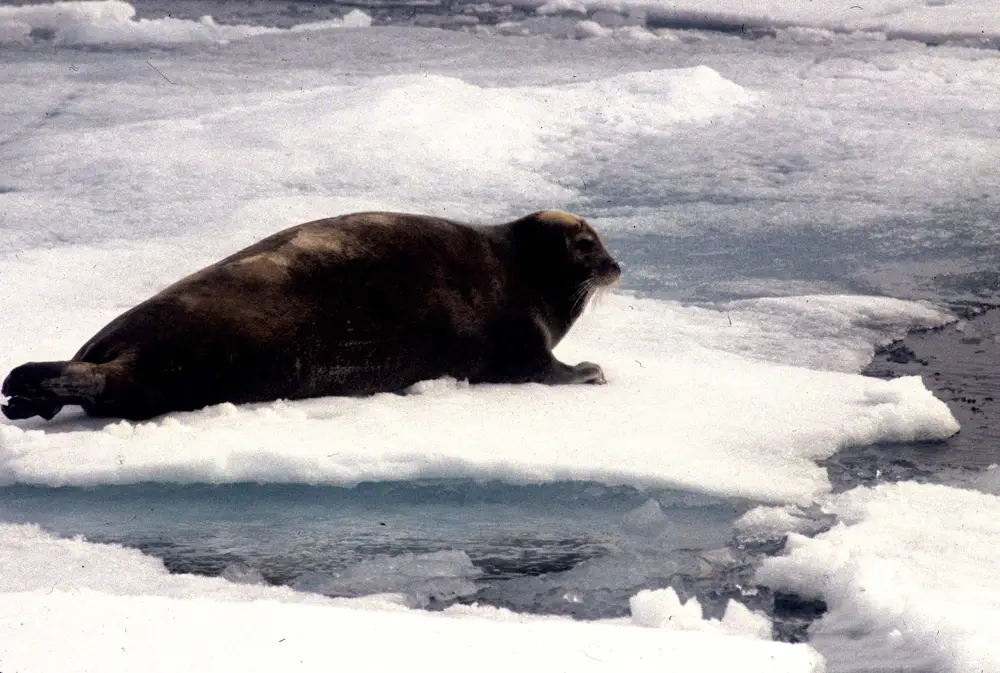
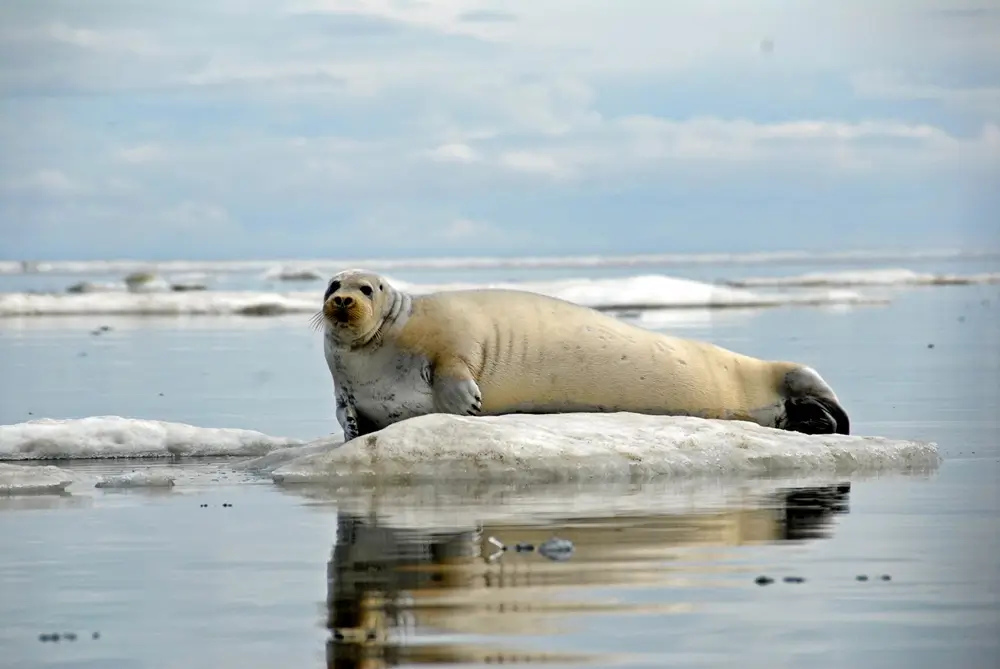
The bearded seal is a large seal that is 7-8 feet (2.1-2.4 m) in length. It is at its heaviest during winter and early spring, when it can weigh as much as 750 pounds (340.2 kg). In the summer and early fall, it weighs 475 to 525 pounds (215.5-238.1 kg). The female is a little larger than the male.
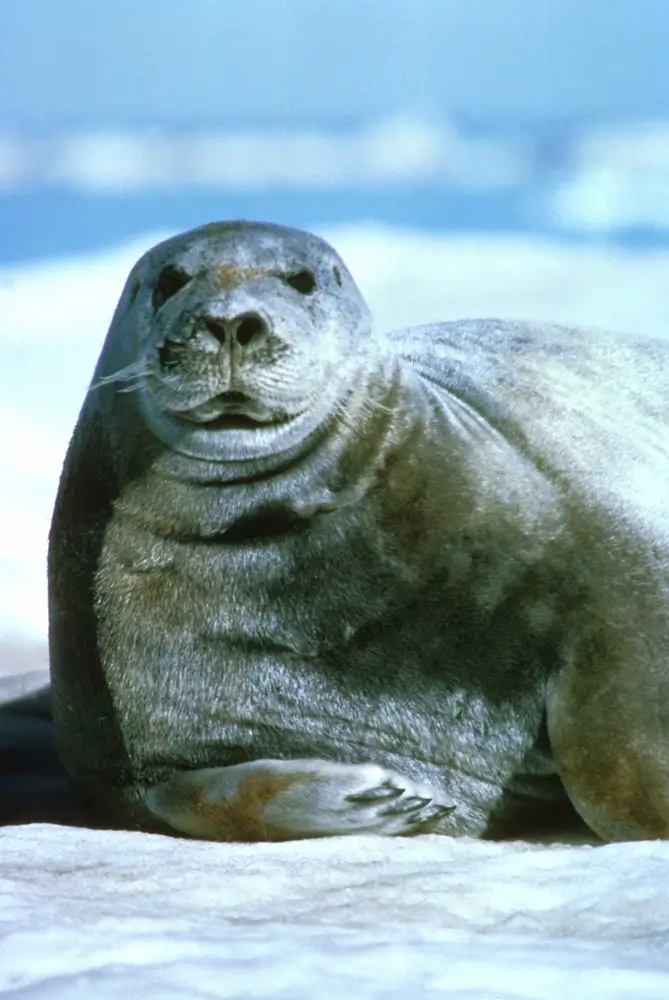
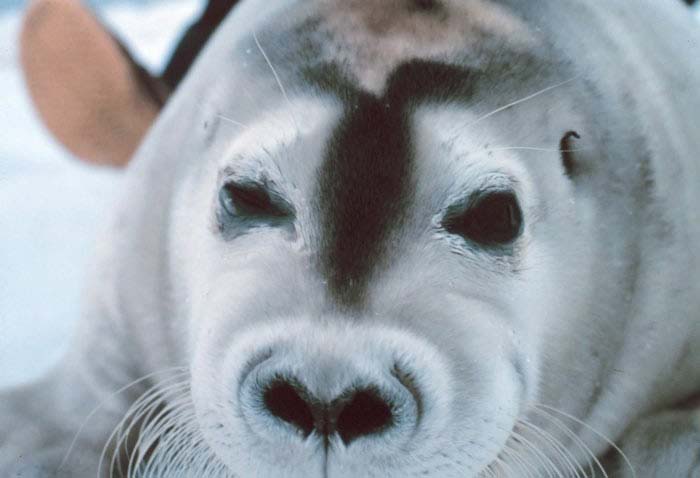
The bearded seal has gray-to-brown fur and distinctive, squared-off front flippers with strong claws, which it uses to create and maintain breathing holes in the ice. It has a round head, small eyes, and a broad muzzle with thick, bristly white whiskers.
Bearded seal pups may have a black stripe running up the middle of their forehead.
Habitat
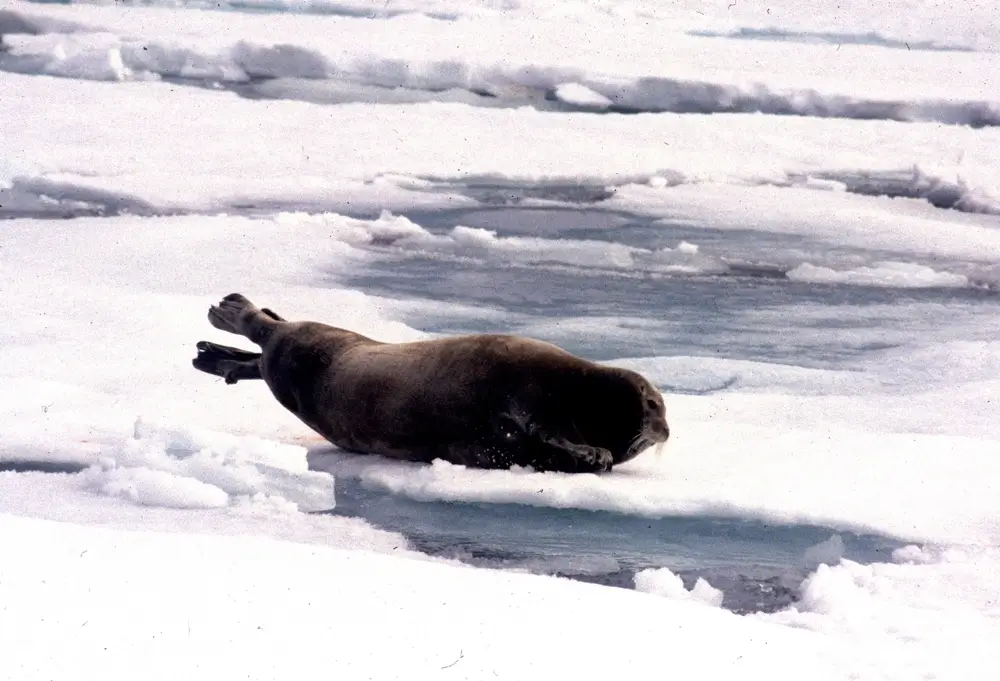
The bearded seal prefers shallow arctic waters less than 500 feet (152.4 m) deep. It is found on patches of floating ice. In the summer months, it may climb onto rocky beaches.
The bearded seal mates in May. Groups of up to 50 bearded seals may gather together. Males sing to attract females, and males occasionally fight over a female.
Females give birth to a single pup 11 months after mating. The pup weighs about 70 pounds (31.8 kg) at birth. Its eyes are open, and it is covered in blue-to-brown fur.
The pup begins swimming shortly after birth and quickly gains weight. It nurses for 12 to 18 days, and by the end of this period, it has nearly tripled its weight to about 185 pounds (83.9 kg). Females may mate again as early as two weeks after their pup is weaned (no longer needs its mother’s milk).
The bearded seal has a lifespan of around 25 years in the wild.
Behavior
Except for the breeding season, the bearded seal is a solitary animal. In the spring, male bearded seals “sing” underwater songs that can be heard by humans on the surface. The song is probably used to attract a mate and establish territory.
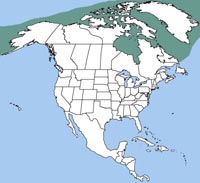
In North America, the bearded seal is found in northern coastal waters and shallow seas from Alaska to Labrador, Canada, and Greenland. It has a circumpolar* range and is also found in the northern coastal arctic waters of Europe and Asia.
*Circumpolar ranges stretch around the polar regions.