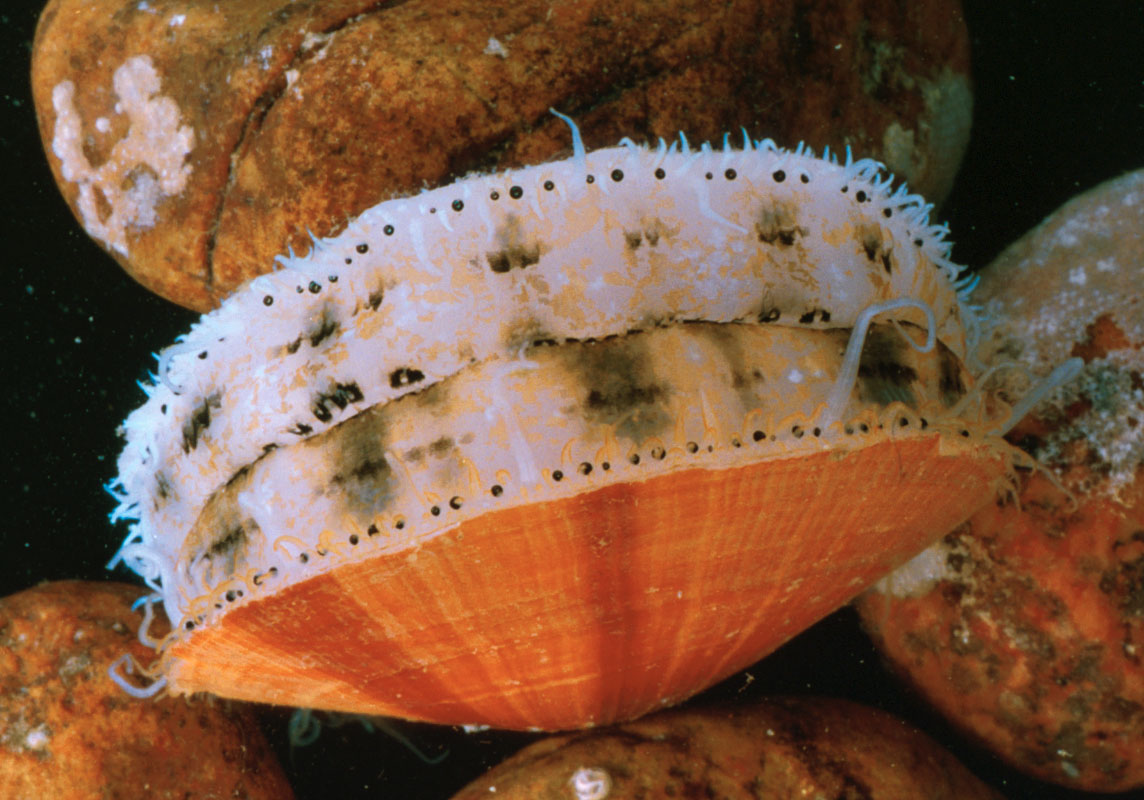
Bivalves are a group of mollusks known for their two-part shells, which are hinged together. They range in size from tiny species just 0.4 inches (1 cm) long to giant clams that can grow over 4 feet (1.2 m) across. There are about 15,000 known species of bivalves, grouped into roughly 100 families.
Bivalves live in oceans, rivers, and lakes all around the world. Some burrow into sand or mud, while others attach themselves to rocks or other surfaces. They are filter feeders and draw in water and trap tiny food particles like plankton using their gills, which also help them breathe.
Bivalves have a soft body protected by their hard shell. They lack a head and a radula (the tongue-like structure found in many other mollusks). Their bodies include a foot for digging or moving, gills for feeding and breathing, and siphons that bring water in and out.