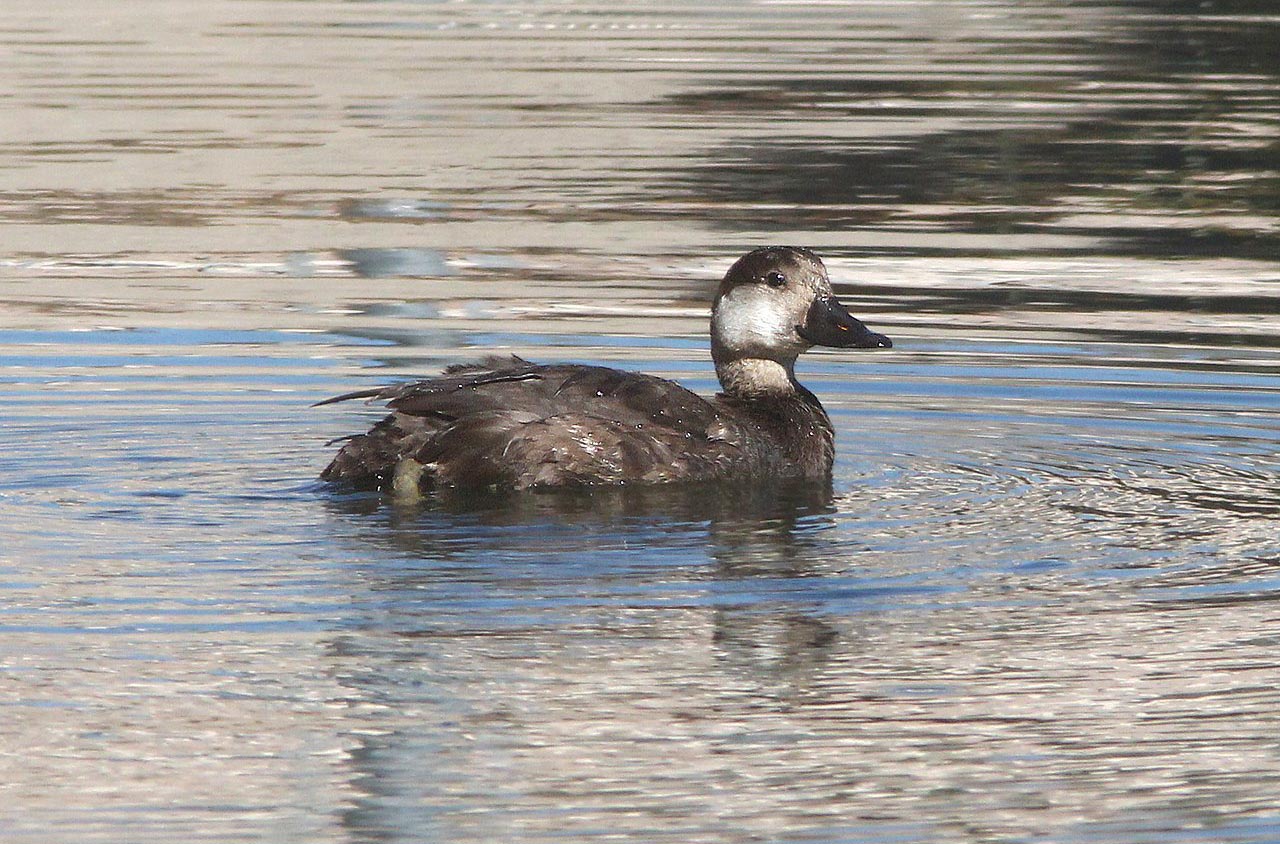
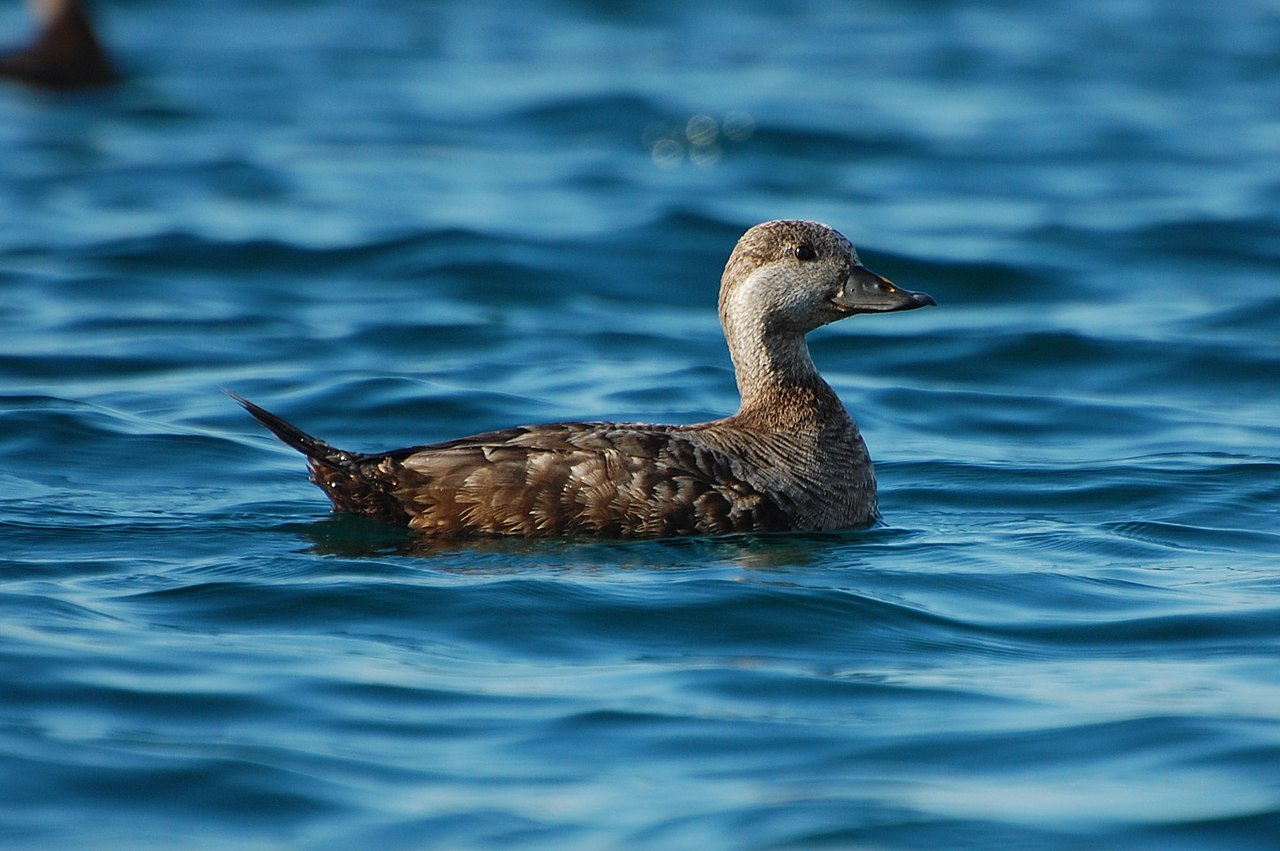
The black scoter is 16.9-19.3 inches (43-49 cm) in length with a wingspan of 27.6-28.4 inches (70-72 cm).
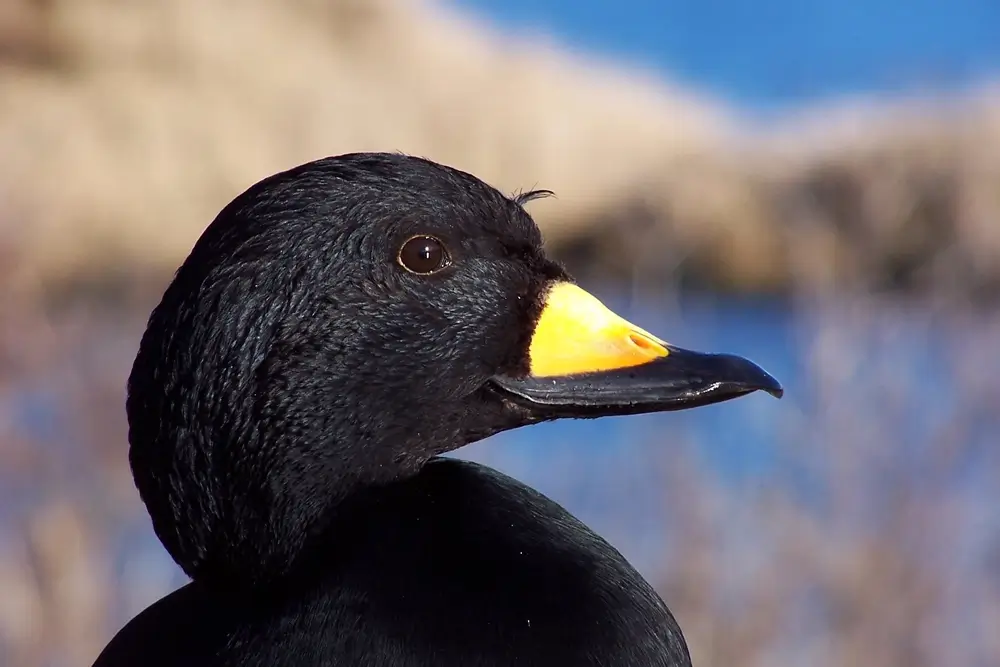
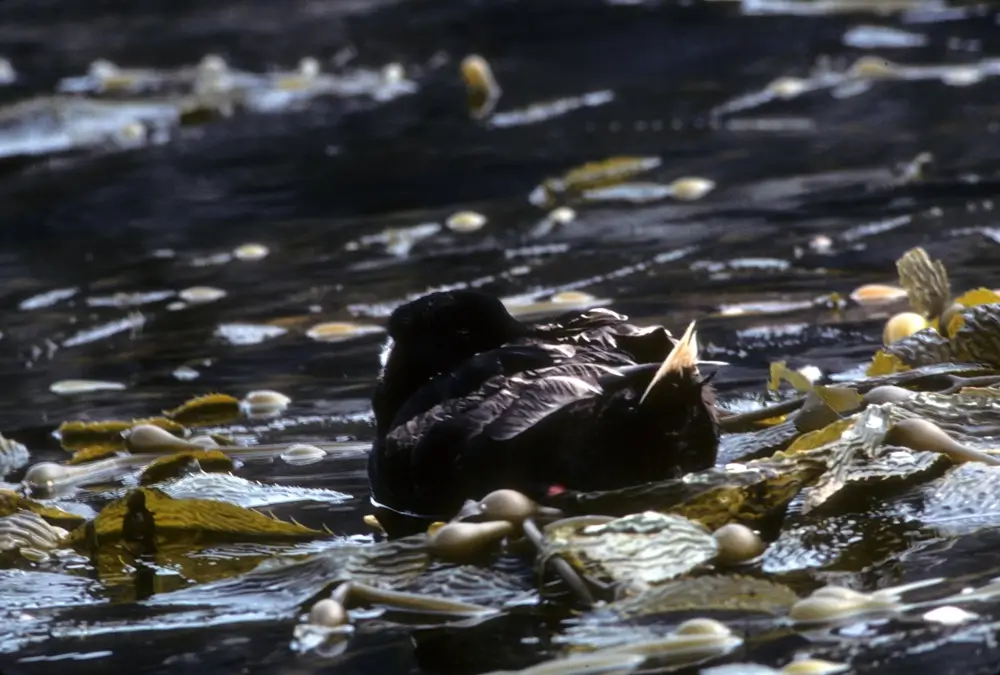
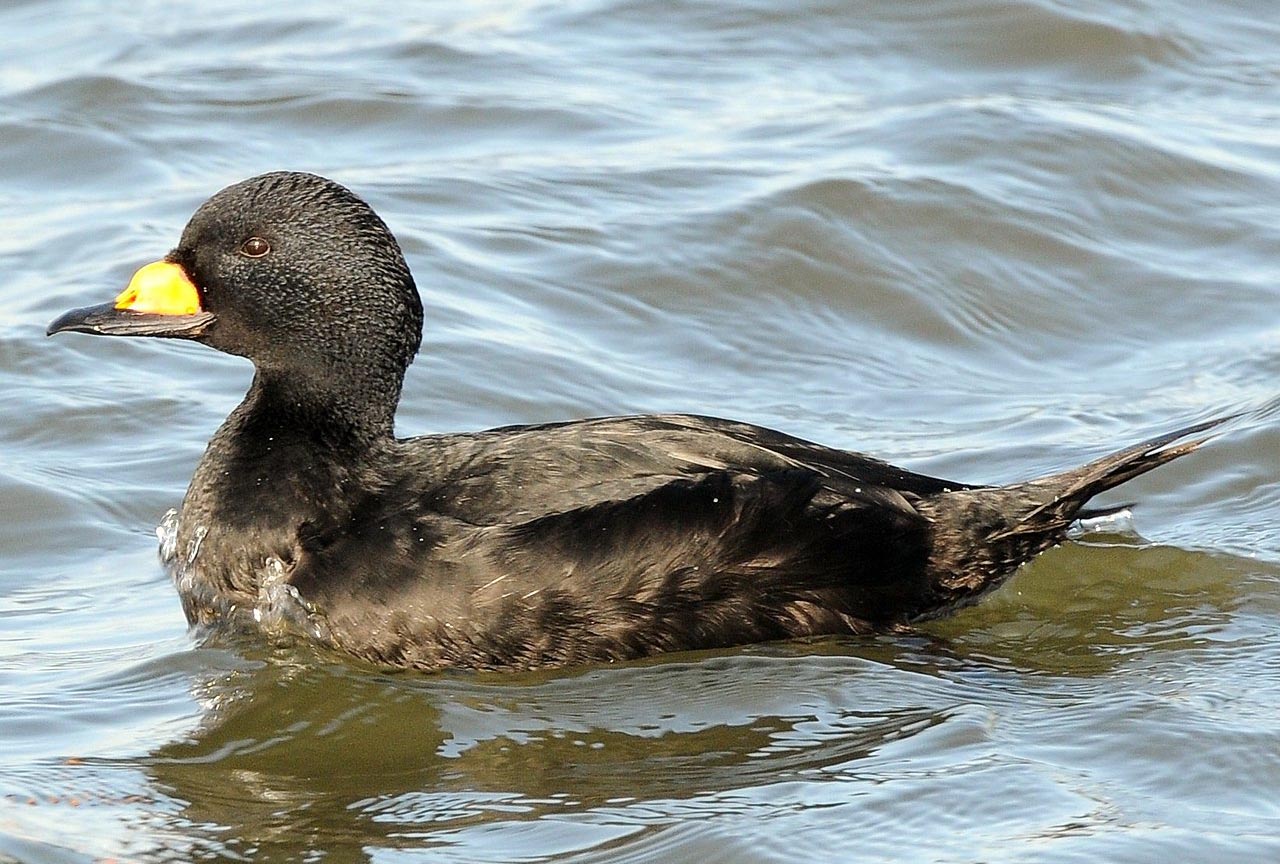
The male is black with a bright yellow knob on the base of his black bill. The female is grayish-brown with light white bars on her sides. She has a black bill and grayish-white patches on her cheeks. Both the male and the female have silvery wing linings that can be seen when they are in flight.
The black scoter is a diving duck. When it is at sea, it dives for crustaceans, mollusks, small fish, and marine worms. When it is in its breeding range, it eats aquatic insects, mollusks, crustaceans, and plants.
Life Cycle
The female black scoter lays 5-10 eggs in a nest made in a hollow in tundra grass. The nest is lined with grass and down and made near the water.
The chicks hatch in about 27-31 days. They leave the nest shortly after hatching and feed themselves immediately. They stay with their mother for about three weeks.
The oldest recorded black scoter was a male that lived to be at least 10 years and 6 months old.
Behavior
Black scoters are the most vocal of all the scoter species. The male black scoter makes a musical, two-note “coor-loo” whistling call.
Did You Know?
The black scoter was once known as the common scoter (Melanitta nigra), but the common scoter was recently split into two species – the common scoter and the black scoter. The common scoter is found in Eurasia.
Support for NatureWorks is provided by:
The Black Scoter in NH
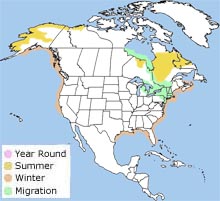
The black scoter does not breed in New Hampshire, but it can be found in the state’s coastal waters from October through April.