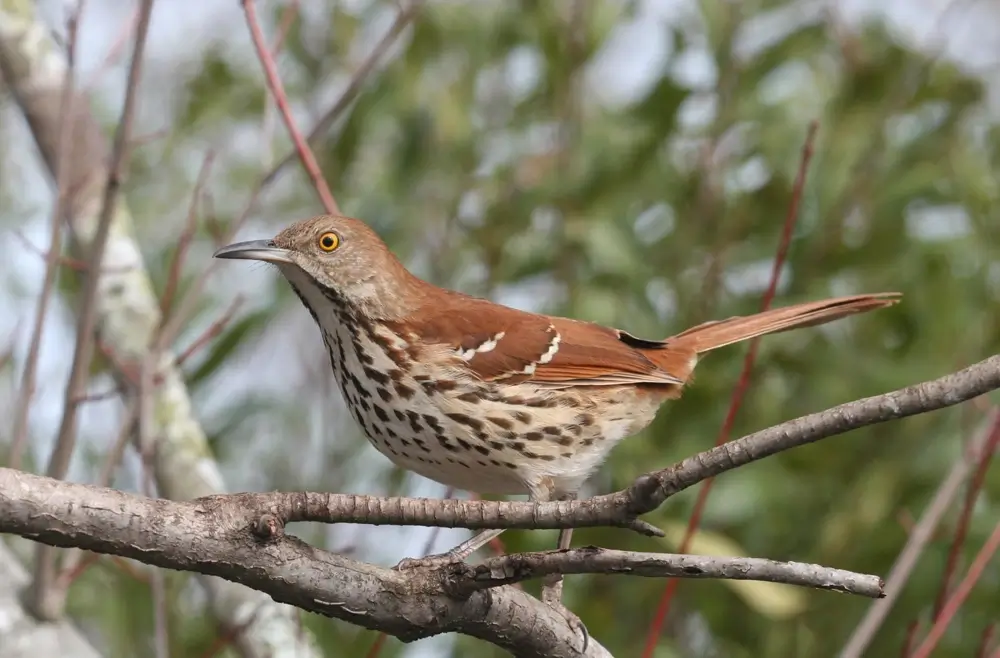
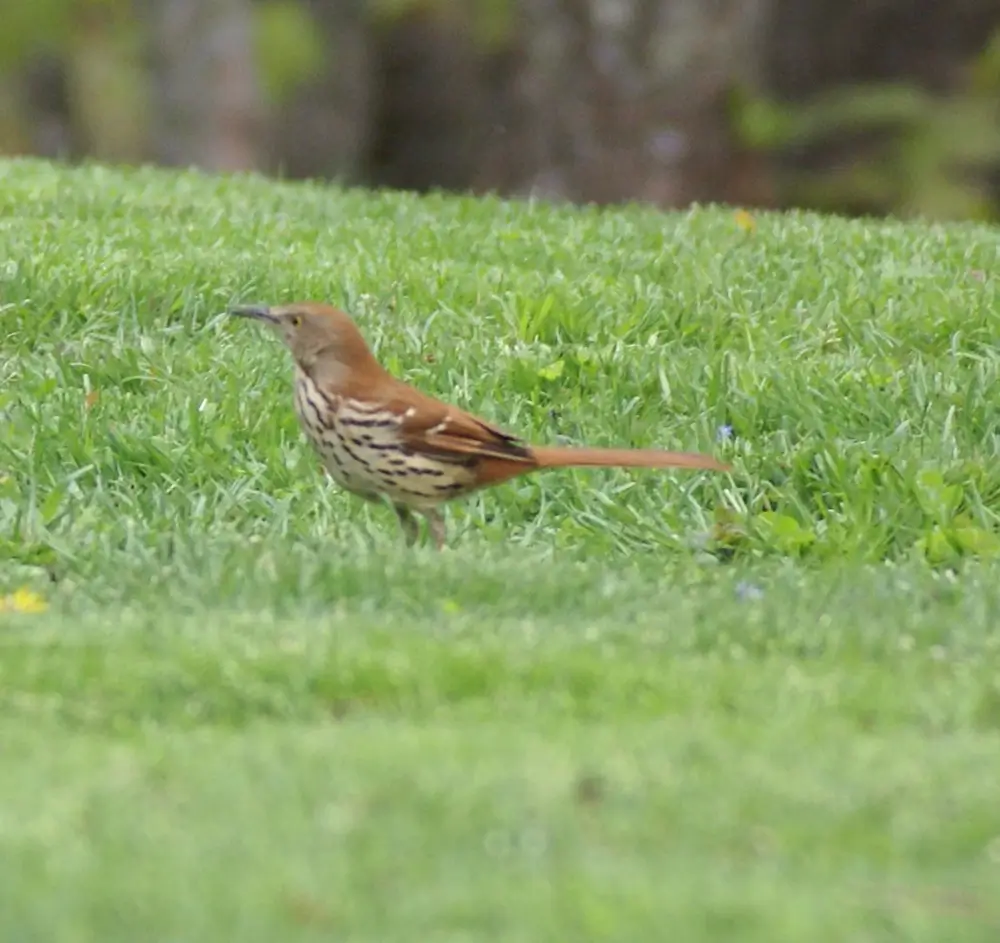
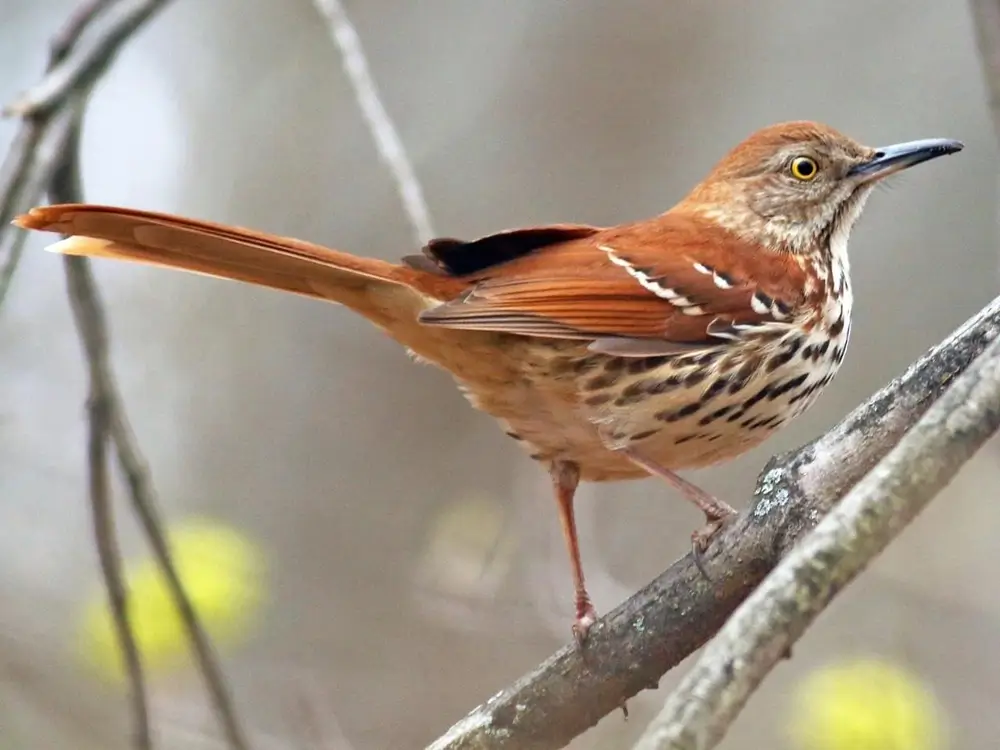
The brown thrasher is 9-12 inches (22.9-30.5 cm) in length with a wingspan of 11-13 inches (27.9-33 cm).
It is a gangly songbird with long, sturdy legs that hold up its large, slender body.
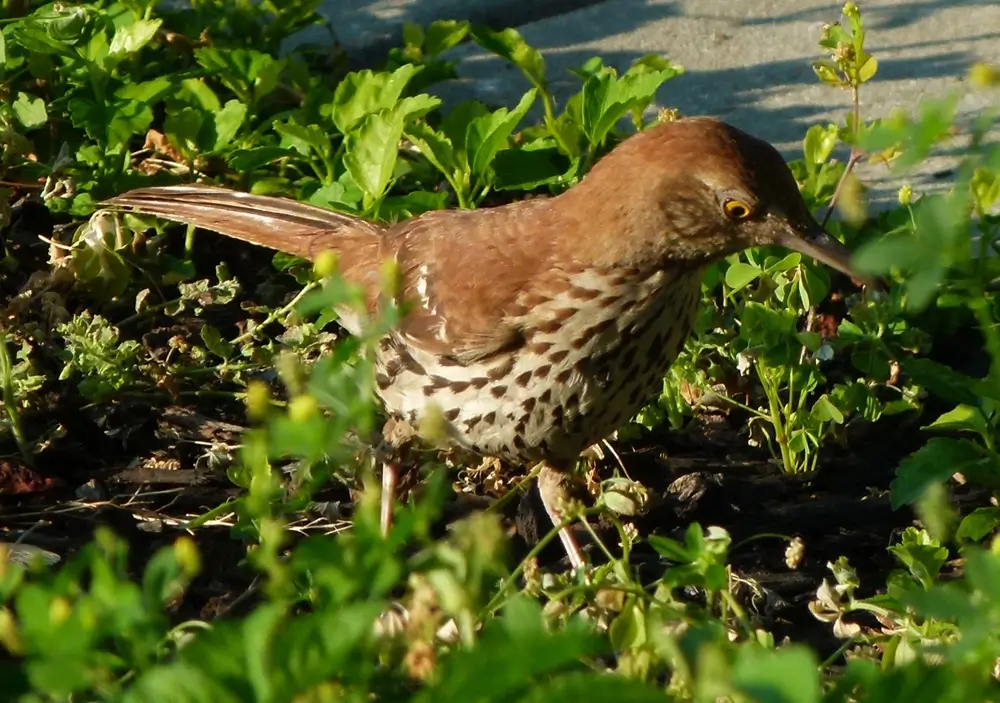
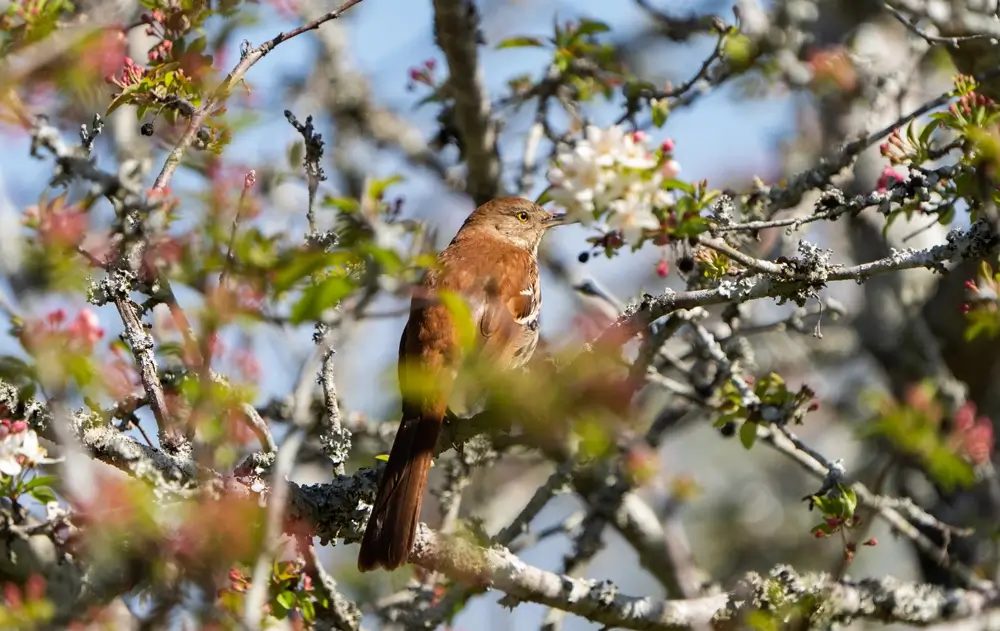
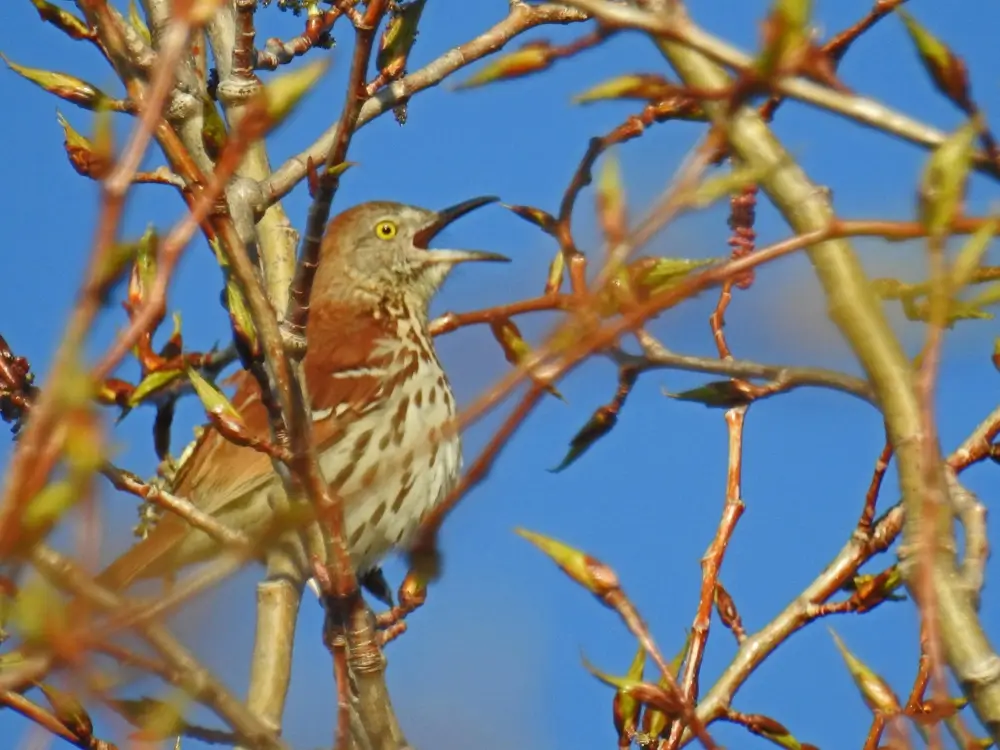
It has a brown head, back, and wings. Its long, slender tail is also brown and is usually cocked up at an angle. It has brown streaks on its white chest and belly. It has bright yellow eyes and a long, slender black bill.
The brown thrasher is very vocal and has lots of different songs.
Habitat
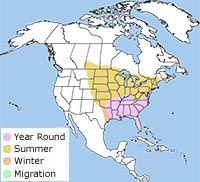
In eastern North America, the brown thrasher nests along forest edges, thickets*, and overgrown clearings in hardwood forests.
In the Midwest, it breeds in fencerows, sheltered areas, and woody areas.
*A thicket is a dense group of bushes, shrubs, or small trees that grow very close together.
Diet
The brown thrasher eats insects, fruit, seeds, and nuts. It feeds mostly on the ground, sweeping its bill along the ground to gather insects.
It eats fruit right off the berry bush and gathers seeds directly from the plant.
Life Cycle
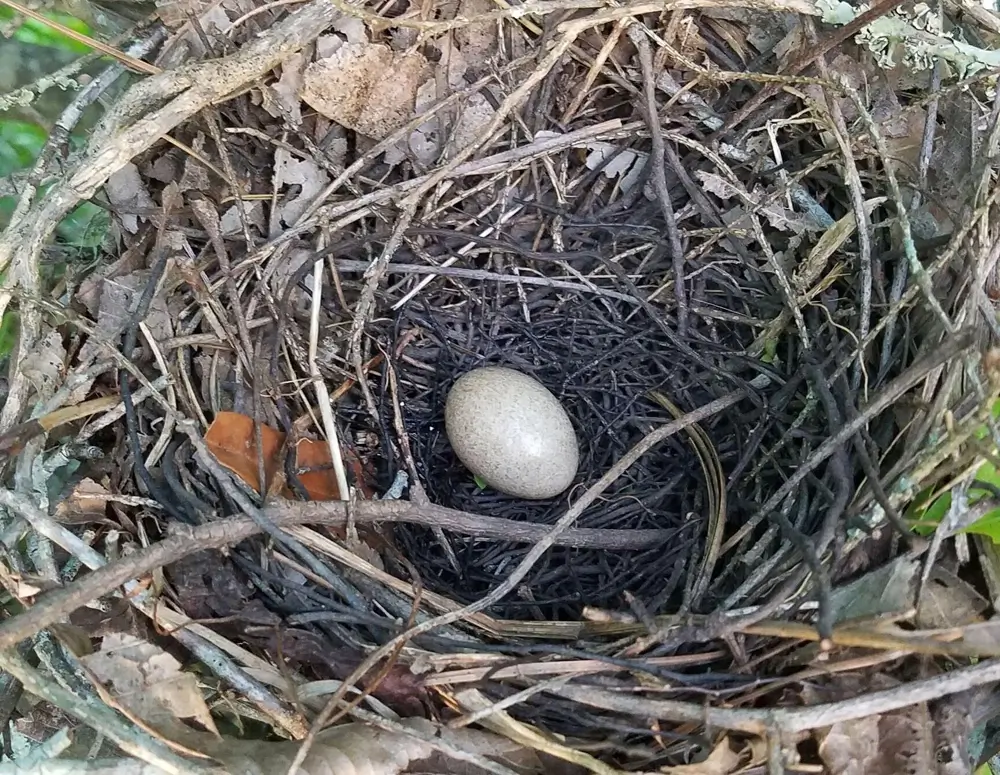
The male and female brown thrasher build a cup-shaped nest from twigs, dead leaves, bark, grass, and rootlets. The nest is usually built low in a tree or thorny shrub, such as forsythia, gooseberry, sumac, or multiflora rose.
The female lays 2-6 blue or white eggs. She incubates the eggs for 10-14 days. The male also helps incubate the eggs and feed the young. After hatching, chicks remain in the nest for nearly two weeks before fledging (developing flight feathers). A female may have a second brood in the season.
The brown thrasher has a lifespan of 2-5 years in the wild
Behavior
The brown thrasher sings a wide variety of songs. Scientists think it can sing more than 1,100 different song types.