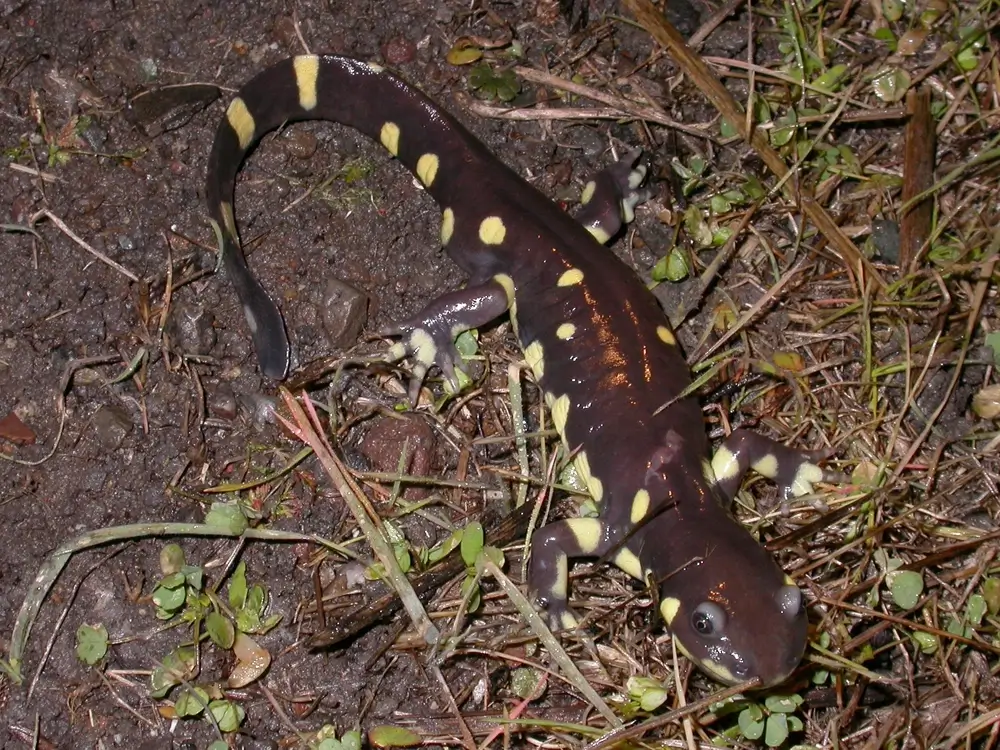
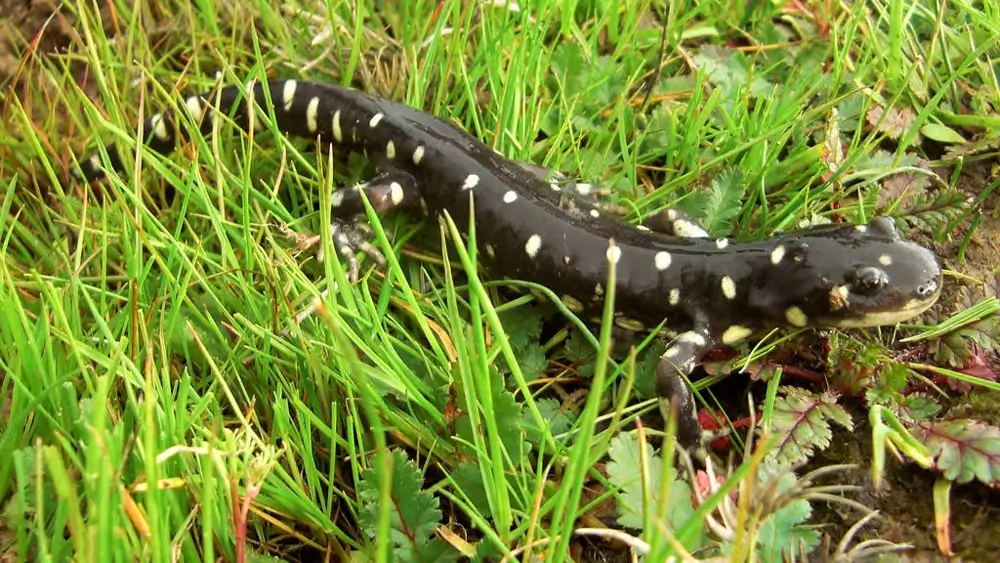
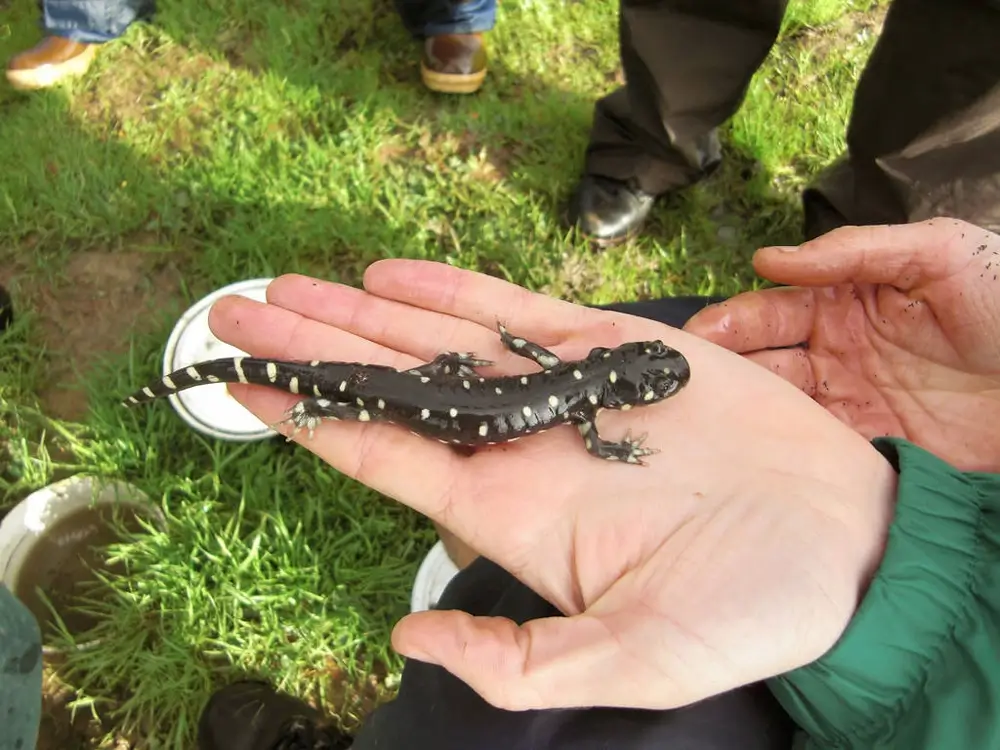
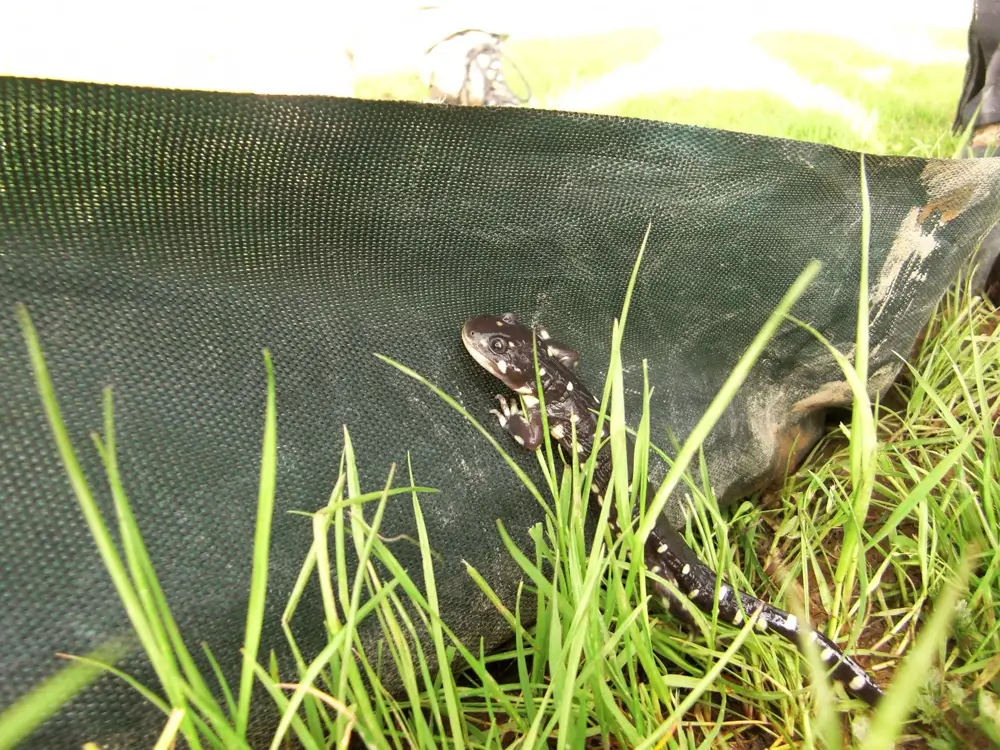
The California tiger salamander is 6 to 8.5 inches (15.2-21.6 cm) in length. It has a thick body and tail and a round snout. It is black with cream to yellow spots. Its belly is gray and may have some small yellow spots on it. It usually has 12 costal grooves (vertical grooves) on its body.
Habitat
The California tiger salamander lives in underground areas near ponds, in grasslands, and open woodlands. It likes areas with cool, wet winters and hot, dry summers.
During the rainy season in January and February, the California tiger salamander migrates to large vernal pools to mate. The female lays one egg at a time and attaches it to a twig, grass stems, or other underwater vegetation. A jelly-like substance surrounds the eggs.
The larvae hatch in two to four weeks. They are yellowish-gray with feathery external gills and dorsal fins. They change into salamanders in two and a half to three months. While the larvae are small, they feed on microscopic organisms. As they get larger, they feed on tiny crustaceans and aquatic insect larvae.
Behavior
The California tiger salamander spends the summer underground in ground squirrel burrows. After the first few heavy rains in the fall, they emerge from their burrows and migrate to breeding pools.
Did You Know?
The California tiger salamander is an endangered species in Sonoma County and Santa Barbara County, California, and a threatened species in the rest of its range.
The California tiger salamander is found in the Central Valley of California and its bordering foothills, coastal grasslands, and seasonal wetlands.
Its numbers have dropped due to habitat loss, predation from crayfish and bullfrogs, being hit by cars during migration, and interbreeding with non-native tiger salamanders.