The cinnamon teal is about 14-17 inches (36 to 43 cm) in length and has a wingspan of 21.3-22.4 inches (54-57 cm).
The female has a light brown head and neck, a gray bill, and brown eyes. Her breast and sides are brown and streaked with darker V-shaped spots. Her upperparts are brown and her belly is white. She has a light blue shoulder patch on her upper wings with a white band of feathers under the patch and a strip of green feathers at the edge of the wing.
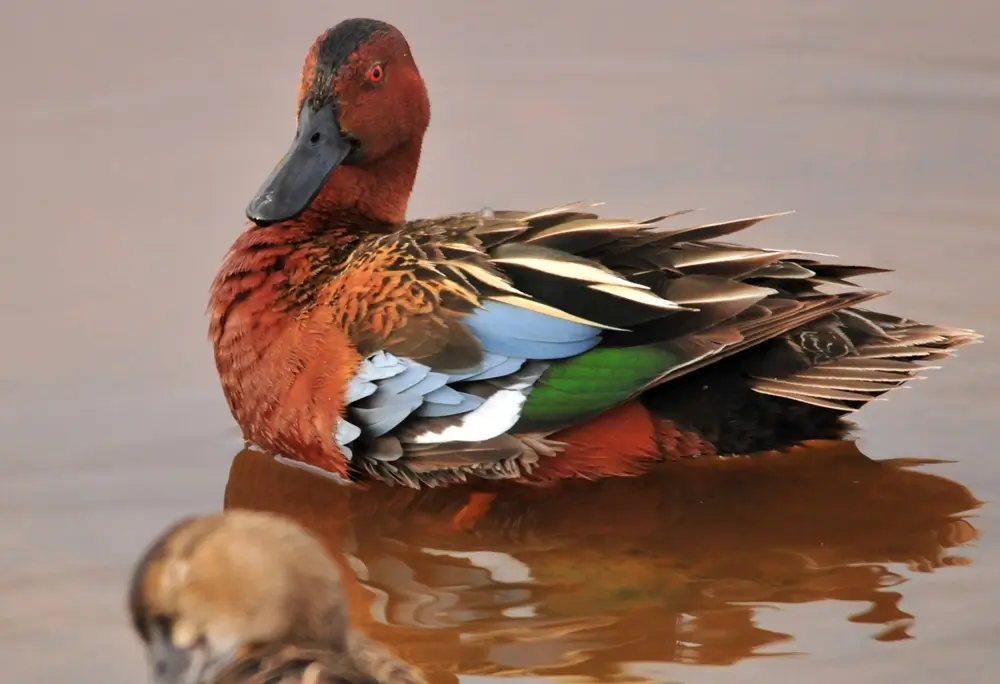
The male cinnamon teal has a bright cinnamon-colored head, neck, stomach, and sides. He has a black bill, yellow legs and feet, and red eyes. His wing markings are the same as the female’s markings, but his shoulder patch is a darker blue.
Habitat
The cinnamon teal is found in shallow ponds, marshes, lakes, and streams with low-growing reeds and other plants at the edges.
Diet
The cinnamon teal is a dabbling duck. It usually feeds in shallow water where it scoops up floating plants, seeds, and even insects.
It also dives for food and eats aquatic invertebrates.
Life Cycle
The female cinnamon teal swims in front of a male she wants to attract. The male preens, dips his head, and takes short flights to attract a female. The female builds a nest out of grass, down, and plant stems. Sometimes, the female builds her nest underneath dead reeds and plant stems. She enters the nest through tunnels she makes in the plants.
She lays 9-12 eggs that hatch in about three weeks. The chicks are covered in down when they are born and leave the nest and feed themselves within 34 hours. They stay with their mother until they fledge, when they are about a month and a half old.
The cinnamon teal has a lifespan of around 8 years in the wild.
Behavior
Cinnamon teals travel in small flocks made up of male and female pairs. They are very fast flyers and can take off directly from the water.