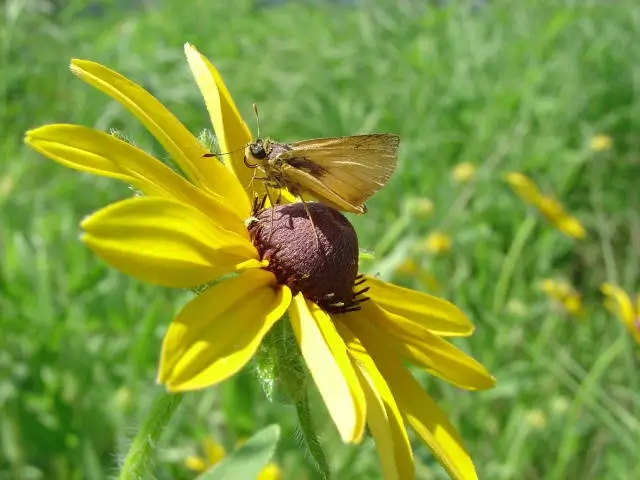
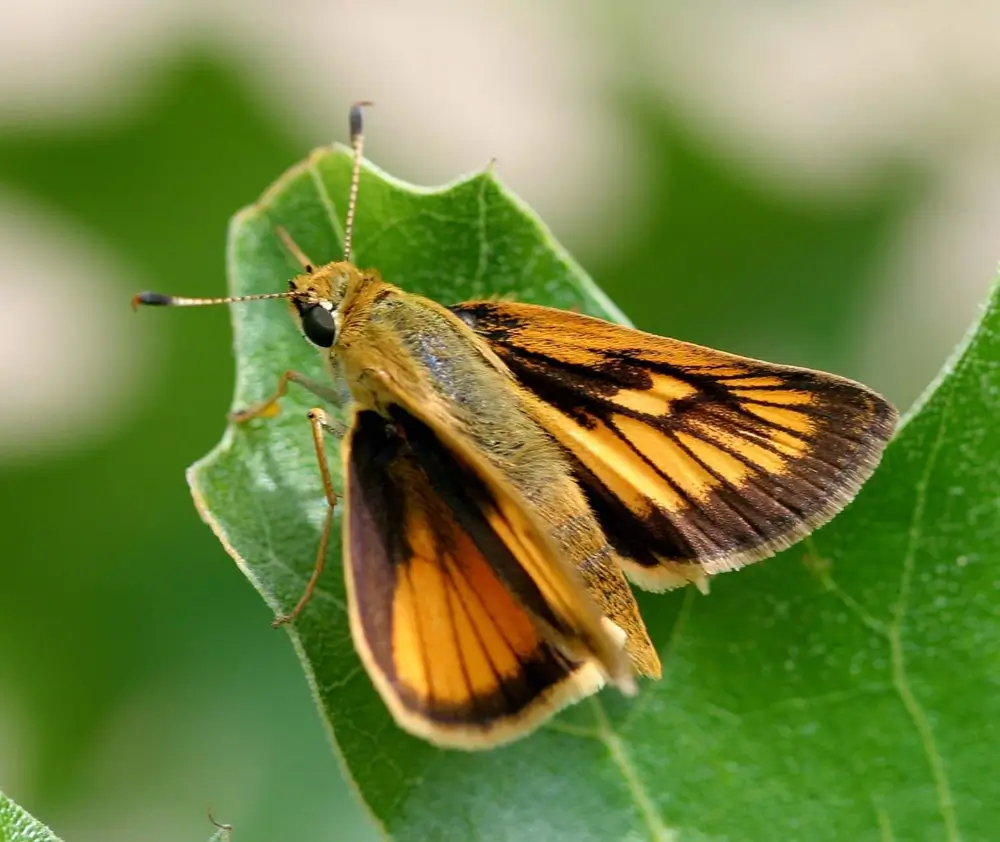
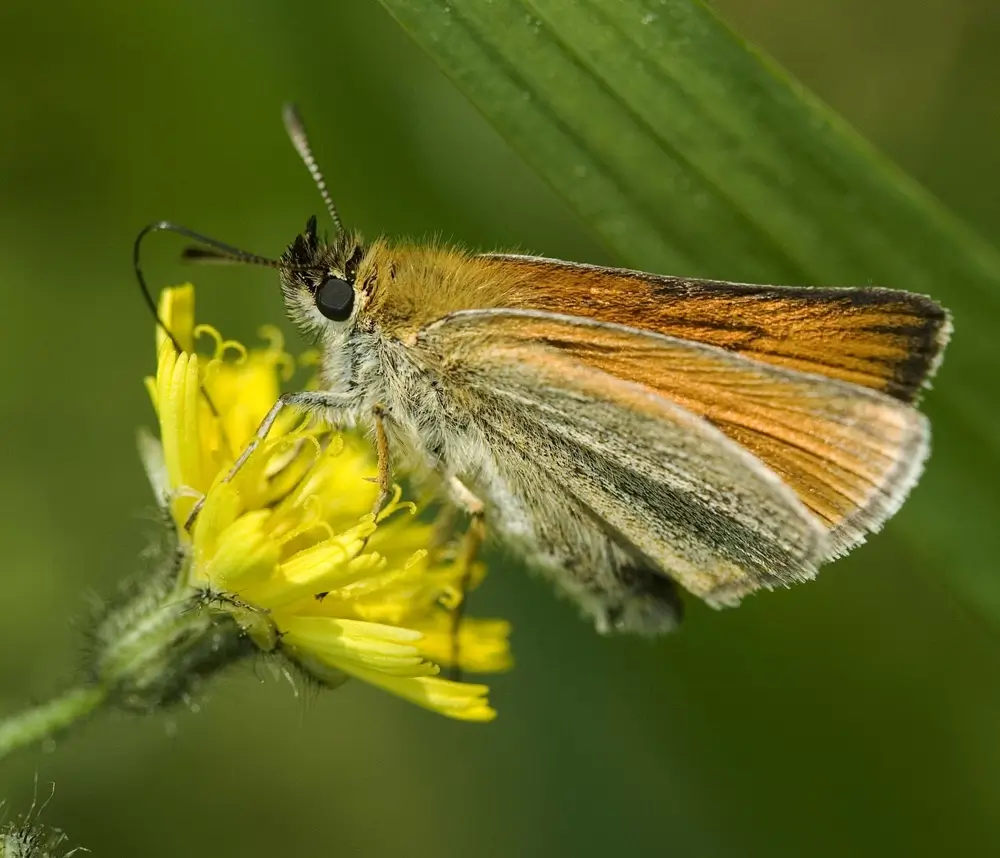
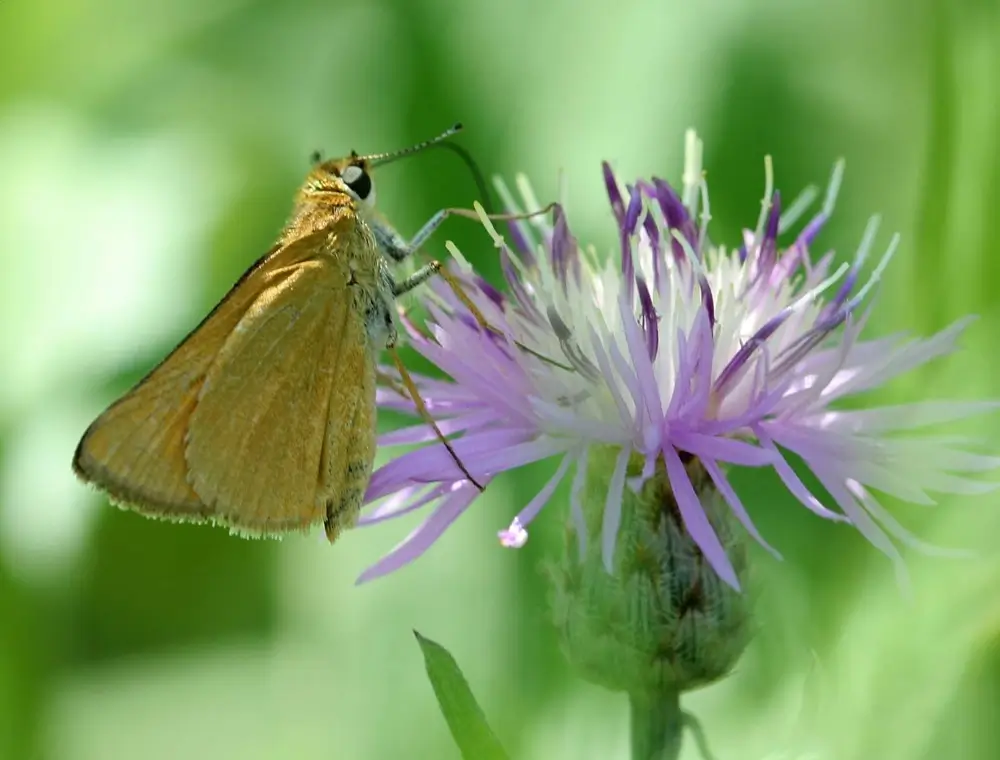
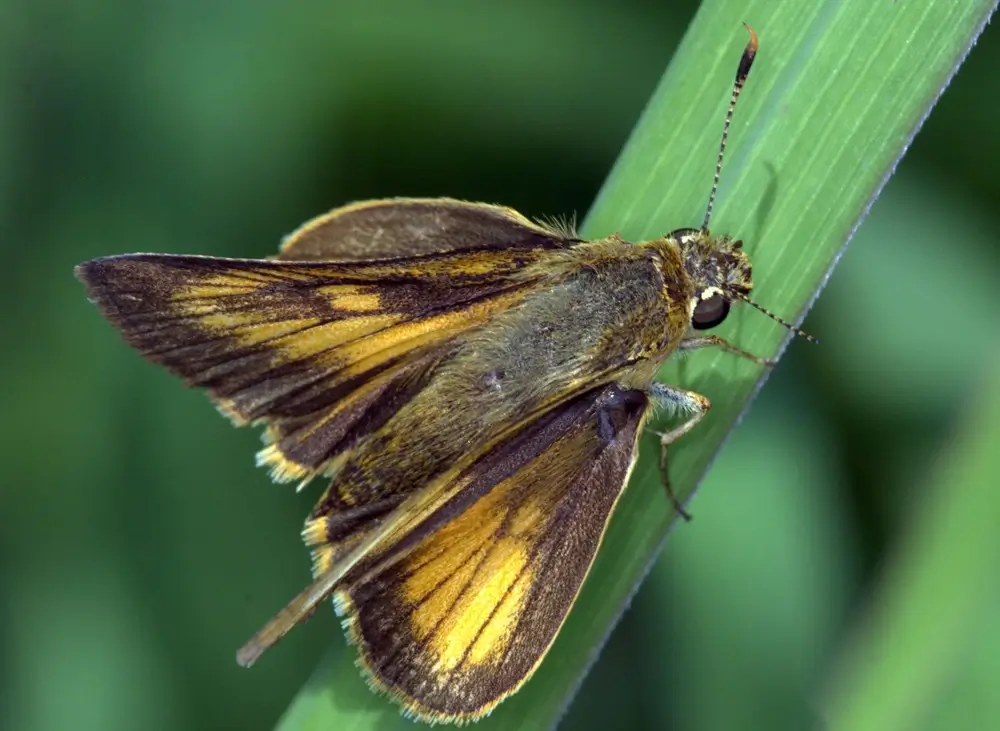
The Delaware skipper has a wingspan of 1-1.5 inches (2.5-3.8 cm). The uppersides of its wings are a bright yellowish-orange and have a dark brown to black border with black veins. The undersides of its wings are a solid yellowish-orange.
It has an orange fringe on the edge of its wings. The border on the female’s wings is thicker than the border on the male’s wings, and the veins are darker.
Habitat
The Delaware skipper is often found in moist areas like marshes, prairies, bogs, open woods, fields, gardens, and yards.
Diet
The Delaware skipper caterpillar eats a variety of grasses, including switchgrass, bluestem, and woolly beardgrass.
The adult Delaware skipper eats nectar from mostly pink, purple, and white flowers, including milkweeds, morning glories, clovers, buttonbush, thistles, and pickerelweed.
Life Cycle
The female lays single eggs on the leaves of a host plant. In the northern parts of its range, the Delaware skipper has one brood a year between July and August. In the southern parts of its range, it has two broods between May and September.
Behavior
Male Delaware skippers sit on low grass to watch for females, especially near puddles or little dips in the ground. Sometimes they rest on bare dirt. They fly really fast and look like little orange flashes in the air.
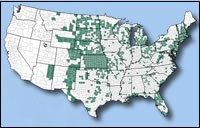
In North America, the Delaware skipper is found from southern Canada south to Arizona, Texas, and Florida. It is also found in Mexico and Central America.