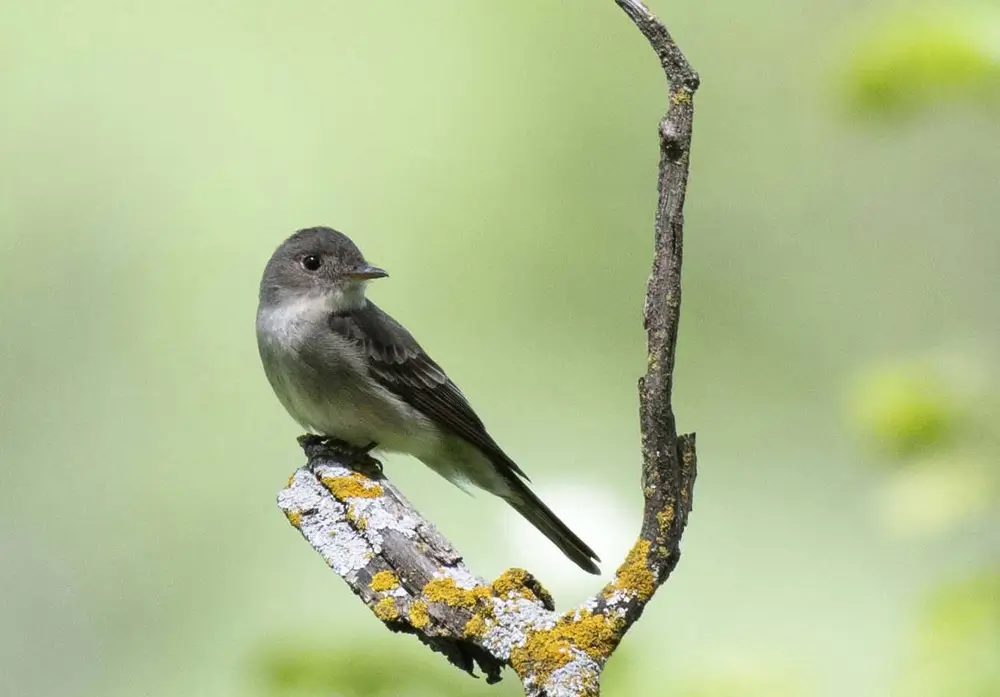
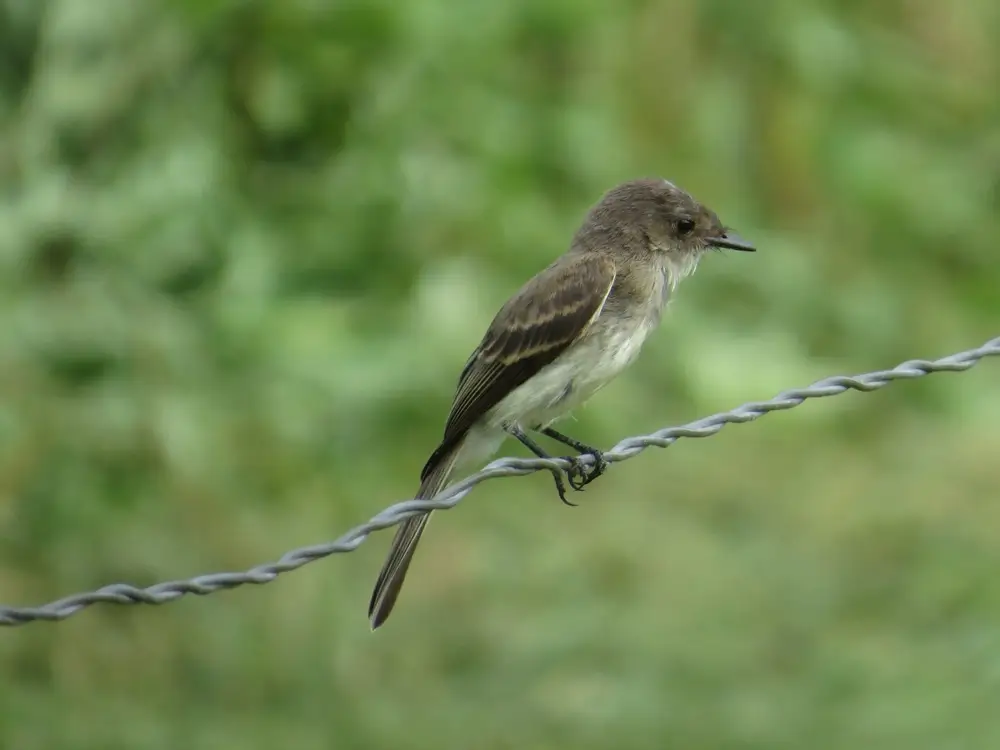
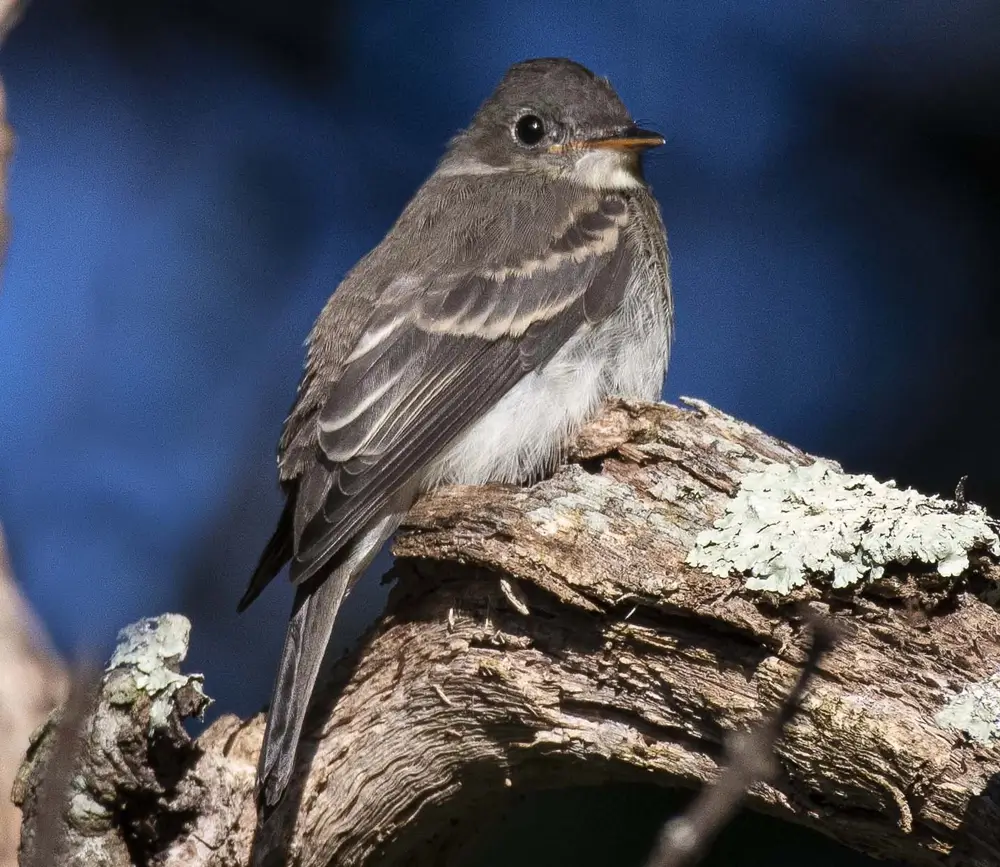
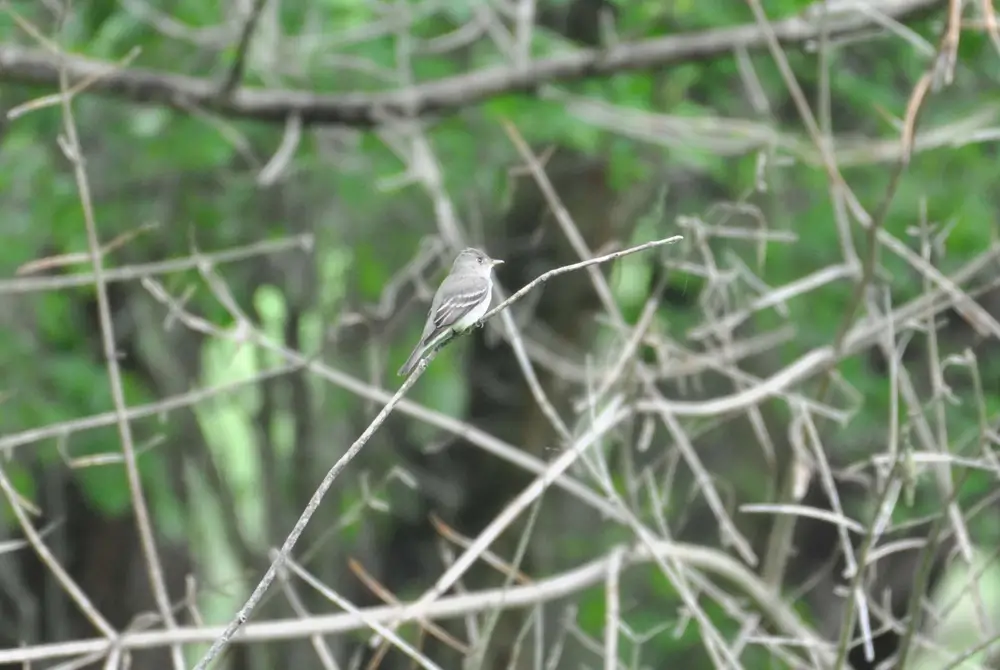
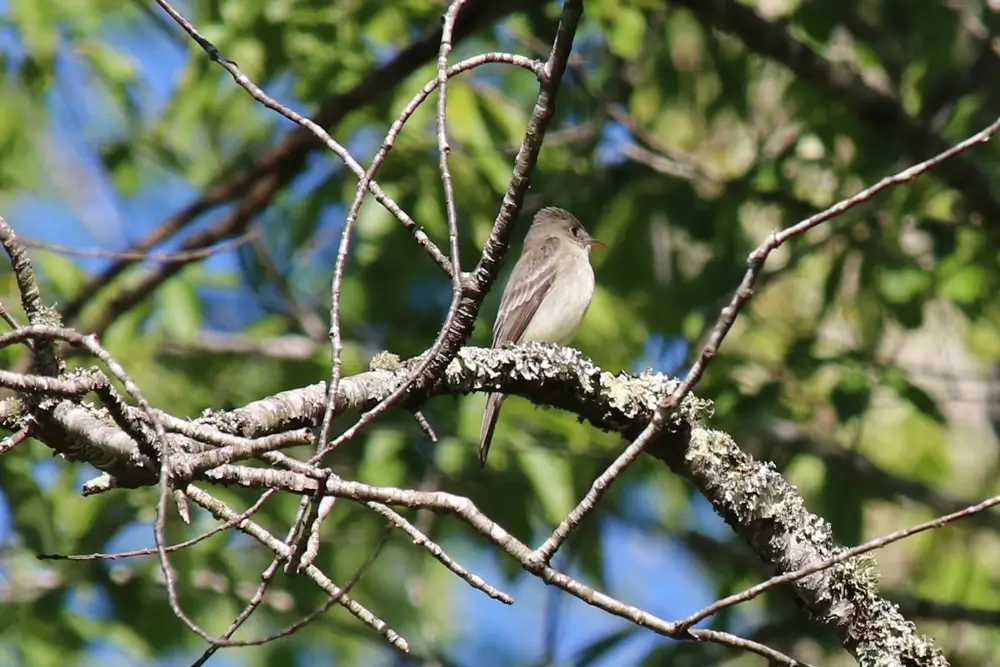
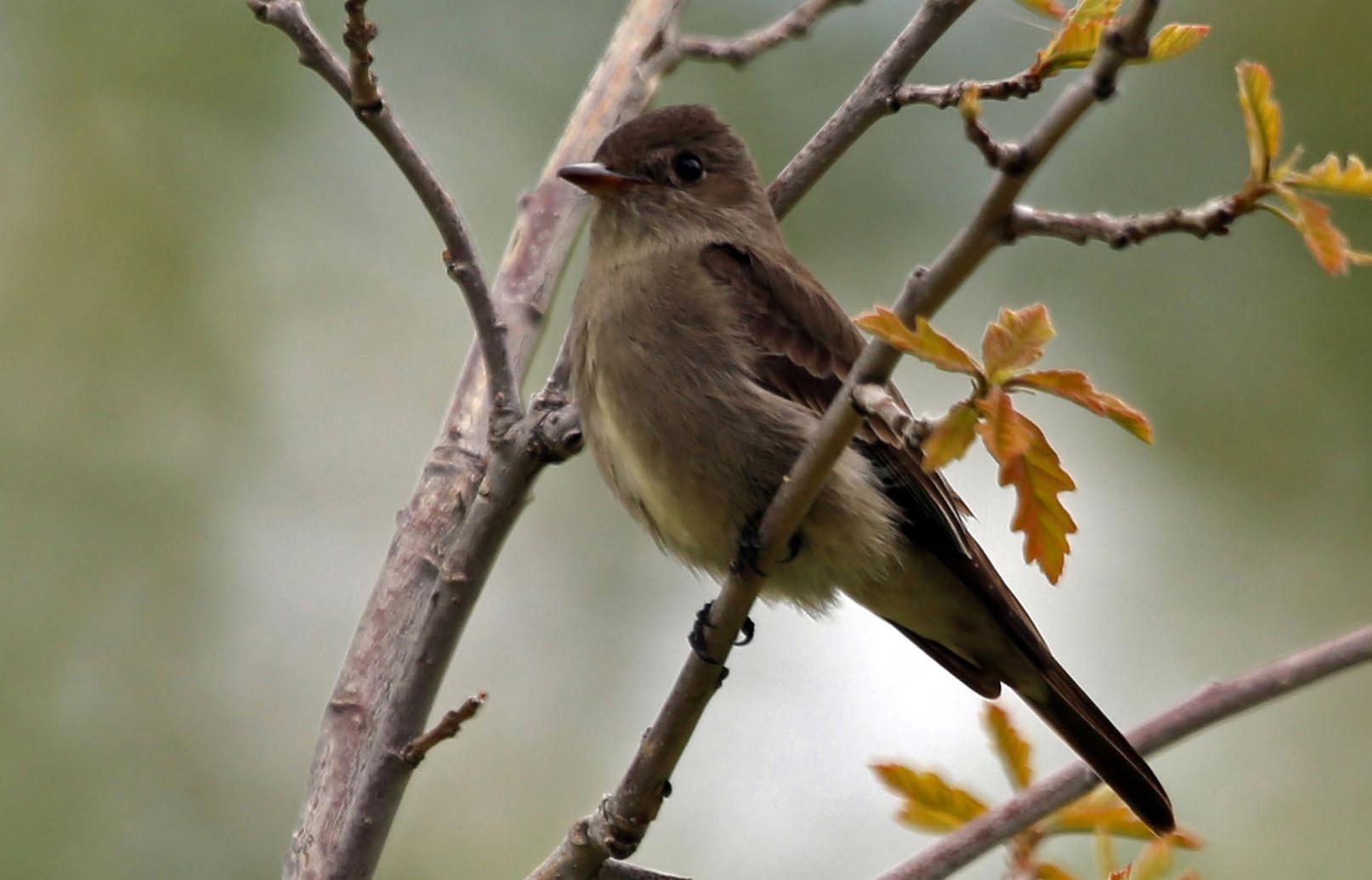
The eastern wood-pewee is a small flycatcher that is 5-6 inches (12.7-15.2 cm) in length with a wingspan of 10 inches (25.4 cm).
It has grayish-olive upperparts, a grayish-white throat, breast, and belly, and white wing bars. It has a dark gray bill; the lower bill is yellow-orange at the base.
Males and females look alike.
Habitat
The eastern wood-pewee is found in deciduous, coniferous, and mixed forests.
Diet
The eastern wood-pewee eats insects. It perches on tree branches in the middle part of the understory* and waits for its prey to fly by, and then chases after it. It occasionally eats seeds.
*In a forest, the understory is the layer of plants and small trees that grows beneath the tall canopy trees but above the forest floor.
Life Cycle
The female lays 2-3 eggs in an open cup nest. The chicks hatch in 12-13 days and fledge (develop flight feathers) when they are 14-18 days old. The female has one brood a year.
The eastern wood-pewee can live up to 8 years in the wild.
Behavior
The eastern wood-pewee is very hard to spot, but can be identified by its “pee-ah-wee” call.
Did You Know?
The eastern wood-pewee and western wood-pewee sound very different, but they look almost identical. It is nearly impossible to tell them apart by just looking at them.
Support for NatureWorks is provided by:
The Eastern Wood-Pewee in NH
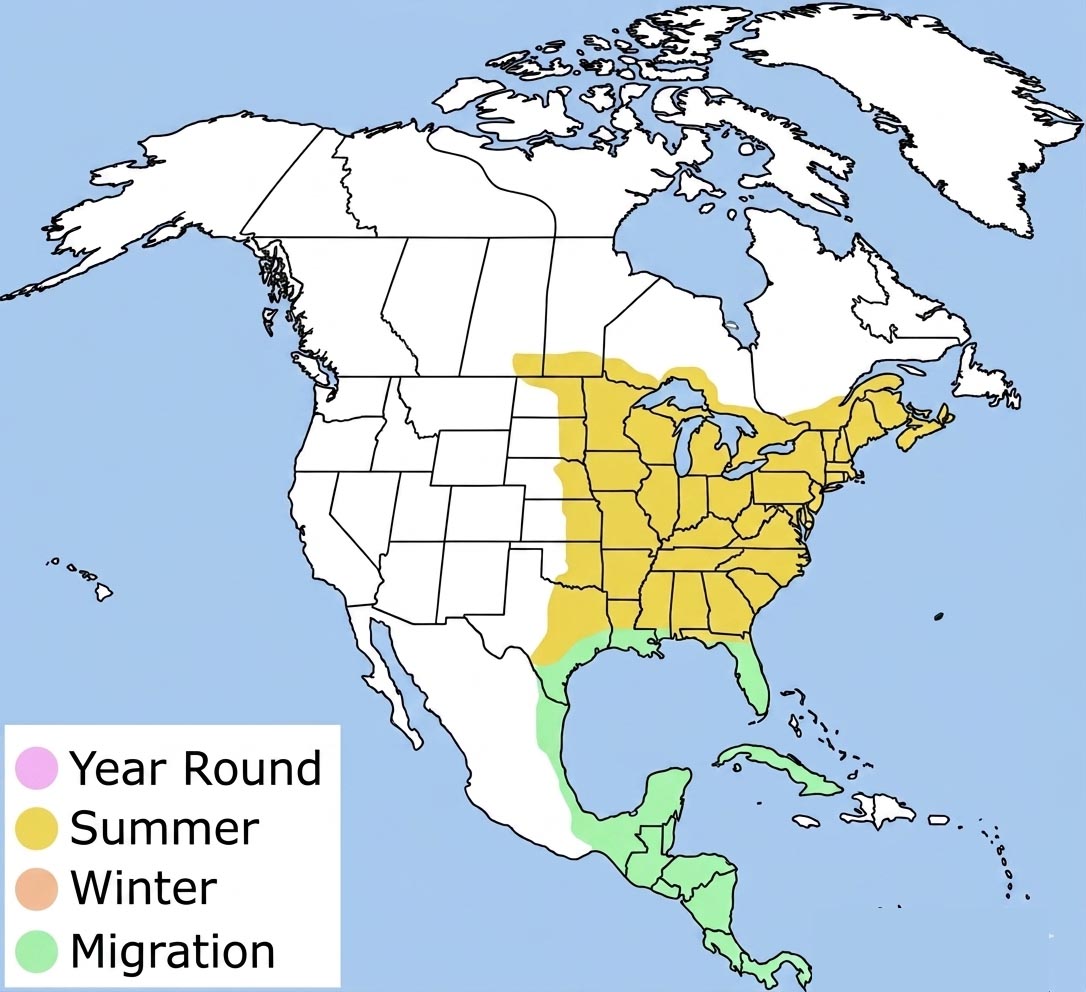
The eastern wood-pewee breeds in New Hampshire and can be found in deciduous and mixed forests from May through September.
The eastern wood-pewee is a neotropical migrant*. It breeds from south-central and southeastern Canada to the Gulf Coast and Florida.
It winters in northwestern South America in Colombia, Venezuela, Ecuador, Peru, and Brazil.
It is one of the last neotropical migrants to return north in the spring.
*A Neotropical migratory bird breeds in Canada and the United States and migrates to Mexico, Central America, South America, or the Caribbean islands in the fall.