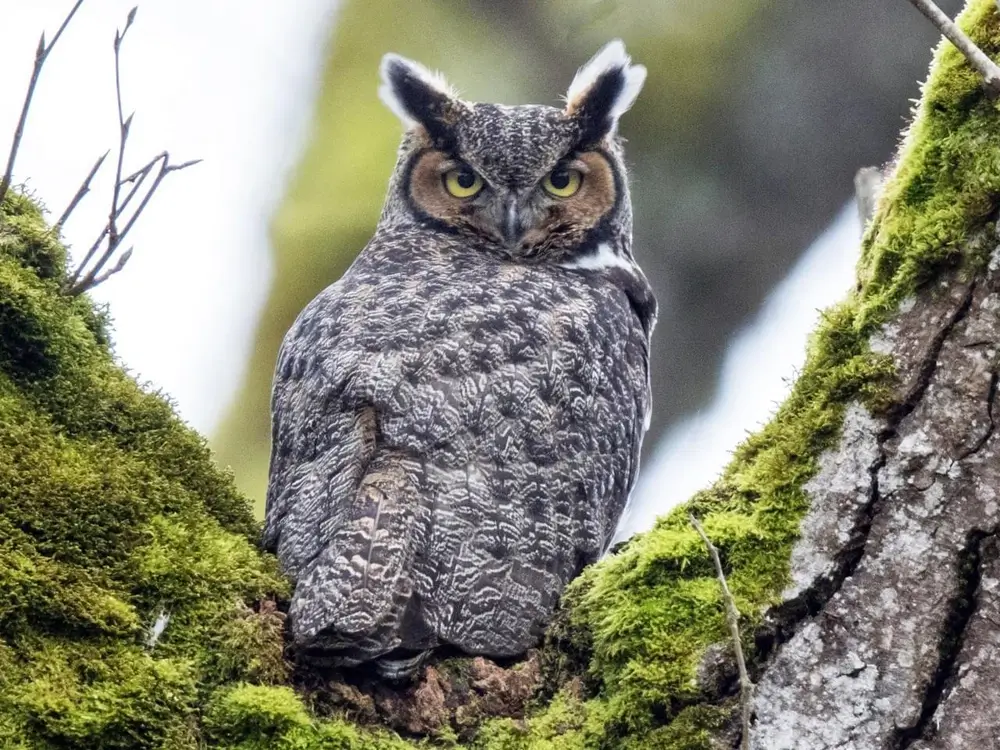
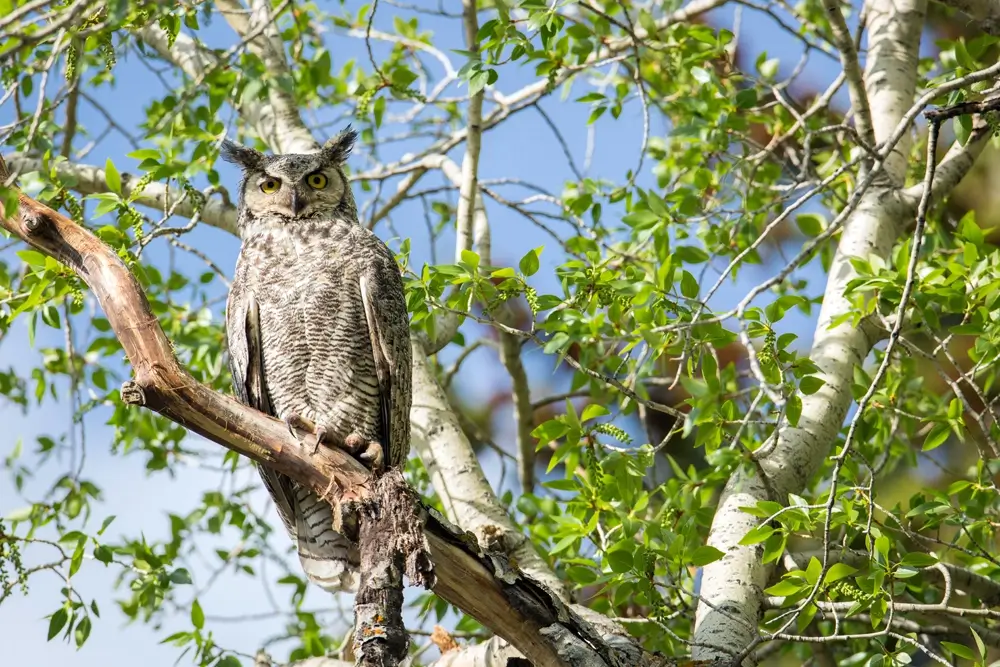
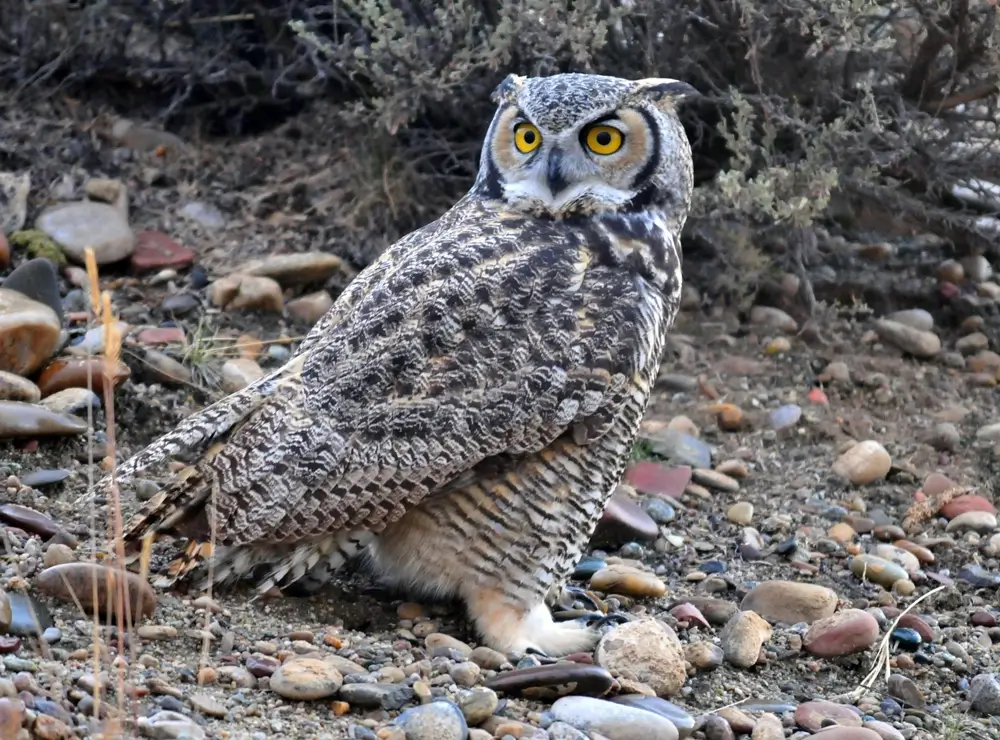
The Great Horned Owl is a large owl that stands about 1.5–2 feet (0.46–0.61 m) tall and has a wingspan of about 3.4–4.9 feet (1–1.5 m).
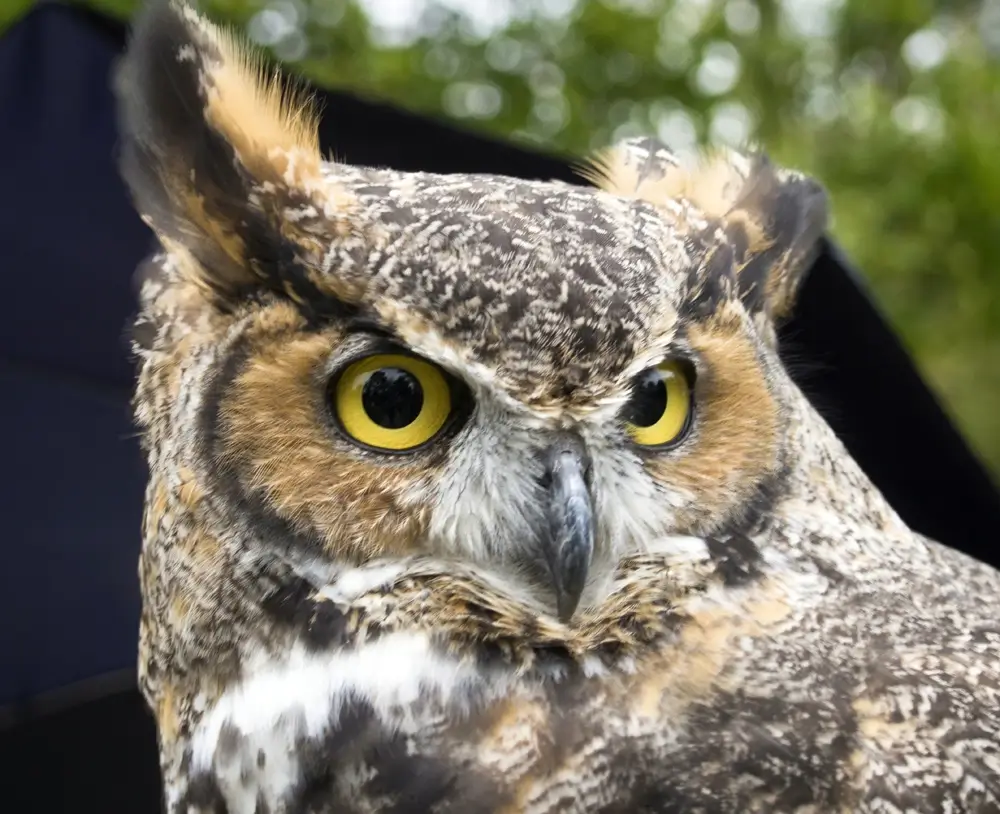
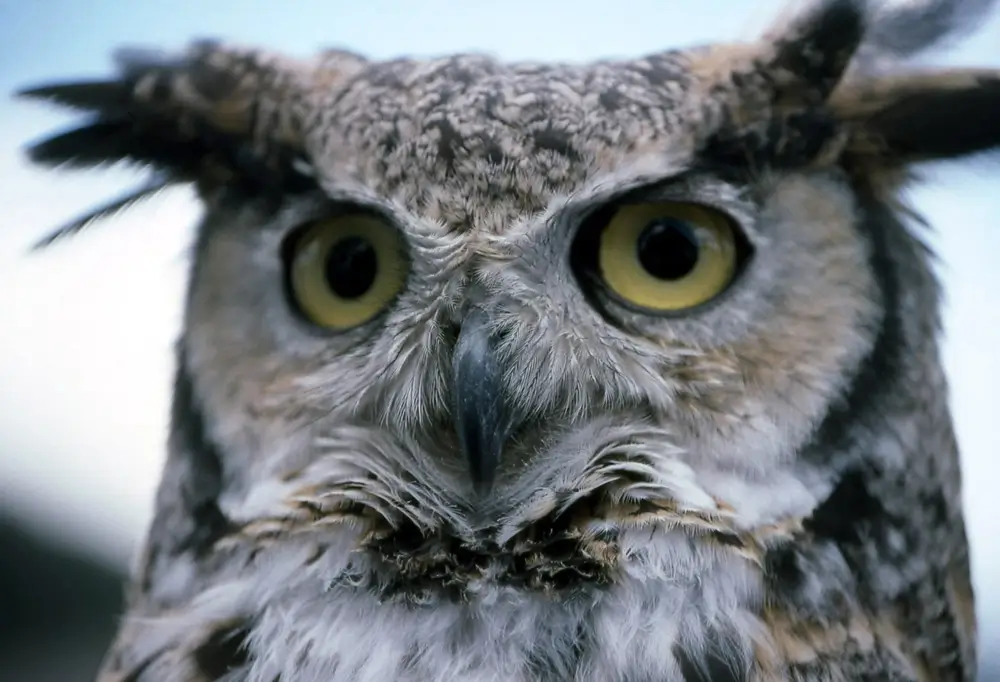
It is best known for the large tufts of feathers on its head that look like horns. These are not real horns or ears—just feathers. The owl has large yellow eyes and feathers colored brown, gray, black, and white. These markings look like tree bark and help camouflage the owl in the woods, making it hard to spot during the day.
Habitat
The Great Horned Owl lives in woodlands, along cliffs and canyons, and at the edge of forests.
Diet
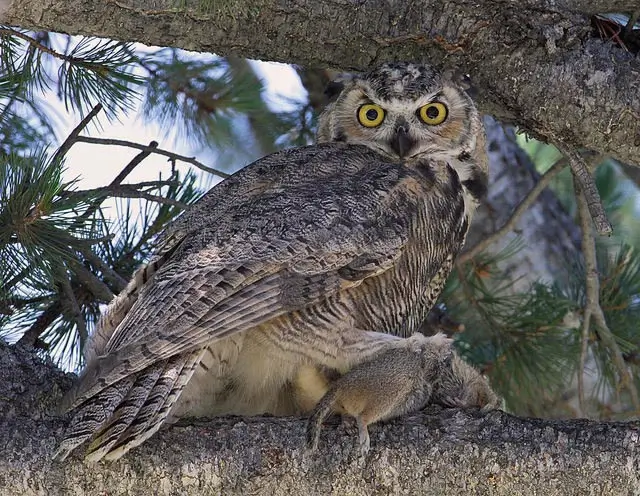
The Great Horned Owl is nocturnal, which means it is active at night. It hunts many kinds of animals, including mice, rabbits, squirrels, and even skunks. It also eats birds such as ducks and quail.
The owl swallows small prey whole. When the prey is too large to swallow whole, the owl tears it into smaller pieces with its sharp beak and talons.
Later, the owl regurgitates, or coughs up, the parts it cannot digest, such as bones, fur, and feathers. These are called owl pellets. You can learn what an owl has eaten by studying the bones and other remains found in the pellets.
Life Cycle
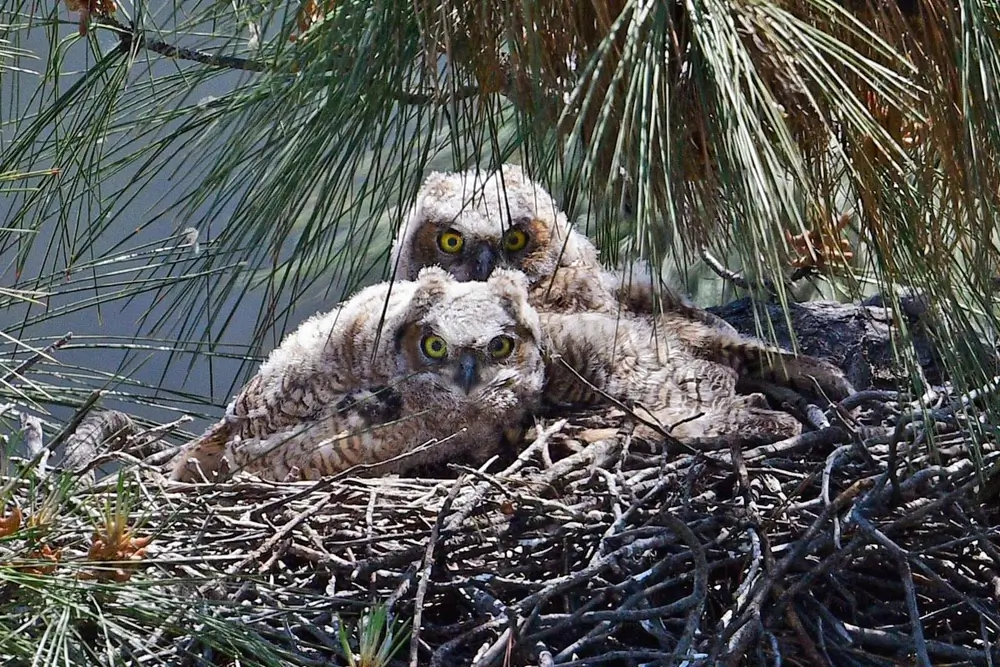
The Great Horned Owl begins mating in January and early February. During courtship, the male and female call to each other with deep hooting sounds. Instead of building their own nests, they usually use abandoned nests made by other birds, especially hawks or crows.
The female usually lays 2–3 eggs and raises one family each year. She does most of the incubating, while the male brings food to the nest. The eggs hatch after about 4–5 weeks. After hatching, both parents care for and feed the owlets.
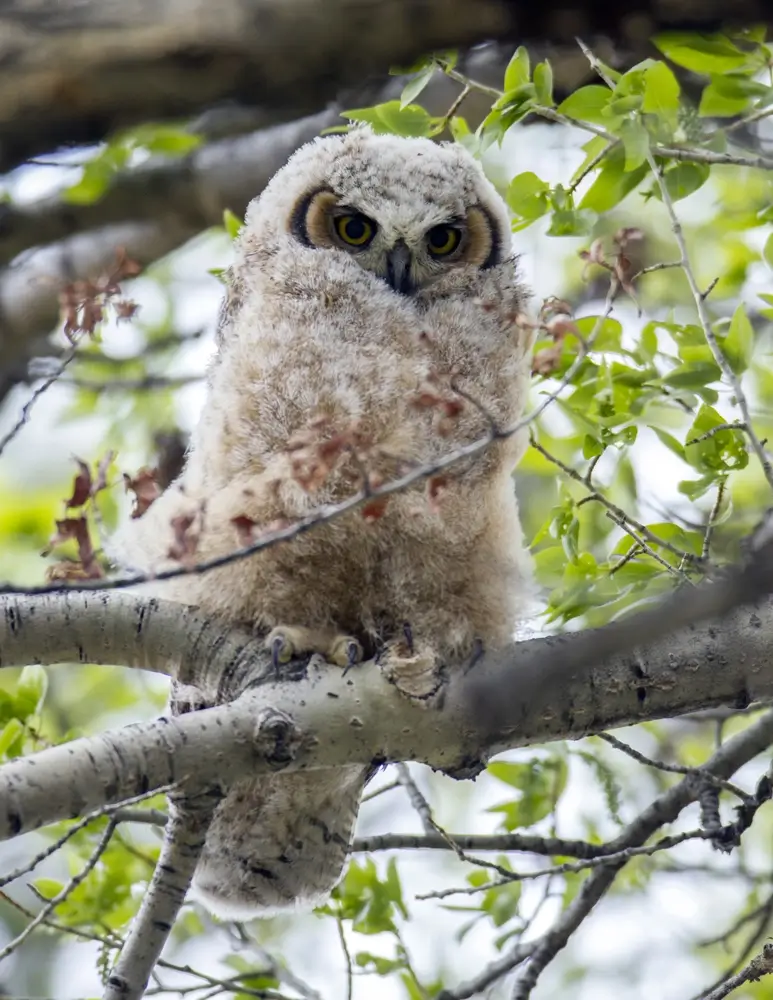
Great Horned Owls are very protective parents and may attack animals or people that come too close to their nest. The young owls leave the nest when they are about 6–7 weeks old and begin flying at around 9–10 weeks of age.
Great Horned Owls can live about 13–15 years in the wild, though some live longer. In captivity, they may live much longer. One famous captive Great Horned Owl at the San Francisco Zoo, named King Richard, lived to be about 50 years old.
Behavior
The Great Horned Owl’s excellent hearing and eyesight help it hunt at night. Its loosely-packed feathers make it almost silent when it flies. This makes it easier for it to sneak up on its prey.
Did You Know?
The Passamaquoddy tribe of Maine believed the Great Horned Owl’s call was a magical flute that helped people fall in love.
Support for NatureWorks is provided by:
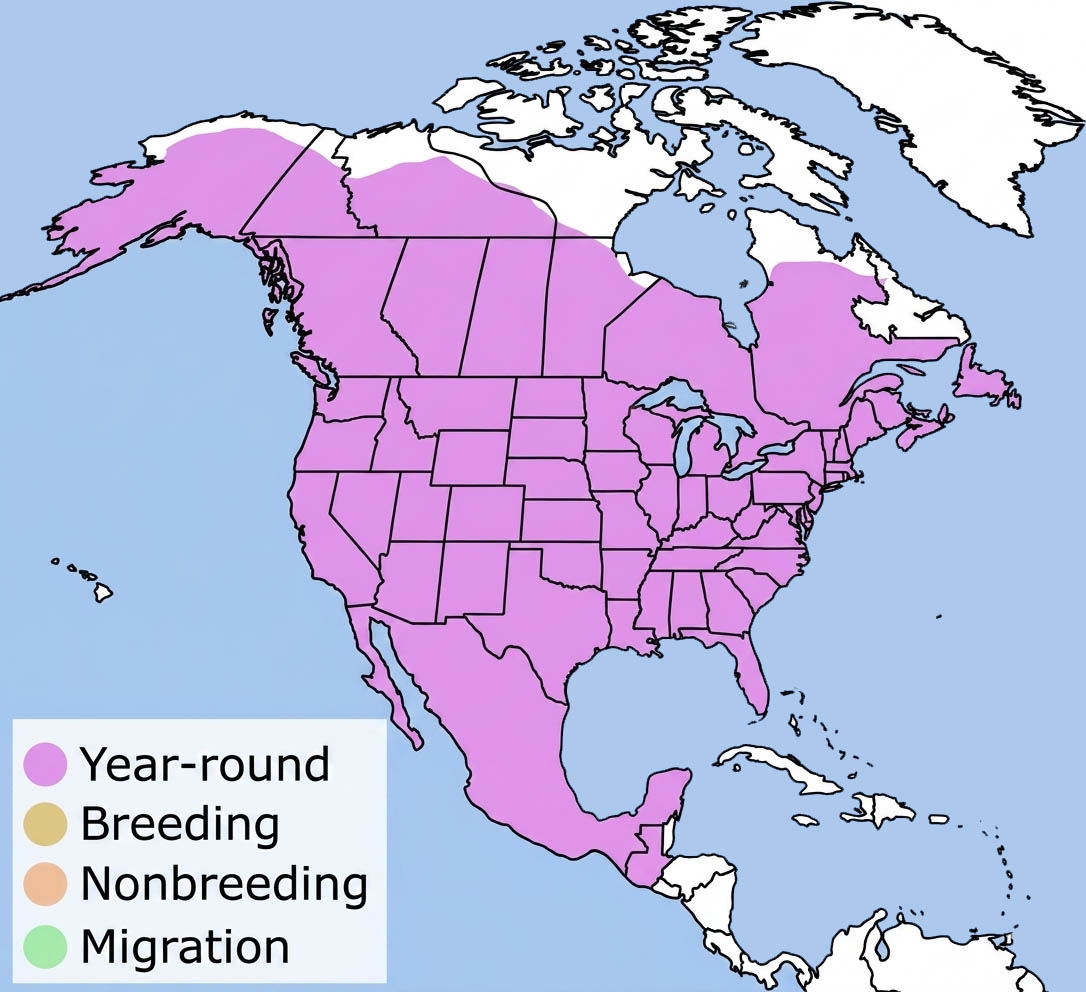
The Great Horned Owl in NH
The Great Horned Owl is a year-round resident of New Hampshire and is found across the state.