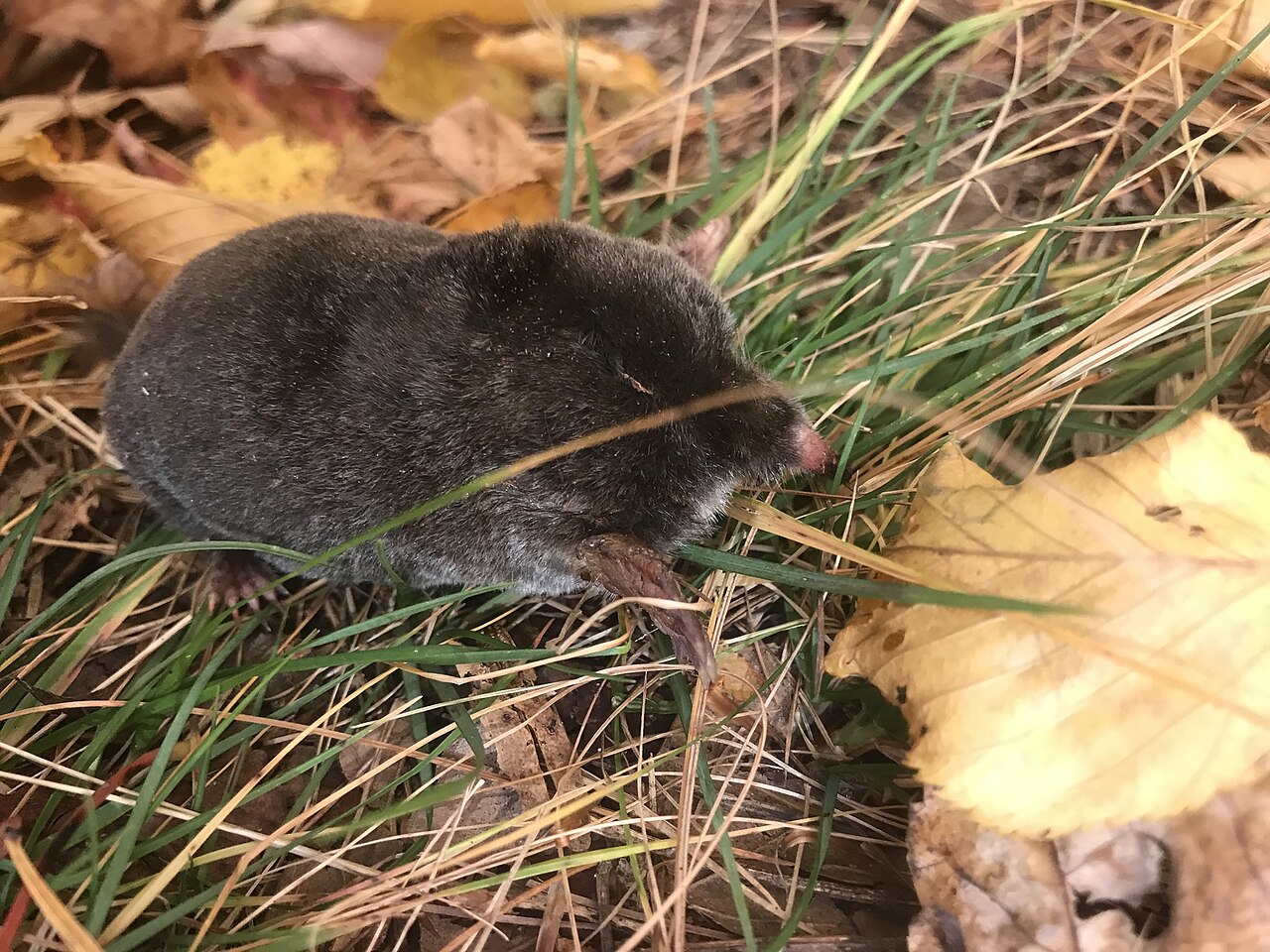
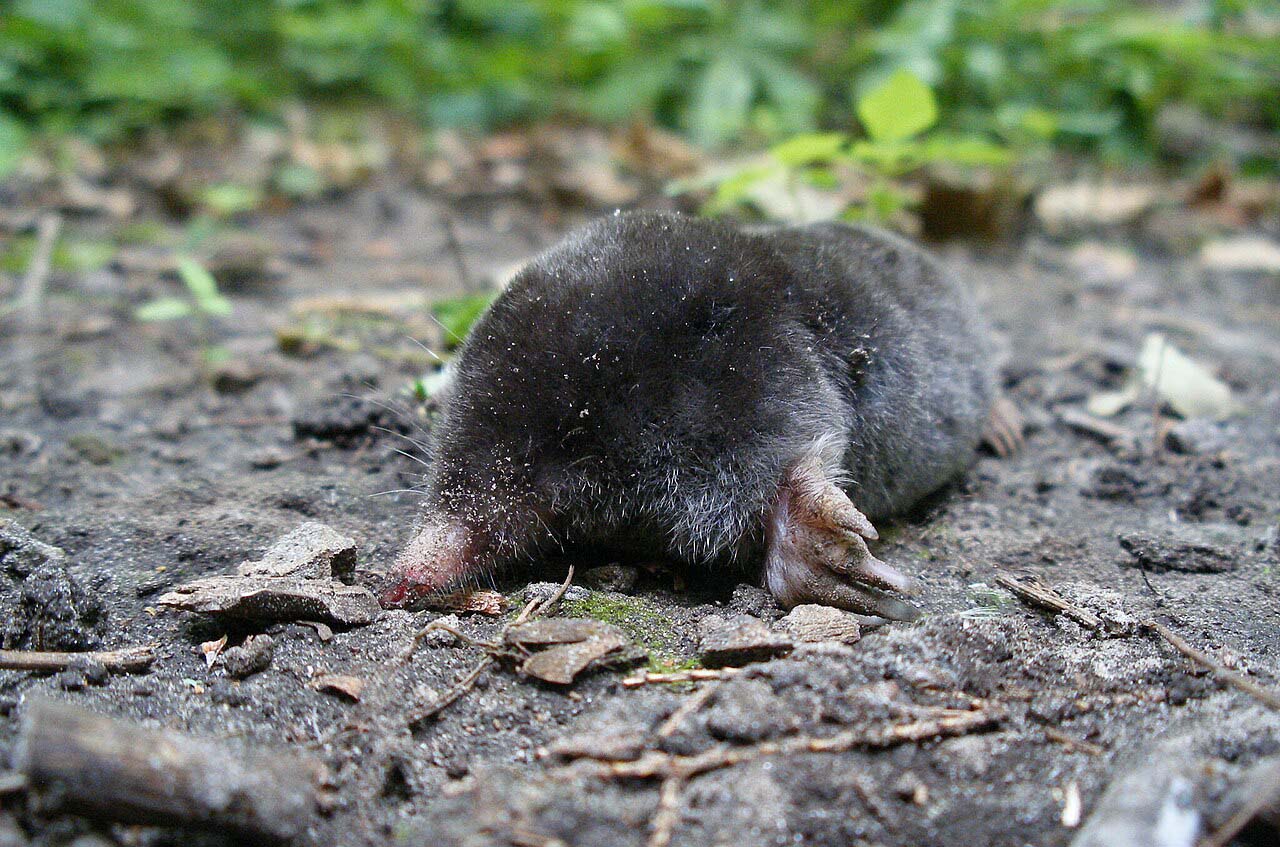
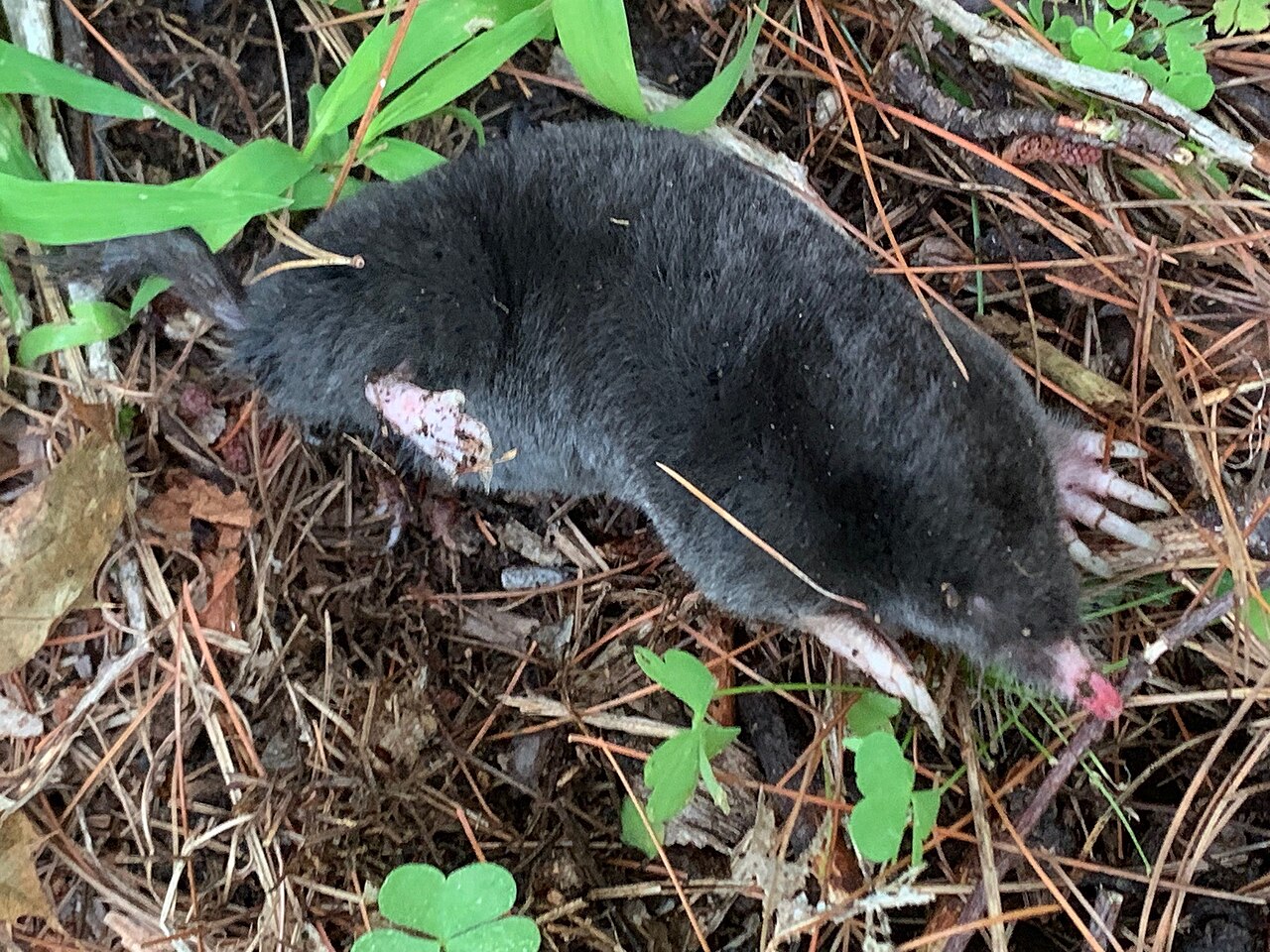
The Hairy-tailed Mole is about 5–7 inches (12.7–17.8 cm) long. It has dark gray to black fur on its back, with slightly lighter fur on its underside.
It has a long snout with a red tip, a short tail covered in bristly hair, tiny eyes hidden under fur, and long, sharp front claws that help it dig and burrow underground.
Habitat
The Hairy-tailed Mole prefers areas with dry, sandy, or loamy* soil. It is found in forests, open fields, old pastures, cultivated fields, lawns, and golf courses.
* Loam is a rich, crumbly soil made of sand, silt, clay, and decayed plant and animal material.
Diet
The Hairy-tailed Mole spends the day tunneling under the ground and searching for food. It sometimes comes out at night to search for food. It eats earthworms, grubs (beetle larvae), beetles, ants, and other invertebrates.
Life Cycle
In the spring, male Hairy-tailed Moles find females in their burrows and mate with them. The female gives birth to four to five young. They are weaned (no longer need their mother’s milk) when they are about a month old. The Hairy-tailed Mole has a life span of 4-5 years.
Behavior
The Hairy-tailed Mole constructs elaborate tunnel systems under the earth. It may share its system with other moles. When a Hairy-tailed Mole dies, its system may be taken over by another mole.
The Hairy-tailed Mole is active during the winter, and it goes deeper into its tunnels to stay warm.
Did You Know?
The Hairy-tailed Mole is also known as Brewer’s Mole.
Support for NatureWorks is provided by:
The Hairy-Tailed Mole in NH
The Hairy-tailed Mole is found throughout New Hampshire in areas with sandy, loamy soil in forests, old fields, and lawns.
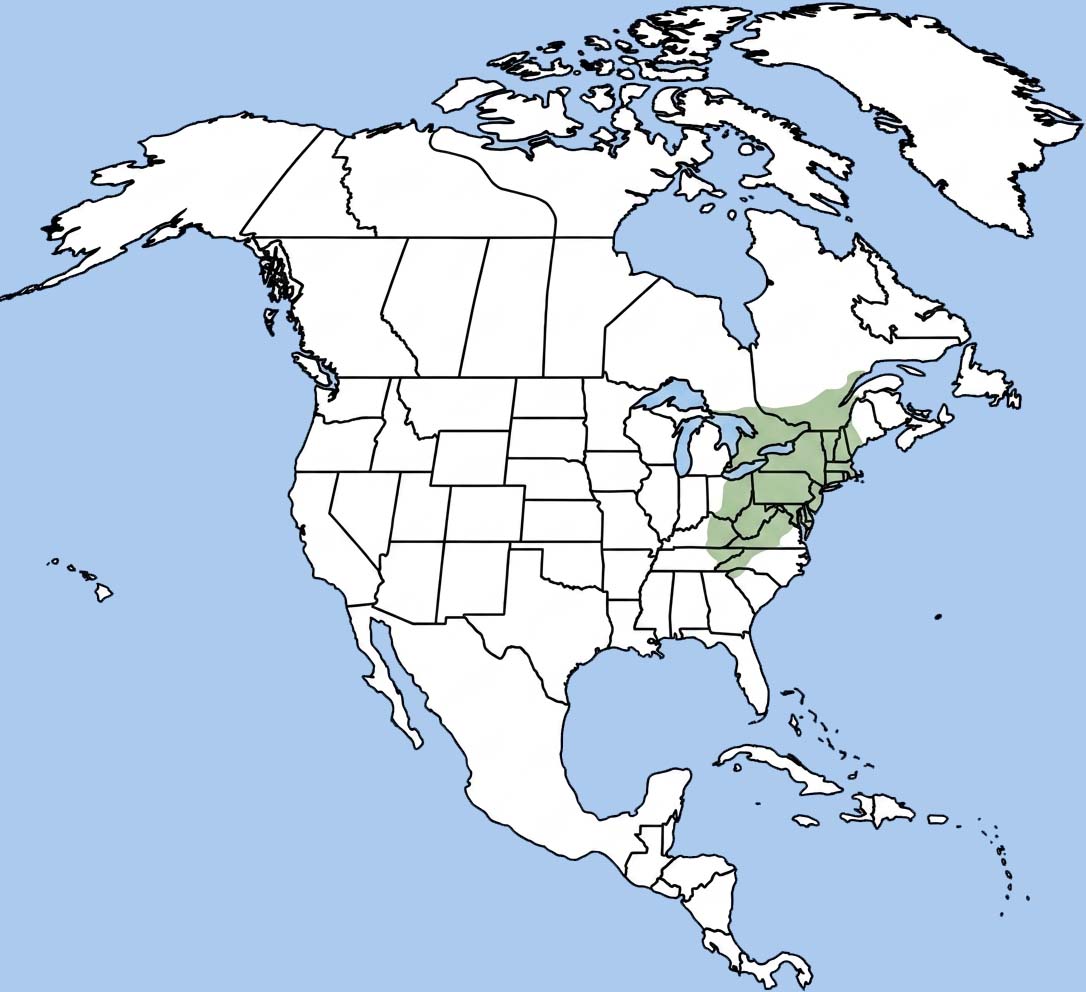
The Hairy-tailed Mole is found from southeastern Canada and New England, including New Hampshire, southwest through the mountains of Tennessee and North Carolina.