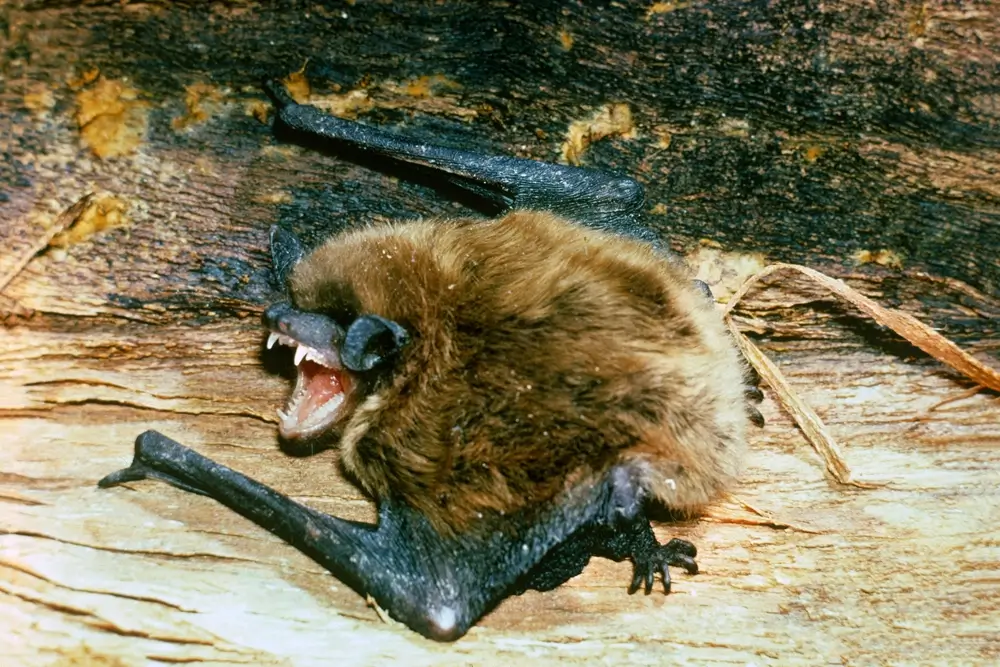
Little Brown Bat

Myotis lucifugus

Kingdom
Phylum
Class
Order
Family
Genus

Little Brown Bat

Myotis lucifugus

Kingdom
Phylum
Class
Order
Family
Genus

Characteristics

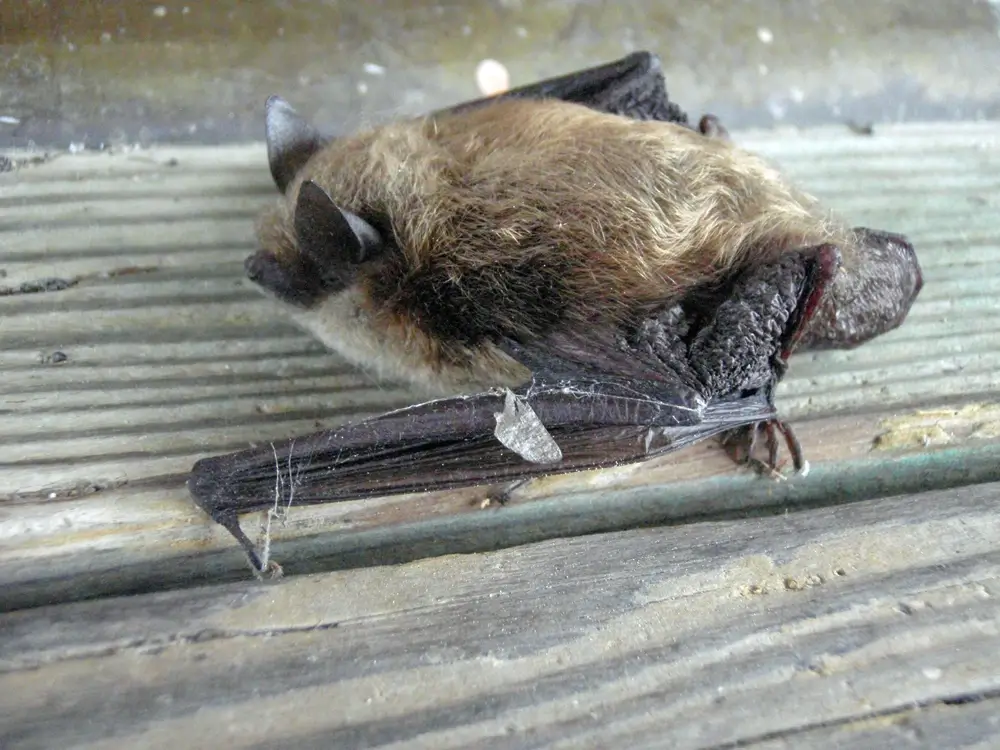
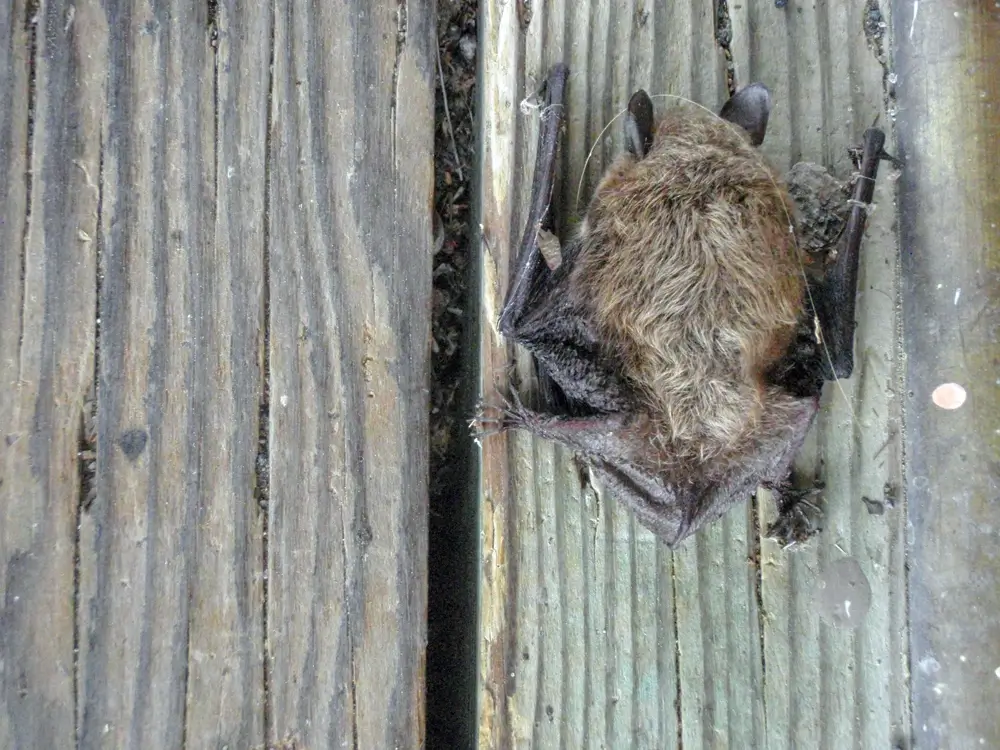
The little brown bat has glossy brown fur. It has hair on its toes and pointed ears. It is between 3-5 inches (7.6-12.7 cm) in length and weighs between 1/16 and 1/2 ounces (4.5-14 g).

The little brown bat is also known as the little brown myotis.

Habitat

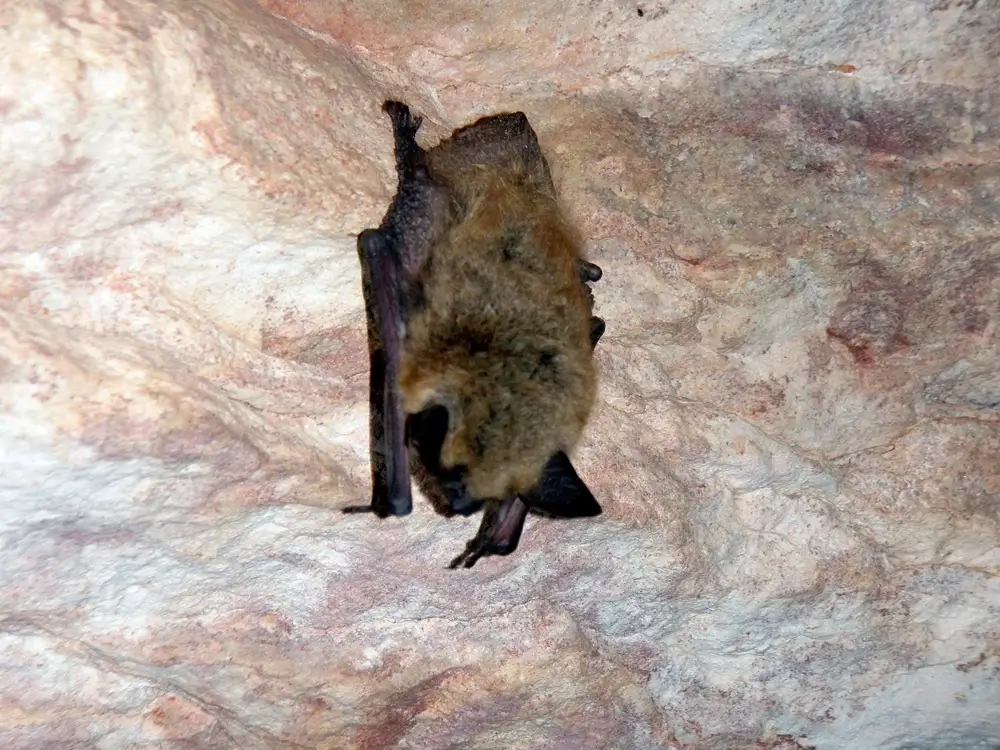
The little brown bat lives along streams and lakes. It forms nursery colonies in buildings. In the winter, it hibernates in caves and mines.

Diet

The little brown bat eats insects like gnats, flies, moths, wasps, and beetles. The little brown bat hunts at dusk and at night.

The little brown bat uses echolocation to find its prey. It sends out a high-pitched sound that bounces off objects and returns to the bat. By listening to the echoes, the bat can tell what the object is and where it is. When it locates an insect, the bat uses its wings to scoop it into a small pouch formed by its wing and tail membranes. Then it grabs the insect with its sharp teeth and eats it.

Life Cycle

Mating season is in the fall, but fertilization doesn’t happen until spring. In the spring, little brown bats form huge nursery colonies. A nursery colony may have thousands of bats in it. The female little brown bat gives birth to only one baby. During birth, the female hangs right-side up. The baby bat attaches itself to a teat. It nurses for about two weeks. It flies when it is three weeks old.

Behavior

The little brown bat migrates to caves or mines in the winter to hibernate. It wakes up every couple of weeks during hibernation. It doesn’t feed when it wakes up, but it may fly around outside the cave on warm nights.

Did You Know?

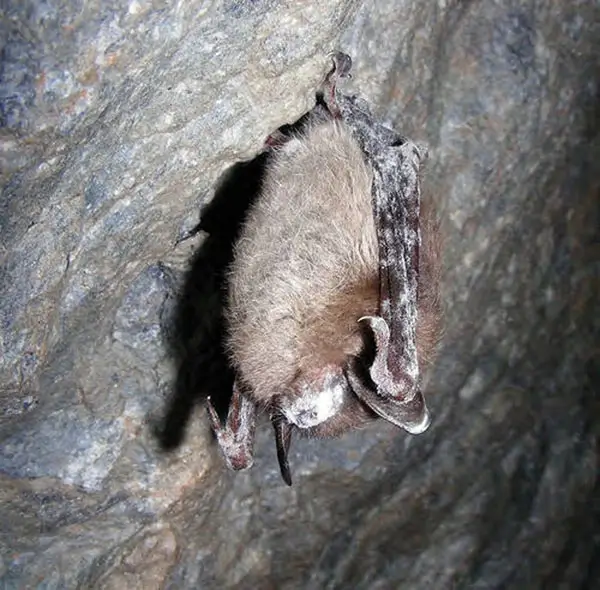
White-nose Syndrome mostly affects bats that hibernate. It gets its name from the white fungus, Pseudogymnoascus destructans, which grows on the bats’ muzzles, ears, and wings during hibernation. This fungus thrives in the cold, humid conditions found in the caves and mines where bats sleep. Infected bats can become dehydrated, starve, or wake up too early from hibernation, which puts their survival at risk.


Support for NatureWorks is provided by:

The Little Brown Bat in NH

The little brown bat was once found in great numbers in New Hampshire, but since 2010, its population has been severely impacted by White-nose Syndrome, and it is now an endangered species in the state.

World Status: Endangered
N.H. Status: Endangered in NH

Range

The little brown bat is found in most of the United States and Canada, except for the south-central and southeastern United States and northern Alaska and Canada.