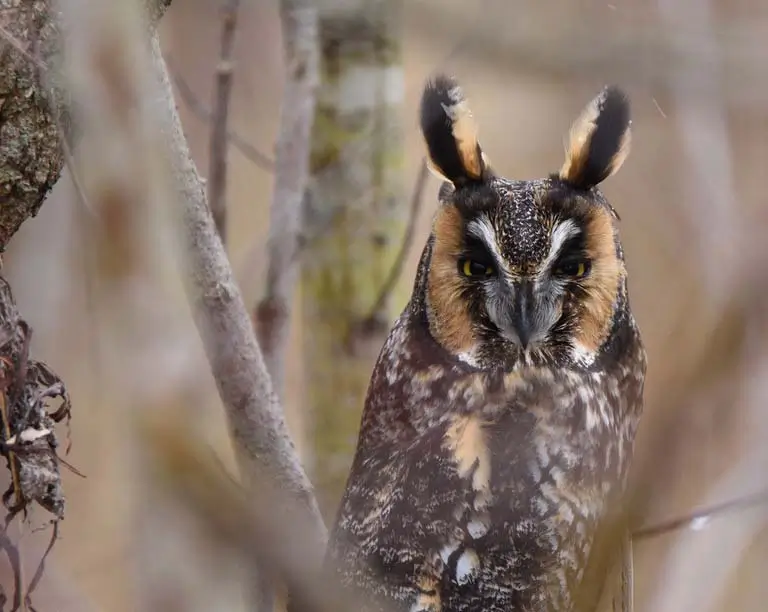
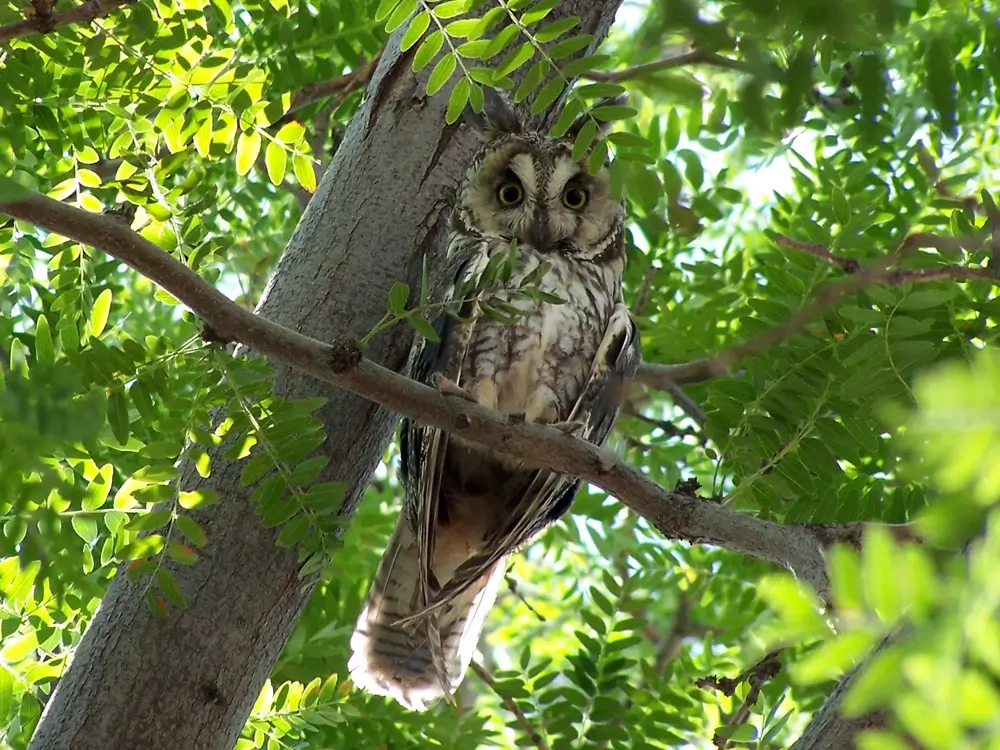
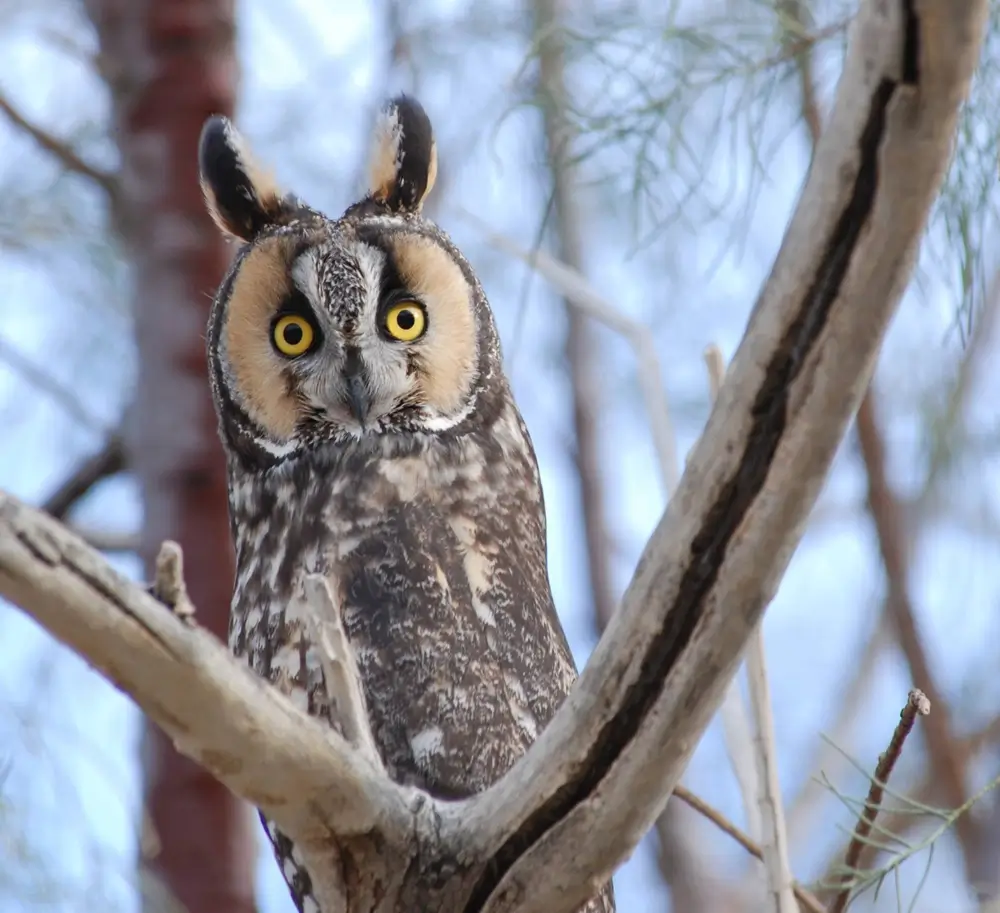
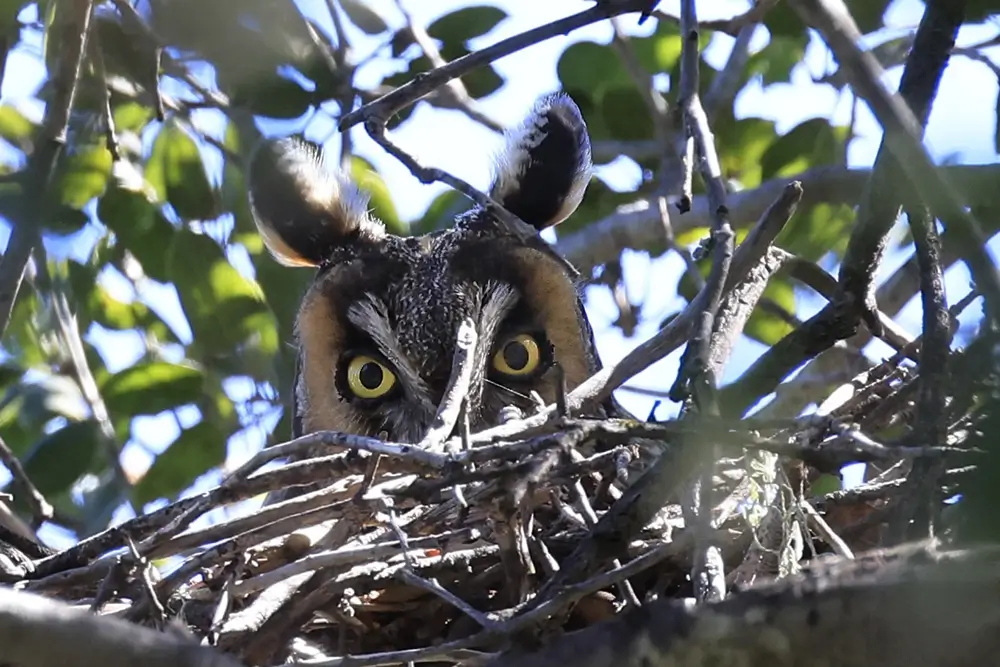
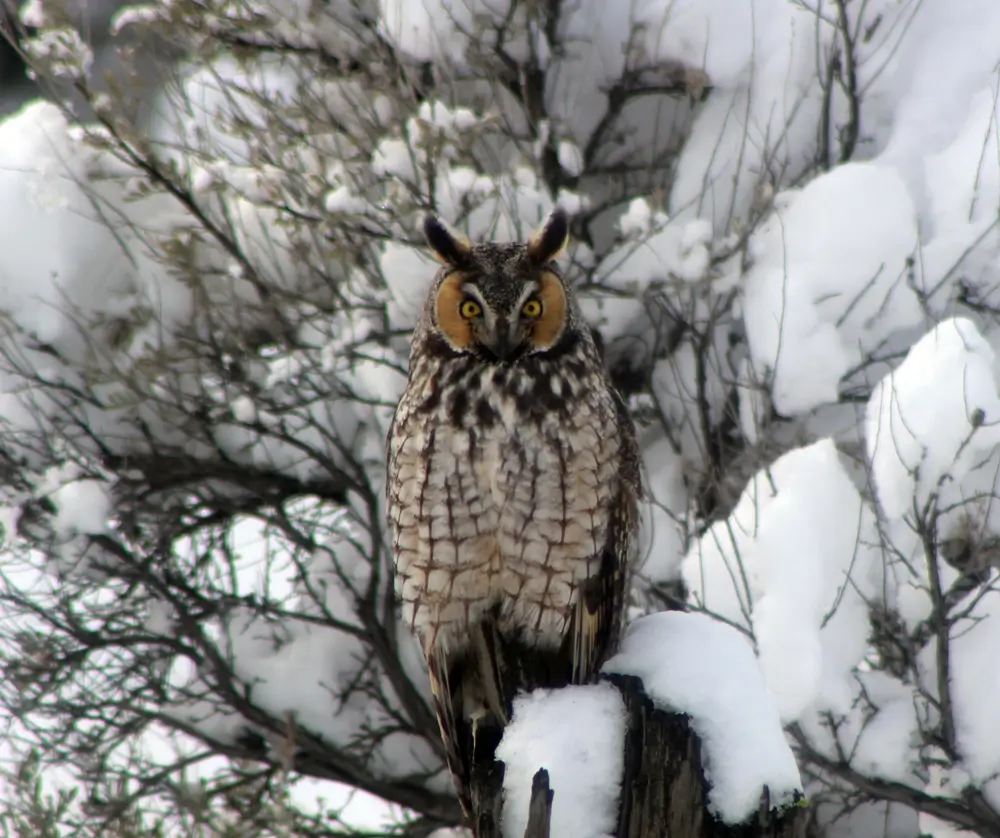
The long-eared owl is around 15-16 inches (38-40.6 cm) in length with a wingspan of around 40 inches (101.6 cm).
It has long ear tufts that are set very close together and can’t be seen when the owl is flying. The long-eared owl is brownish-gray with a vertical streaking pattern. It has a chestnut-colored facial disk with small white patches set under bright yellow eyes.
Habitat
The long-eared owl lives in dense coniferous and deciduous forests from sea level up to 6,562 feet (2,000 m) in elevation.
With their excellent eyesight and hearing, the long-eared owl hunts almost exclusively at night. It hunts mostly from the ground or from low areas in trees.
To kill its prey, the long-eared owl bites the back of the skull and swallows the animal whole.
Life Cycle
The long-eared owl breeds from February to July, and pairs are monogamous (they only have one mate at a time). To attract a female, the male performs an aerial display, flying in a zig-zag pattern over possible nesting sites. Sometimes, long-eared owls build their nests close together in loose colonies.
The female long-eared owl lays 2 to 10 eggs over about 30 days in a stick nest built by other birds. The eggs are white, smooth, and shiny. The female incubates (sits on the eggs to keep them warm) for 25 to 30 days, taking short breaks at night to hunt for food.
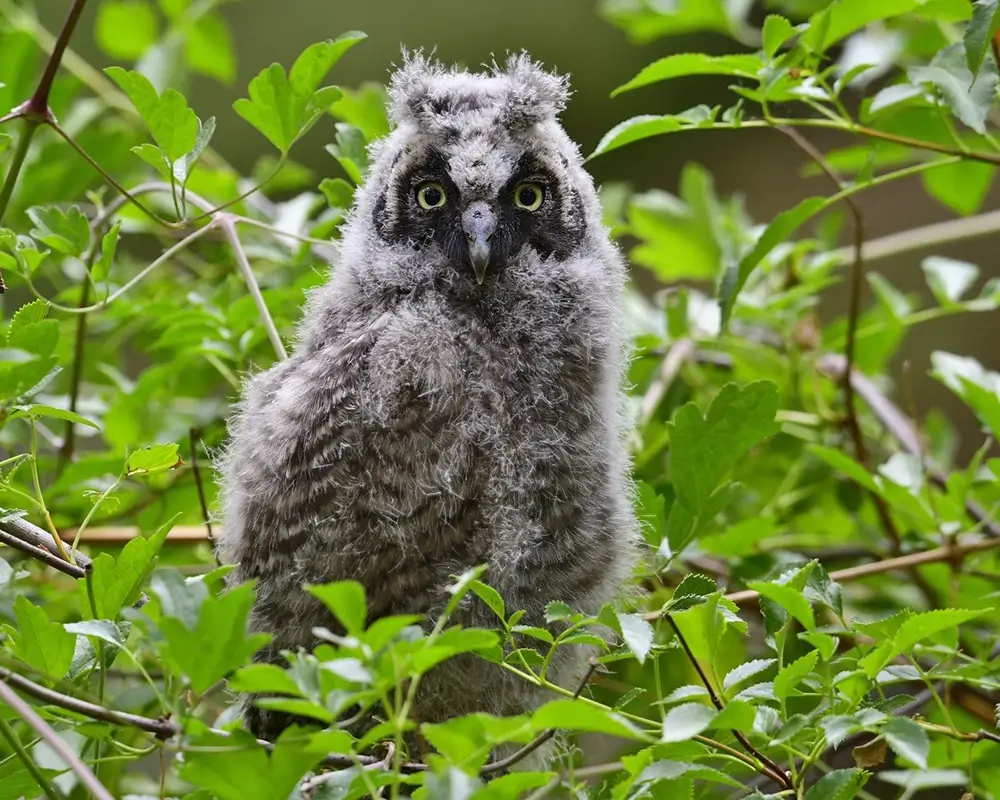
After hatching, the chicks leave the nest at about 21 days old. They still cannot fly, so they stay in nearby bushes. By 35 days old, the chicks learn to fly. They stay with their parents for around 10 to 11 weeks.
The long-eared owl has an average lifespan of 4 years. The oldest long-eared owl on record was 12 years old.
Behavior
The long-eared owl is very quiet during the day and hard to detect. They are experts at camouflage and are able to stretch out their slender bodies and compress their feathers so they look like a tree trunk.
Did You Know?
Support for NatureWorks is provided by:
The Long-Eared Owl in NH
There are no recent records of the long-eared owl breeding in New Hampshire, but it may winter in the state, although not in large numbers.