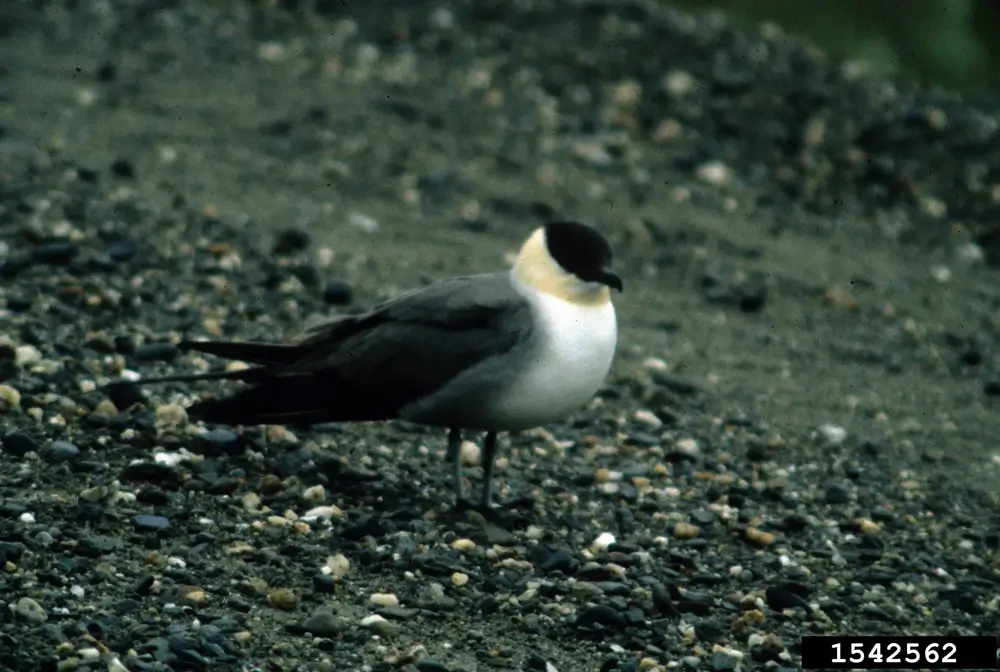
The long-tailed jaeger is 1.3-2.1 feet(3.8-6.3 m) in length with a wingspan of 3.4-3.7 feet (1-1.1 m).
It has a slightly hooked bill, webbed feet, and 6-10 inch (15.2-25.4 cm) long pointed center tail feathers that stick out beyond its other tail feathers. During the non-breeding season, it loses its center tail feathers.
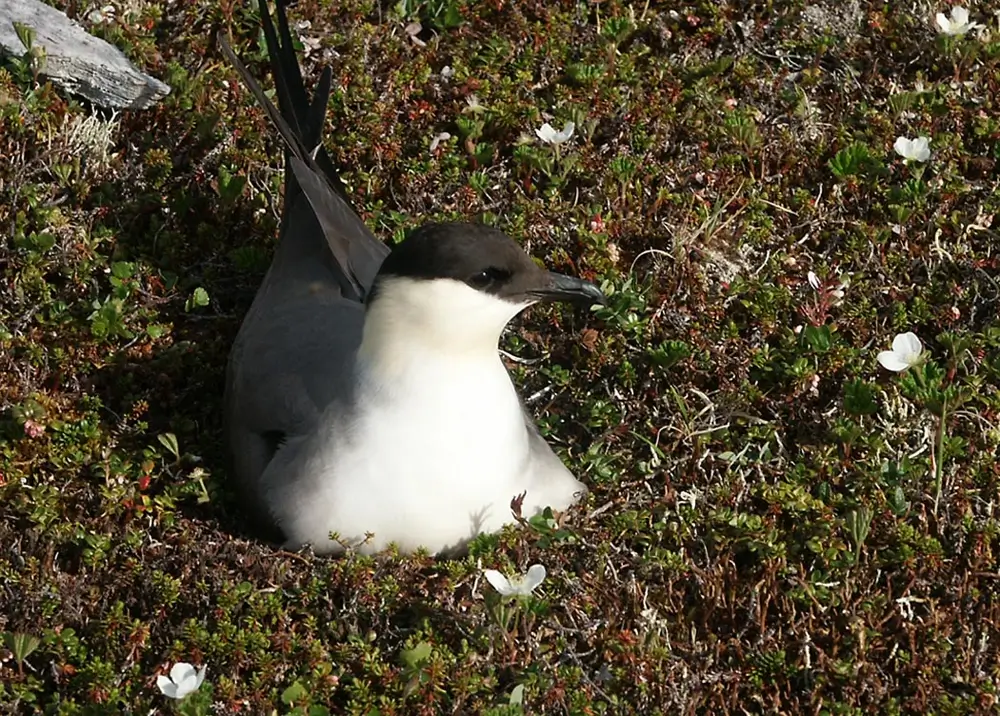
In the breeding season, it has a gray back and wings, a white head and belly, and a dark brown cap on its head.
In the non-breeding season, its cap has white and gray spots on it, and its undersides have light brown and white bars. Males and females look alike.
Habitat
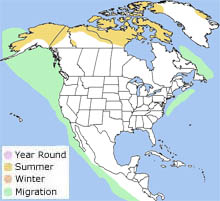
The long-tailed jaeger breeds on the tundra and coastal marshes in the Arctic. In the winter, it is usually found on the open ocean, far from the shoreline
Diet
The long-tailed jaeger eats fish, crustaceans, insects, and small birds. It also eats small mammals like lemmings and voles.
It hovers over its land prey, circling like a hawk. It then swoops down and snatches up the prey. It catches insects in the air, and it steals food from other seabirds, but not as often as the parasitic jaeger.
Life Cycle
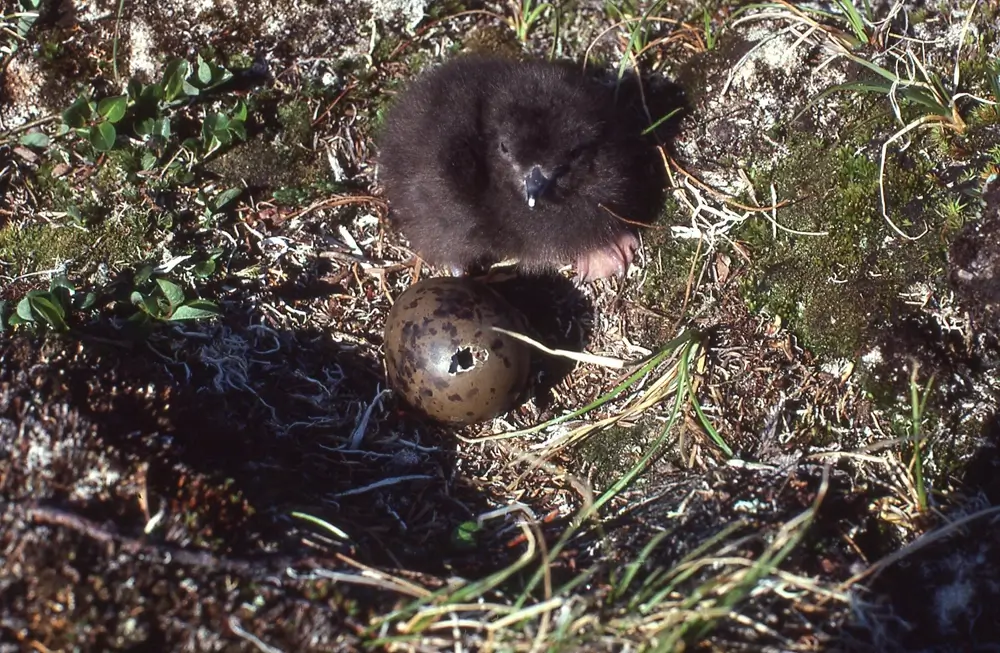
Male and female pairs make a nest in a shallow depression on the ground. The female lays 1-2 eggs. Both the male and the female incubate the eggs and keep them warm by clutching them with their feet and pressing them into a brood patch. A brood patch is a bare patch of skin under their wings. After the breeding season, feathers grow back on their brood patch.
The female usually spends more time on the nest than the male. The chicks leave the nest a few days after hatching. One parent stays with the chicks while the other parent brings food back to the nest. The adult regurgitates food for the chicks to eat.
The chicks fledge when they are 21-27 days old, but their parents stay with them for a few more weeks.
The long-tailed jaeger has a lifespan of 8-9 years in the wild.
Behavior
The long-tailed jaeger uses flight displays to warn of intruders invading their breeding territory. They may fly at the intruder and raise their wings.
Did You Know?
The long-tailed jaeger is the smallest species of jaeger.
Support for NatureWorks is provided by:
The Long-Tailed Jaeger in NH
The long-tailed jaeger does not breed in NewHampshire, but it may be found in the ocean waters of the coast of the state.