New England Cottontail

Sylvilagus transitionalis

Kingdom
Phylum
Class
Order
Family
Genus

New England Cottontail

Sylvilagus transitionalis

Kingdom
Phylum
Class
Order
Family
Genus

Characteristics

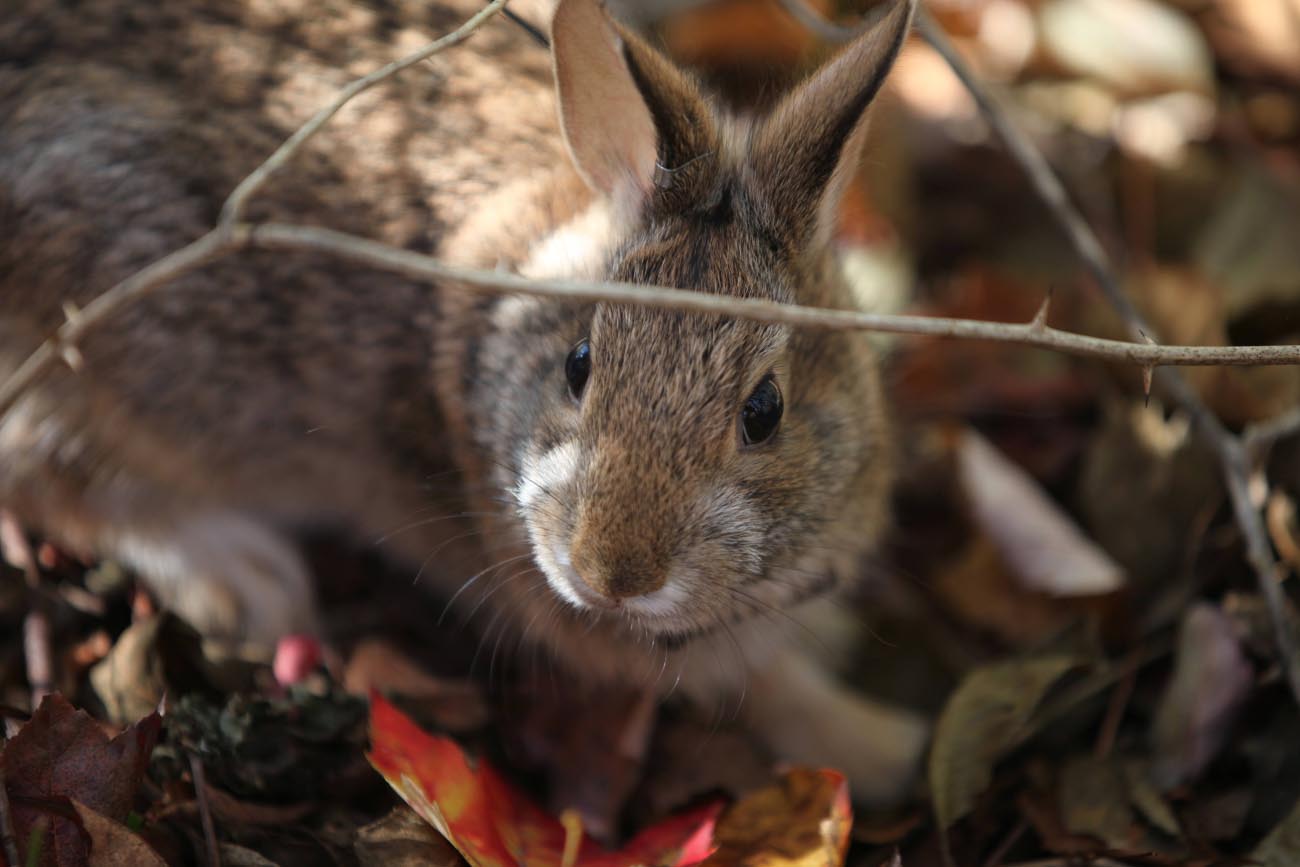
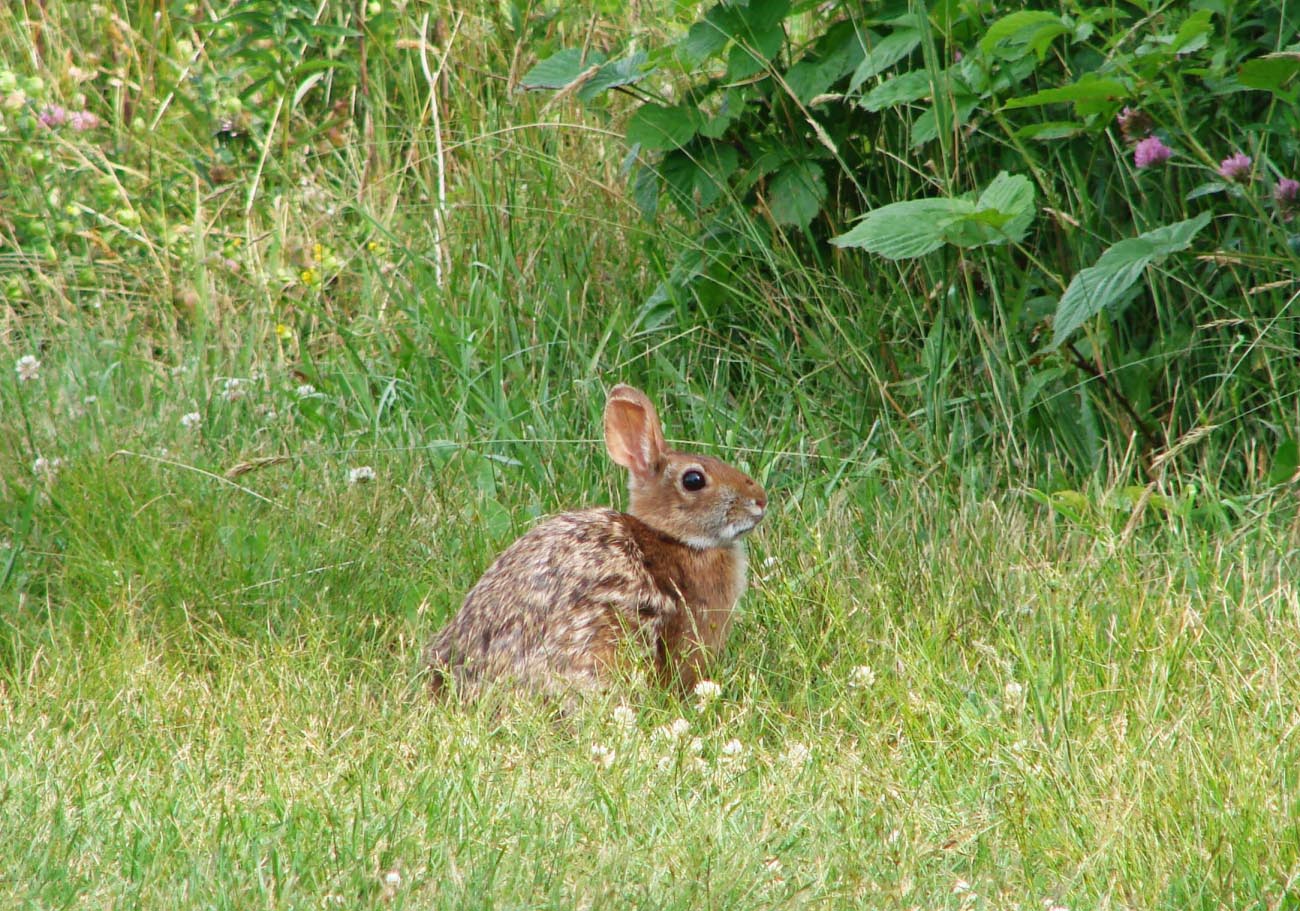
The New England cottontail has soft brown fur mixed with black and reddish colors. Its underside is lighter in color, and it has a fluffy white tail that looks like a cotton ball. They have short ears, large dark eyes, and powerful back legs that help them run quickly and escape predators.

They are about 14-19 inches (36-48 cm) and weigh about 1.5-3 pounds (0.7-1.4 kg). Females are often slightly larger than males.

New England cottontails can be difficult to tell apart from eastern cottontails, another rabbit species found in the same area. However, New England cottontails usually have shorter ears and slightly darker fur.

Habitat

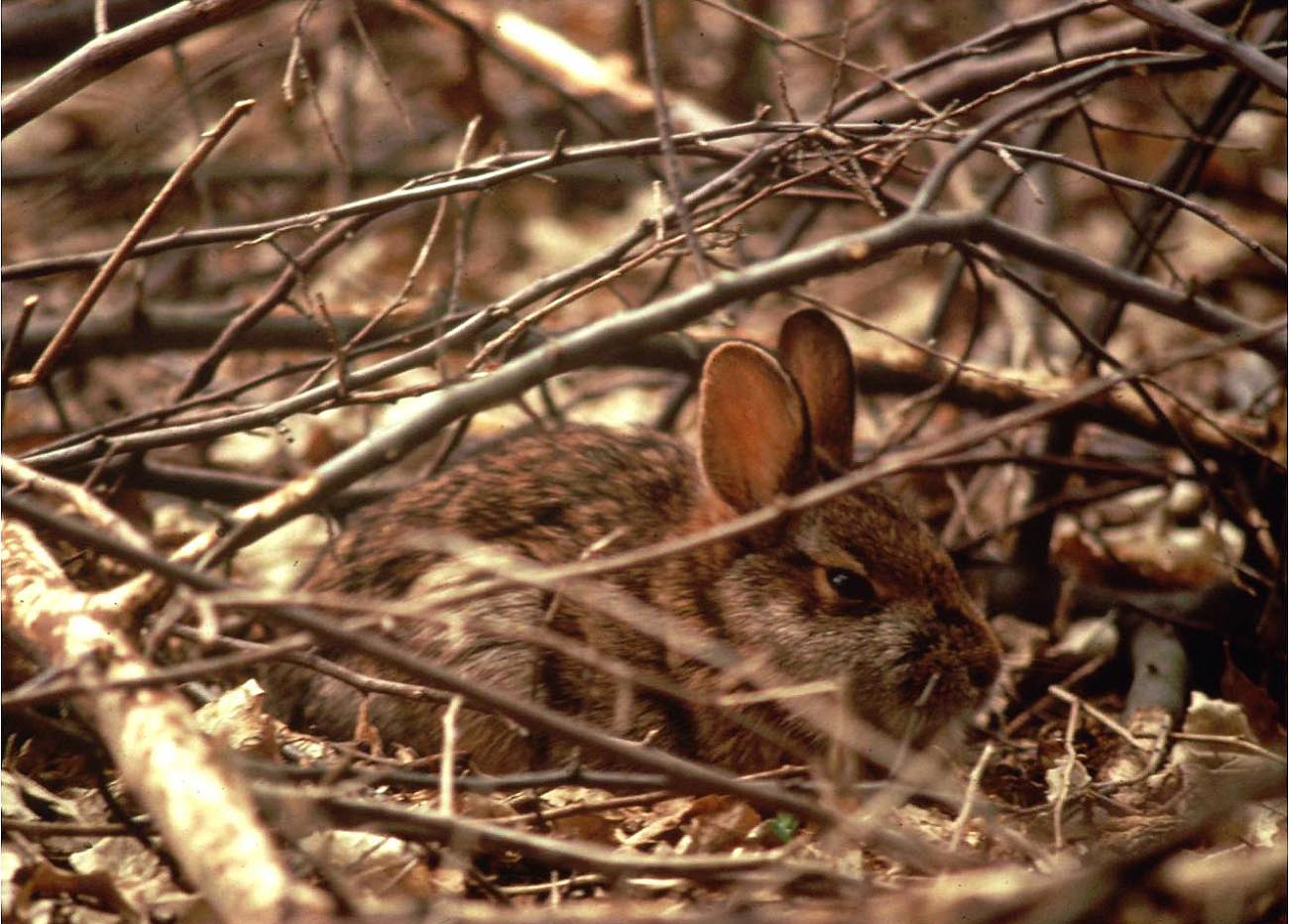
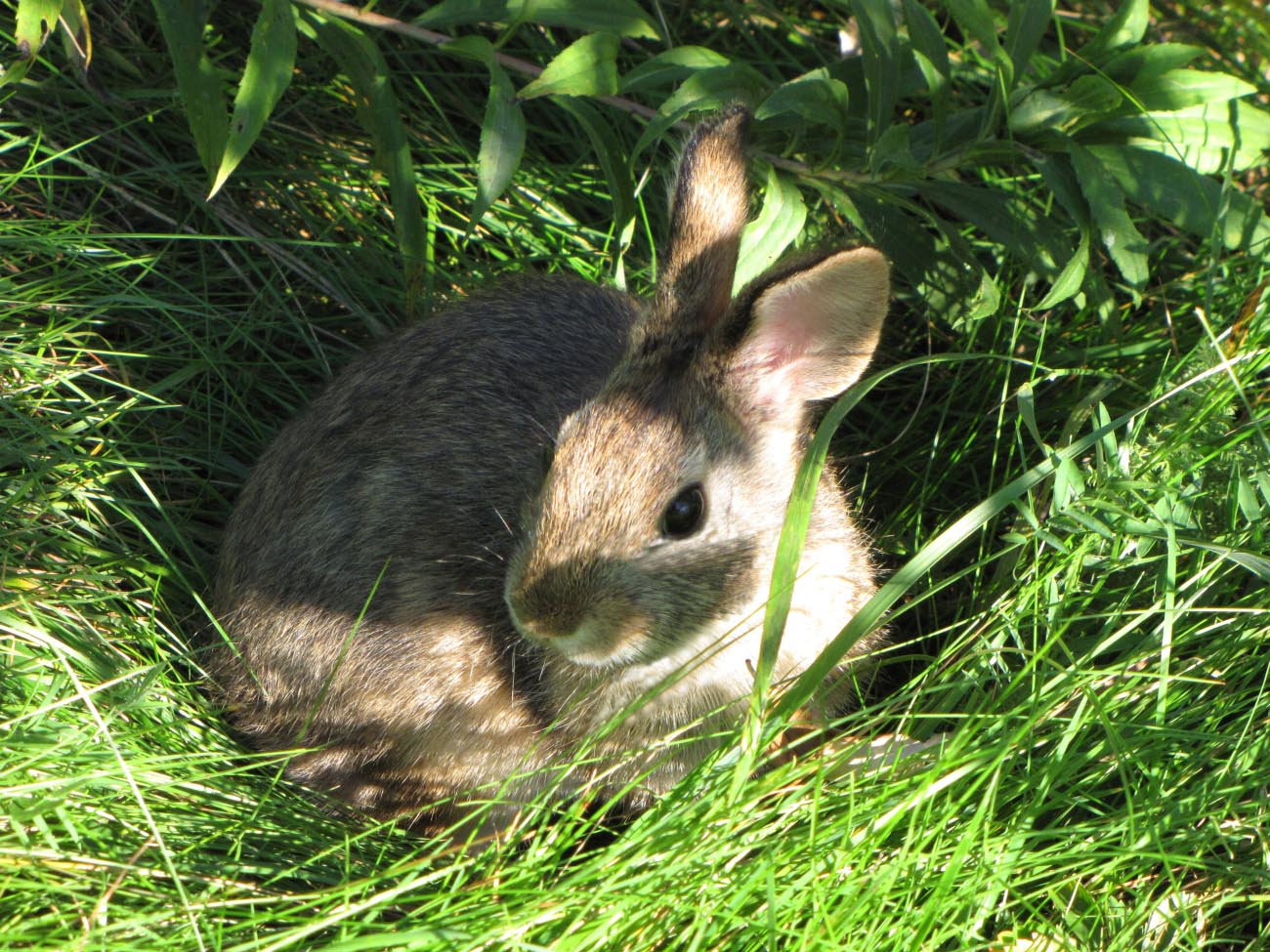
New England cottontails live in thick, brushy habitats where they can stay hidden from predators. They prefer young forests, overgrown fields, shrubby wetlands, and forest edges filled with dense vegetation.

Unlike some rabbits, they do not dig large burrows and instead depend on thick plant cover for protection.

Diet

New England cottontails are herbivores, meaning they eat plants. During the spring and summer, they feed on grasses, clover, leaves, and wildflowers.

In the colder months, they switch to eating bark, twigs, and buds from shrubs and small trees. They are most active at dawn and dusk when they leave hiding places to search for food.

Life Cycle

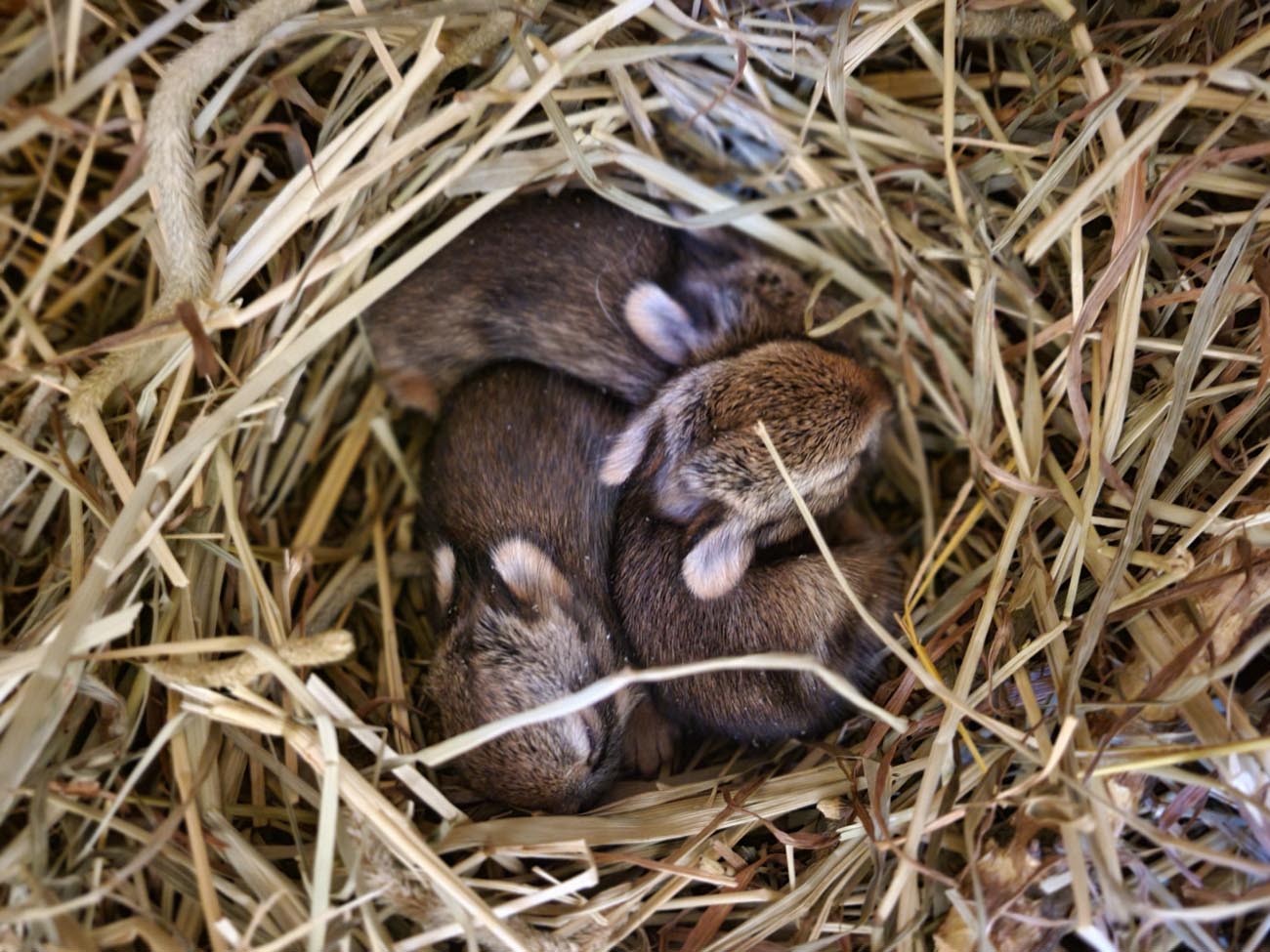
The breeding season lasts from late winter through summer. A female builds a shallow nest on the ground using grass and fur. After a pregnancy of about one month, she gives birth to 3 to 8 babies called kits. The kits are born blind and nearly hairless, but they grow quickly.

Within about a week, they begin growing fur and opening their eyes. Young rabbits leave the nest after two to three weeks and may breed within their first year.

Behavior

New England cottontails are shy and usually live alone except during the breeding season. When danger approaches, they often freeze to avoid being seen.

If threatened, they can suddenly sprint away in a zigzag pattern to escape predators such as red foxes, hawks, owls, and coyotes. They remain active all year long and do not hibernate in the winter.

Did You Know?

The New England cottontail population has declined because of habitat loss. Wildlife agencies and conservation groups are working to restore the dense shrub habitats these rabbits need to survive.

Creating young forests and brushy areas can help protect this unique New England species for the future.


Support for NatureWorks is provided by:

The New England Cottontail in NH

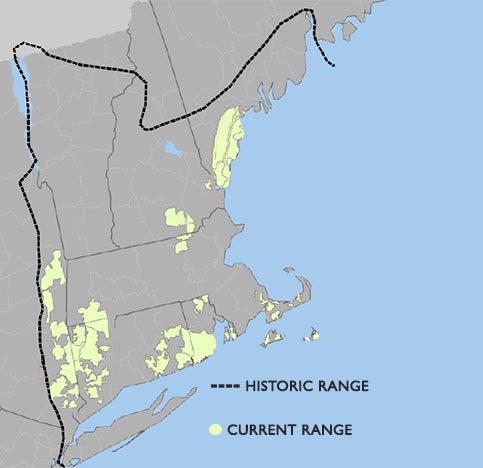
New England cottontails are found in southeastern New Hampshire.

World Status: Vulnerable
N.H. Status: Endangered in NH
New England Cottontail Map

Range

The New England cottontail is found in parts of Maine, New Hampshire, Massachusetts, Connecticut, Rhode Island, and eastern New York.

Today, the species survives in small, scattered populations because much of its habitat has been cleared for roads, homes, and farms.