The pileated woodpecker is 15-20 inches (38.1-50.8 cm) in length with a wingspan of 26-30 inches (66-76.2 cm). It is one of the largest woodpeckers found in North America. Only the imperial woodpecker (Campephilus imperialis) of western Mexico is larger. The probably extinct ivory-billed woodpecker (Campephilus principalis), which was once found in the southeastern United States and Cuba, was also larger.
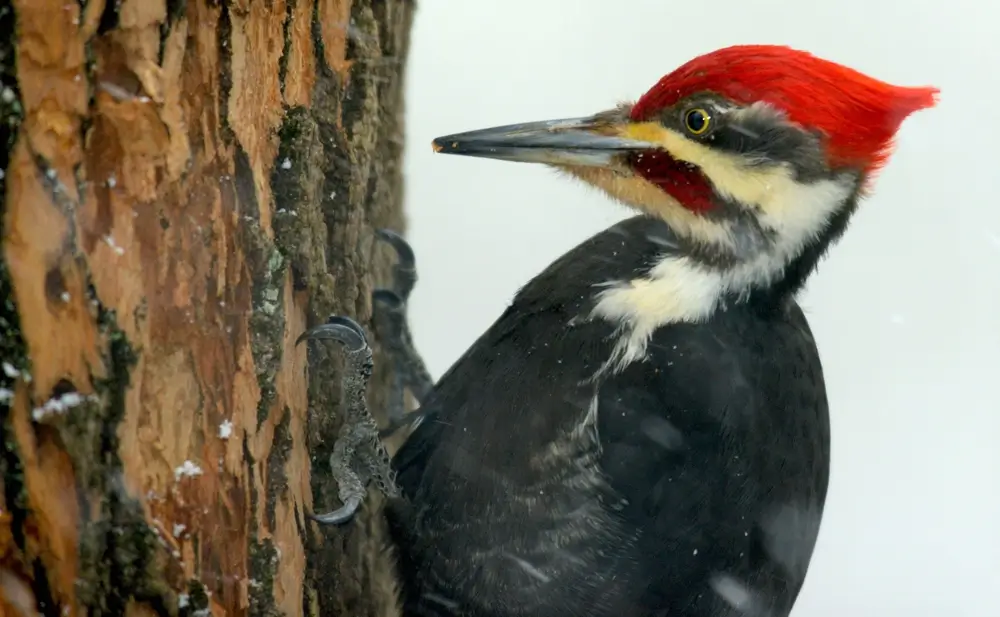
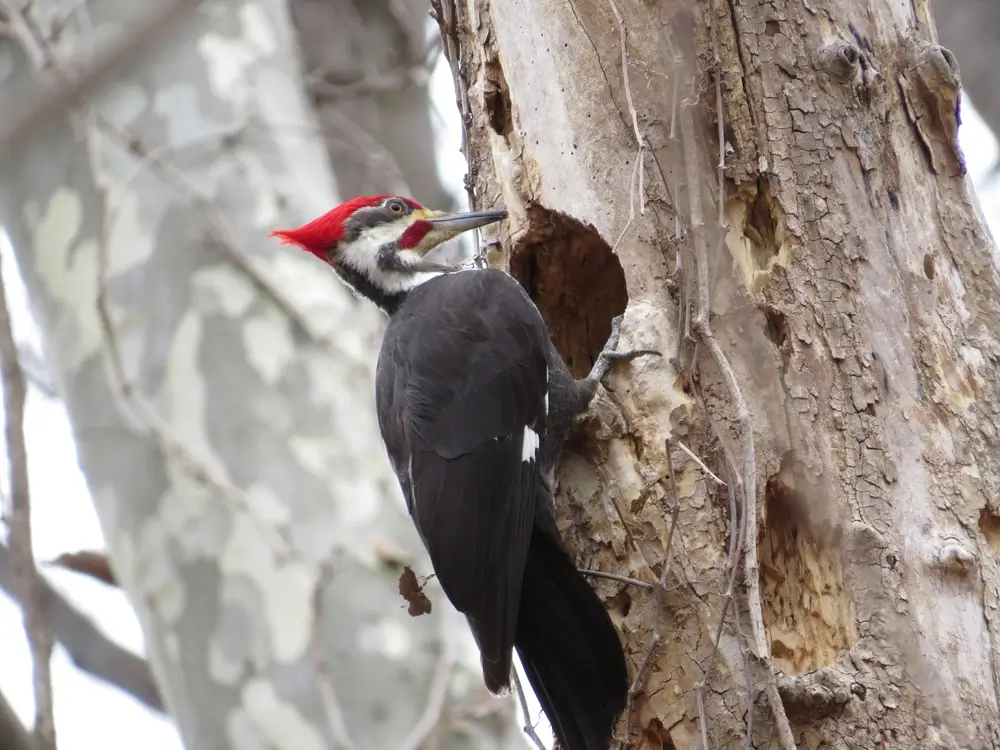
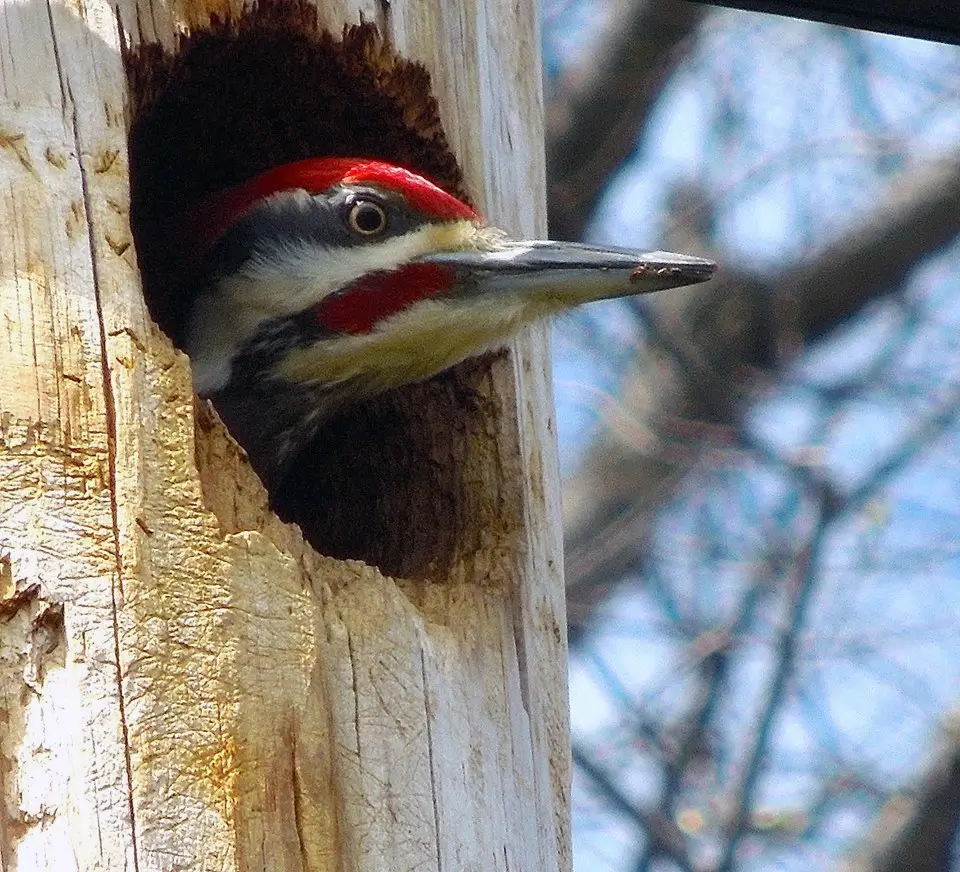
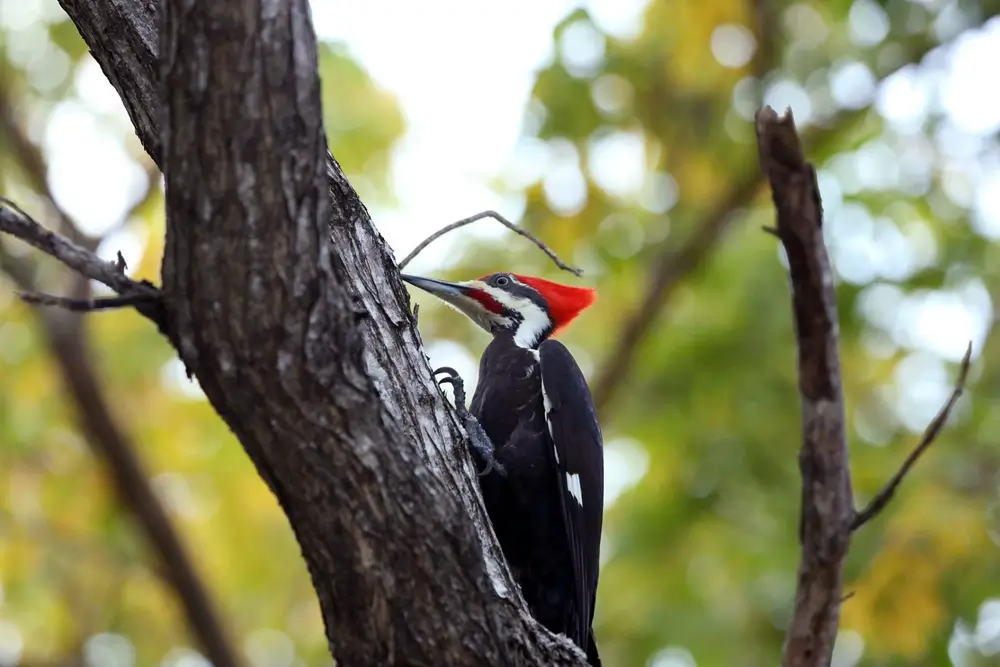
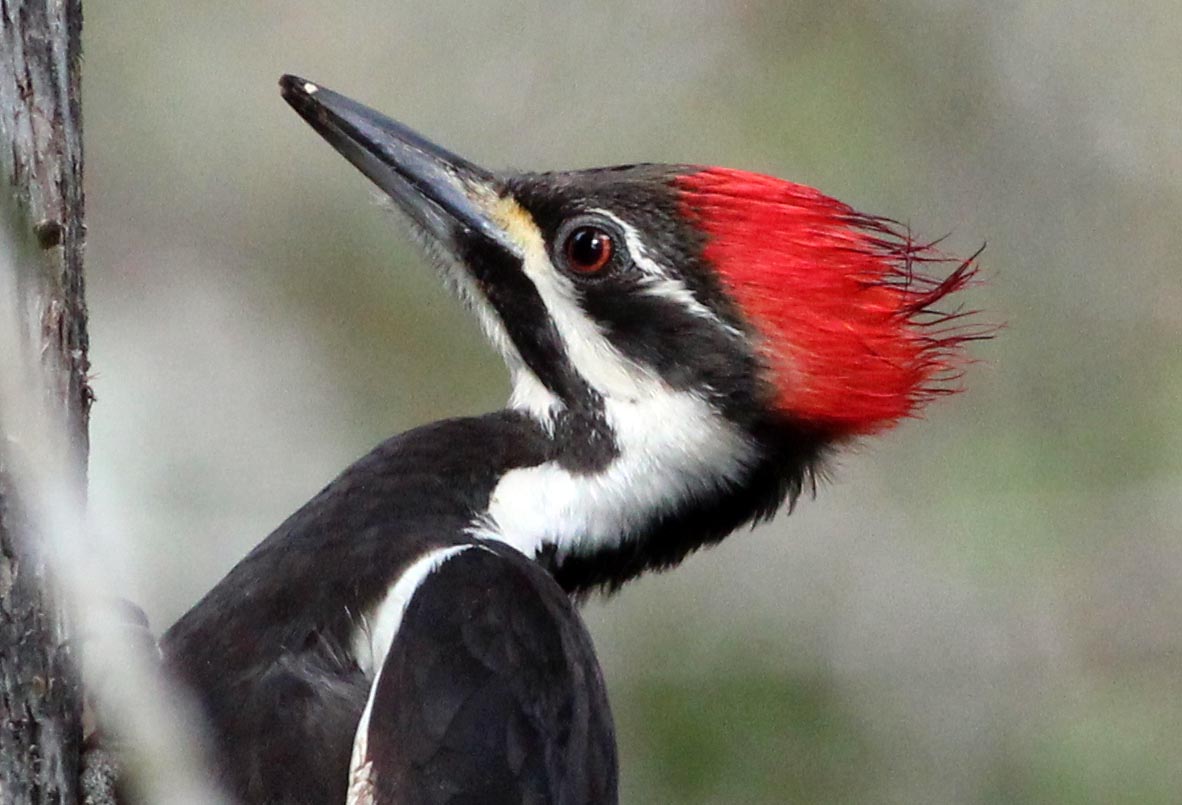
The pileated woodpecker has a black body, a red crest, white stripes on its neck, and black and white stripes on its face. It has bristly yellow feathers over its nostrils that keep out wood chips. It has a long, sticky tongue; a long, sharp, pointed bill; and yellow eyes.
Males and females are similar, but males have a red forehead, and females have a gray to yellowish-brown forehead.
The pileated woodpecker eats insects, fruits, and nuts. A large part of its diet consists of carpenter ants and beetle larvae.
It uses its sharp bill to pull bark off trees and expose ant colonies. It uses its long, sticky tongue to poke into holes and drag out the ants.
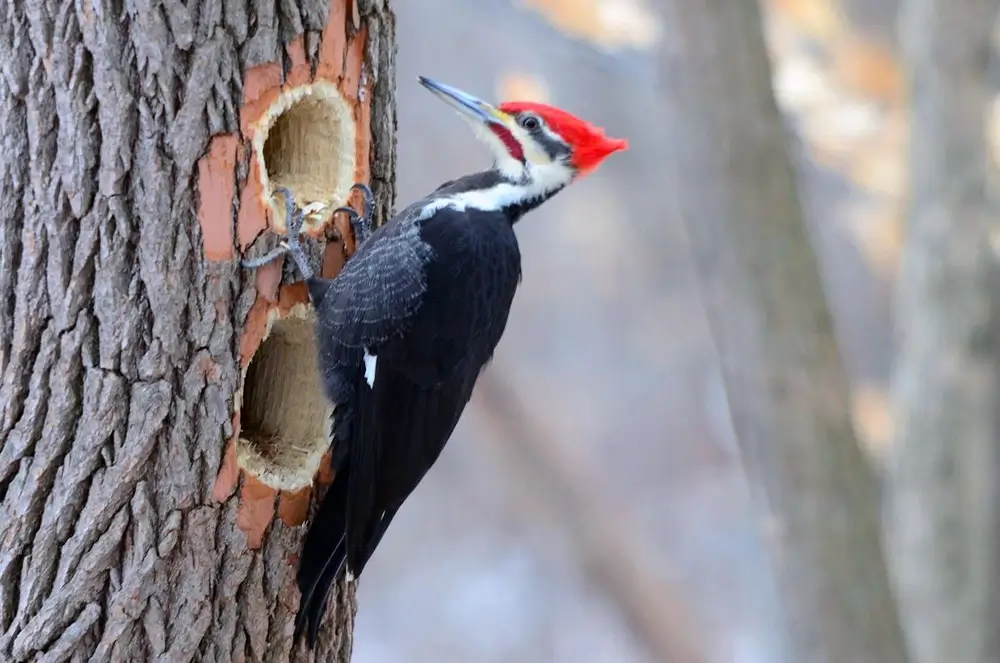
It also makes large rectangular holes in trees to create roosting and nesting spots and to expose insects.
Life Cycle
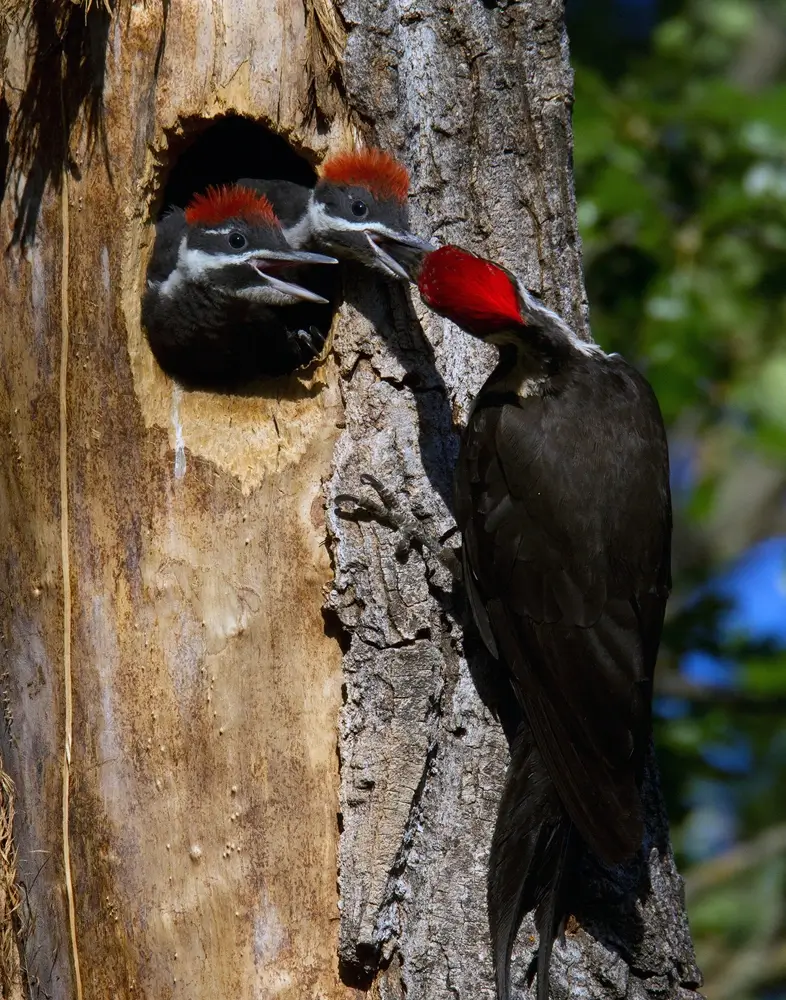
The pileated woodpecker makes its nest in a tree cavity. The female lays four eggs. Both parents incubate the eggs during the day, and the male incubates the eggs at night. The chicks hatch after a little more than two weeks and fledge (develop flight feathers) when they are about a month old.
The pileated woodpecker can live up to 13 years in the wild.
Behavior
Although the pileated woodpecker often clings to the sides of trees while searching for insects, it is also a strong flyer and sometimes hops along the ground looking for food.
Pileated woodpeckers use their powerful bills to “drum” on hollow trees. These loud tapping sounds help them communicate and warn other woodpeckers to stay out of their territory.
Did You Know?
You can pronounce pileated two ways, with a short I-sound (pill-ee-ated) or a long I-sound (pie-lee-ated).
Cartoon creator Walter Lantz based Woody Woodpecker on the pileated woodpecker.
Support for NatureWorks is provided by:
The Pileated Woodpecker in NH
The pileated woodpecker is found year-round in forests and woodlands across New Hampshire.
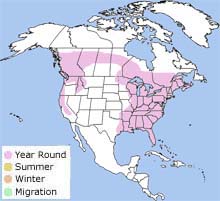
The pileated woodpecker is found in Canada from British Columbia east to Nova Scotia. It is found in most areas of the eastern United States and in the western United States from Washington south to California and east to Idaho and Montana.