The red-throated loon is the smallest of the loons. It is 2.1-2.2 feet (0.64-0.68 m) in length and has a wingspan of 2.6-3.1 feet (0.9-0.93 m).
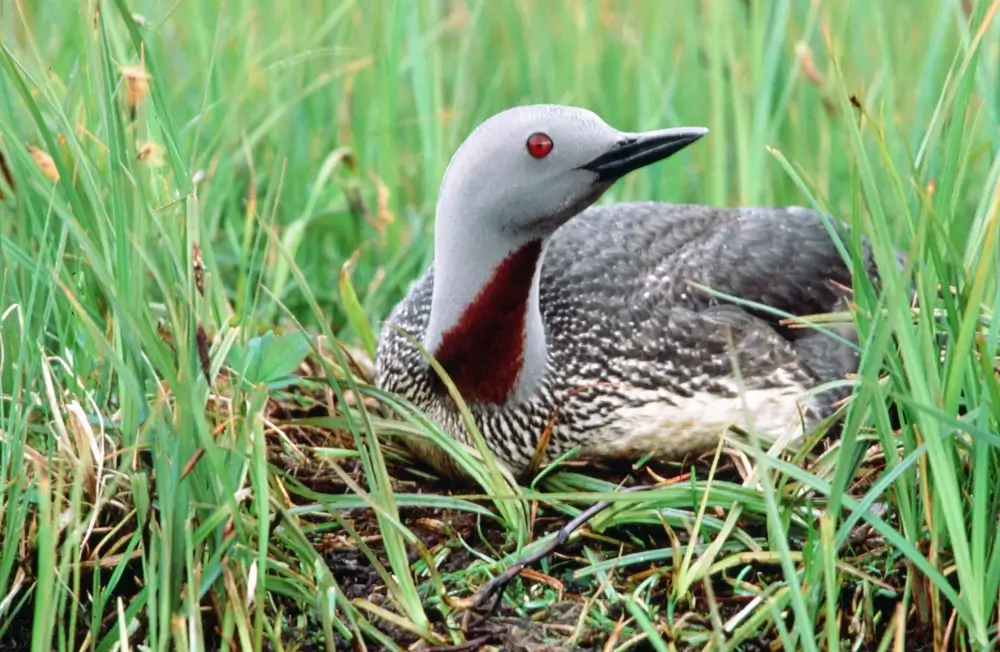
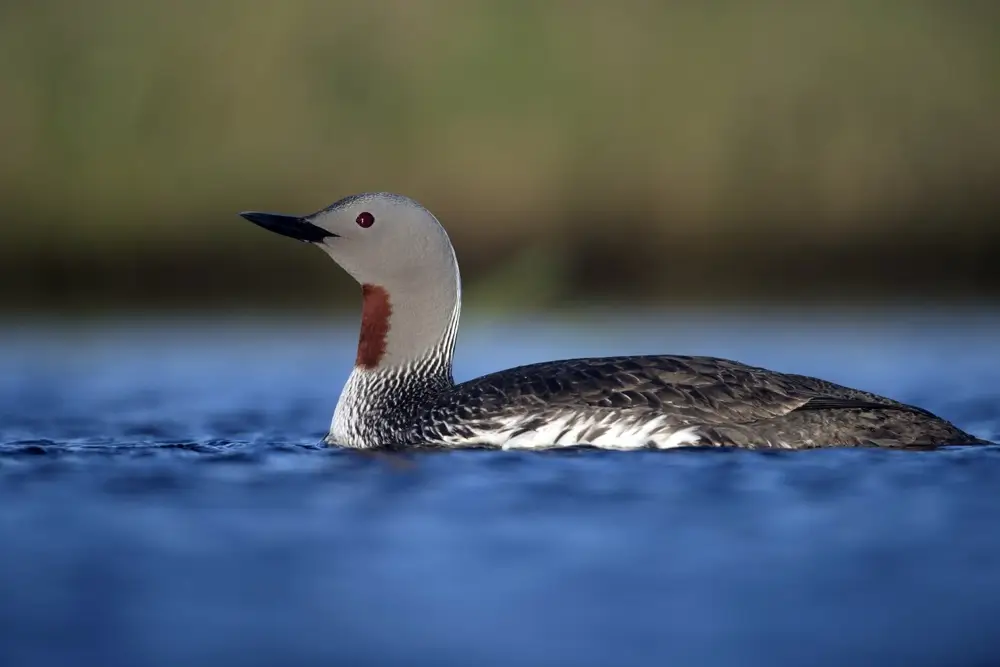
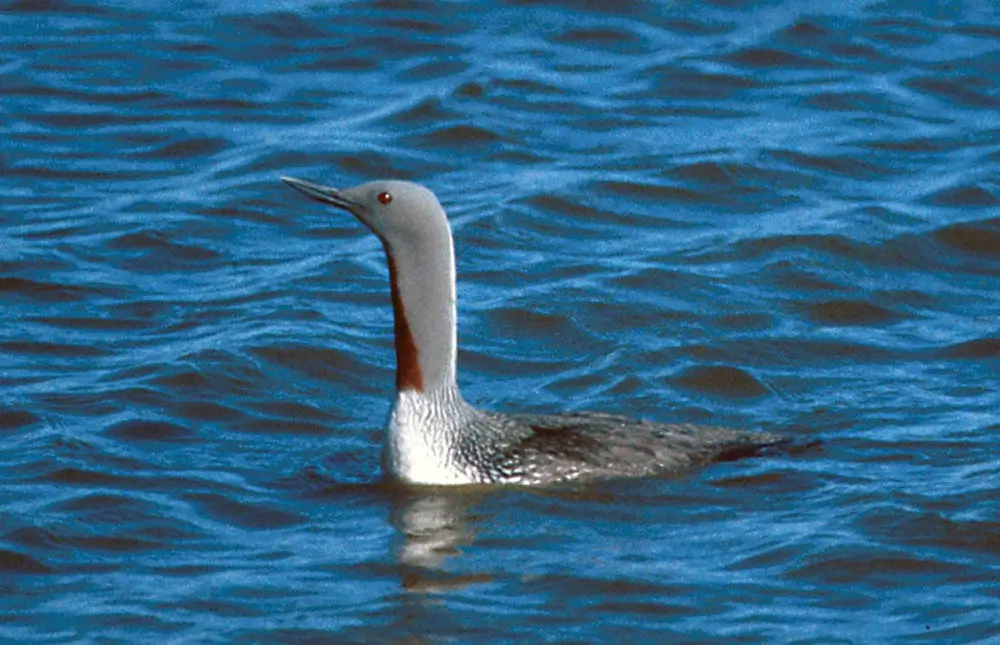
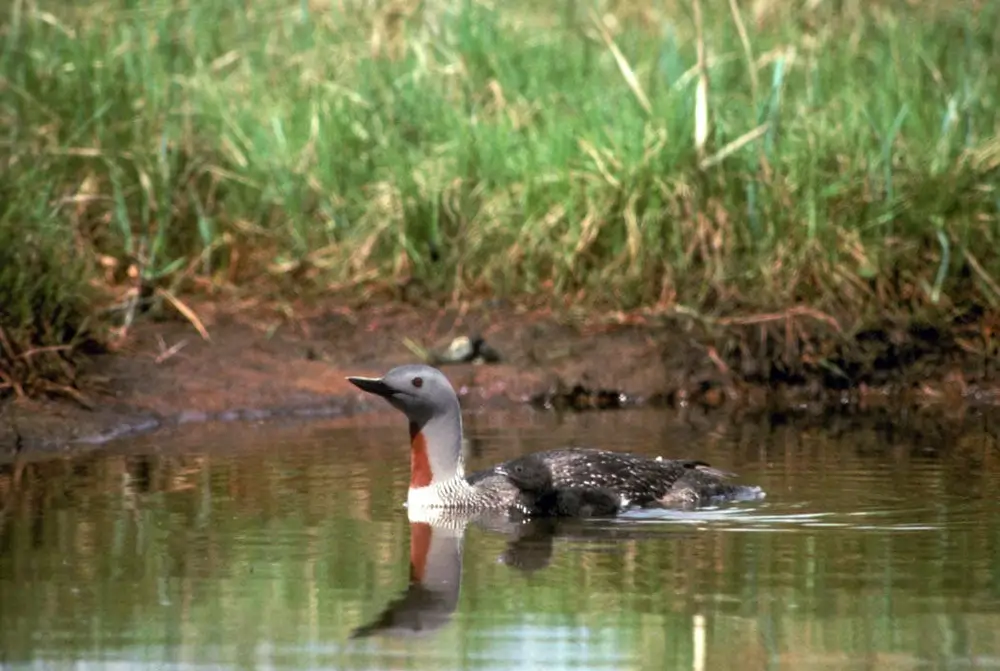
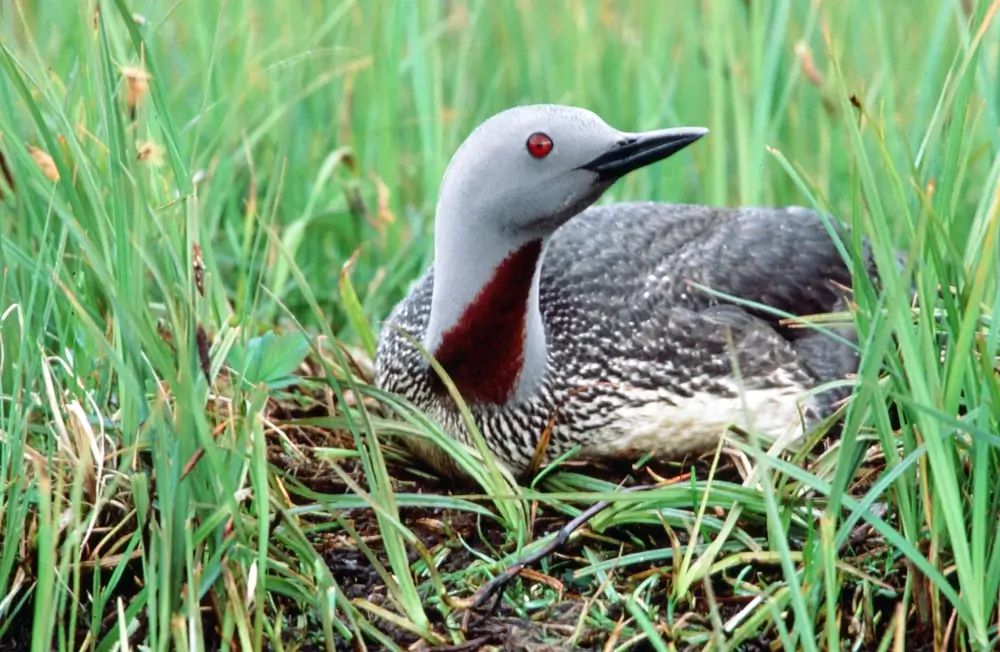
It changes color throughout the year. During the summer, its head and neck are grey with a large glossy red patch on its neck.
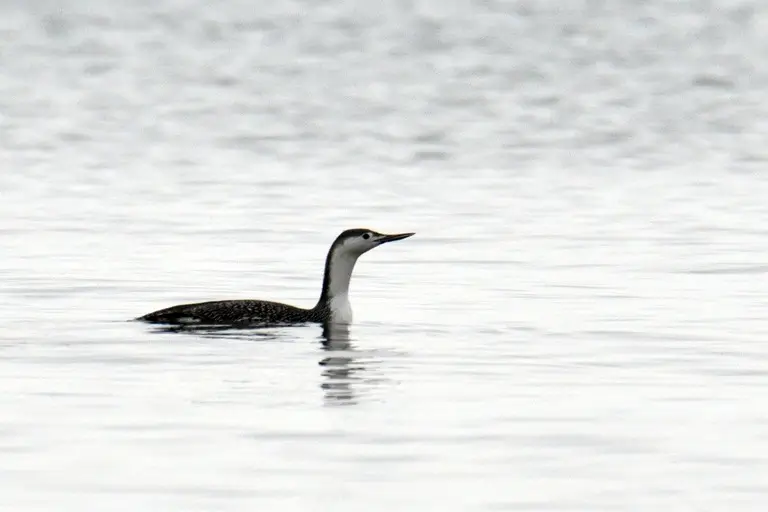
During winter, the red-throated loon’s head turns white, and the red patch goes away for the season.
While swimming, the loon sits very low in the water; often, just its head and neck are above water.
Habitat
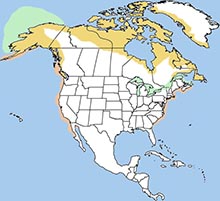
During the breeding season, the red-throated loon lives in freshwater ponds, lakes, wetlands, and bogs.
During migration, flocks of red-throated loons often share large lakes. In the winter, the red-throated loon lives along sheltered coastlines in salt water.
It is sensitive to human disturbance and will leave a body of water if too many humans are near.
Diet
The red-throated loon only hunts in marine waters, never in the freshwater ponds and lakes used for nesting. It locates prey visually, needing clear water to find fish as they swim by.
The red-throated loon dives to retrieve its food, which is mostly small to medium-sized fish. It sometimes eats crustaceans, mollusks, frogs, fish eggs, and insects.
Life Cycle
Breeding begins when the spring thaw occurs, usually in May. The male selects a nesting site close to deep water. The male and female build the nest from a heap of plant material.
The female lays two eggs, which are incubated for three weeks by both the male and female. After 2-3 weeks, the chicks begin swimming and spend most of their time in the water. At this point, they still rely on their parents for food.
After 7 weeks, the chicks can fly on their own and are independent from their parents.
Behavior
Unlike the common loon, the red-throated loon can take off directly from land or water and does not need a runway.
Did You Know?
Support for NatureWorks is provided by:
The Red-Throated Loon in NH
The red-throated loon does not breed in New Hampshire, but it is found in the coastal waters of the state in the winter.