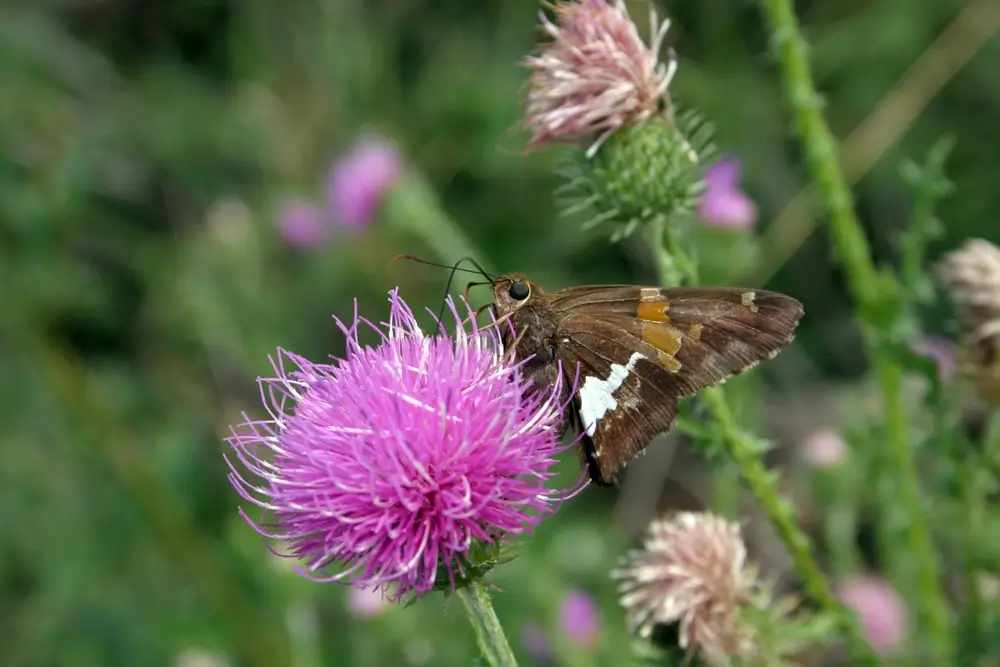
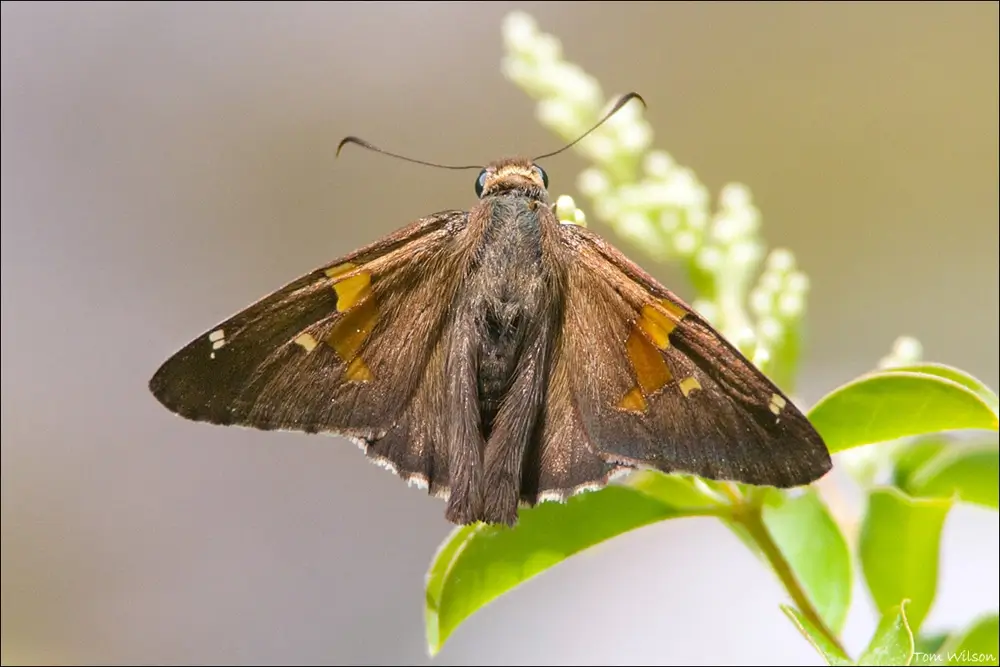
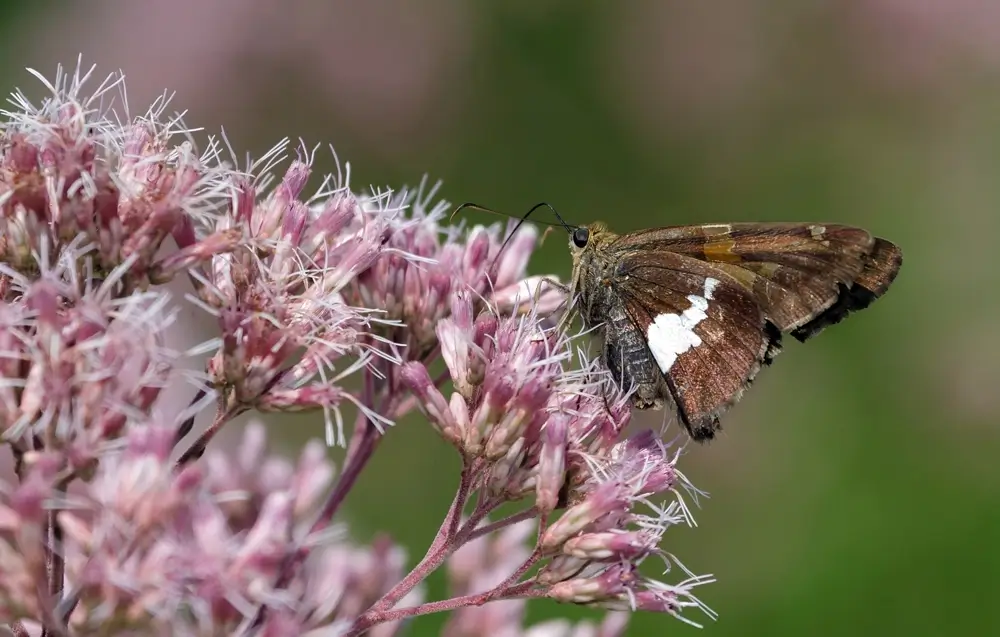
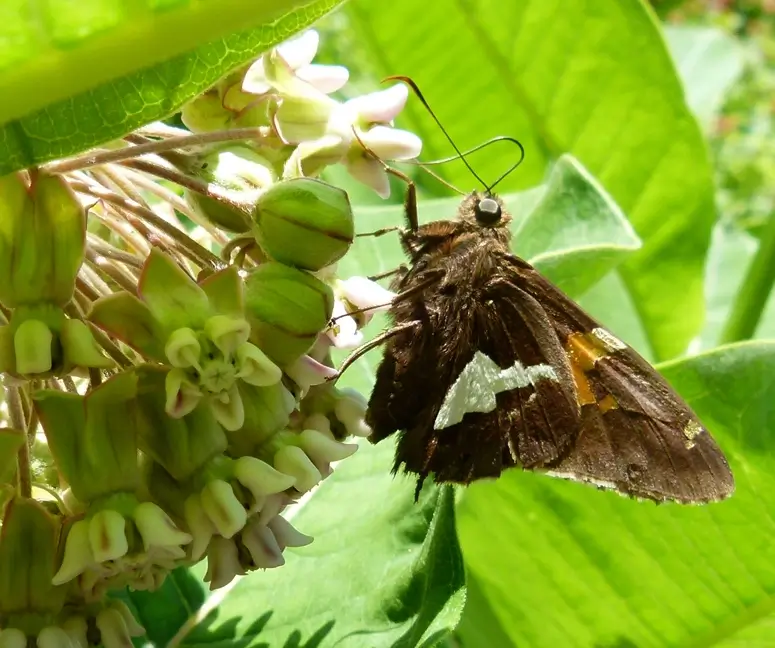
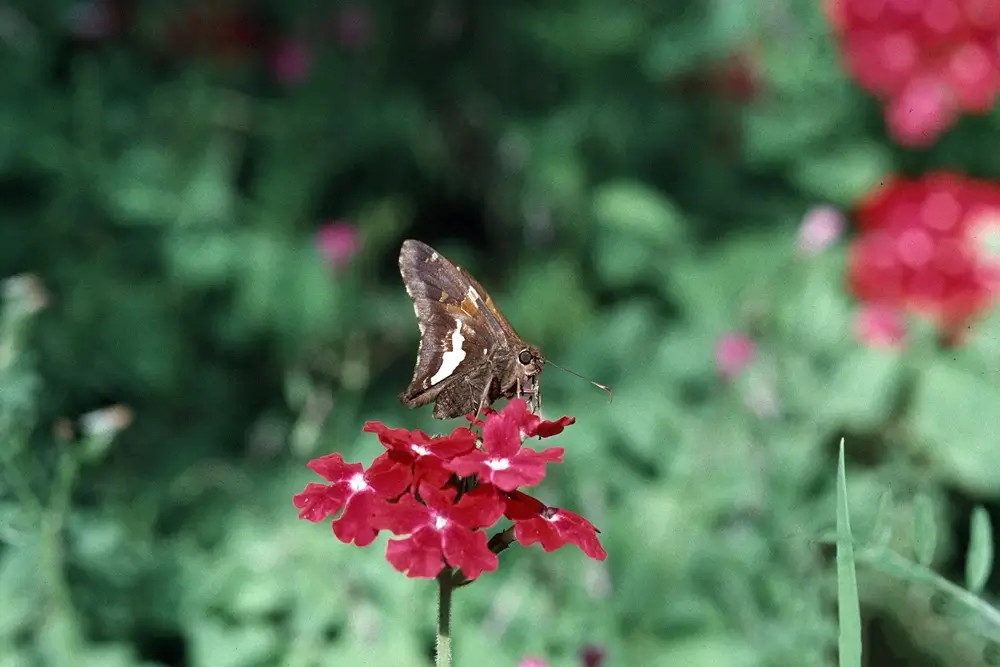
The silver-spotted skipper has a wingspan of 1.5 to 2.5 inches (3.8-5.1 cm). It has sharply pointed, triangular forewings. It is dark brown on its uppersides and undersides.
It has a yellow band on the upper side and the underside of its forewings. It gets its name from the large silvery spot on its hindwings.
Habitat
The silver-spotted skipper is found in open woodlands and brushy areas.
Diet
The silver-spotted skipper caterpillar eats plants in the legume or Fabaceae family, especially the black locust, bush clover, and false indigo.
The adult rarely gets nectar from yellow flowers. It prefers red, pink, purple, blue, and occasionally white flowers, including milkweed, red clover, buttonbush, blazing star, and thistles.
Life Cycle
The male silver-spotted skipper perches on a tree branch or a blade of tall grass and waits for a female. He chases away insects that get too close to his perch. The female lays one egg at a time near a host plant.
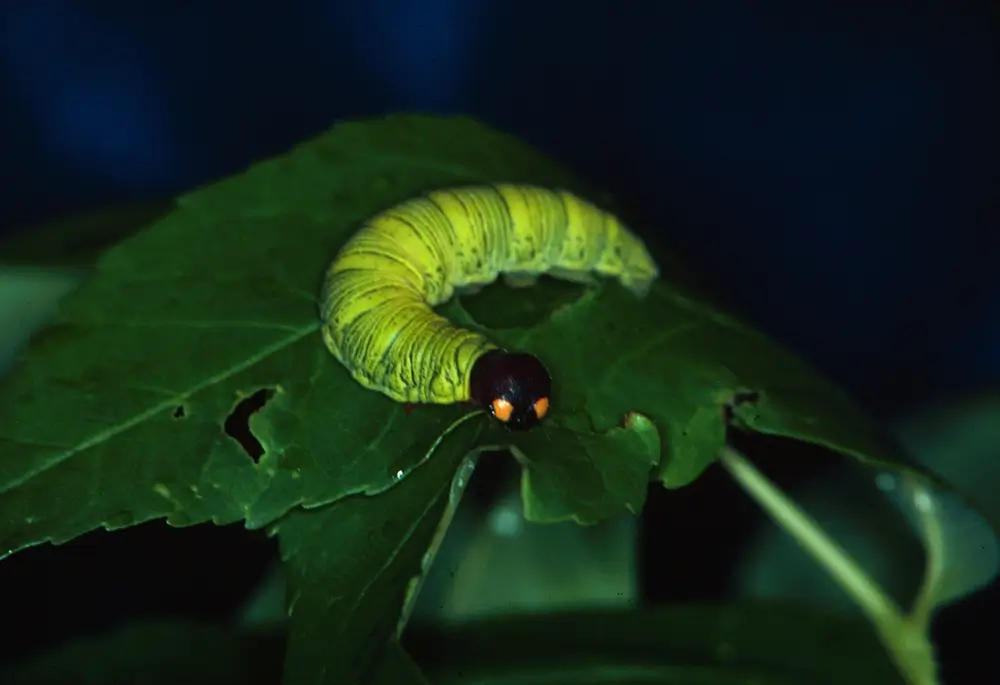
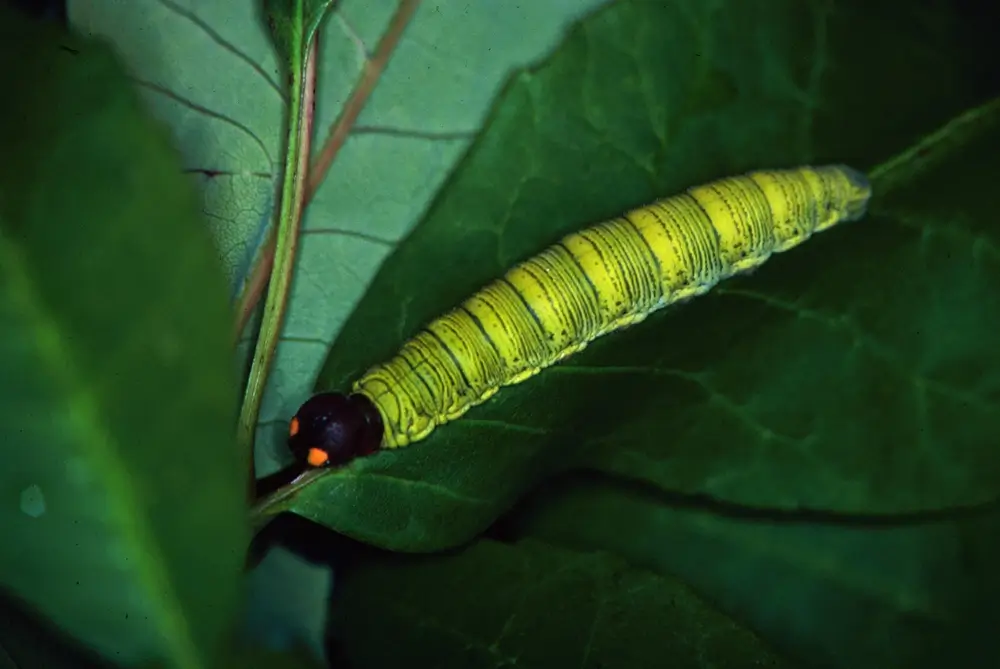
The silver-spotted skipper produces more than one brood a year. Silver-spotted skipper larvae have a green body and a brown head with two orange spots that look like eyes.
Behavior
Spotted-silver skippers zoom through the air in quick, jerky flights—almost like tiny acrobats. The adult butterflies are busy during the day, but their caterpillars eat at night. Look for them all summer long!
Did You Know?
Support for NatureWorks is provided by:
The Silver-Spotted Skipper in NH
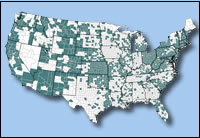
The silver-spotted skipper is found throughout New Hampshire.
The silver-spotted skipper is found from British Columbia, Canada east to Quebec, Canada, and south throughout most of the United States and into northern Mexico.