The surf scoter is a large sea duck measuring 1.6-2 feet (0.49-0.61 m) in length with a wingspan of 29.9–30.3 feet (9-9.2 m). They weigh 1.8-2.6 pounds (0.82-1.2 kg)
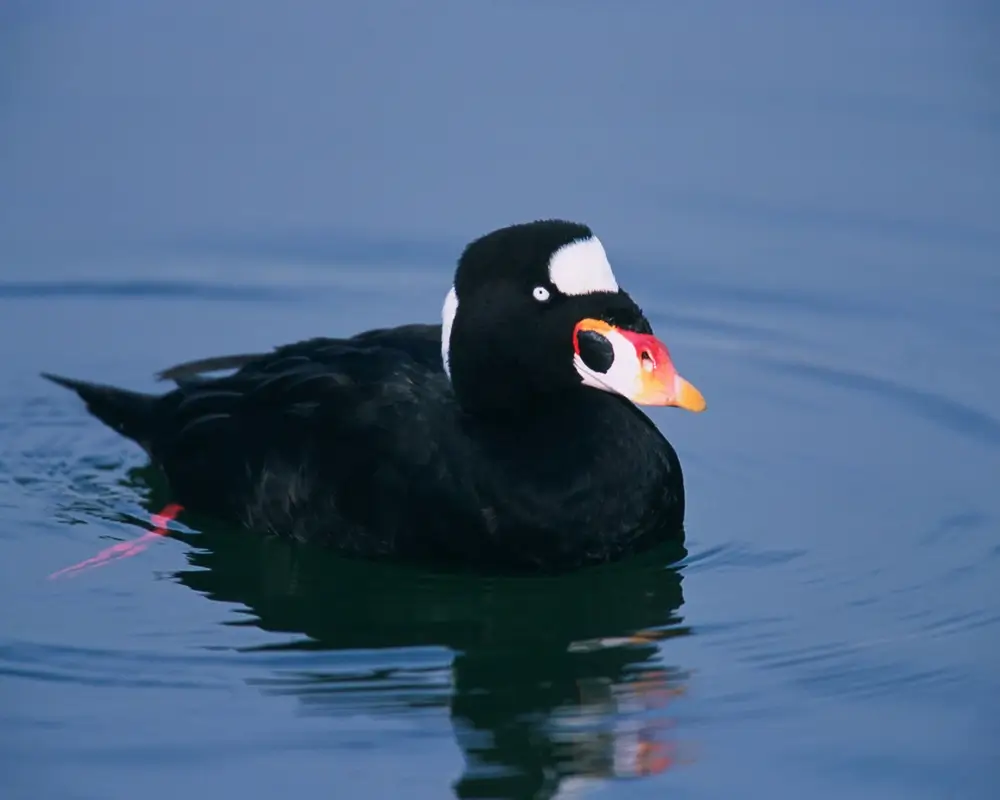
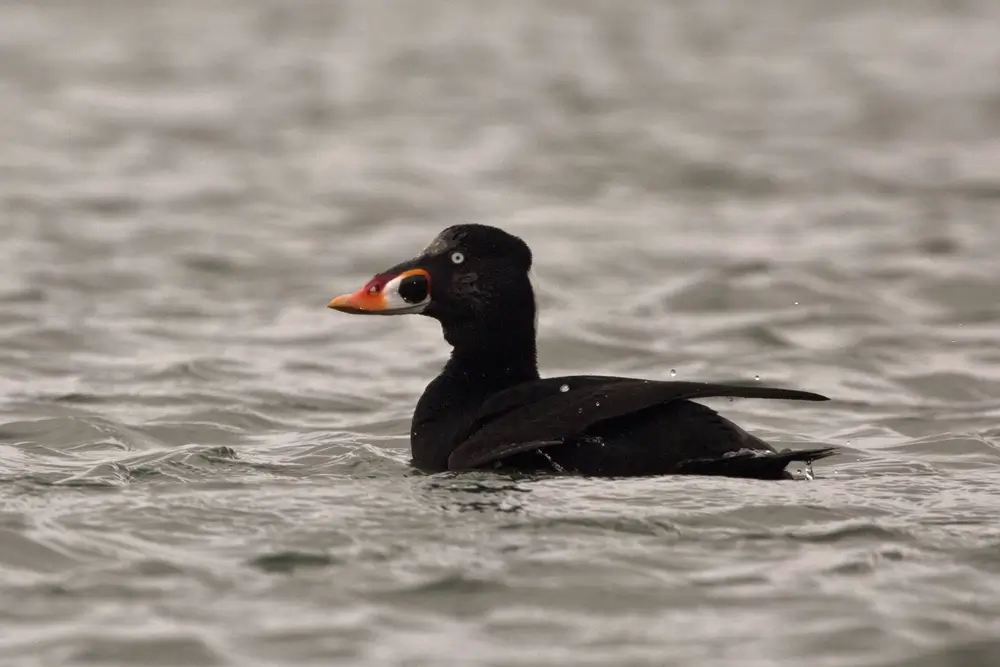
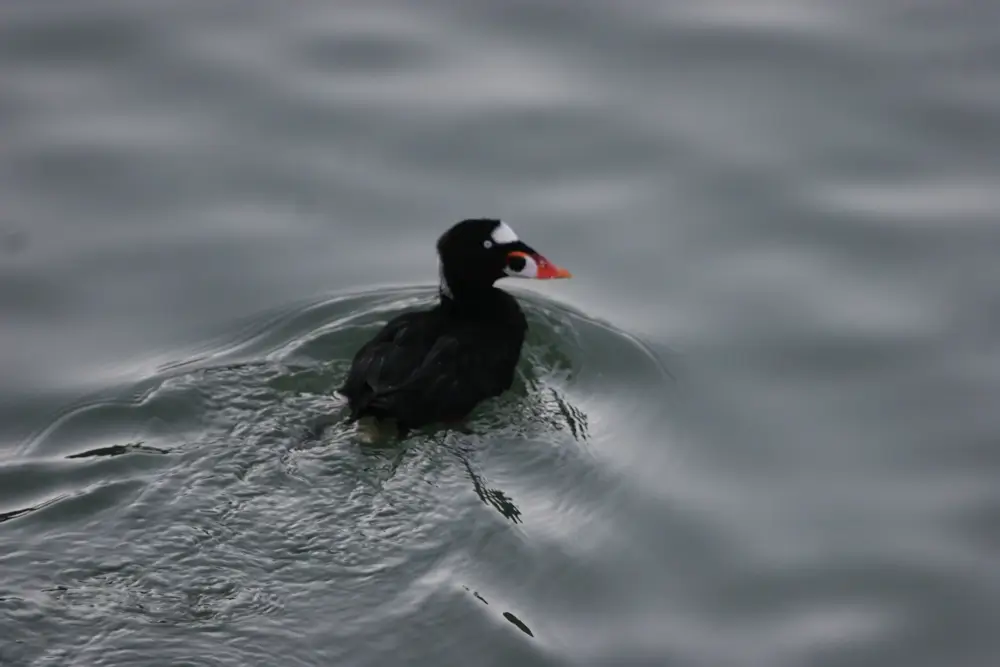
Males and females look different. Males are a deep black color, with one or two white patches on their heads. They have large bills that are swollen at the base. The bill looks orange from far away but is really white, red, yellow, and black. Its eyes are light blue or yellow, and its feet are reddish-orange.
Females are a lighter black, and their bills are not as large as the males and look greenish-black, not red, from far away.
Habitat
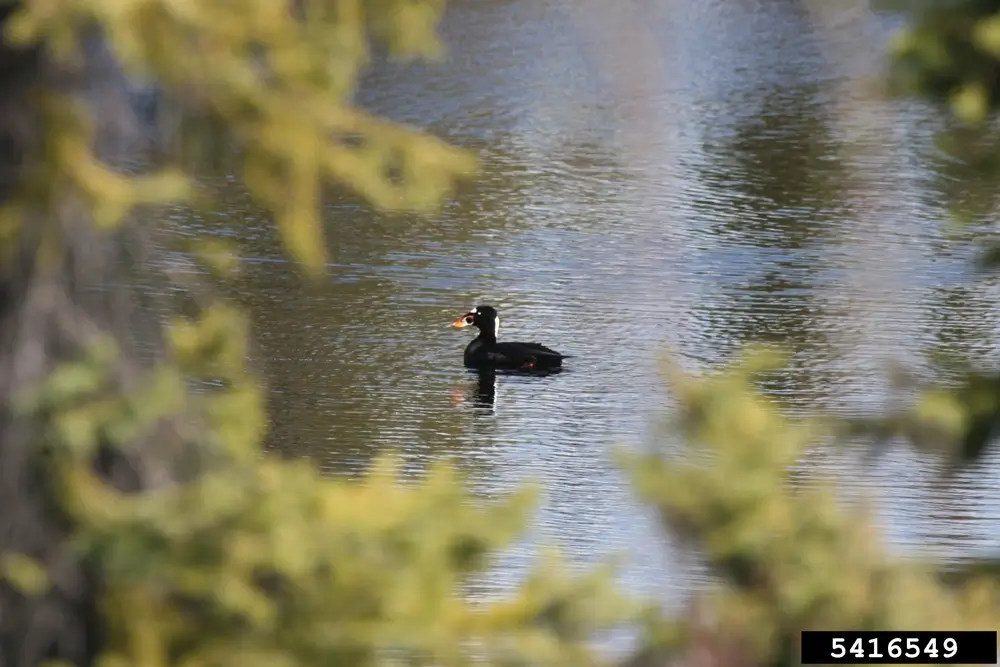
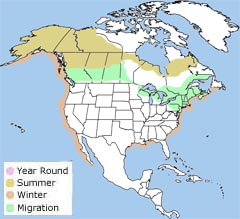
The surf scoter lives in both freshwater and marine habitats. In the summer, it lives and breeds on small bodies of fresh water in boreal forests or tundra landscapes.
In the winter, the surf scoter lives in shallow ocean bays, estuaries, and mouths of rivers along the west and east coasts. It prefers habitats with pebble or sandy bottoms.
Diet
The surf scoter is a diving duck. It feeds on bottom-dwelling creatures. Its primary food source is mollusks. It also eats crustaceans, such as razor clams, worms, and echinoderms like starfish, brittle stars, sea urchins, sand dollars, and sea cucumbers.
In the summer, the surf scoter eats insects, insect larvae, and plant matter.
Life Cycle
Breeding begins in May or June when surf scoter lives on small bodies of fresh water in boreal forests or tundra landscapes. Females make their nests in shallow depressions along the water and line them with grass, plant material, and feathers.
The female lays 6-9 creamy white eggs. The chicks hatch with downy feathers, and their eyes open. Mothers protect their eggs only until the chicks hatch.
Since mothers aren’t very protective of their young, it is common for young surf scoters to get mixed up with the wrong family on crowded lakes. The chicks are precocial. Once they are dry, they leave the nest and can feed themselves immediately.
The surf scoter has a lifespan of around 10 years in the wild.
Behavior
Although adult surf scoters fly back north for the summer, some young surf scoters don’t. Instead, they spend the summer along the coast.
Did You Know?
The surf scoter got the nickname, “skunk-headed coot” from the black and white patterns on its head.
Support for NatureWorks is provided by:
The Surf Scoter in NH
The surf scoter does not breed in New Hampshire, but it can be found in the state during its migration and in the winter.
The surf scoter breeds from western Alaska through Central Labrador in Canada.
In the winter, the surf scoter lives along the Pacific and Atlantic coasts in North America. Its winter range extends as far south as Baja California in Mexico on the west coast and down to South Carolina on the east coast.
Although not native to the area, the surf scoter has also been found as far away as Russia.