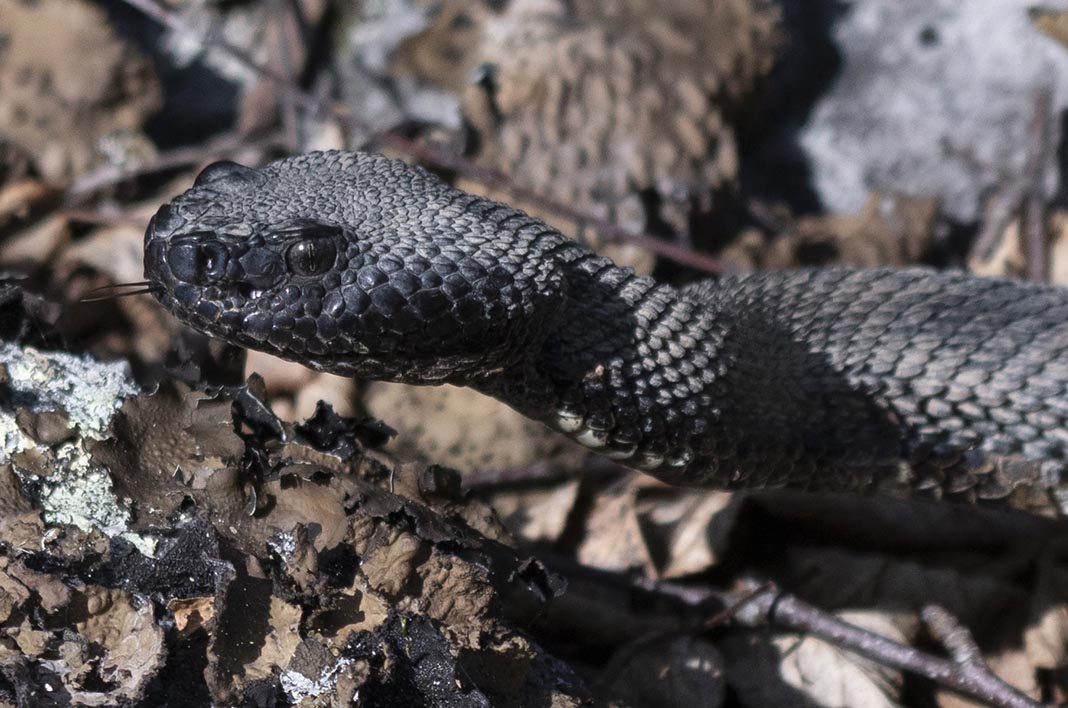
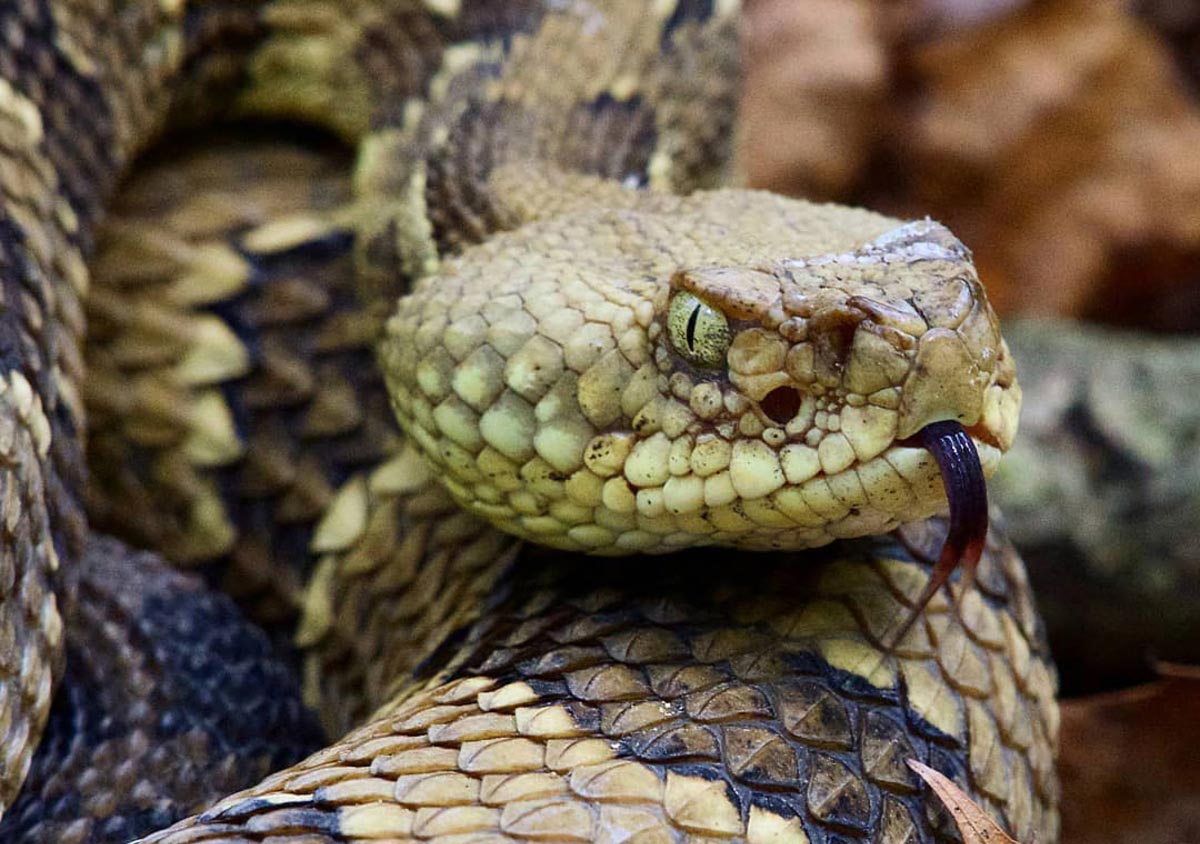
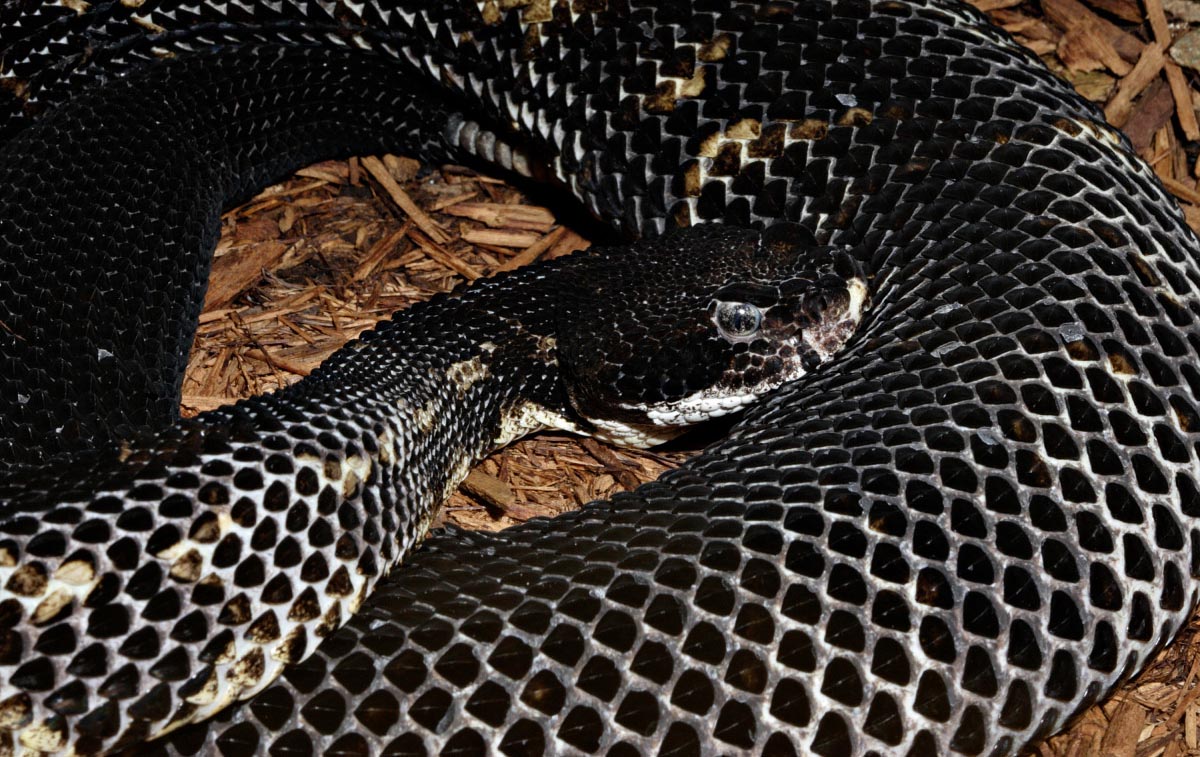
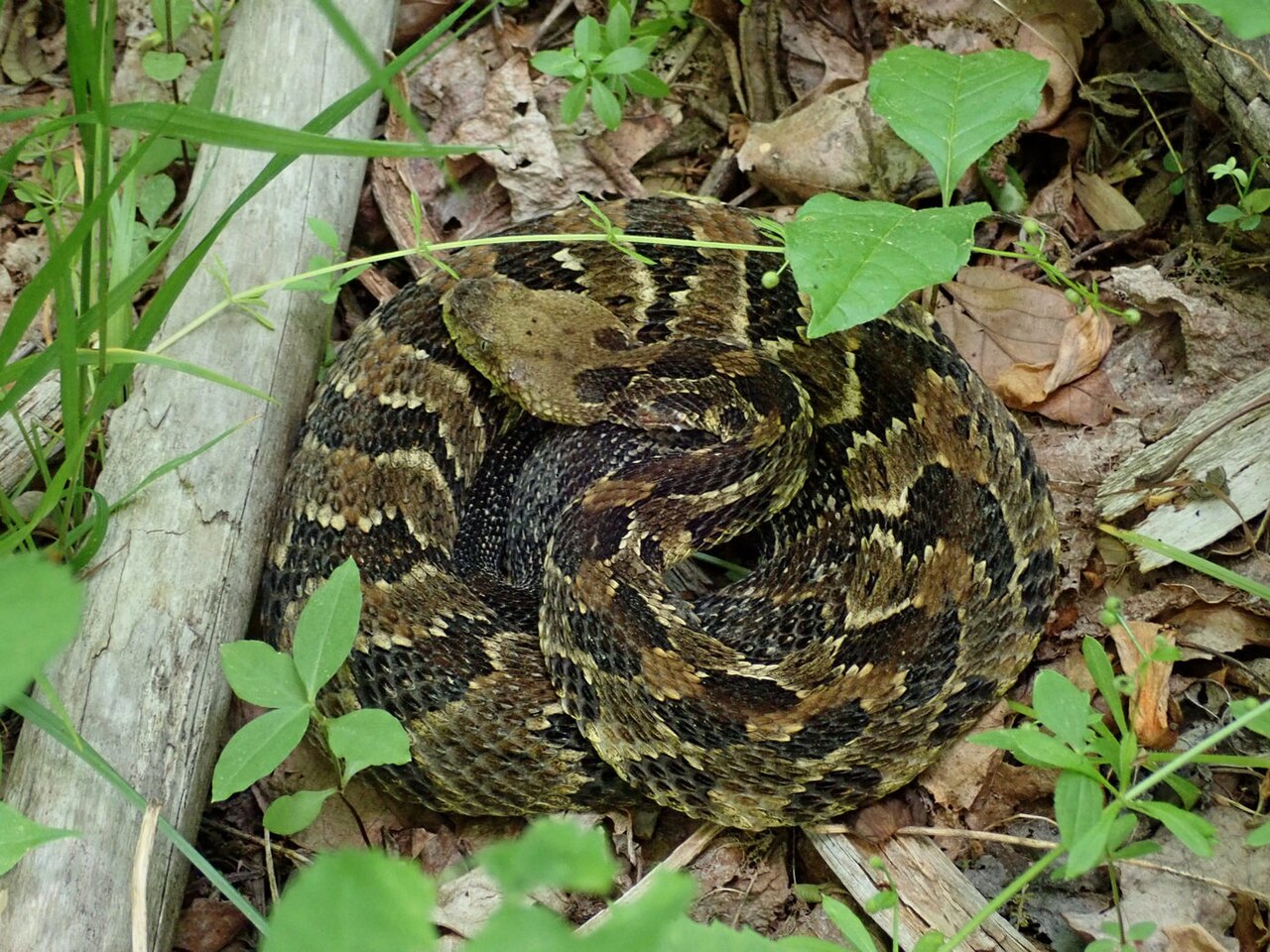
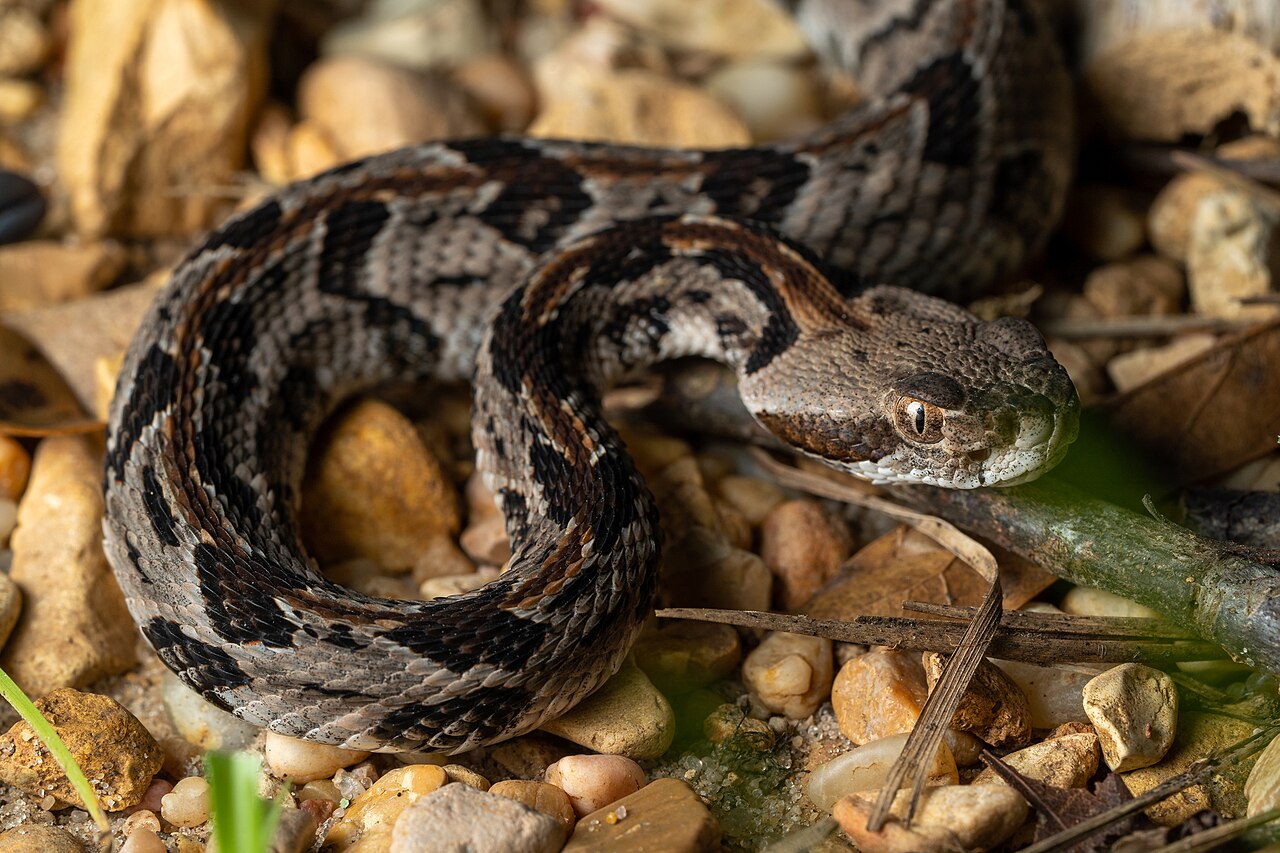
The timber rattlesnake is a large venomous snake found in the eastern United States. Adults are typically about 3-5 feet (0.9 to 1.5 m) long, though some can reach up to 6 feet (1.8 m) in length. They have thick, muscular bodies and deceptive coloration that helps them blend into forest floors—usually yellow, tan, gray, or brown with dark V-shaped or crossband patterns along the back.
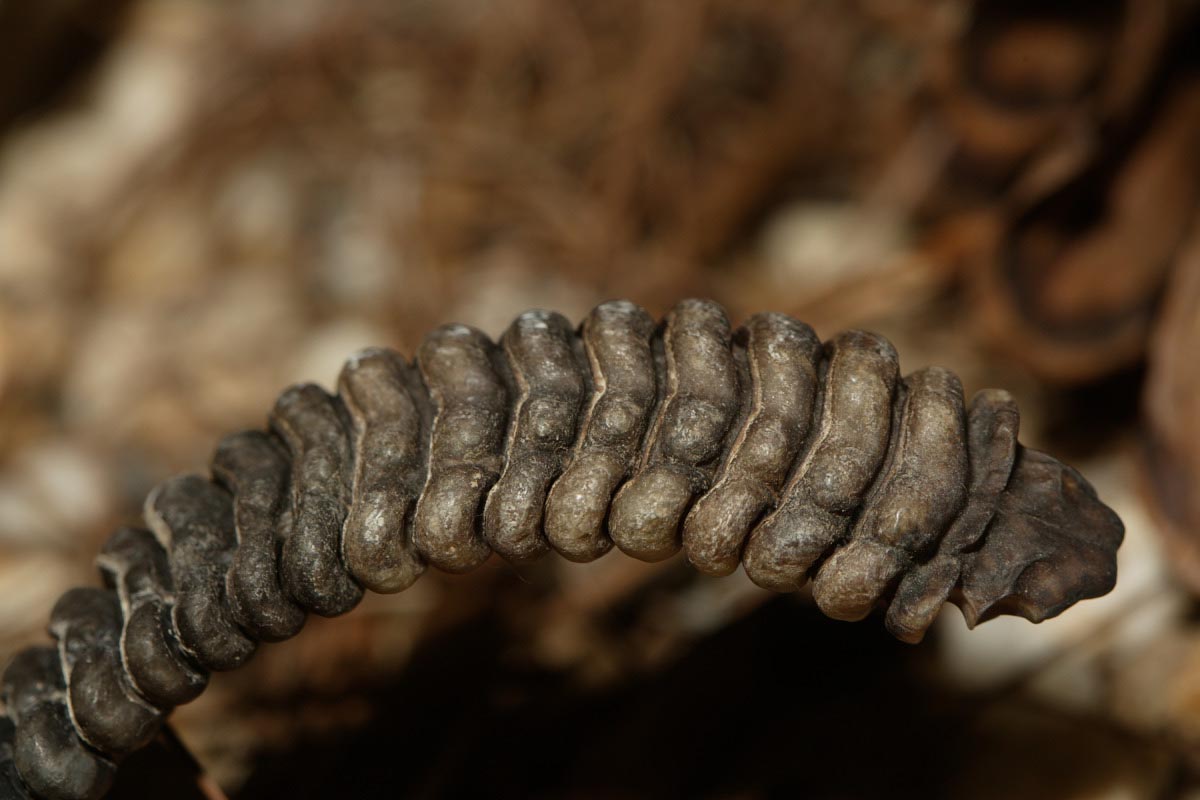
Timber rattlesnakes have a black tail with a segmented rattle made of keratin (the same protein found in human fingernails). A new segment may be added each time the snake sheds its skin, although parts of the rattle can break off over time.
Habitat
Timber rattlesnakes live in deciduous forests, rocky hillsides, cliffs, and wooded areas with plenty of cover, such as logs, leaf litter, and rock crevices.
Diet
Timber rattlesnakes are carnivores and help control rodent populations. Their diet includes mice, rats, chipmunks, squirrels, and occasionally small birds or amphibians. They are ambush predators; they wait quietly for prey and then strike quickly, using venom to immobilize it before swallowing it whole.
Life Cycle
Timber rattlesnakes do not lay eggs. Instead, females give birth to live young in late summer or early fall. A litter usually contains 4 to 10 fully formed, venomous young, which are independent from birth. In the wild, they can live about 10 to 20 years, sometimes longer.
Behavior
These snakes are generally shy and avoid people. If threatened, they may shake their rattle as a warning sound. They are most active in warm weather, basking in sunlight to regulate body temperature, and become much less active in colder months.
Did You Know?
Despite their fearsome reputation, timber rattlesnakes are not aggressive and typically bite only when they feel threatened or cornered.
Support for NatureWorks is provided by:
The Timber Rattlesnake in NH
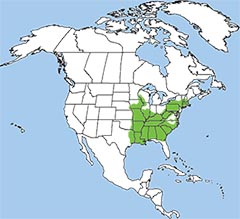
The timber rattlesnake was once found from the Massachusetts border north to the White Mountains. There is currently only one population found in New Hampshire, and it is an endangered species in the state.
The timber rattlesnake is found in much of the eastern U.S., especially the Appalachian region, parts of the Midwest and Southeast, and small scattered populations in parts of New England.