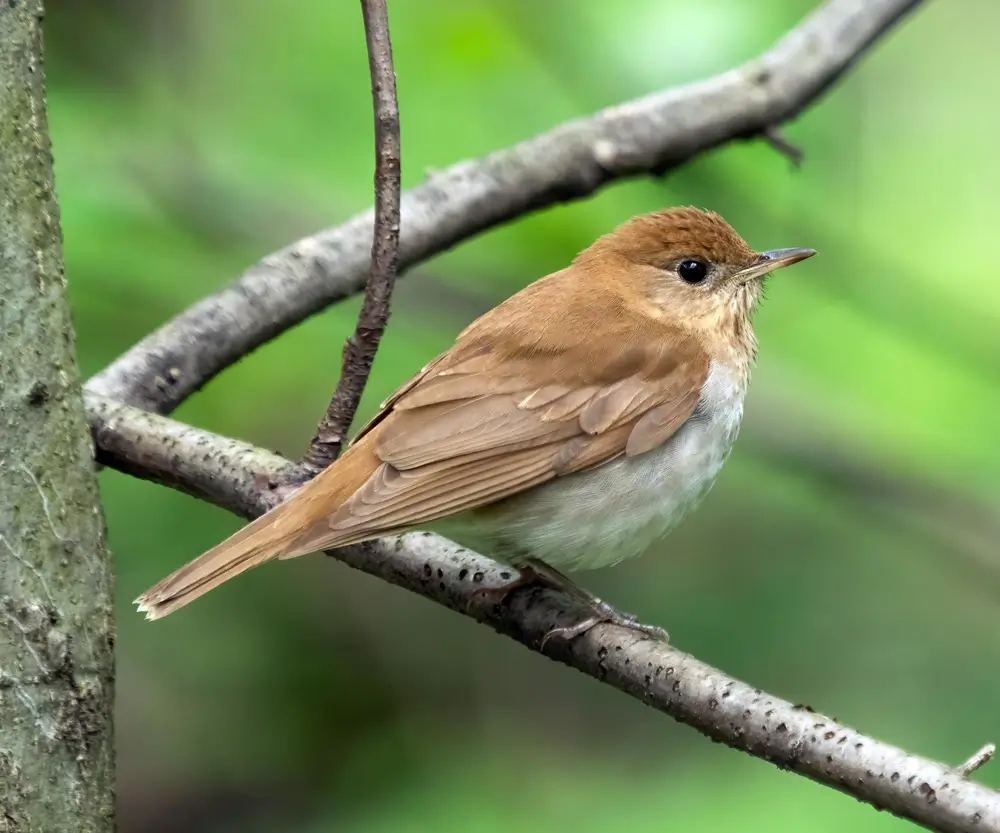
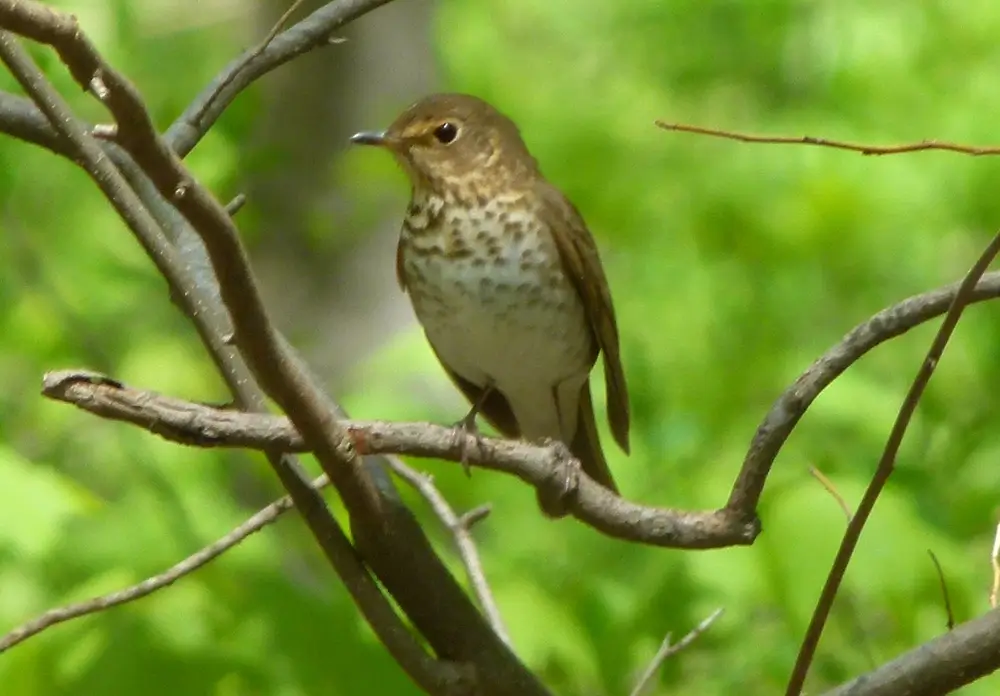
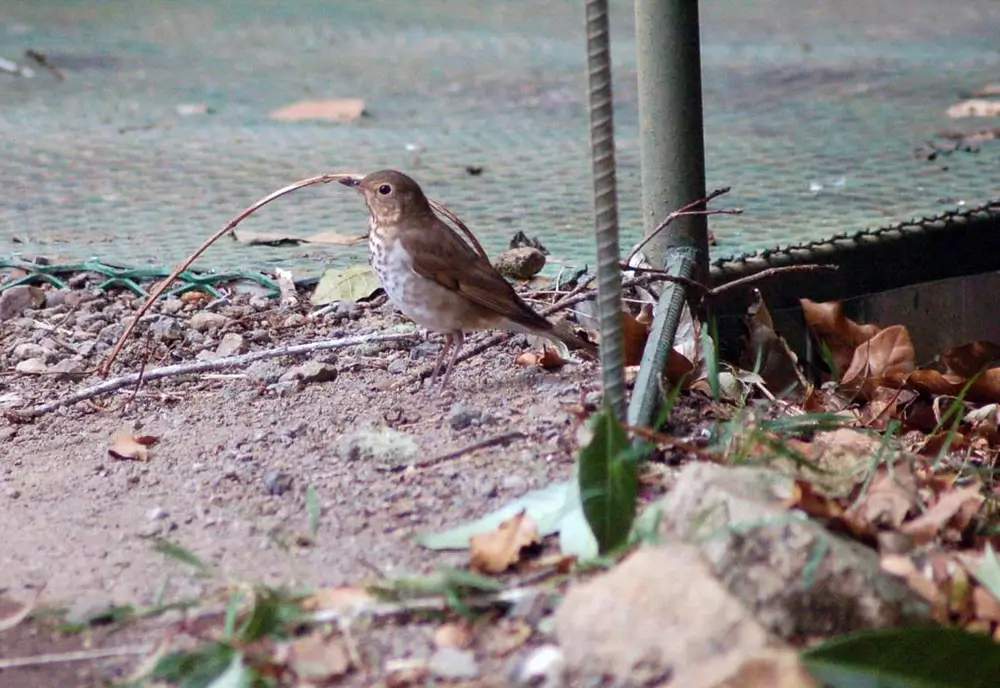
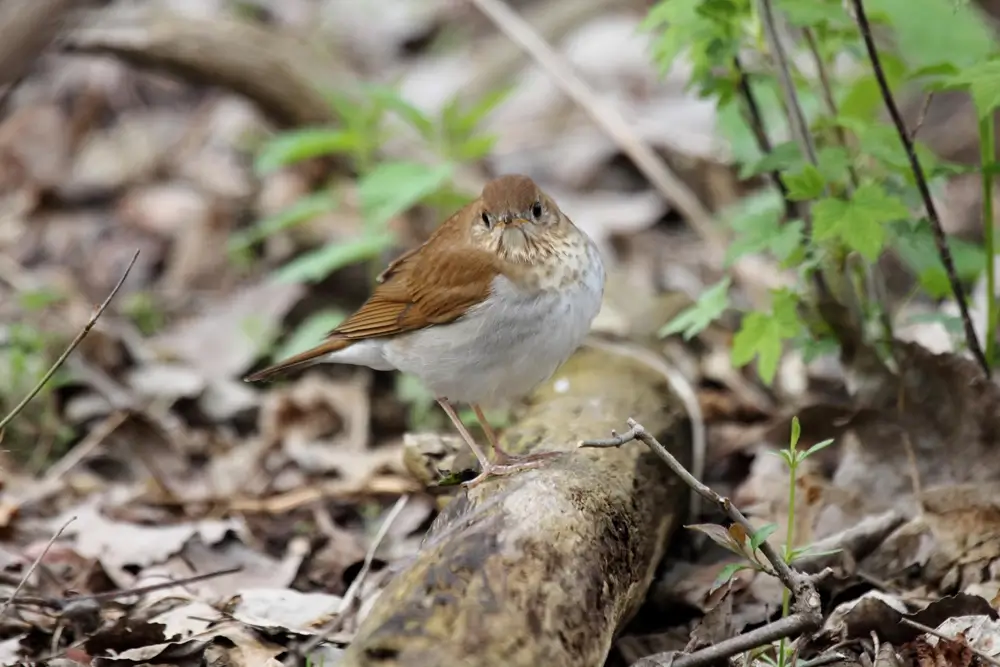
The veery is a light brown thrush with its brown head, back, and wings, and a speckled white and brown throat, and a white belly.
It is 6.7-7.1 in (17-18 cm) in length. It has a wingspan of 11.0-11.4 in (28-29 cm). It weighs 1.0-1.9 oz (28-54 g).
The veery’s clear and recognizable song that is easy to hear spreading through the woods during the breeding season.
Habitat
The veery spends the summer in spots along rivers in damp, deciduous forests. It prefers disturbed forests with a dense understory.
Diet
The veery forages on the ground for food. It eats insects during the breeding season and fruit and berries in the late summer and fall.
Life Cycle
The veery forms a cup-shaped nest on the ground at the base of a small tree. The nest is made of dead leaves, bark from the grapevine, weeds, and decomposing leaves. The veery lines the nest with fine roots and fibers.
In the nest, the female lays 1-5 pale, greenish-blue eggs. Upon hatching, the young chicks are helpless, have few feathers, and need to be cared for by the parents.
The veery has a lifespan of 5-10 years in the wild.
Behavior
The veery can fly up to 160 miles (257 km) in one night. It can also fly at altitudes above 2,000 feet (610 m).
Did You Know?
Support for NatureWorks is provided by:
The Veery in NH
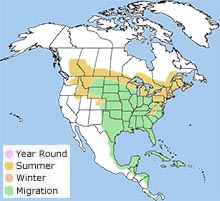
The veery breeds throughout New Hampshire, except at high elevations. It migrates south to Brazil in the fall.
During the breeding season, the veery is found from southern Canada into the Rocky Mountains, along the Great Lakes, along the Appalachian Mountains, and across New England.
The veery is migratory. In the fall, it migrates to central and southern Brazil.