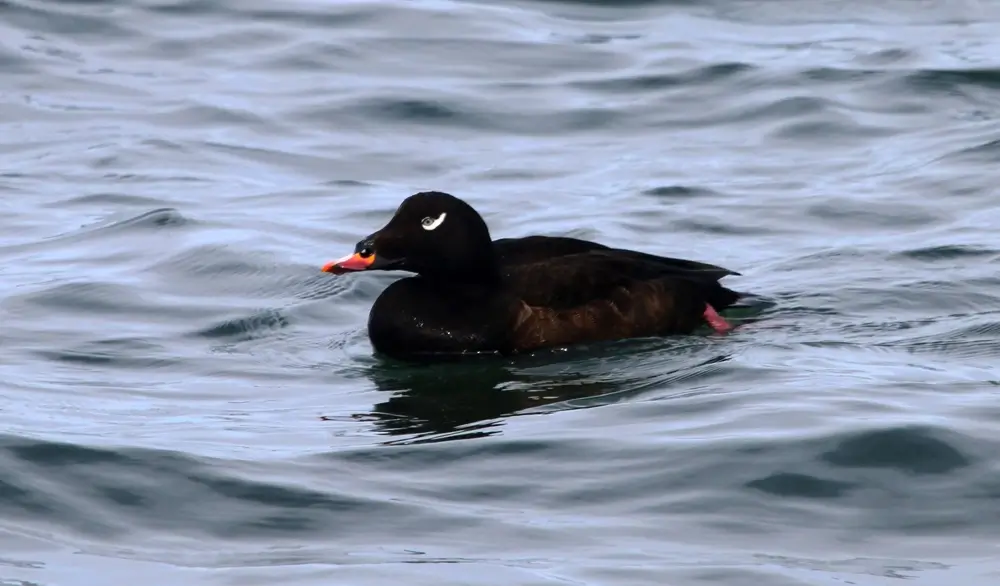
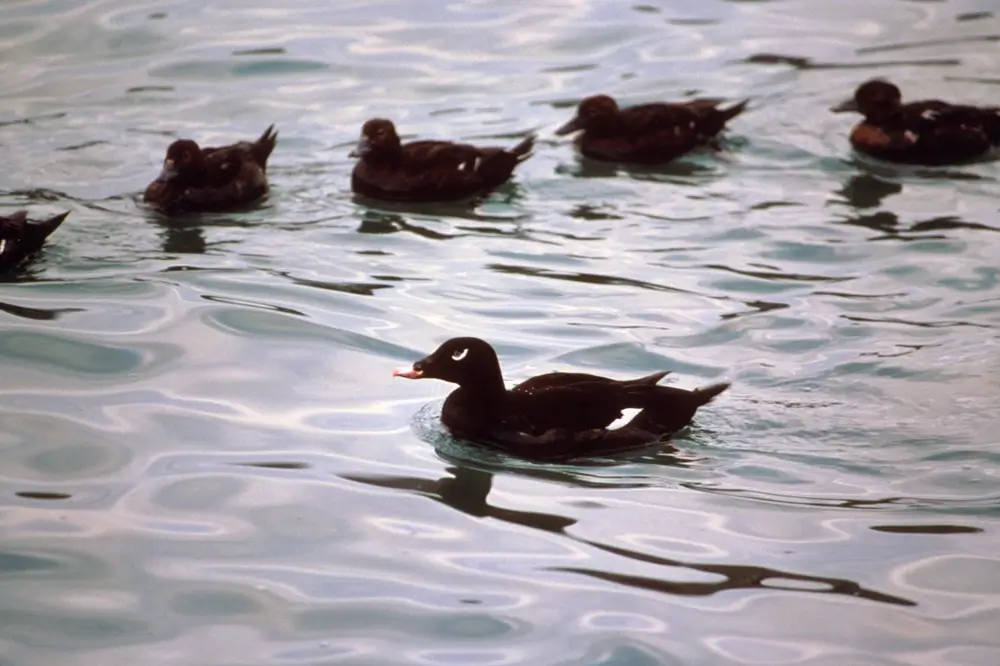
The white-winged scoter is a large and stocky bird, measuring about 1.6-2 feet (0.49-0.61 m) in length. It is among the largest of all ducks.
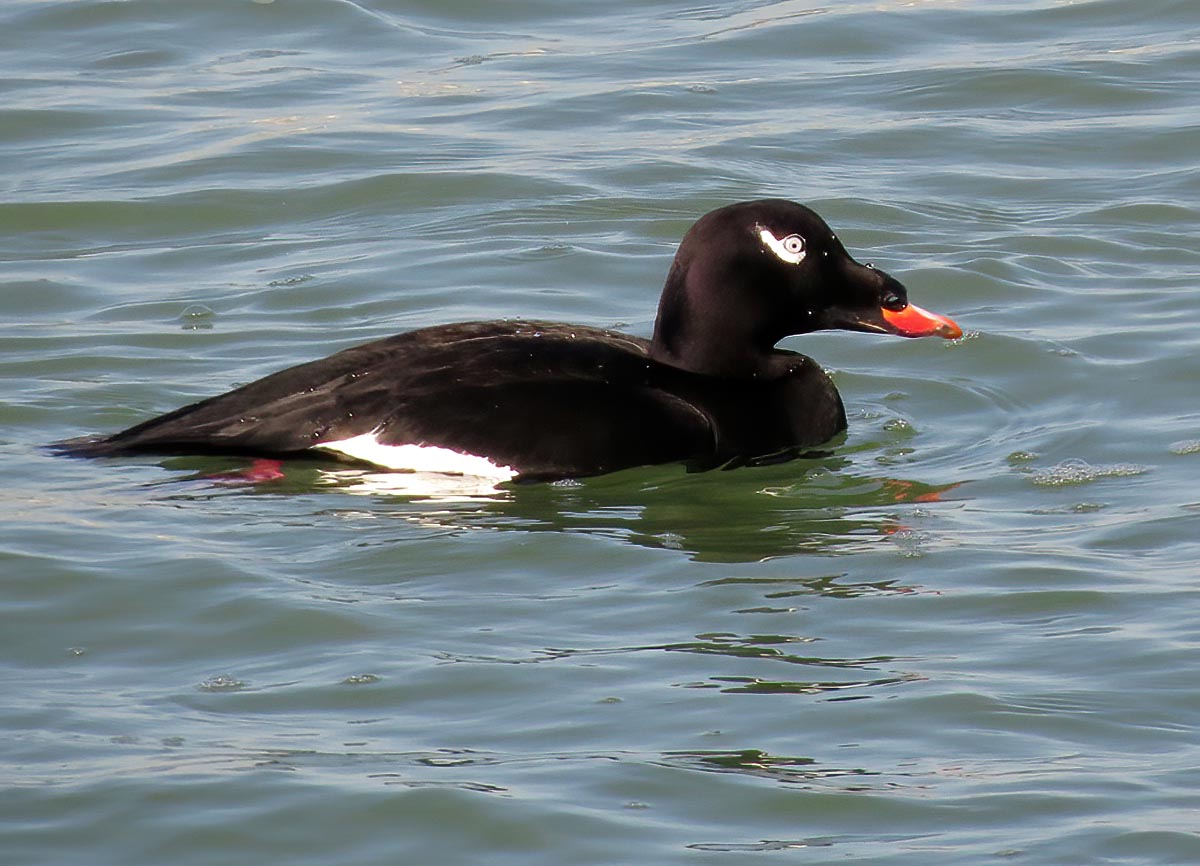
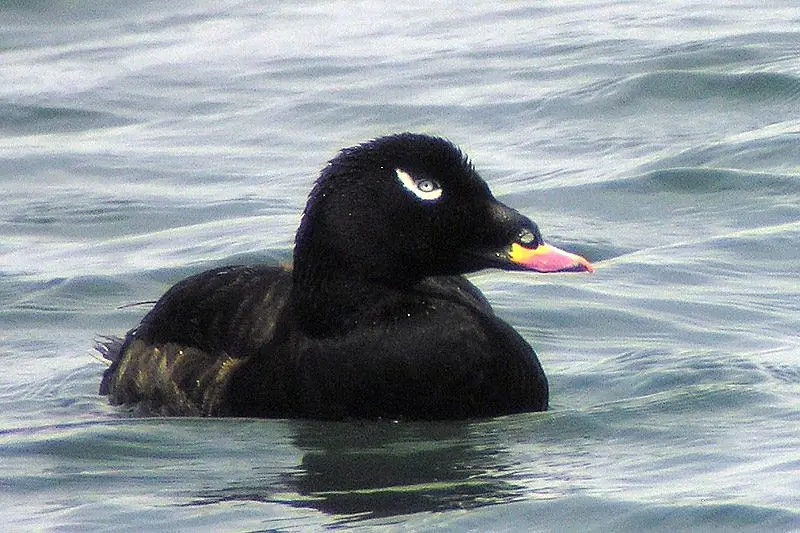
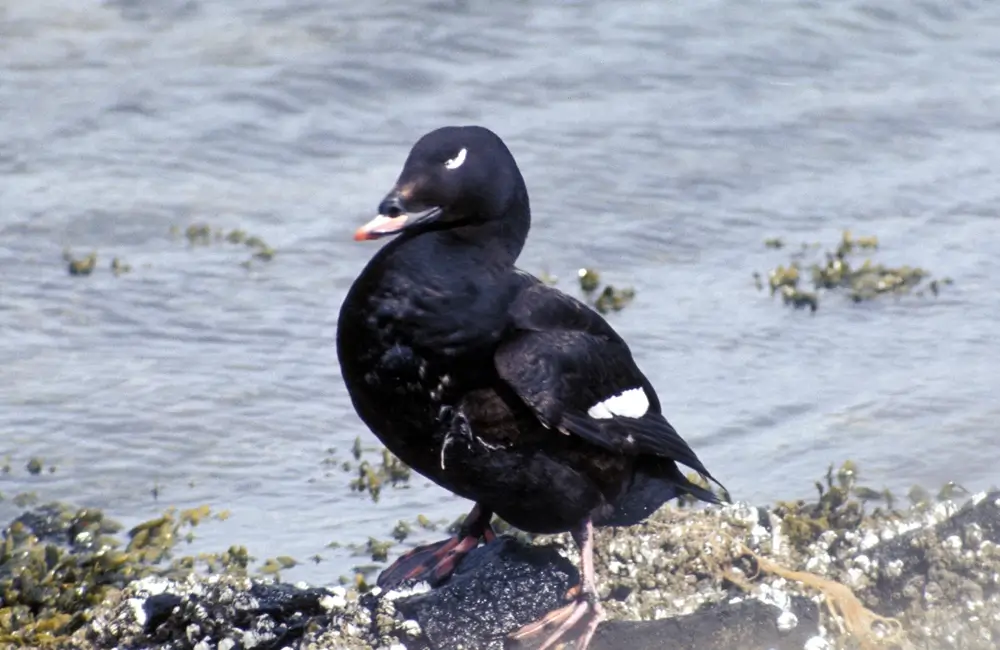
Males are all black with a white, comma-shaped patch around each eye. Females may have whitish patches on the face and are a dark brown color. The male’s bill is black at the base with reddish sides and an orange nail. The female’s bill is similar in color but less bright.
Both males and females have red legs and a white stripe on their wings.
Habitat
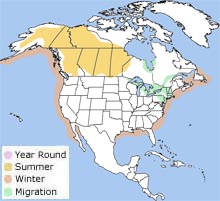
During the breeding season, the white-winged scoter can be found in a variety of habitats. These include wooded coastlines, small freshwater lakes and rivers in northern coniferous forests, wooded arctic tundra, and alpine zones.
In the winter, the white-winged scoter inhabit coastal waters, preferring estuaries and inlets with large mussel beds.
Diet
The white-winged scoter is a diving duck. It feeds on the bottom of lakes and oceans.
Its diet consists mostly of mollusks, such as clams and mussels. It will also eat crustaceans, worms, echinoderms, amphipods, isopods, and small fish.
In freshwater habitats, the white-winged scoter also feeds on adult and larval insects and plant material.
Life Cycle
Breeding begins in mid-May. Females make a shallow depression in the ground for their nest. They prefer a site with tall grass, among hummocks, or under bushes. They line the nest with sticks and down. Nests are close to the water.
The white-winged scoter lay 6-16 creamy buff or light pink eggs per female. Chicks hatch with downy feathers and their eyes open. They are precocial, leave the nest as soon as they are dry, and can feed themselves immediately.
The white-winged scoter can live around 12 years in the wild.
Behavior
The population of the white-winged scoter on the Great Lakes is rising due to the growing population of the invasive zebra mussel.
Did You Know?
Support for NatureWorks is provided by:
The White-Winged Scoter in NH
The white-winged scoter does not breed in New Hampshire, but it can be found in the state during its migration, and it winters in the coastal waters of the state.