

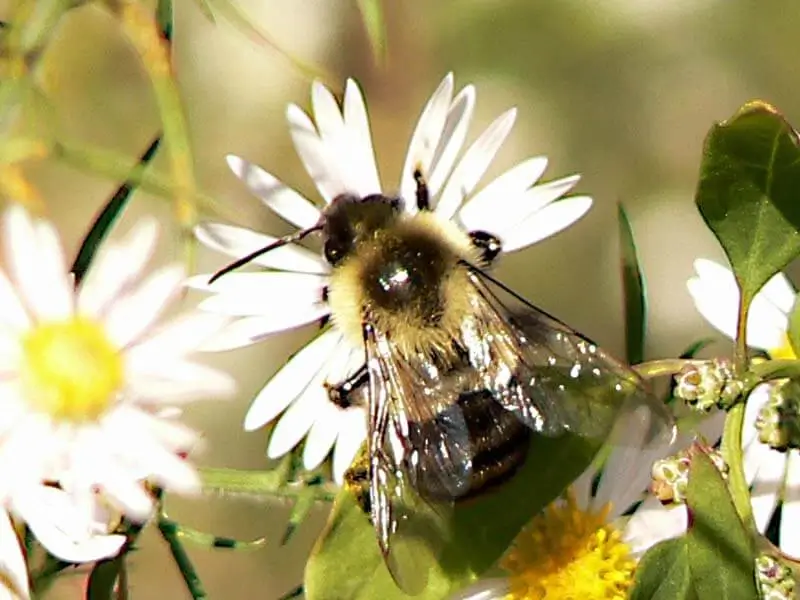
Bees and hummingbirds are attracted to bright colors.
Bright colors in nature often act as advertising coloration, helping plants get the attention of animals. Flowers, for example, need to be pollinated to reproduce. Bees and hummingbirds are attracted to bright colors and will pollinate the flowers.
After pollination, some plants grow berries. As the berries ripen, they turn bright colors such as red, blue, or purple. These colors signal to birds that the fruit is sweet and ready to eat. When birds eat the berries, the seeds pass through their digestive system and are later dropped in new places. Some of these seeds then grow into new plants, helping the species spread.
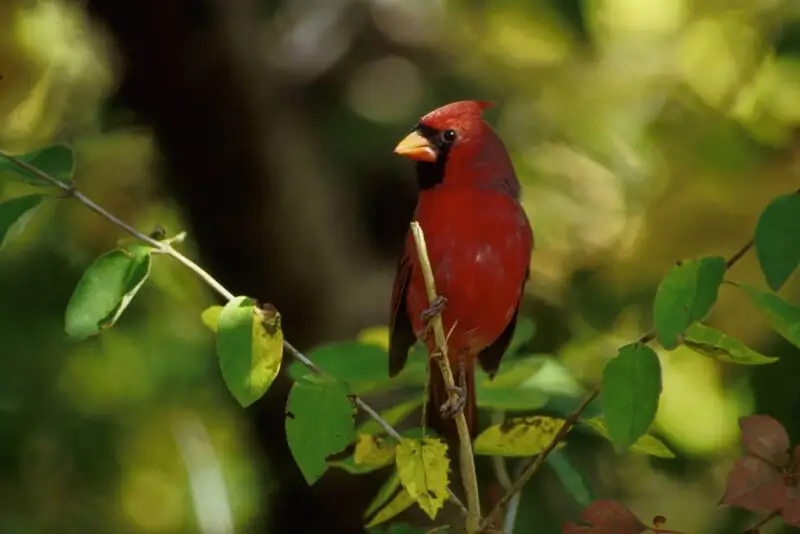
The cardinal is about eight inches in length. It has a black mask on its face; a crest on its head; and a short, cone-shaped bill.
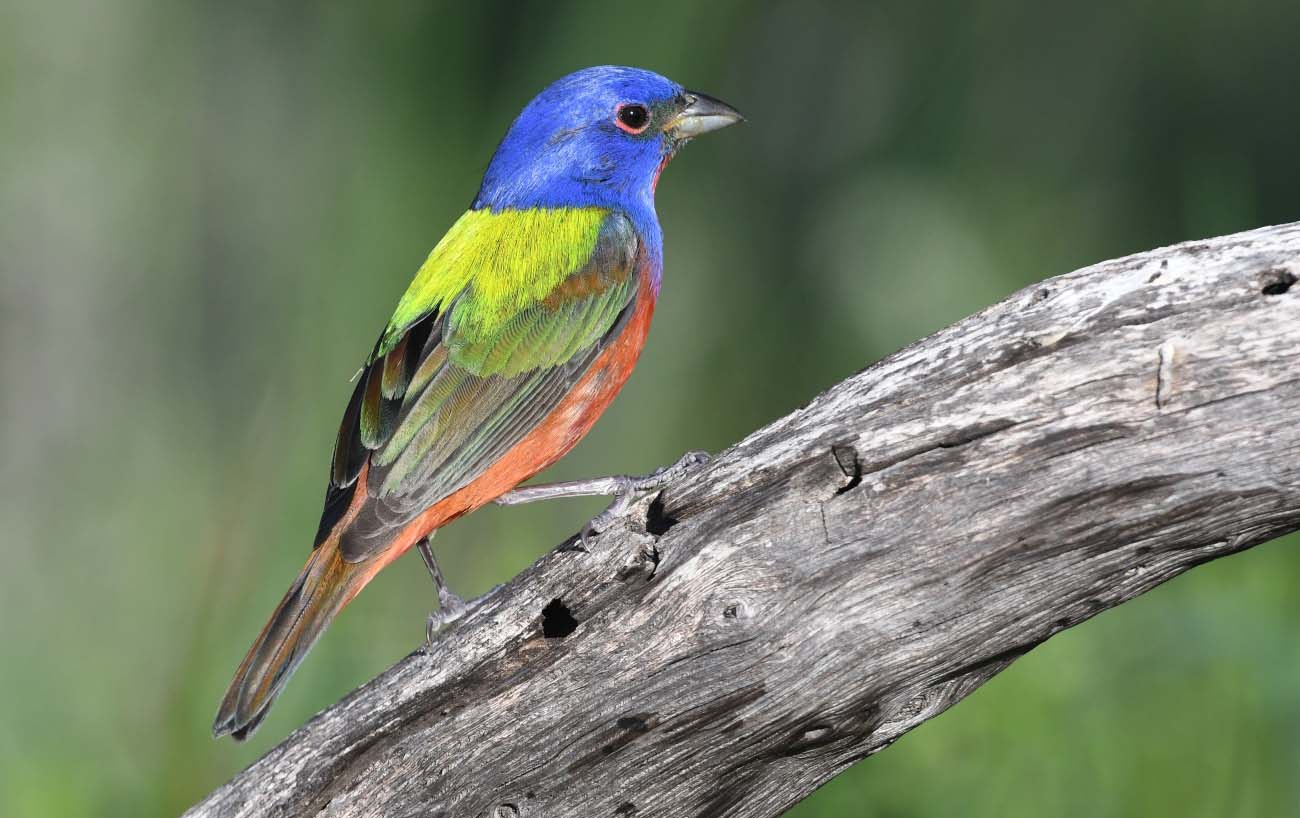
Color is also used to attract mates. Many male birds, like the northern cardinal and the painted bunting, have bright feathers that help them stand out and attract females. Bright colors can be a sign that a bird is healthy and strong.
Female birds are often attracted to healthier males because it increases the chances that their chicks will also be strong and survive.
Unlike males, female birds are usually less colorful. Their duller colors help them blend into their surroundings, protecting them from predators while they are nesting.
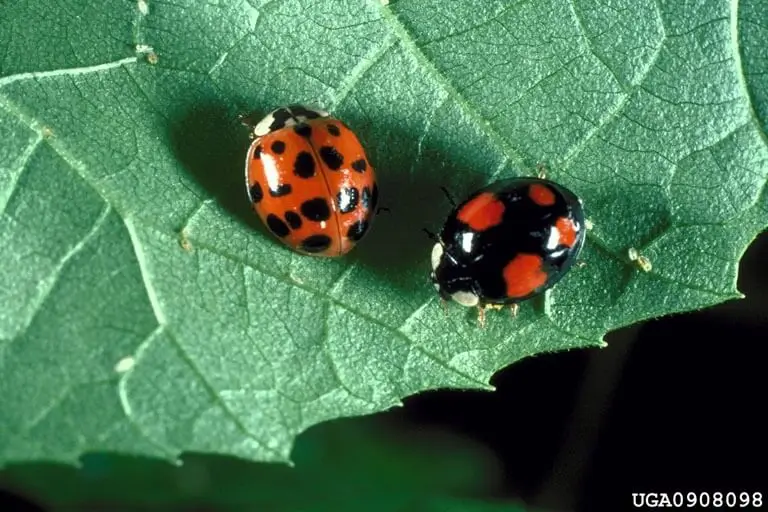
The lady beetle has bright orange wings with black spots. Its coloring warns predators that the ladybug tastes awful.
Advertising color to warn predators to keep away. For example, the lady beetle has bright orange wings with black spots. These bold colors warn predators that the ladybug tastes bad and is not a good meal.
The striped skunk has short, stubby legs and cannot run very fast to escape danger. Instead, it relies on other adaptations to survive. Its black-and-white stripes act as a warning signal to predators that it can spray a strong, unpleasant-smelling liquid if threatened.
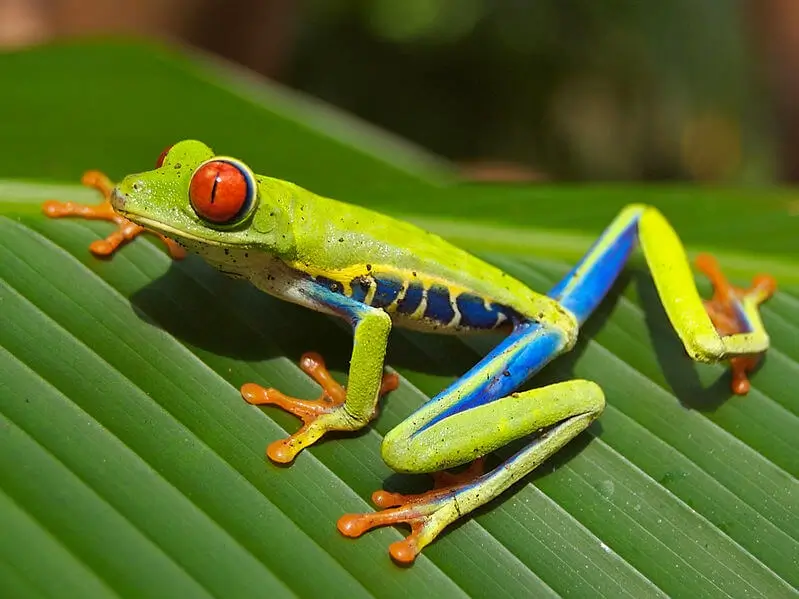
Some animals, like the red-eyed tree frog, may scare prey away with their color.
Some animals, like the red-eyed tree frog, use their bright colors to startle predators. Red-eyed tree frogs sleep during the day. If a predator comes close, the frog suddenly opens its bright red eyes.
This flash of color can surprise or confuse the predator for a moment, giving the frog enough time to hop away to safety.
