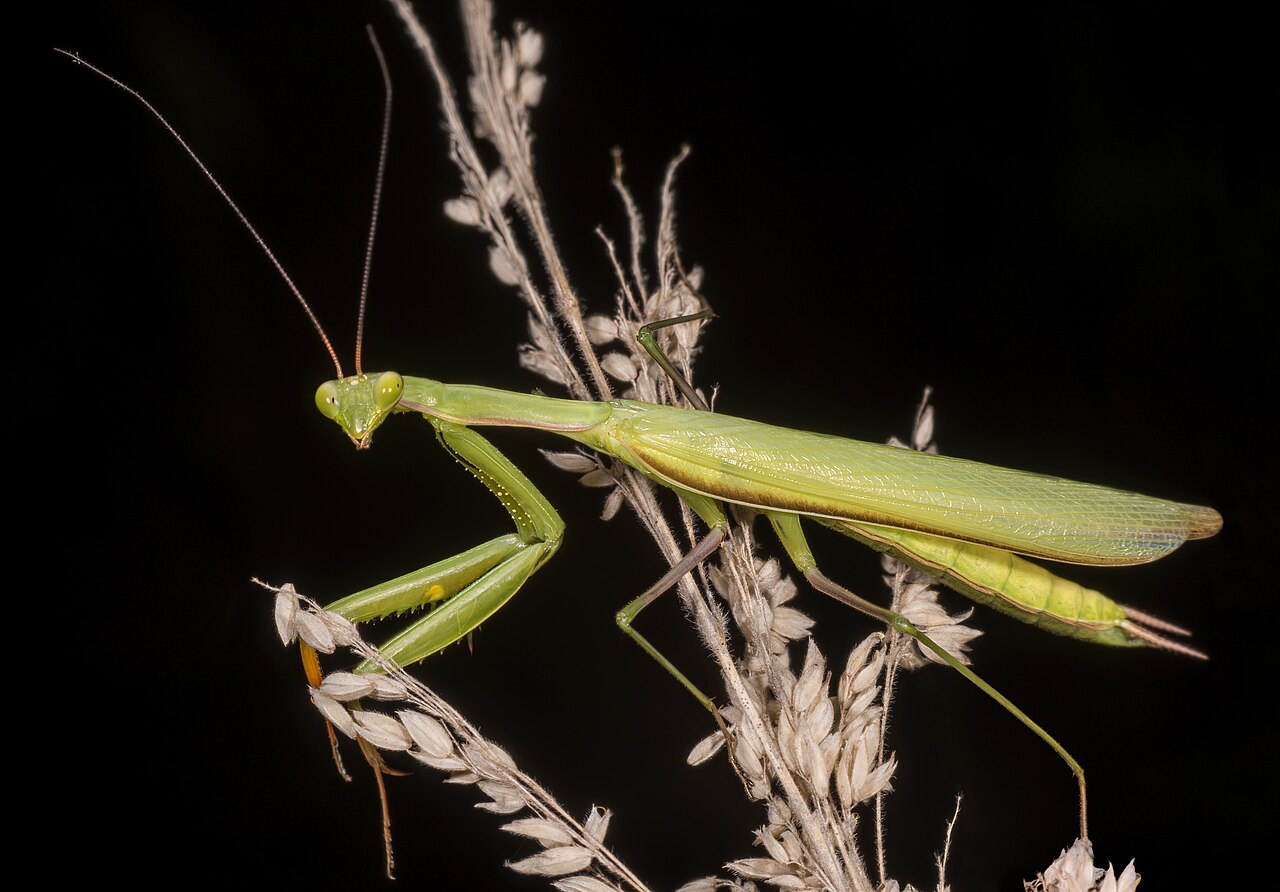
There are about 2,400 species of mantises, grouped into around 33 families.
Mantises are found all over the world, mostly in tropical and subtropical regions. They live on every continent except Antarctica. Some species also live in temperate areas, including parts of North America.
Mantises can live in many different habitats, such as forests, grasslands, deserts, and gardens. Most species prefer areas with lots of plants, where they can hide and hunt.
Mantises are carnivores, which means they eat other animals. They are ambush predators, staying very still and then striking quickly when prey comes close. They use their strong, spiny front legs to grab and hold their prey. Their diet includes insects like flies, crickets, and beetles, as well as spiders, frogs, lizards, and even small birds.
Mantises have triangular heads that can turn from side to side, which is unusual for insects. They also have large compound eyes and excellent vision to help them spot prey. Many species use camouflage to blend in with leaves, flowers, or sticks. In some species, the female may eat the male during or after mating.