

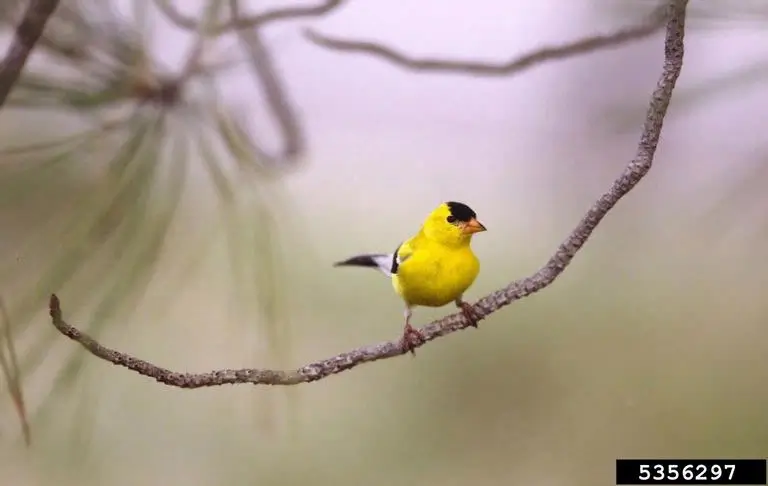
Animals often communicate using structural adaptations like the bright yellow color of the male American goldfinch.
Animals often communicate with structural adaptations, such as the bright yellow color of the male American goldfinch. A structural adaptation used to communicate is called a badge.
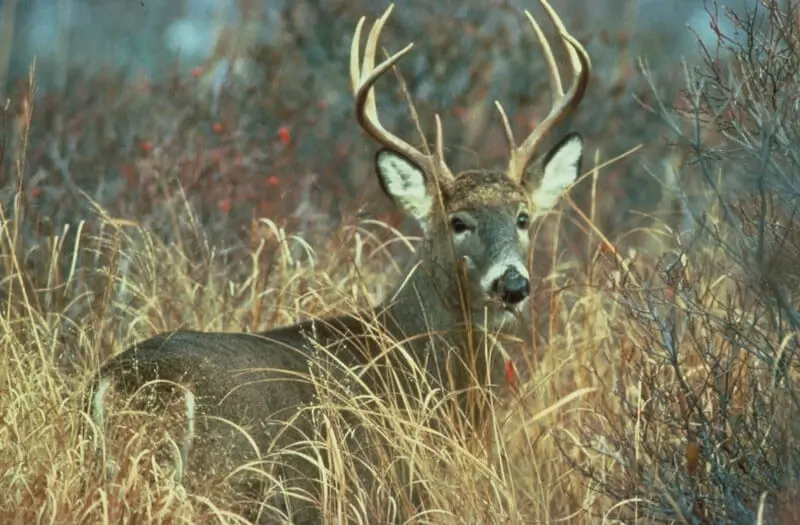
The male white-tailed deer has antlers. The size of the antlers is a badge that can tell another male deer how powerful the other deer is.
The male white-tailed deer has antlers. The size of the antlers is a badge that lets other male deer know how powerful he is. The larger the antlers, the more powerful the deer.
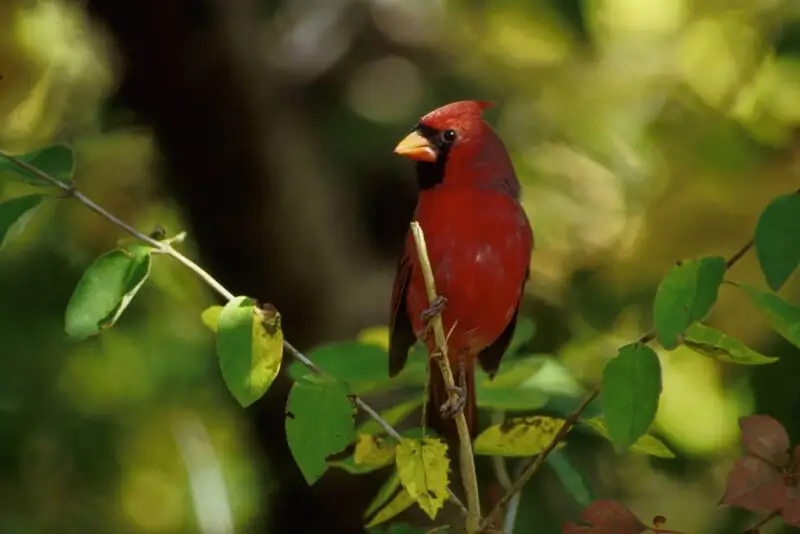
Badges can also help females pick a mate. Many male bird's, like the northern cardinal, have brightly colored feathers. The brighter a male birds feathers, the healthier he is.
Badges can also help females choose a mate. In many bird species, males have brightly colored feathers or other features that are badges of health and strength. For example, the male northern cardinal has bright red feathers that are easy to see. The brighter a male bird’s feathers, the healthier he usually is.
Females often prefer healthier males because strong, healthy mates are more likely to produce offspring that survive and thrive.
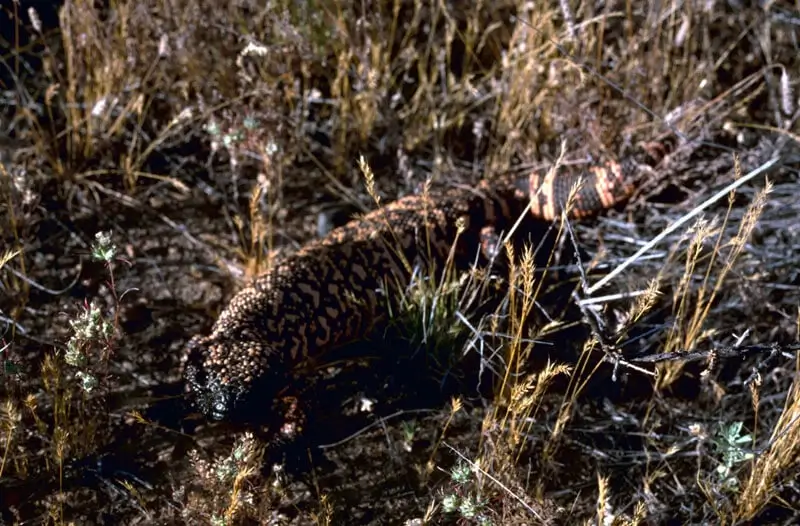
The gila monster's bright orange colored splotches are a warning to predators that the gila monster is poisonous and they should back off.
Sometimes an animal’s color or pattern acts like a warning signal to other animals. This is called warning coloration or aposematism. It helps predators know to stay away before they even try to attack.
For example, the Gila monster’s bright orange and black splotches act like a “danger sign.” These colors warn predators that it is venomous and can deliver a painful bite. Because of this warning, most predators learn to avoid it, which helps the Gila monster survive without having to fight.
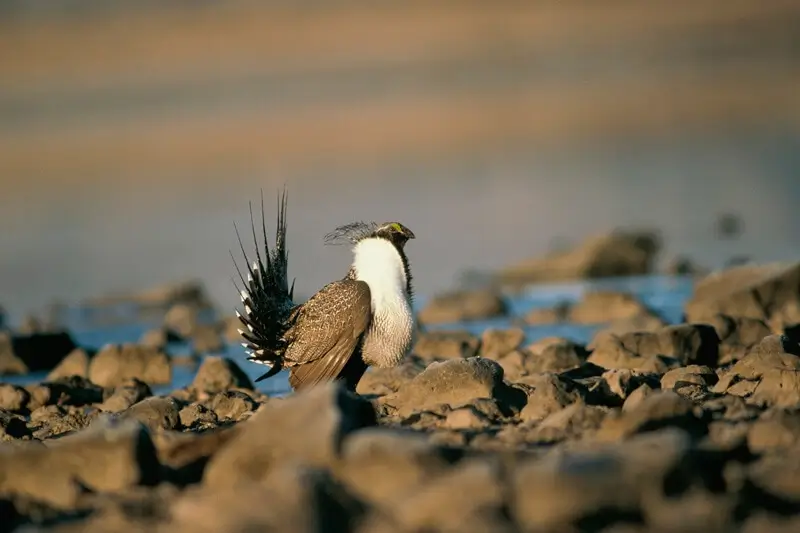
When an animal exhibits a behavior that can be seen by other animals, it is called a display.
When an animal exhibits a behavior seen by other animals, it is called a display. Displays can be used to attract a mate or to warn off a predator.
When a sage grouse opens its tail feathers and struts around trying to attract a female’s attention, that is a display. When a cat arches its back and raises its fur, that is also a display.
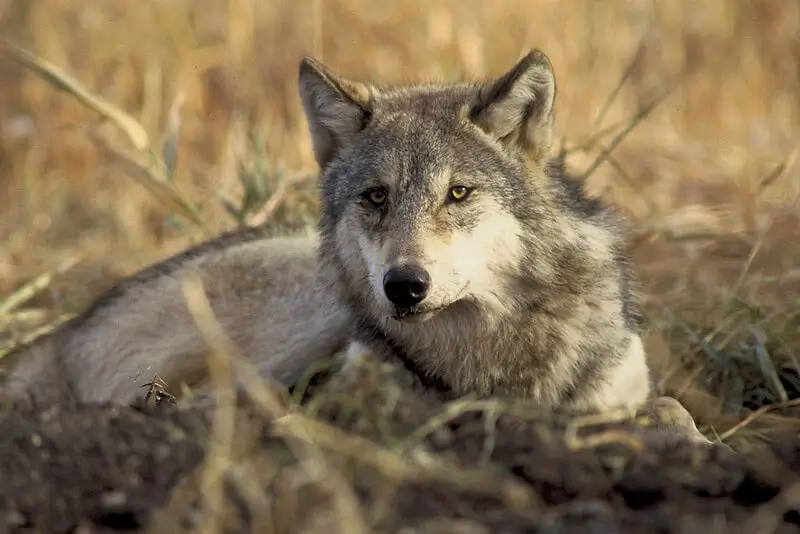
Wolves and dogs put their tails between their legs and lie on their backs to show submission to another wolf or dog and to let them know they are not a threat.
Wolves and dogs put their tails between their legs and lie on their backs to show submission to another wolf or dog and to let them know they are not a threat. When wolves (and dogs) want to show dominance, they stare at each other, raise their fur, and bare their teeth. This lets the other wolf or dog know that they want to be the top, or dominant, animal.
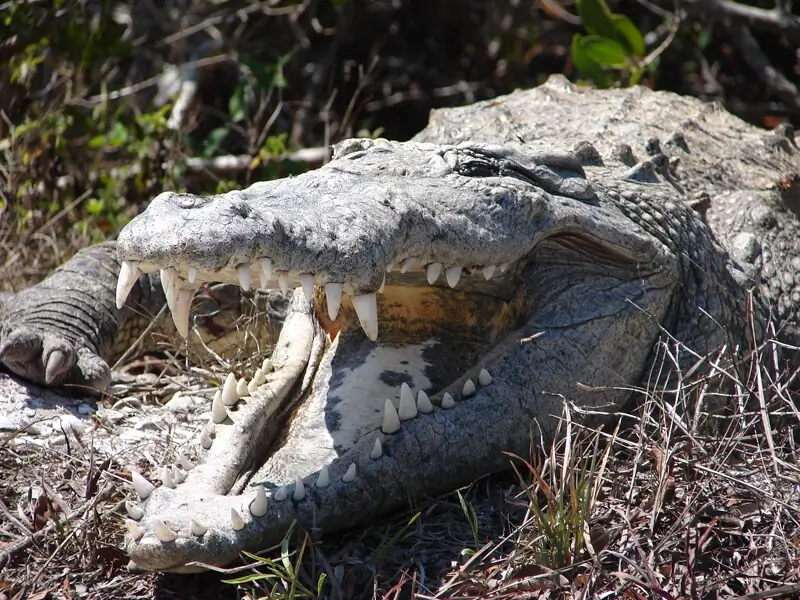
Many animals use visual displays to attract a mate. A female American crocodile tries to get the attention of a male by lifting her head and showing her neck.
Many animals use visual displays to attract a mate. A female American crocodile tries to catch a male’s attention by lifting her head and showing her neck. She will also use tactile communication and rub up against the side of the male’s head and neck. This lets the normally aggressive male know that she is not aggressive.
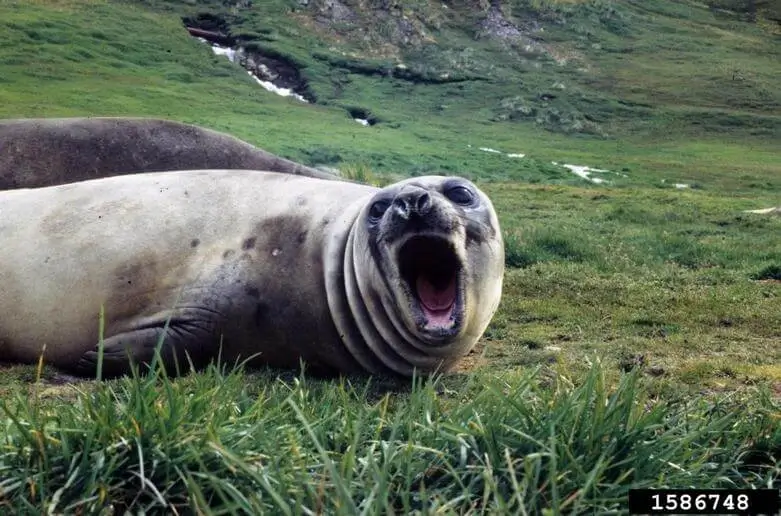
Male elephant seals go through a series of vocal and visual displays of aggression when they are competing for a mate.
Sometimes animals use visual and auditory communication. Male elephant seals go through a series of vocal and visual displays of aggression when competing for a mate. Males will roar, posture, and sometimes fight by pushing or biting each other to show dominance.
After these contests, one male eventually emerges as the winner and gains the right to mate with the females in that group.
